
Greece and Europe Overtourism Crisis: Stricter Travel Policies Enacted
Greece and several European nations enforce stricter hotel limits, coastal protection zones, and travel controls to tackle the overtourism crisis.

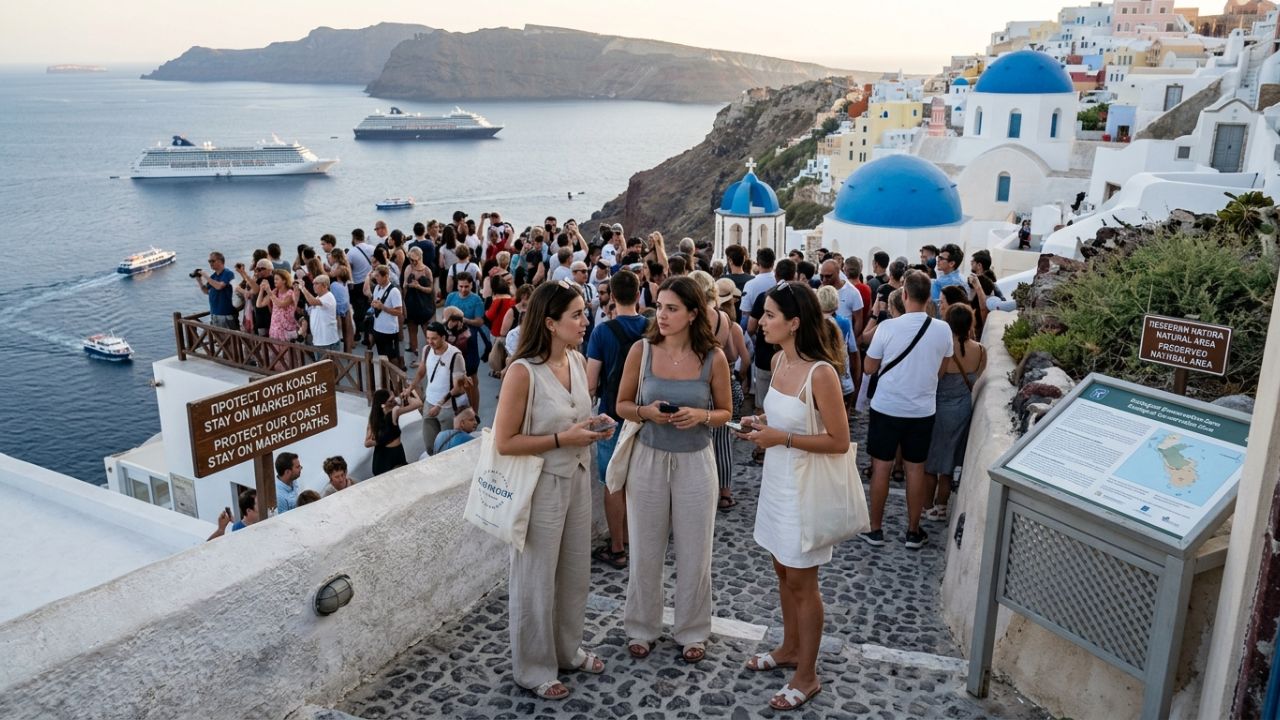
Image generated by AI
Greece and European Nations Enact Stricter Hotel Limits to Combat Intensifying Europe Overtourism Crisis, Urging Travelers to Prepare for New Sustainable Controls: New Travel Alert
Published on June 18, 2026
Greece, alongside a coalition of major European nations, is introducing strict new policies targeting hotel limits, coastal protection, and sustainable travel controls to combat an intensifying Europe overtourism crisis. Driven by record-breaking international visitor arrivals that are straining infrastructure, housing, and ecosystems in hotspots like Santorini, Mykonos, and Crete, these measures mark a dramatic shift away from unchecked tourism growth. Travelers planning trips to these popular European regions must prepare for tighter regulations, limited accommodation choices, and expanded conservation zones starting this season.
Quick Summary
- Continental Action: Multiple European nations are enforcing stricter regulations to manage record-breaking tourism peaks.
- Greek Island Limits: High-demand destinations like Santorini, Mykonos, and Crete face new hotel capacity controls and construction limits.
- Coastal Preservation: Authorities are establishing expanded "untouched coastal zones" to shield fragile ecosystems from development.
- Stricter Rental Rules: Countries like Spain and the Netherlands are tightening short-term rental laws to protect residential housing.
- Sustainable Shift: The European travel sector is transitioning its focus from pure growth to destination resilience and site protection.
The continental shift toward controlled development comes as Europe enters one of its strongest commercial growth cycles, which has simultaneously pushed local infrastructure to its structural limits. As a result, the European Travel Commission (ETC) and national governments are prioritizing environmental preservation and local community well-being over pure visitor volume. With coastal overcrowding, soaring property demand, and ecological degradation threatening key regions, lawmakers are stepping in with legally mandated protections to balance economic success with ecological limits.
Event/Incident Details: The Scope of the Europe Overtourism Crisis
The expanding Europe overtourism crisis has compelled multiple nations to coordinate independent regulatory responses to manage visitor overload. Record-breaking international arrivals are putting unprecedented pressure on transport grids, housing availability, and municipal infrastructure across the continent.
To help travelers understand the policy measures being implemented across different countries, the table below outlines the primary affected regions and their respective strategies:
| Country | Focus Area | Key Policy Measures | Intended Outcome |
|---|---|---|---|
| Greece | Island & Coastal Zones | Hotel capacity limits, "untouched coastal zones" | Reduced beach crowding, construction halts |
| Turkey | Aegean & Mediterranean | Sustainable zoning, beach & heritage protection | Controlled growth, infrastructure expansion |
| Netherlands | Urban Centers | Visitor dispersal, short-term rental limits | Protected neighborhoods, crowd redirection |
| Spain | Coast & Islands | Short-term rental caps, residential zoning | Lower housing strain, managed congestion |
| Portugal | Cities & Coasts | Visitor distribution, quality of life rules | Regional dispersal, coastal preservation |
| Italy | Historic Sites | Access limits, heritage protection | Preserved historical assets, crowd control |
| France | High-Traffic Areas | Infrastructure resilience, community balance | Sustained local capacity, crowd management |
| Austria | Alpine & Heritage | Transport limits, controlled development | Landscape protection, high-value tourism |
| Germany | Cities & Regions | Sustainable travel frameworks, flow management | Reduced urban congestion, better transit |
(Note: These restrictions represent a unified effort by European authorities to reshape the summer travel landscape in favor of destination longevity).
Risk and Environmental Impact of the Europe Overtourism Crisis
The environmental and structural risks associated with unchecked travel volumes have reached critical levels. Without intervention, high-density visitor activity directly threatens the natural resources and historical assets that attract tourists in the first place.
The primary environmental and structural risks include:
- Fragile Ecosystem Strain: Coastal areas in Greece and Spain face severe degradation from heavy foot traffic and development.
- Local Housing Depletion: The rapid expansion of short-term tourist accommodations has squeezed out local residents and inflated property costs.
- Infrastructure Gridlock: Transport networks, water supplies, and waste management systems in islands like Santorini frequently exceed safe operating thresholds.
- Cultural Site Degradation: Historic cities in Italy and France face wear and tear from unmanaged visitor densities at popular monuments.
- Declining Quality of Life: Local communities experience rising living costs and overcrowding, leading to friction between residents and visitors.
What Authorities Are Saying
Government officials and regulatory bodies are emphasizing that the era of prioritizing pure tourism volume is coming to an end. According to the United Nations World Tourism Organization (UNWTO), destination management must focus on strategic planning and sustainability to ensure long-term viability.
In Greece, tourism authorities are actively implementing the "untouched coastal zones" program, which enforces strict construction bans on ecologically sensitive beaches. Meanwhile, the Greek National Tourism Organisation (GNTO) is urging travelers to discover lesser-known regional mainland destinations to ease the pressure on crowded islands. Across the Mediterranean, Spanish and Portuguese planners are echoing these statements, declaring that future tourism budgets will fund environmental protection and neighborhood preservation rather than mass marketing.
Practical Traveler Advice for Navigating Sustainable Controls
As new travel regulations take effect, visitors must adapt their planning strategies to avoid travel disruption and support local conservation efforts. Staying informed and choosing alternative travel styles will ensure a smoother vacation experience.
Travelers should follow these practical steps:
- Book accommodations early: Hotel development limits and short-term rental caps mean fewer available rooms in peak seasons.
- Explore off-path destinations: Consider visiting emerging regional spots rather than congested hubs like Santorini or Mykonos.
- Respect local zoning laws: Stay informed about restricted access areas, pedestrian-only zones, and beach protection rules.
- Travel during shoulder seasons: Planning trips in spring or autumn helps reduce seasonal pressure and offers a more relaxed trip.
- Utilize public transport: Support local transit management systems by using trains, buses, and shared shuttles to reduce congestion.
Broader Context: A Continental Shift in European Tourism Policy
This regulatory movement marks a historic turning point in how European nations view the economics of travel. For decades, success was measured solely by annual visitor counts and revenue growth. However, the visible toll on local communities and ecosystems has forced a re-evaluation of this model.
High-density tourist zones along the Mediterranean and Aegean seas are now recognized as ecologically vulnerable. Because popular islands rely heavily on seasonal tourism, they lack the natural resources to support year-round crowds. Reshaping tourism frameworks to focus on ecological protection and controlled expansion is now seen as essential to prevent permanent damage to these historic landscapes.
What to Expect Next: Reshaping the European Tourism Landscape
Moving forward, travelers should expect the rollout of even tighter regulations across the continent. Governments will continue to monitor the impact of these initial hotel limits and coastal protections, adjusting policies as necessary.
We can expect the following developments in the near future:
- Broader Visitor Caps: More historic cities and natural parks will likely introduce pre-booking requirements and daily entry limits.
- Increased Travel Taxes: Municipalities may implement or raise tourist taxes to fund infrastructure upgrades and environmental cleanups.
- Enhanced Dispersal Initiatives: Airlines and tourism boards will promote secondary airports and lesser-known regions to distribute visitor flows.
Conclusion
Successfully addressing the Europe overtourism crisis requires a balance between tourism revenue and environmental protection. By observing new travel controls, respecting local guidelines, and choosing sustainable itineraries, travelers can support the resilience of these destinations. Preparedness and ecological awareness will remain essential for holiday planning in Europe's changing travel landscape.
FAQ: Europe Overtourism Crisis 2026
Why is Greece implementing hotel limits and coastal protections? Greece is enforcing these policies to protect fragile island ecosystems, reduce infrastructure strain, and manage seasonal overcrowding in popular destinations like Santorini, Mykonos, and Crete.
Which European countries are enacting new overtourism policies? Greece, Turkey, Spain, Portugal, Italy, France, the Netherlands, Austria, and Germany are all implementing stricter regulations to manage high visitor volumes.
How do these sustainable travel controls affect tourists? Travelers may face limited accommodation availability due to hotel development caps, stricter rental regulations, and rules designed to control visitor access at popular sites.
What are "untouched coastal zones" in Greece? These are designated, expanded protection zones along Greek coastlines where commercial development and building activities are prohibited to preserve natural environments.
How can I help reduce the impact of overtourism during my trip? You can support local communities by visiting during off-peak seasons, choosing emerging regional destinations, and respecting local environmental and zoning laws.
Related Travel Guides
Italy Confirms Nationwide Ground Handling Strike on June 26
Washington DC Airspace Shutdown: Reagan National Airport Halts July 4 Flights
Disclaimer
This article is for informational and educational purposes only. It does not constitute legal, financial, or professional advice. While we strive to provide accurate and up-to-date information, travel policies, regulations, and conditions change rapidly. Always verify information with official sources before making travel decisions. Nomad Lawyer makes no representations about the accuracy, reliability, completeness, or suitability of the information provided. Readers should consult qualified professionals for advice specific to their circumstances. The views expressed in this article are those of the author and do not necessarily reflect the views of Nomad Lawyer.
Kunal K Choudhary
Co-Founder & Contributor
A passionate traveller and tech enthusiast. Kunal contributes to the vision and growth of Nomad Lawyer, bringing fresh perspectives and driving the community forward.
Learn more about our team →