
10-Night Great Lakes Luxury Cruise: Chicago to Toronto Itinerary, Soo Locks, and Passenger Guide 2026

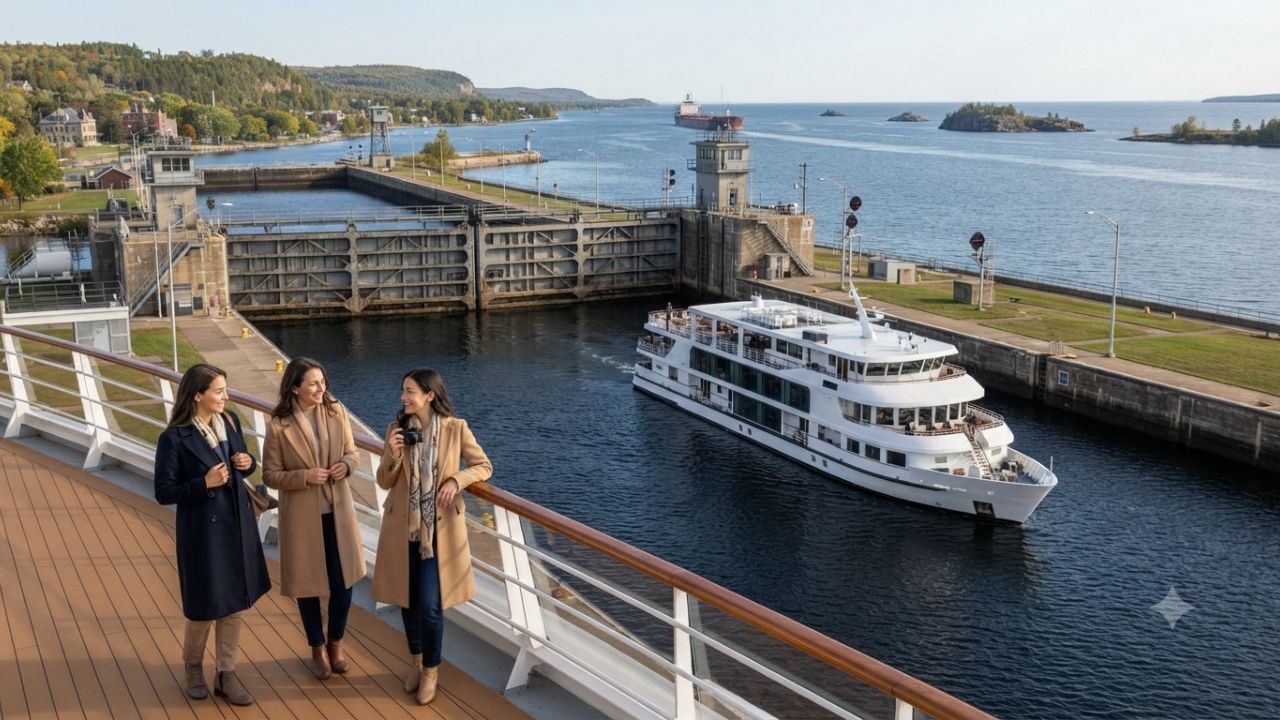
Image credit: Cruise the Great Lakes
North American inland waterway cruising is experiencing a historic surge, with more than 25,000 luxury passengers sailing the Great Lakes basin during the current operating season. According to regional industry data from Cruise the Great Lakes, small-ship passenger volume expanded by 5 percent year-on-year, driven by high demand for comprehensive 10-night itineraries linking Chicago and Toronto across US and Canadian freshwater ports.
Deployed on purpose-built boutique vessels carrying between 180 and 210 passengers, these inland voyages blend five-star hospitality with direct city-center docking. By navigating narrow river locks, historic canals, and coastal straits, small-ship operators bypass industrial freight terminals, placing travelers within steps of downtown cultural districts in Detroit, Cleveland, Mackinac Island, and Sault Ste. Marie.
Navigation Metrics and Engineering Landmarks Along the Inland Seaway
Cruising across the Great Lakes involves navigating historic engineering marvels that lift and lower vessels across shifting freshwater lake elevations:
| Navigational Feature | Technical Metric & Specification | Systemic Aviation & Maritime Purpose | Onboard Passenger Experience Impact |
|---|---|---|---|
| Soo Locks Transit | 6.4-meter vertical lift | Connects Lake Superior with Lake Huron | Live daylight gravity lockage at Sault Ste. Marie |
| Welland Canal Run | 8 individual locks | Bypasses Niagara Falls via Lake Ontario | Intimate transit past monumental grain terminals |
| St. Clair River Channel | 64-kilometer passage | Navigates US–Canada international border | Close-quarters viewing of working ore freighters |
| Detroit River Route | 51-kilometer natural strait | Links Lake St. Clair to western Lake Erie | Panoramic skyline vistas of Detroit and Windsor |
| Mackinac Straits Transit | 8-kilometer suspension span | Connects Lake Michigan and Lake Huron | Under-bridge sailing beneath Mackinac Bridge |
Source: Cruise the Great Lakes & US Army Corps of Engineers (Soo Locks Visitor Center).
Resident maritime historians, known as LakeLorians, provide daily lectures on observation decks during canal transits, detailing the history of commercial shipping, freshwater ecology, and regional shipwrecks.
Comparative Analysis: Boutique Inland Cruising vs Mega-Ocean Liners
Small-ship Great Lakes cruising provides distinct operational and service advantages over conventional ocean mega-liners:
| Operational Dimension | Boutique Inland Vessels | Conventional Ocean Liners | Passenger Experience Advantage |
|---|---|---|---|
| Passenger Capacity | 180 to 210 guests | 3,000 to 6,000 guests | Minimal waiting lines & tranquil public lounges |
| Terminal Access | Direct city-center docks | Industrial cargo terminals | Walk directly into downtown cultural districts |
| Port Frequency | Daily docking schedules | Frequent open-sea days | Maximizes daylight exploration ashore |
| Onboard Gastronomy | Sourced local ingredients | Large-scale mass catering | Regional walleye, artisan cheeses & stone fruits |
| Disembarkation Time | 2 to 3 minutes | Exceeds 90 minutes | Fast, stress-free gangway transit |
| Educational Focus | Resident LakeLorian historians | Generic stage entertainment | Deep historical, geographic & scientific discovery |
Highlighting the economic impact of small-ship travel on coastal communities, Dave Lorenz, Chairman of Cruise the Great Lakes, noted: “Small-ship cruising represents one of the most sustainable, high-value tourism developments for our freshwater ports. These discerning international visitors generate substantial economic vitality while preserving the historic character of our shoreline towns.”
Logistical Planning and Passenger Booking Guidelines
Travelers planning a 10-night Great Lakes voyage should consider key operational requirements:
- Fares & Inclusions: Comprehensive 10-night itineraries commence at $6,899 (£5,500) per person, covering a pre-cruise hotel stay, all-inclusive dining, premium beverages, Wi-Fi, guided shore excursions, and luggage handling.
- Operating Season: The sailing season runs strictly from May through October. Operations halt in late autumn and winter due to ice formation and scheduled lock maintenance across the St. Lawrence Seaway.
- Passport & Visa Protocols: Because itineraries cross international maritime borders between the United States and Canada, passengers must carry a valid passport and obtain required electronic travel authorizations (ESTA / eTA).
- Booking Advance Windows: Due to strict 190-guest ship capacity caps, popular summer and autumn foliage departures frequently sell out 9 to 12 months in advance. Primary turnaround ports are Chicago and Toronto.
Great Lakes 10-Night Cruise FAQ: October 2026
How much does a 10-night Great Lakes luxury cruise cost? Fares for a 10-night comprehensive itinerary start at $6,899 (£5,500) per person, including pre-cruise hotel stays, all-inclusive gourmet meals, premium drinks, Wi-Fi, and guided shore excursions.
What are the primary turnaround ports for Great Lakes itineraries? Chicago, Illinois, and Toronto, Ontario, serve as the primary turnaround hub terminals for 10-night Great Lakes cruises.
How many passengers do boutique Great Lakes cruise ships carry? Boutique inland vessels carry approximately 180 to 210 passengers, allowing 2-to-3-minute disembarkation times and direct docking at city-center piers.
When does the Great Lakes cruise season operate? The sailing season operates from May through October. Ships do not sail during winter months due to ice formation and lock maintenance.
Why This Matters for Travelers and Regional Port Economies in 2026
For luxury travelers seeking an alternative to crowded ocean liners, 10-night Great Lakes cruises combine five-star service with rich North American maritime history. By docking directly at city-center piers in Detroit, Cleveland, and Mackinac Island, small-ship cruising delivers high-yield economic support to freshwater port communities while protecting fragile shoreline ecosystems.
Related Travel Guides
Disclaimer
This article is for informational and educational purposes only. It does not constitute legal, financial, or professional advice. While we strive to provide accurate and up-to-date information, travel policies, regulations, and conditions change rapidly. Always verify information with official sources before making travel decisions. Nomad Lawyer makes no representations about the accuracy, reliability, completeness, or suitability of the information provided. Readers should consult qualified professionals for advice specific to their circumstances. The views expressed in this article are those of the author and do not necessarily reflect the views of Nomad Lawyer.
Kunal K Choudhary
Co-Founder & Contributor
A passionate traveller and tech enthusiast. Kunal contributes to the vision and growth of Nomad Lawyer, bringing fresh perspectives and driving the community forward.
Learn more about our team →