
Global Fishing Hotspots Drive Recreational Angling Tourism Boom
Recreational angling transforms into a global tourism driver, with destinations like Australia, New Zealand, and the United States attracting travelers.

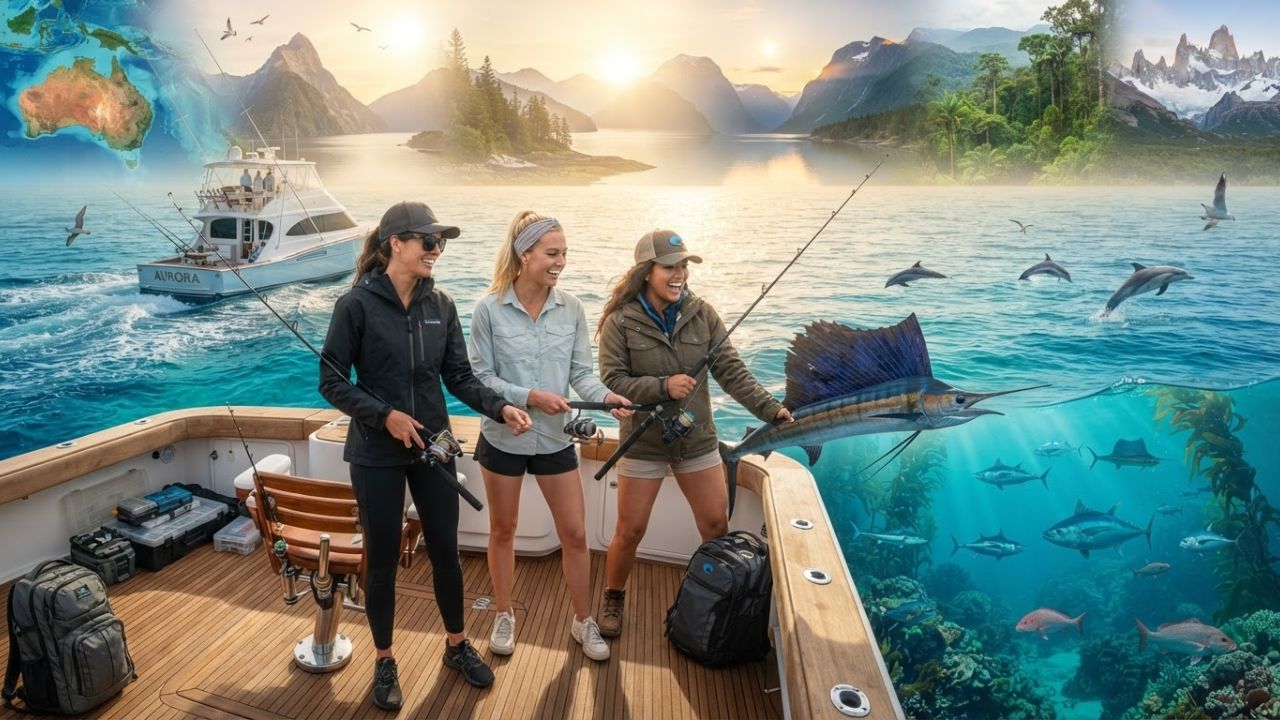
Image generated by AI
Recreational angling has evolved into a major segment of the adventure travel industry, with countries like Australia, New Zealand, and the United States investing in sustainable fisheries to capture high-value tourism spending.
Outdoor recreation is expanding beyond traditional sightseeing, with global fishing tourism destinations drawing a growing share of international travel spending. According to national fisheries departments, recreational angling has become a major driver of regional economies. Travelers are increasingly booking multi-day itineraries focused on catching specific sport fish in pristine environments, ranging from glacial rivers in Iceland to tropical reefs in Costa Rica.
Evaluating Key Angling Markets in 2026
Government research highlights the economic significance of the angling sector in several primary markets:
- Australia: The Department of Agriculture, Fisheries and Forestry records that approximately one in five Australian adults participates in recreational fishing. Northern territories attract travelers for barramundi, while southern and offshore waters support snapper, kingfish, and southern bluefin tuna.
- United States: NOAA Fisheries data indicates that the domestic recreational fishing sector supports hundreds of thousands of jobs. Key destinations include Alaska for Pacific salmon and halibut, Florida for deep-sea sport fishing, and the Great Lakes for freshwater trout.
- New Zealand: The Ministry for Primary Industries reports significant recreational harvests. The South Island's rivers are globally recognized for trout fly-fishing, while coastal waters offer snapper, kingfish, and swordfish.
- Canada: Fisheries and Oceans Canada monitors a large freshwater and coastal angling market. Remote wilderness lodges in British Columbia and the northern territories attract visitors seeking Atlantic and Pacific salmon.
Other regions, including Norway (for Arctic cod and fjord fishing), Iceland (for exclusive salmon rivers), South Africa (sitting between two ocean systems), Japan (for coastal yellowtail), and Chile (for Patagonian fly-fishing), are also expanding their niche sport fishing tourism sectors.
The table below summarizes the key target species and environments of major global angling hubs:
Global Angling Hotspots and Target Species
| Destination Region | Primary Angling Environment | Key Target Species | Managing Authority / Agency |
|---|---|---|---|
| Australia | Tropical reefs, southern oceans & rivers | Barramundi, trevally, Murray cod | Dept. of Agriculture, Fisheries & Forestry |
| United States | Alaskan wilderness, Florida reefs & Great Lakes | Pacific salmon, halibut, lake trout | NOAA Fisheries |
| New Zealand | Glacial rivers, coastal bays & deep ocean | Brown trout, kingfish, swordfish | Ministry for Primary Industries |
| Canada | Remote freshwater lakes & Pacific coast | Atlantic salmon, northern pike, walleye | Fisheries and Oceans Canada |
| Norway | Arctic fjords & cold-water oceans | Atlantic cod, halibut, mackerel | Directorate of Fisheries |
| Iceland | Controlled-access rivers & North Atlantic | Atlantic salmon, brown trout, Arctic char | Local river management systems |
Why This Matters
From a logistical perspective, this shift highlights the growth of experiential travel, where visitors seek a deeper connection to local heritage, art, and gastronomy rather than just landmark visits. For travelers planning their summer trips, this means that selecting a destination with diverse activities reduces the risk of weather-related disruptions. If rain or extreme heat makes outdoor sightseeing uncomfortable, visitors can easily pivot to indoor museums, wellness retreats, or culinary tours.
For the travel industry, this trend demonstrates that marketing a country requires highlighting its cultural and conservation assets alongside its natural scenery. Destinations that invest in preserving their historic architecture, supporting local artists, and promoting regional food systems are better positioned to attract high-value, long-stay travelers who contribute more to the local economy than day-trippers.
Industry Outlook
Market trends suggest that the demand for multi-dimensional travel will continue to grow as travelers seek to maximize their holiday budgets. As travel costs remain high, consumers are looking for destinations that offer a variety of experiences within a single geographic area. This pattern favors countries that can offer a blend of outdoor recreation, cultural education, and premium dining.
In response to these trends, local tourism boards are focusing on off-season campaigns to attract visitors during the autumn and winter months, when cultural attractions and historic tours remain fully operational. This strategy helps stabilize the local hospitality sector, ensuring year-round employment and reducing the environmental pressure associated with summer overcrowding.
Related: India Launches Air India Partnership to Drive Inbound Tourism and Stopover Travel
Related: Vietnam, Singapore, and Thailand Lead Southeast Asian Travel Boom in 2026
Related: California Florida Michigan Strategic Campaigns Recover Canadian Tourism
Disclaimer
This article is for informational and educational purposes only. It does not constitute legal, financial, or professional advice. While we strive to provide accurate and up-to-date information, travel policies, regulations, and conditions change rapidly. Always verify information with official sources before making travel decisions. Nomad Lawyer makes no representations about the accuracy, reliability, completeness, or suitability of the information provided. Readers should consult qualified professionals for advice specific to their circumstances. The views expressed in this article are those of the author and do not necessarily reflect the views of Nomad Lawyer.
Raushan Kumar
Founder & Lead Developer
Full-stack developer with 11+ years of experience and a passionate traveller. Raushan built Nomad Lawyer from the ground up with a vision to create the best travel and law experience on the web.
Learn more about our team →