
Global Aviation Shake-Up Triggers Massive Travel Chaos as Thai Airways, Singapore Airlines, and US Carriers Execute Brutal Flight Cancellations and Hub Exits Amid Severe Airport Disruptions: Latest Airline News
A devastating global fuel shock and severe staffing shortages force major airlines to ruthlessly slash routes, resulting in nationwide flight cancellations and uncontrollable travel chaos.

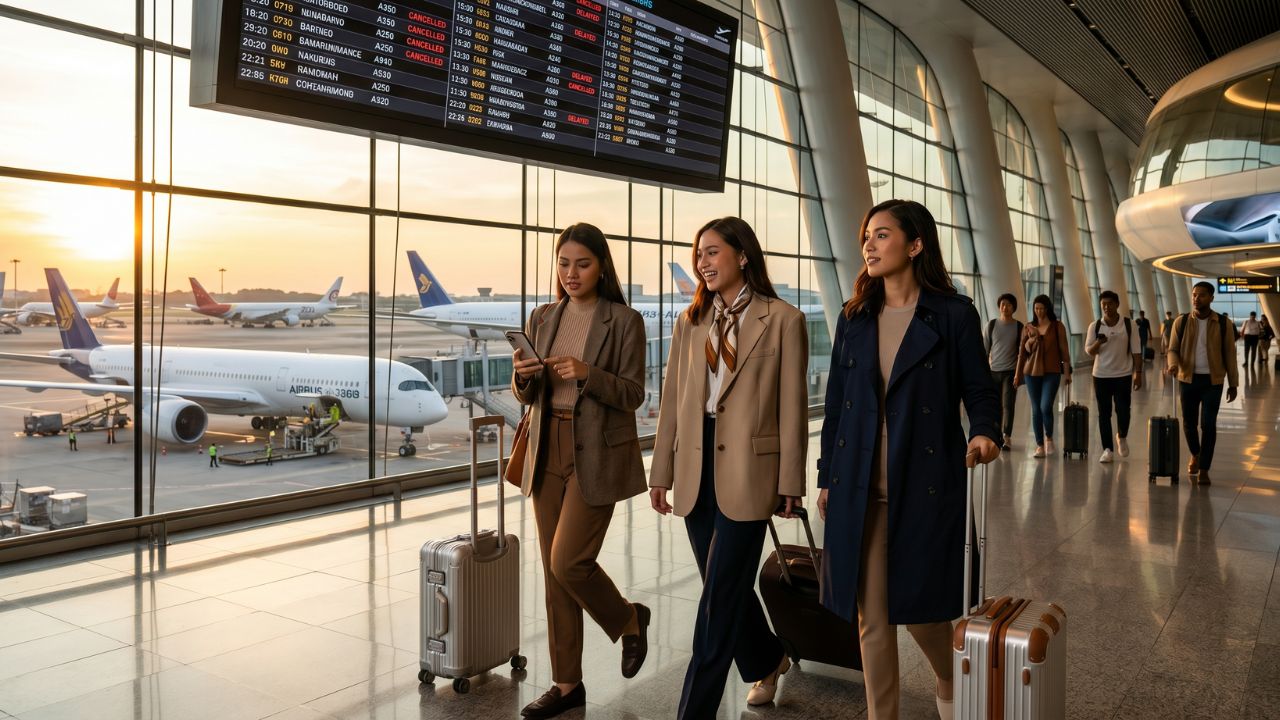
Image generated by AI
In a devastating restructuring cycle explicitly driving unprecedented travel chaos and rolling flight cancellations across virtually every major international network, the global aviation industry has entered a massive operational shake-up. Detailed in comprehensive reports on June 18, 2026, major global carriers—including Thai Airways, Singapore Airlines, Malaysia Airlines, Garuda Indonesia, and leading US operators—are aggressively slashing routes and exiting secondary airports to survive a brutal confluence of soaring fuel costs and crippling capacity crunches. Recognizing that airlines are hemorrhaging cash, carriers are ruthlessly abandoning unprofitable markets to consolidate their remaining fleets at massive core hubs. This brutal network contraction is directly triggering severe airport disruptions, stranding millions of passengers, and driving the cost of travel to historic highs. As panicked tourists and corporate commuters realize that the era of affordable, high-frequency connectivity has violently collapsed, this global aviation survival strategy stands as the premier headline in today's breaking airline news and absolutely vital global aviation updates.
By introducing direct passenger coordination and dynamic scheduling backups, the regional aviation hubs target growing passenger demand across vital commerce sectors. The choice to coordinate flight departures in phases helps to manage gate capacity, supporting the country's broader regional transportation network.
Context: The Collapse of Network Stability
For the millions of global passengers attempting to navigate international airspace this year, the sheer scale of operational bottlenecks and airline defensive strategies has transformed routine transit into financial and physical exhaustion.
Historically, when fuel prices spike, airlines attempt to absorb the impact. However, the recent fuel shock was completely unprecedented, pushing average jet fuel prices from $2.50 to $4.51 per gallon in just two months—a fatal spike that triggered the total collapse of budget carrier Spirit Airlines. Although US statistics show the price eventually settled at $2.42 per gallon in November 2025, the total monthly industry fuel expenditure remained a staggering $3.59 billion. Unable to absorb these numbers, airlines launched a desperate survival response. Instead of maintaining comprehensive networks, carriers like Thai Airways and Malaysia Airlines are aggressively retreating from secondary airports, forcing all traffic into congested mega-hubs. Concurrently, a severe staffing shortage among air traffic controllers forced the Federal Aviation Administration (FAA) to issue an emergency order mandating flight cuts of up to 10 percent at 40 busy US airports. This mandated capacity reduction, combined with airlines voluntarily axing routes that cannot cover fuel and landing fees, guarantees that passengers will continue to face brutal travel chaos, significantly higher fares, and constant flight cancellations.
To view live flight schedules, verify the active delay status of your specific itinerary, or to track active regional airspace restrictions, travelers must consult official aviation directories. For direct booking access on carriers attempting to maintain hub stability, travelers should cautiously utilize the official portals for airlines like Singapore Airlines. To explore live flight tracking and monitor the exact severity of the global bottlenecks causing the flight cancellations you must now actively survive, passengers can consult the official FlightAware tracking service.
Section-Wise Breakdown of the Industry Crisis
The Fuel Shock and Passenger Extortion
The immediate response to the fuel shock (which peaked with a $5 billion industry spend in March 2026) was to aggressively pass costs onto the passenger. American Airlines increased checked bag fees to punitive levels of $50 and $60. United Airlines hiked fares by as much as 20 percent, while Delta Air Lines eliminated free food on short flights. Southwest and Alaska Airlines followed suit with aggressive fee increases, and JetBlue identified entire route blocks for elimination. For the passenger, the cost of flying is now up to 20 percent more expensive than a year prior, generating massive travel friction.
The Regulatory Capacity Crunch
Staffing shortages have fundamentally broken airspace management. During a U.S. government shutdown, unpaid air traffic controllers were so overwhelmed that the FAA mandated staged flight reductions ranging from 4 percent to 10 percent at 40 major airports. Airlines were forced to execute massive flight cancellations to meet these targets. While carriers were required to issue full refunds, the sudden grounding of thousands of flights unleashed severe airport disruptions nationwide.
Weather Disruption Amplification
Network fragility is compounded by climate volatility. The Civil Aviation Authority of Singapore (CAAS) reported 55 massive flight diversions from Changi Airport due to severe convective weather and lightning. With networks already running at maximum consolidation, a single weather diversion now creates cascading flight cancellations across multiple Asian hubs, forcing regulators to scramble to develop advanced Aviation Meteorological Programmes just to keep planes in the sky.
Technical Roster: Global Aviation Disruption Data
To ensure absolute factual accuracy regarding the exact scale of this operational collapse and the extreme defensive measures executed by global airlines, the following matrix details the verified disruption and cost-shifting data:
Global Aviation Disruption Metrics & Airline Responses
| Crisis Metric / Airline | Strategic Response & Impact |
|---|---|
| Peak Jet Fuel Spike | Surged from $2.50 to $4.51 per gallon (Triggered Spirit Airlines collapse) |
| November 2025 Fuel Baseline | $2.42 per gallon (Industry total monthly spend: $3.59 billion) |
| FAA Mandated Capacity Cuts | 4% to 10% flight reductions enforced at 40 busy US airports |
| Singapore Changi Weather | 55 flight diversions reported due to severe convective weather |
| American Airlines | Increased checked baggage fees directly to $50 and $60 |
| United Airlines | Executed base fare hikes by as much as 20% |
| Delta Air Lines | Eliminated free food offerings on short-haul flights |
| Garuda Indonesia | Shifted capacity strictly to Jakarta; ruthlessly cut unprofitable domestic routes |
Passenger Impact: The Era of Expensive Stranding
For the hundreds of millions of corporate and leisure travelers forced to navigate this global aviation shake-up, the psychological and financial toll is catastrophic.
The immediate passenger impact is a massive loss of connectivity paired with exorbitant pricing. Previously, a traveler could rely on affordable, direct flights from secondary airports. Today, because airlines are retreating to major hubs like Jakarta or Bangkok to protect margins, that same passenger is forced to purchase a 20 percent more expensive ticket, pay a $60 bag fee, and transit through a hyper-congested mega-hub. Furthermore, because operations are entirely centralized, a single thunderstorm in Singapore or a staffing shortage in the US instantly cascades through the system, trapping the passenger in multi-day travel chaos. The era of the passenger holding leverage is over; travelers must now pay a premium simply for the chance that their flight might not be cancelled.
Industry Analysis: The Consolidation Survival Strategy
Aviation industry analysts view the simultaneous route slashing by Asian carriers (Thai Airways, Malaysia Airlines) and US legacy operators as definitive proof that global aviation has permanently transitioned into a defensive, hub-centric survival mode.
Analysts note that airlines can no longer operate "thin" routes. The collapse of Spirit Airlines proved that high fuel costs and low-margin flying equal bankruptcy. By consolidating operations, retiring older aircraft, and prioritizing high-yield hubs, carriers are desperately preserving liquidity. However, industry experts warn that this hub-centric approach destroys network resilience. By forcing all global traffic into a handful of mega-airports, any local disruption—such as the 55 weather diversions at Changi or FAA-mandated ATC cuts in America—instantly paralyzes the entire international system. Regulators are now trapped trying to balance the airlines' need for financial survival against the absolute destruction of consumer access and affordability.
Actionable Advice for Surviving the Global Shake-Up
If you are navigating the highly volatile international aviation network during this period of extreme consolidation, execute this strategic planning checklist to fully bypass regional travel chaos:
- Avoid Secondary Airports: Airlines are actively abandoning non-hub airports. Do not book itineraries originating from or transiting through secondary cities; if a disruption occurs, the airline will cancel your flight first to protect their main hub operations.
- Budget for Hidden Extortion: With United hiking fares by 20% and American charging $60 for bags, the displayed ticket price is a fiction. Aggressively calculate total fees before booking, and pack exclusively in carry-on luggage to avoid punitive baggage charges.
- Demand Direct Hub-to-Hub Routing: If you must fly internationally, book direct flights between mega-hubs (e.g., Singapore to LAX). Do not book complex, multi-leg itineraries; the capacity crunch guarantees that at least one leg of your journey will suffer flight cancellations.
- Monitor Weather Diversion Hubs: Be highly aware of equatorial weather patterns. If you are flying through Changi during storm season, build a massive time buffer into your connection, as convective weather diversions are heavily impacting tightly scheduled operations.
FAQ: The Global Aviation Shake-Up & Travel Chaos
Why are global airlines executing massive flight cancellations?
Airlines are ruthlessly slashing unprofitable routes to survive a brutal fuel shock (which saw prices spike to $4.51/gallon), alongside a massive capacity crunch driven by severe air traffic controller staffing shortages.
How are airlines passing the cost of this travel chaos to passengers?
To preserve margins, carriers have drastically increased costs: United hiked fares by 20%, American Airlines raised bag fees to $60, and airlines globally are cutting complimentary services like food on short flights.
What caused the FAA to mandate flight reductions in the US?
During a government shutdown, unpaid and overwhelmed air traffic controllers triggered a severe staffing crisis, forcing the FAA to mandate flight cuts of 4% to 10% at 40 busy airports to prevent total airspace collapse.
The Reality of the Hub-Centric Era
The historic, brutal network restructuring executed by global carriers proves definitively that extreme financial defensive strategies are the primary driver of modern physical travel chaos. By ruthlessly exiting secondary airports, hiking fares by 20 percent, and consolidating entire fleets at hyper-congested hubs to survive soaring fuel costs, airlines have abandoned the passenger. As government agencies desperately mandate capacity cuts to manage staffing failures—triggering rolling delays and severe airport disruptions that ruin vital global transit—travelers must accept a critical new reality: avoiding brutal travel anxiety requires acknowledging that airlines prioritize liquidity over connectivity, and survival demands paying premium rates to fly exclusively on heavily fortified, hub-to-hub corridors.
Key Takeaways
- The Fuel Shock Catalyst: A massive fuel spike to $4.51/gallon (and $3.59 billion monthly spend in Nov 2025) triggered the collapse of budget carriers and forced global network consolidation.
- Punitive Passenger Costs: Airlines are surviving by extorting passengers: $60 bag fees on American, 20% fare hikes on United, and reduced inflight services globally.
- Mandated Airspace Contraction: Severe ATC staffing shortages forced the FAA to mandate 4% to 10% flight cuts at 40 major US airports, institutionalizing flight cancellations.
- Weather Fragility: Centralized hubs are highly vulnerable, demonstrated by 55 severe weather diversions at Singapore’s Changi Airport.
- Passenger Survival: Travelers must absolutely avoid complex itineraries through secondary airports, exclusively utilizing direct, hub-to-hub flights to insulate themselves from systemic network collapse.
Related Travel Guides
Massive Travel Chaos Paralyzes Chicago O'Hare with 1,425 Disruptions
Disclaimer
This article is for informational and educational purposes only. It does not constitute legal, financial, or professional advice. While we strive to provide accurate and up-to-date information, travel policies, regulations, and conditions change rapidly. Always verify information with official sources before making travel decisions. Nomad Lawyer makes no representations about the accuracy, reliability, completeness, or suitability of the information provided. Readers should consult qualified professionals for advice specific to their circumstances. The views expressed in this article are those of the author and do not necessarily reflect the views of Nomad Lawyer.
Kunal K Choudhary
Co-Founder & Contributor
A passionate traveller and tech enthusiast. Kunal contributes to the vision and growth of Nomad Lawyer, bringing fresh perspectives and driving the community forward.
Learn more about our team →