
Germany, Netherlands, and Belgium Launch Multinational Cyber-Strike Against Rogue Visa Websites and Scalper Syndicates
European law enforcement launches a coordinated cyber-strike across Germany, the Netherlands, and Belgium, dismantling fake visa portals and appointment bots.

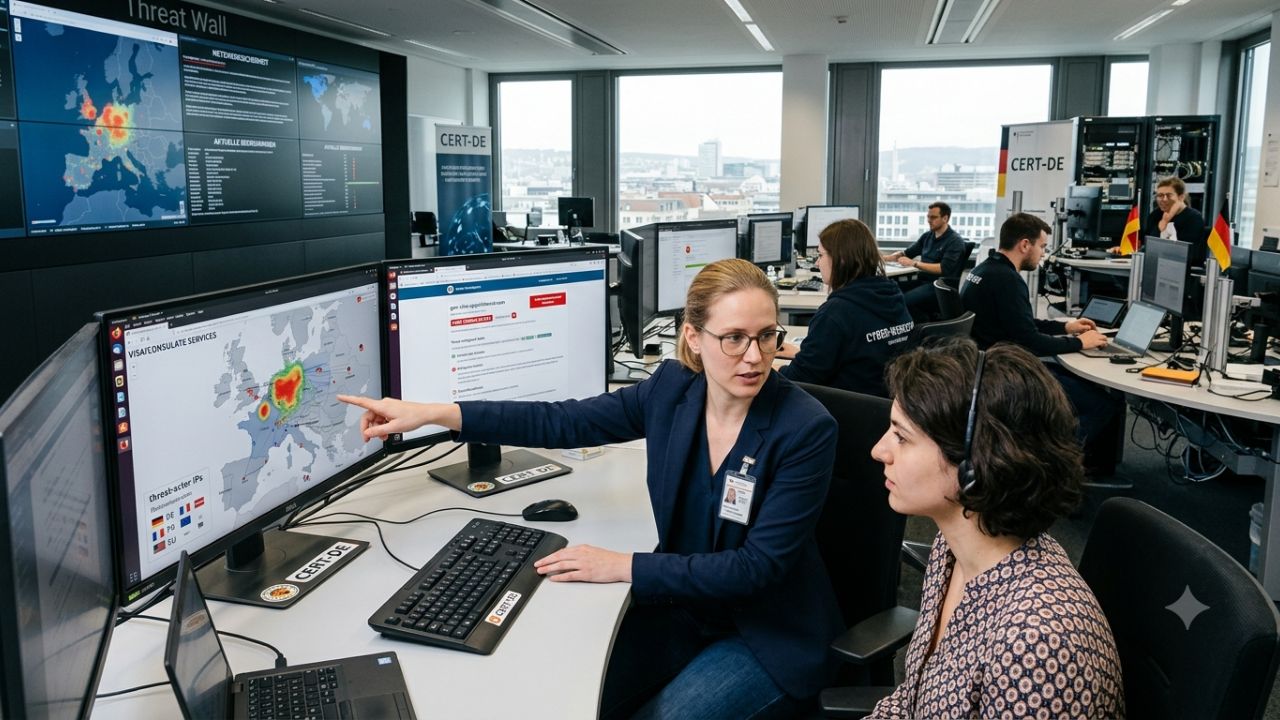
In an unprecedented cross-border cybersecurity offensive, federal police units and cyber-defense agencies across Germany, the Netherlands, and Belgium have united with Europol to dismantle an organized network of predatory visa clone portals, automated consular appointment-scalping syndicates, and fraudulent digital travel authorization platforms targeting millions of international travelers.
The multinational operation marks a pivotal tactical escalation in defending European borders in cyberspace. As international mobility surges and global governments accelerate the roll-out of electronic entry authorizations, organized cyber-syndicates have built industrial-scale digital traps. These criminal operations siphon off millions in extortionate fees, intercept sensitive biometric and identity documents, hoard diplomatic appointment quotas, and leave innocent tourists facing multi-year entry bans or denied boarding at departure gates.
ANATOMY OF THE TRAVEL VISA CYBER-EXPLOITATION FUNNEL
| Column 1 |
|---|
| Stage 1: Search Engine Manipulation (Deceptive sponsored Google/Bing ad bids) |
| v |
| Stage 2: Digital Government Spoofing (Faked coats of arms on .agency/.org domains) |
| v |
| Stage 3: Identity & Biometric Harvesting (Passports, home addresses, banking data) |
| v |
| Stage 4: Automated Consular Quota Hoarding (Bots corner VFS/TLS/BLS appointments) |
| v |
| Stage 5: Travel Fallout & Extortion (Fake paperwork, denied boarding, entry bans) |
The Modern Cyber-Syndicate Threat Landscape
Modern travel fraud has evolved far beyond clumsy phishing emails. Organized crime syndicates now run enterprise-grade software stacks, machine learning scrapers, and high-budget search engine ad campaigns that mimic official government infrastructure with unsettling precision.
These criminal enterprises target travelers at every step of their journey, capitalizing on the friction caused by differing national immigration policies and the debut of new digital travel rules.
| Entity / Route | Metrics | Operational Status |
|---|---|---|
| STAGE | FRAUD TACTIC | TRAVELLER EXPOSURE & FINANCIAL HARM |
| 01 | Search Engine Manipulation | High-bid sponsored ads divert searches |
| away from official .gov and .europa.eu | ||
| 02 | Identity & Financial Harvesting | Cloned forms capture complete passport |
| scans, banking data, and facial photos | ||
| 03 | Excessive Markup Extraction | Government permits marked up 300% to |
| 2,000% above official statutory rates | ||
| 04 | Consular Appointment Hoarding | Bot scripts monopolize free appointments |
| for illicit resale at €300 to €1,000+ | ||
| 05 | Border Disruption & Entry Bans | Forged itinerary records lead to visa |
| denials and multi-year Schengen bans |
Deceptive Visual Clones Masquerading as Official Agencies
Syndicates deploy pixel-perfect digital duplicates of genuine ministerial immigration portals. They copy national coats of arms, official EU border graphics, and authentic diplomatic typography.
Operating on deceptively framed top-level domains such as .agency, .us-visa-online.com, .schengen-portal.org, or .visa-assistance.net, these platforms give applicants a false sense of security while collecting their unencrypted passport scans, employment verification documents, and payment details.
Exploitation of Search Engine Optimization and Paid Ad Auctions
By outbidding government agencies on competitive Google and Bing search keywords like "Apply Schengen Visa Germany," "UK ETA official site," or "US ESTA fast track," rogue operators ensure their links appear above genuine sovereign domains. First-time international flyers, business executives rushing between continents, and non-native language speakers routinely mistake these sponsored links for official government portals.
Dark-Web Identity Auction Pipelines
The financial extraction does not end when an inflated credit card transaction processes. The passport scans, biometric self-portraits, national identification numbers, and residential records uploaded to these fake portals are compiled into identity databases and sold to dark-web brokers. These records fuel secondary loan fraud, synthetic identity theft, and cross-border financial deception.
The Global Authorization Landscape and Price Exploitation
The global transition from physical passport visa stamps to electronic travel authorizations has unintentionally created a lucrative attack surface for digital fraudsters. Because statutory authorization fees differ widely between sovereign jurisdictions, travelers unfamiliar with baseline government costs are easily swindled by inflated processing fees.
| Entity / Route | Metrics | Operational Status |
|---|---|---|
| AUTHORIZATION SYSTEM | STATUTORY GOVERNMENT FEE | ROGUE BROKER SCAM CHARGES |
| UK Electronic Travel | Official £16 | $80 to $150+ |
| Authorisation (ETA) | (Deceptive third-party markup) | |
| US Electronic System | Official $40.27 | $100 to $200+ |
| for Travel (ESTA) | (CBP statutory rate) | (Unnecessary handling markup) |
| Canada Electronic Travel | Official CAD $7 | $60 to $120+ |
| Authorization (eTA) | (Bogus express-service fees) | |
| Schengen Consular | Free or nominal service | €300 to €1,000+ |
| Appointment Slots | center fee (~€30-€40) | (Bot-hoarded appointment slots) |
| European Entry/Exit | 100% Free registration | $50 to $150 |
| System (EES) Checks | at border checkpoints | (Fake advance clearance pass) |
US ESTA and UK Electronic Travel Authorisation Vulnerabilities
The United States Electronic System for Travel Authorization (ESTA) carries an official statutory fee of $40.27 through the Customs and Border Protection platform. Copycat syndicates routinely charge $120 to $220, pocketing the difference under the guise of "document verification" or "vip queue jumping."
A similar scam has targeted the United Kingdom's Electronic Travel Authorisation (ETA). While the Home Office charges an official fee of £16, rogue platforms charge between $80 and $150, often submitting nothing to border systems and leaving travelers stranded at departure gates.
Schengen Consular Appointment Monopolization
Booking a consular appointment at diplomatic missions or authorized processing partners (such as VFS Global, TLScontact, or BLS International) has become a frustrating ordeal across key source markets in North Africa, South Asia, and the Middle East.
Cyber-syndicates deploy automated headless browser networks to refresh appointment calendars every split second, vacuuming up every open calendar slot across embassies in Berlin, Paris, Amsterdam, and Brussels within milliseconds.
These stolen slots are then resold on Telegram channels, WhatsApp broker networks, and black-market travel agencies for €300 to over €1,000 each, locking out ordinary travelers, students, and workers.
Exploiting New European Border Systems: EES and ETIAS
The phased rollout of the European Union's modernized Entry/Exit System (EES) has opened up another line of attack for scammers. Because EES captures biometric facial images and fingerprints at border control points across 29 European countries, scammers have taken advantage of public confusion. Hundreds of rogue websites have appeared claiming to sell "pre-registered digital biometric EES passes" for $50 to $150.
In reality, EES registration takes place exclusively in person at physical European port kiosks at zero cost. European law enforcement has also preemptively seized dozens of scam domains masquerading as official application portals for the upcoming European Travel Information and Authorization System (ETIAS), months before its operational debut.
Travelers can verify official EU border requirements directly via the European Union Official EES Portal, which provides verified guidance on biometric registration and entry requirements across the Schengen area.
The Tri-Nation Task Force: Germany, Netherlands, and Belgium
Recognizing that cyber-syndicates operate across international borders through distributed cloud servers and foreign bank accounts, law enforcement in Western Europe organized a coordinated joint strike force.
Germany, the Netherlands, and Belgium have pooled technical capabilities, cross-border jurisdiction, and financial tracing mechanisms through Europol to dismantle the digital operations running these visa scams.
| Entity / Route | Metrics | Operational Status |
|---|---|---|
| NATION / ENTITY | LEAD ENFORCEMENT AGENCIES | OPERATIONAL CORE SPECIALTY |
| Germany | Federal Criminal Police (BKA) | Forensic server tracking, |
| & Federal Police (Bundespolizei) | cryptocurrency tracing, | |
| dark-web forum infiltration | ||
| Netherlands | National Cyber Security Centre | Real-time domain seizure, |
| (NCSC) & High Tech Crime Unit | DNS sinkholing, reverse-IP | |
| botnet infrastructure probes | ||
| Belgium | Federal Computer Crime Unit | Judicial asset freezing, |
| (FCCU) & Federal Public Justice | European arrest warrants, | |
| payment gateway disruptions | ||
| Europol & | European Cybercrime Centre | Multi-jurisdictional data |
| INTERPOL | (EC3) & Financial Crime Taskforce | bridges, global alert feeds |
Germany: Technical Forensics and Cryptographic Tracing
The German Federal Criminal Police Office (Bundeskriminalamt - BKA), working alongside the Bundespolizei, leads the technical forensic investigations. German cyber investigators trace criminal proceeds laundered through cryptocurrency mixers, identify server hosting nodes in non-cooperative offshore jurisdictions, and expose developer rings producing appointment-scalping software.
The Netherlands: Domain Interdiction and Automated Takedowns
The Dutch National Cyber Security Centre (NCSC) and the National High Tech Crime Unit leverage their network infrastructure to disrupt domain names. Working with major domain registrars and internet registries, Dutch authorities have automated the identification, blacklisting, and DNS sinkholing of rogue visa domains before they can rank in organic search results.
Belgium: Legal Coordination and Financial Asset Freezing
Operating out of Brussels, the Belgian Federal Computer Crime Unit (FCCU) coordinates cross-border legal actions. Belgian magistrates expedite cross-border evidence collection, issue emergency asset-freeze orders on merchant accounts linked to deceptive payment processors, and file European Arrest Warrants against syndicate ringleaders.
TRI-NATION CYBER-STRIKE DEFENSE ARCHITECTURE (3 PILLARS)
| Column 1 |
|---|
| [PILLAR 1: TECHNICAL TAKEDOWNS] |
| * Automated web crawlers scan registrar logs for infringing domains |
| * Rapid DNS sinkholing redirects deceptive traffic to police warning splashpages |
| * Search engine ad coordinators de-index fraudulent commercial campaigns |
| [PILLAR 2: BOTNET & APPOINTMENT NEUTRALIZATION] |
| * Behavioral telemetry blocks automated scrapers on consular portals |
| * CAPTCHA hardening and session-fingerprint verification for booking platforms |
| * Mass cancellation of bot-harvested appointment slots across embassies |
| [PILLAR 3: FINANCIAL INTERDICTION] |
| * Immediate freezing of IBAN accounts holding illicit visa markups |
| * Blacklisting of syndicate cryptocurrency wallets across exchanges |
| * Coordinated payment gateway chargebacks protecting affected cardholders |
The Three Pillars of the Cyber-Strike Operation
The joint strike force operates across three tactical vectors to neutralize rogue visa syndicates from infrastructure to cash flow:
Pillar 1: Automated Infrastructure Takedowns and DNS Sinkholing
Using automated machine-learning web scanners, the task force monitors domain name registrars for suspicious registrations containing terms like esta-official-gov, apply-schengen-schengenvisa, ees-europe-pass, or germany-consular-portal.
Once a site is confirmed as an unauthorized spoof of government assets, Dutch and German cyber teams issue emergency administrative takedowns, sinkholing the domain at the DNS level and rerouting visitor traffic to official law enforcement advisory pages.
Pillar 2: Neutralizing Appointment Scalper Bots
To curb the black-market resale of consular appointments, the coalition works directly with external visa service providers (VFS Global, TLScontact, BLS International) to upgrade their digital defenses.
By adding behavioral telemetry, device fingerprinting, and cryptographic token verification to appointment booking systems, consular portals can now block automated scripts in real time. Thousands of appointments hoarded by bot rings have been canceled and returned directly to public consular calendars.
Pillar 3: Financial Interdiction and Payment Gateway Sanctions
A cyber-syndicate cannot operate without access to the financial system. Working alongside the European Banking Authority and international card networks, Belgian and German authorities identify merchant IDs and virtual IBAN accounts used by these scam platforms.
Accounts are frozen under anti-money laundering provisions, preventing the payout of illicit profits and triggering automatic chargebacks for victimized travelers who file disputes through their card issuers.
The True Cost of Visa Fraud: How Travelers Suffer
The fallout from counterfeit visa platforms goes far beyond losing a $100 service fee. When travelers place their immigration records in the hands of illegal operators, they risk serious legal consequences.
| Entity / Route | Metrics | Operational Status |
|---|---|---|
| LEVEL | FRAUD TYPE | IMPACT ON INTERNATIONAL TRAVELLERS |
| CRITICAL | Falsified Documentation | Permanent immigration red flags, consular |
| Submitted by Unlicensed | fraud inquiries, and 3 to 10-year | |
| Intermediaries | Schengen entry bans | |
| HIGH | Counterfeit Electronic | Immediate denied boarding at airline gate, |
| Authorizations (ESTA/ETA) | forfeited airfare, and stranded journeys | |
| HIGH | Identity & Passport Theft | Exploitation of personal credentials for |
| fraudulent loans and cross-border crimes | ||
| MODERATE | Inflated Processing Fees | 300% to 2,000% markups on government fees |
| that are otherwise free or nominal |
Entry Bans Triggered by Forged Documents
To guarantee approvals, unlicensed visa brokers often submit fake hotel bookings, counterfeit round-trip airline tickets, or forged bank statements alongside legitimate client details. When consular officers detect these fabrications, the legal penalty falls entirely on the applicant, not the broker.
Under Article 32 of the Schengen Visa Code, submitting falsified paperwork results in an immediate visa refusal and a multi-year ban from entering all 29 Schengen member states.
Airport Gate Denials and Stranded Passengers
Many counterfeit platforms take payment, generate an impressive PDF confirmation with an official-looking coat of arms, and never transmit the data to national border agencies. Travelers arrive at departure gates only to discover that airline check-in agents have no record of their US ESTA or UK ETA on the automated carrier database.
Boarding is denied on the spot, and non-refundable flights, connections, and hotel reservations are lost without compensation.
Blackmail and Post-Application Extortion
Once syndicates capture an applicant's complete dossier—including passport details, employment history, family contacts, and home addresses—bad actors often demand second and third payments. Travelers report receiving threatening emails claiming their entry permits have been flagged for "customs irregularities" and demanding urgent wire transfers to avoid criminal arrest at border checkpoints.
Official vs. Fraudulent Portals: Verification Checklist
International travelers can safeguard their finances and personal records by checking immigration portals against clear operational red flags before entering sensitive data.
| Entity / Route | Metrics | Operational Status |
|---|---|---|
| FACTOR | VERIFIED OFFICIAL PORTAL | FRAUDULENT LOOKALIKE PORTAL |
| Domain Extension | Restricted sovereign suffixes: | Commercial domains: |
| .gov, .gov.uk, .europa.eu | .com, .net, .org, .us, .agency | |
| Search Placement | Organic sovereign indexing | Labeled "Sponsored" or "Ad" |
| with verified security seal | atop commercial search pages | |
| Pricing Policy | Fixed statutory price; | Vague base price with added |
| zero hidden processing fees | "priority expediting fees" | |
| Approval Claims | Explicit warnings that consular | Guarantees of "100% approval" |
| decisions rest with diplomats | or "express VIP issuance" | |
| Biometric System | Explicit notice that biometric | Demands upfront online fees |
| Rules (EES) | checks take place in person | to "pre-clear" digital photos |
Crucial Practical Rules for Travelers
- Examine the Domain Suffix: Legitimate government platforms operate on restricted top-level domains. Official United States immigration sites always end in
.gov(such asesta.cbp.dhs.gov). United Kingdom portals end in.gov.uk. European Union portals end in.europa.eu. Avoid commercial extensions like.com,.info,.org, or.ccwhen seeking official authorizations. - Never Buy Consular Appointments on Social Media: Legitimate appointment slots at VFS Global, TLScontact, and BLS International are nontransferable and assigned to the applicant's unique passport number. Buying appointment times from brokers on Instagram, Telegram, or Facebook yields invalid bookings that will be rejected at the visa center door.
- Ignore Guarantees of Visa Issuance: Sovereign visa decisions are made exclusively by consular officers and diplomats. No commercial agency, expat advisor, or third-party lawyer can guarantee an entry permit or speed up background checks.
- Remember EES Biometrics Are Always Free: The European Entry/Exit System does not collect online payments or process biometric files through commercial websites. If a website asks for money to register your face or fingerprints for European border entry, it is a scam.
Immediate Action Plan for Scammed Travelers
Travelers who realize they have shared personal documents or made payments to an unauthorized platform must act quickly to limit financial loss and identity exposure.
| Entity / Route | Metrics | Operational Status |
|---|---|---|
| STEP | IMMEDIATE ACTION REQUIRED | PURPOSE & STRATEGIC OUTCOME |
| 01 | Freeze payment cards & initiate | Stops unauthorized secondary billing and |
| fraud chargebacks with your bank | launches recovery of stolen application | |
| fees via card scheme consumer protections | ||
| 02 | Check genuine government portals | Determines whether any official entry |
| using official passport numbers | application was actually lodged or if the | |
| confirmation receipt was completely faked | ||
| 03 | Report passport data theft to | Flags exposed passport credentials to |
| national issuing authorities | prevent identity fraud and unauthorized | |
| border crossings under your identity | ||
| 04 | File reports with specialized | Feeds actionable digital intelligence to |
| cybercrime enforcement bureaus | BKA, Europol, FTC, and Action Fraud to | |
| aid active domain and server takedowns |
Step 1: Secure Accounts and Initiate Payment Chargebacks
Call your bank or credit card company immediately. Request a freeze or cancellation on the card used on the fraudulent portal, and contest the charges under fraud or unfair commercial practice provisions. Card networks maintain strict liability protocols for merchants operating misleading digital portals.
Step 2: Verify Application Status on Genuine Government Portals
Visit genuine sovereign portals—such as the official US CBP ESTA portal, the UK Home Office portal, or the relevant embassy website—and enter your passport number to check if an authorization was submitted. Do not rely on email receipts or registration numbers issued by third-party intermediaries.
Step 3: Protect Your Passport and Identity
If you uploaded high-resolution scans of your passport, driver's license, or national identity card to an untrusted portal, inform your national passport authority immediately. Many consular services can place fraud alerts on exposed passport numbers to block unauthorized attempts to open credit lines or cross borders under your identity.
Step 4: Report the Incident to National Cybercrime Authorities
Submit detailed reports—including URLs, IP addresses, transaction receipts, and correspondence—to official cyber-reporting portals:
- Germany: Report directly via the digital crime portal of the Bundeskriminalamt.
- United Kingdom: File an incident report with Action Fraud.
- United States: Submit an online complaint with the Internet Crime Complaint Center (IC3) and the Federal Trade Commission.
- European Union: Direct reports through national police portals, which share case details with Europol's European Cybercrime Centre (EC3).
The Future of Digital Border Security
The joint strike force assembled by Germany, the Netherlands, and Belgium represents a modern defense model for international travel security. As border networks transition to automated biometric gates and electronic clearance, the frontline of immigration enforcement will increasingly be fought in the server room and registry database.
Through coordinated real-time intelligence sharing, automated DNS takedowns, and aggressive disruption of fraudulent payment gateways, European law enforcement is working to ensure that the shift toward seamless digital travel does not leave travelers vulnerable to international cyber syndicates.
Frequently Asked Questions
What official fees apply to UK ETA and US ESTA authorizations?
The statutory fee for a UK Electronic Travel Authorisation is £16 through the official UK government portal. The official US ESTA costs $40.27 via the CBP portal. Any website charging higher amounts is an unauthorized third-party intermediary or an outright scam.
Does the European Entry/Exit System charge an advance online registration fee?
No. The European Entry/Exit System collects biometric details exclusively in person at official border checkpoints at zero cost. Websites demanding advance online payments or pre-registration fees for EES are fraudulent platforms targeting confused travelers.
Can an agency guarantee a Schengen visa approval or appointment?
No third-party broker or commercial agency can guarantee Schengen visa approvals or hold proprietary access to consular appointment schedules. Visa issuance decisions are made exclusively by diplomatic consulates, and genuine appointments are assigned strictly to individual passport holders.
What should I do if I shared my passport scan with a scam website?
Notify your national passport issuing authority immediately to flag potential identity fraud. Contact your financial institution to freeze payment cards used on the platform, and submit a formal incident report to national cybercrime agencies like the BKA, FTC, or Action Fraud.
Related Travel Guides
Disclaimer
This article is for informational and educational purposes only. It does not constitute legal, financial, or professional advice. While we strive to provide accurate and up-to-date information, travel policies, regulations, and conditions change rapidly. Always verify information with official sources before making travel decisions. Nomad Lawyer makes no representations about the accuracy, reliability, completeness, or suitability of the information provided. Readers should consult qualified professionals for advice specific to their circumstances. The views expressed in this article are those of the author and do not necessarily reflect the views of Nomad Lawyer.
Raushan Kumar
Founder & Lead Developer
Full-stack developer with 11+ years of experience and a passionate traveller. Raushan built Nomad Lawyer from the ground up with a vision to create the best travel and law experience on the web.
Learn more about our team →