
Germany Set to Boost Tourism in Lithuania as airBaltic Makes Berlin-Vilnius Route Permanent
airBaltic permanently establishes the Berlin Brandenburg to Vilnius route, providing year-round daily connections and boosting German arrivals in Lithuania.

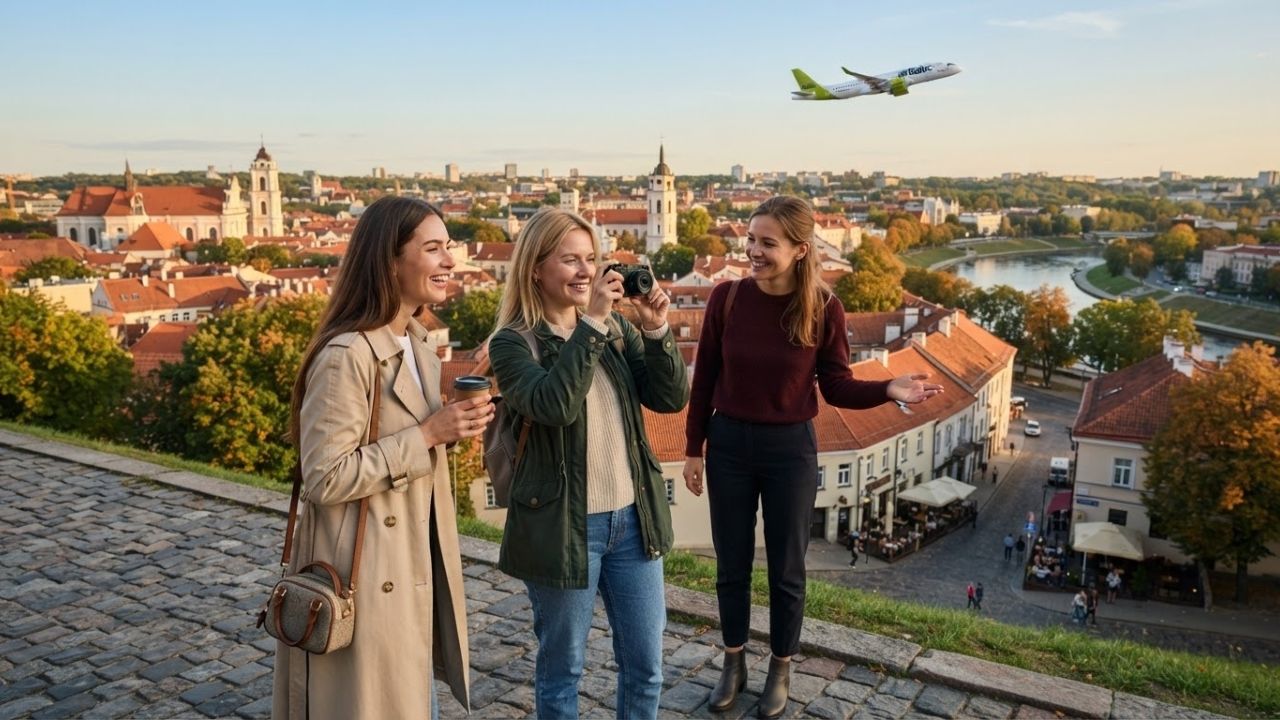
Image generated by AI
A major aviation expansion is set to boost travel between Germany and the Baltics, as airBaltic transitions its Berlin to Vilnius route into a permanent, year-round service. The flight coordinates daily connections to support business and leisure visitors, strengthening bilateral tourism ties between the two capitals.
The European aviation sector is experiencing a transition as regional connectivity becomes central to economic strategies. Unlike Central Europe, which benefits from extensive rail networks, the Baltic states rely heavily on air corridors to maintain contact with major Western European economies.
By upgrading the Berlin to Vilnius route from a seasonal service to a permanent, daily fixture, airBaltic is establishing a year-round economic pathway, ensuring that tourists, corporate investors, and cultural professionals have uninterrupted access to Lithuania.
Year-Round Baltic Aviation and the Berlin-Vilnius Flight Schedule
The flight distance between Berlin Brandenburg Airport (BER) and Vilnius Airport (VNO) spans approximately 822 kilometers (511 miles). The direct flight registers a convenient travel time of 1 hour and 30 minutes to 1 hour and 35 minutes. Operations depart from Terminal 1 in Berlin, offering daily departures to cater to both early-morning corporate travel and late-evening leisure flights (with times ranging from 08:30 to 21:50).
To support this expansion, airBaltic exclusively deploys the Airbus A220-300 on this route. This aircraft features wider seats, larger windows, and a reduced noise footprint, alongside a 25% reduction in fuel burn per seat compared to previous-generation models. This efficiency aligns with municipal carbon reduction targets, offering a sustainable option for eco-conscious travelers.
Analyzing the Tourism Surge and Germany's Role in Lithuanian Arrivals
German travelers represent a primary source market for the Baltic tourism sector. According to data compiled by Statistics Lithuania (Oficialiosios Statistikos Portalas), the country’s accommodation establishments welcomed 3.8 million tourists in 2022, representing a 1.5 times increase compared to 2021. Foreign visitors accounted for 30.1% of this total.
German arrivals are highly significant within these figures:
- Accommodated Tourists: In 2022, 99.0 thousand German visitors stayed in Lithuanian accommodations, representing 8.6% of all international travelers and positioning Germany as a top source market alongside Latvia and Poland.
- Organized Travel Segment: Out of 103.4 thousand foreigners who used travel agencies or tour operators in 2022, a majority of 43.7% arrived from Germany, followed by France at 10.4% and Israel at 7.8%.
Additionally, global benchmarks illustrate the economic weight of travel, with international tourism GDP reaching $81.1 billion for the 2024-25 financial year, showing a 3.8% increase and accounting for 2.9% of total GDP. In June 2025, there were 361,000 active tourism-related businesses globally, accounting for 13.2% of active commercial enterprises. The hospitality sector supports 727,000 jobs as of March 2026 (a 4% year-on-year increase, representing 4.5% of the workforce), with the food and beverage services sector employing 12% of temporary residents.
Eco-Efficient A220-300 Operations and Airline Competition
The Berlin-Vilnius route is not a monopoly. Ryanair also operates non-stop flights on this sector utilizing Boeing 737-800 and 737 MAX 8 aircraft. This competition between low-cost carriers and hybrid airlines helps keep passenger fares affordable—with tickets starting between €39 and €45—while encouraging improvements in onboard service and schedules.
The transition to a permanent year-round route allows tour operators and travel agencies in both countries to market off-season packages, including autumn food tours, winter wellness retreats, and spring cultural breaks, which helps reduce the seasonal concentration of arrivals.
Local Visitor Guide and Vilnius Cultural Etiquette
To help you plan your Baltic itinerary and explore Lithuania's unique heritage:
- Public Transit in Vilnius: Vilnius Airport is located just 6 kilometers from the city center. You can take a local train from the airport station directly to the Vilnius Central Railway Station (a 7-minute journey costing less than €2).
- Understanding Local Etiquette: Lithuanians appreciate polite and quiet interactions in public spaces. When visiting historic churches, speak softly and dress respectfully.
- Explore Beyond the Capital: Use the year-round flights to visit regional destinations, such as the Curonian Spit (a UNESCO World Heritage site known for its dramatic sand dunes), the modernist architecture of Kaunas, or the lakeside Trakai Island Castle.
- Local Culinary Specialties:
- Cepelinai: Try the national dish of potato dumplings stuffed with meat and served with a sour cream and bacon sauce.
- Šaltibarščiai: Sample the famous cold beet soup, instantly recognizable by its bright pink color, typically served with hot boiled potatoes.
- Off-Peak Visit Windows: Visit Vilnius in May or September to enjoy mild temperatures and long daylight hours. December is also a popular time to explore the city's traditional Christmas markets.
Future Projections for Regional Dispersal and MICE Tourism Growth
The permanent air link aligns with route development programs managed by Lithuanian Airports (LTOU) and national marketing campaigns from Lithuania Travel. By establishing daily connectivity, Vilnius is improving its competitiveness in the Meetings, Incentives, Conferences, and Exhibitions (MICE) market, attracting corporate delegations from Germany.
Over the coming years, the daily service is expected to support business partnerships and foreign direct investment in the automotive and technology sectors. By providing a reliable transport link, airBaltic helps integrate the Baltic region with Western Europe, securing a sustainable future for international trade, travel, and cultural exchange.
Related Travel Guides
Disclaimer
This article is for informational and educational purposes only. It does not constitute legal, financial, or professional advice. While we strive to provide accurate and up-to-date information, travel policies, regulations, and conditions change rapidly. Always verify information with official sources before making travel decisions. Nomad Lawyer makes no representations about the accuracy, reliability, completeness, or suitability of the information provided. Readers should consult qualified professionals for advice specific to their circumstances. The views expressed in this article are those of the author and do not necessarily reflect the views of Nomad Lawyer.
Kunal K Choudhary
Co-Founder & Contributor
A passionate traveller and tech enthusiast. Kunal contributes to the vision and growth of Nomad Lawyer, bringing fresh perspectives and driving the community forward.
Learn more about our team →