
Frontier Airlines A321neo Strikes Pedestrian at 127 Knots During Denver Takeoff: Fatal Collision Triggers Engine Fire and Runway Evacuation for 231 Passengers; Major NTSB Investigation Underway
A horrific security breach at Denver International Airport (DEN) resulted in a fatality and a major aircraft fire on May 8, 2026, when a Frontier Airlines Airbus A321neo struck a trespasser during its takeoff roll. Flight F94345 was forced to abort at a high speed of 127 knots, leading to an engine blaze and the emergency evacuation of 231 souls. The NTSB is now investigating how the individual bypassed perimeter security to reach the active runway.

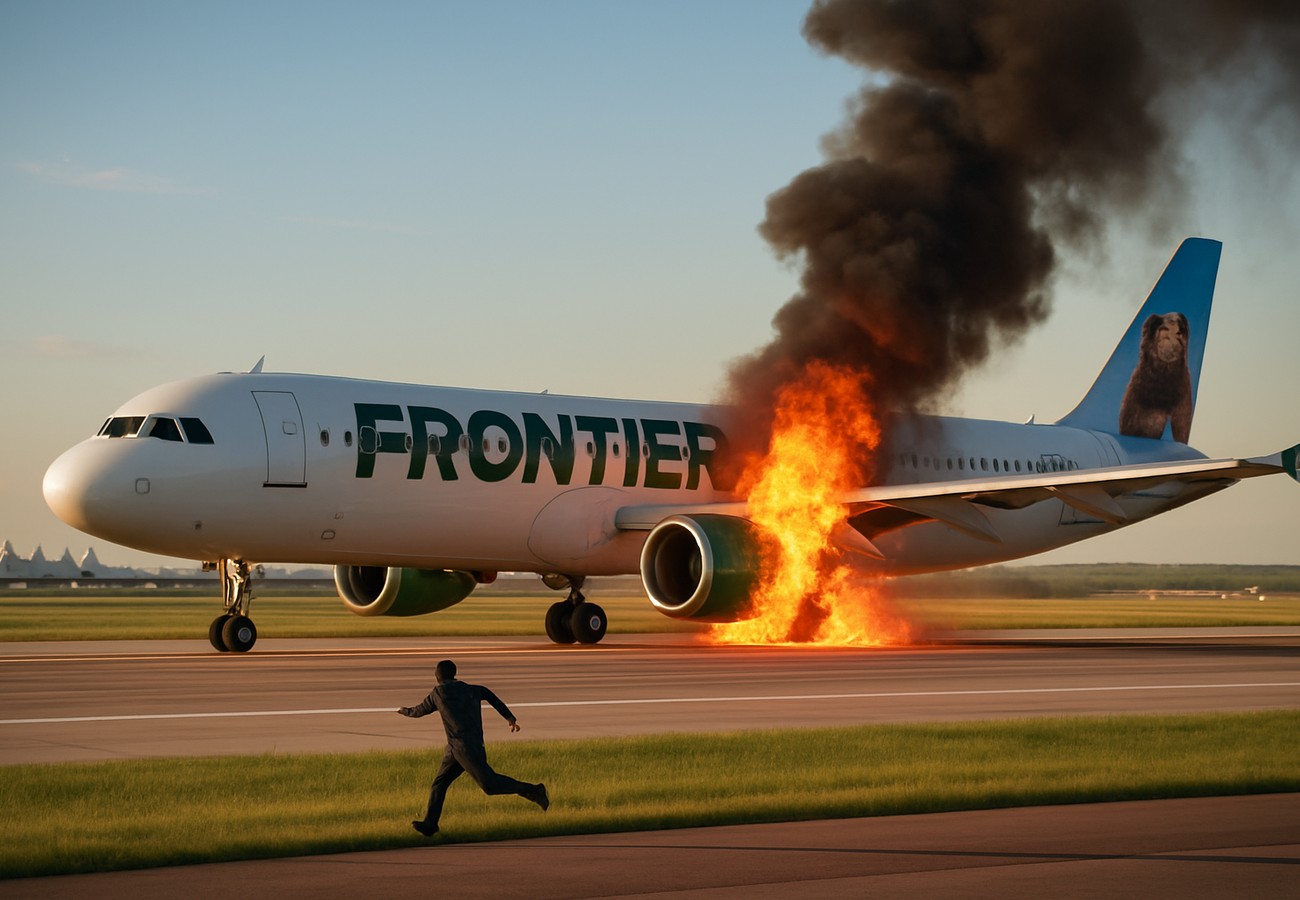
Tragedy at 127 Knots: Frontier Flight F94345 evacuated on the runway after a fatal collision.
Frontier Airlines Jet Strikes Trespasser at Denver International Airport: Fatal Impact at 127 Knots Triggers Engine Fire and Runway Evacuation; Major Aviation News and Security Alert
In a uniquely tragic and horrifying intersection of a security failure and an operational disaster, a Frontier Airlines Airbus A321neo struck and killed a pedestrian during its takeoff roll at Denver International Airport (DEN). This airline news update, confirmed on May 11, 2026, details the harrowing sequence of events on the night of May 8, when Flight F94345, bound for Los Angeles (LAX), was forced to execute a high-speed rejected takeoff at 127 knots. The impact resulted in a fatal injury to the trespasser and a subsequent engine fire that necessitated the emergency evacuation of 231 passengers and crew directly onto the active runway.
The National Transportation Safety Board (NTSB) has launched a top-tier investigation into the incident, focusing not only on the mechanical failure of the engine following the strike but on the catastrophic breach of perimeter security at one of the world’s busiest aviation hubs. As the "Mile High" city grapples with the aftermath, the aviation community is demanding answers on how an unauthorized individual managed to reach a live runway during the critical phase of flight.
Expanded Overview: The 127-Knot Nightmare
The incident involving Flight F94345 is a stark reminder of the "Critical Intersection" of airport security and flight safety. This aviation update reveals that the aircraft, a two-year-old Airbus A321neo (Registration: N646FR), was accelerating down Runway 17L shortly before 11:20 PM. As the jet reached 127 knots—nearly the point of rotation—an individual who had scaled the airport’s perimeter fence appeared in the aircraft’s path.
The pilot’s decision to abort the takeoff at such a high speed was both necessary and violent. An "Aborted Takeoff" (RTO) at 127 knots places extreme thermal stress on the aircraft’s braking system and tires. Following the impact, a fire erupted in one of the engines, leading to a tense exchange between the flight deck and the air traffic control tower. The crew’s swift decision to evacuate the 231 people onboard likely prevented a larger catastrophe, though 12 passengers sustained injuries during the slide evacuation.
Section-Wise Breakdown: Security Failure and Operational Crisis
The Takeoff Roll Disaster: Flight F94345
As the Frontier jet roared down Runway 17L, the crew was faced with every pilot’s worst-case scenario. The impact with the pedestrian at 127 knots caused immediate damage to the aircraft’s power plant, triggering fire alarms in the cockpit. The high-speed abort required the full application of the A321neo’s braking power, which, combined with the engine damage, led to the blaze on the runway.
The Security Breach: Scaling the Perimeter
The most disturbing aspect of the investigation is the timeline of the intrusion. Airport surveillance footage confirms that the individual, who had no operational affiliation with the airport, scaled the perimeter fence just two minutes before the collision. Despite no visible damage to the fencing, the trespasser was able to bypass security measures and reach the active runway area in a window of time too short for ground personnel or ATC to detect and react.
The Evacuation: 12 Injured in Runway Chaos
Following the stop, the order to "Evacuate, Evacuate, Evacuate" was given. Of the 231 people onboard, 12 passengers suffered minor injuries during the rapid exit via emergency slides. Five individuals required hospitalization for further evaluation. Meanwhile, emergency fire crews at DEN responded with a "Tactical Blitz," extinguishing the engine fire before it could penetrate the wing’s fuel tanks.
Frontier Flight F94345: Incident Metrics & Profile
The following table outlines the technical and operational details of the Denver collision.
Frontier Airlines: Flight F94345 Incident Summary
| Metric | Detail | Status / Outcome |
|---|---|---|
| Aircraft Type | Airbus A321neo (N646FR) | Engine Fire / Grounded |
| Route | Denver (DEN) → Los Angeles (LAX) | Aborted Takeoff |
| Speed at Impact | 127 Knots | High-Speed RTO |
| Total Onboard | 231 (Pax + Crew) | All Safely Evacuated |
| Passenger Injuries | 12 Minor | 5 Hospitalized |
| Fatality | 1 (Pedestrian) | Fatal Impact |
| Investigating Agency | NTSB / FAA | Active Investigation |
Source: NTSB Initial Report and Denver International Airport Operations. Data as of May 11, 2026.
Passenger Impact: Terror in the Cabin
For the 225 passengers bound for Los Angeles, the experience was one of sudden, jarring terror:
- The Abort: The violent deceleration of a high-speed RTO can cause minor cabin items to become projectiles, adding to the confusion of the initial impact.
- The Fire: Passengers on the wing-side of the aircraft reported seeing an orange glow and thick smoke emanating from the engine nacelle immediately after the stop.
- The Darkness: The evacuation took place in the near-total darkness of the Denver airfield, with passengers being bussed back to the terminal under heavy security and medical escort.
Industry Analysis: The Physics of the High-Speed Abort
Aviation analysts suggest that an RTO at 127 knots is an "Extreme Stress Event." While pilots train for rejected takeoffs, most training focuses on the "V1" decision point—usually lower than 127 knots for an A321neo in many configurations. The fact that the crew managed to stop the aircraft and evacuate 231 people without a single onboard fatality is a testament to Frontier’s training protocols. However, the industry is now focused on the "Fence Breach" problem. If a modern, high-tech hub like DEN can be breached in 120 seconds, the perimeter security at airports nationwide will likely face a mandatory federal audit.
Conclusion: A Search for Answers at the Mile High Hub
As the NTSB continues its meticulous review of the surveillance footage and flight data, the tragedy of May 8, 2026, looms large over the aviation community. A Frontier jet is charred, a trespasser is dead, and 231 people are left with the trauma of a runway fire. Denver International Airport has pledged full cooperation, but the question remains: how can we prevent the next "Invisible Intrusion"? For now, Flight F94345 stands as a sobering reminder of why vigilance must extend far beyond the boarding gate.
Key Takeaways
- Frontier Airlines A321neo struck a pedestrian at 127 knots during takeoff at DEN.
- Engine fire and high-speed rejected takeoff led to an emergency runway evacuation.
- All 231 passengers and crew survived; 12 passengers suffered minor injuries.
- Tragically, the pedestrian lost their life in the high-speed collision.
- Security breach occurred just 2 minutes before the impact; trespasser scaled the fence.
- NTSB is leading a major investigation into the perimeter failure and engine fire.
- Frontier aircraft N646FR was delivered only two years ago and sustained significant damage.
/article-footer-standard
Related Travel Guides:
Disclaimer
This article is for informational and educational purposes only. It does not constitute legal, financial, or professional advice. While we strive to provide accurate and up-to-date information, travel policies, regulations, and conditions change rapidly. Always verify information with official sources before making travel decisions. Nomad Lawyer makes no representations about the accuracy, reliability, completeness, or suitability of the information provided. Readers should consult qualified professionals for advice specific to their circumstances. The views expressed in this article are those of the author and do not necessarily reflect the views of Nomad Lawyer.
Kunal K Choudhary
Co-Founder & Contributor
A passionate traveller and tech enthusiast. Kunal contributes to the vision and growth of Nomad Lawyer, bringing fresh perspectives and driving the community forward.
Learn more about our team →