
World Cup Teams Arrive in Luxury: Airlines Deploy Premium Aircraft and Custom Liveries for 2026 Tournament
Breaking airline news and aviation industry updates for 2026.

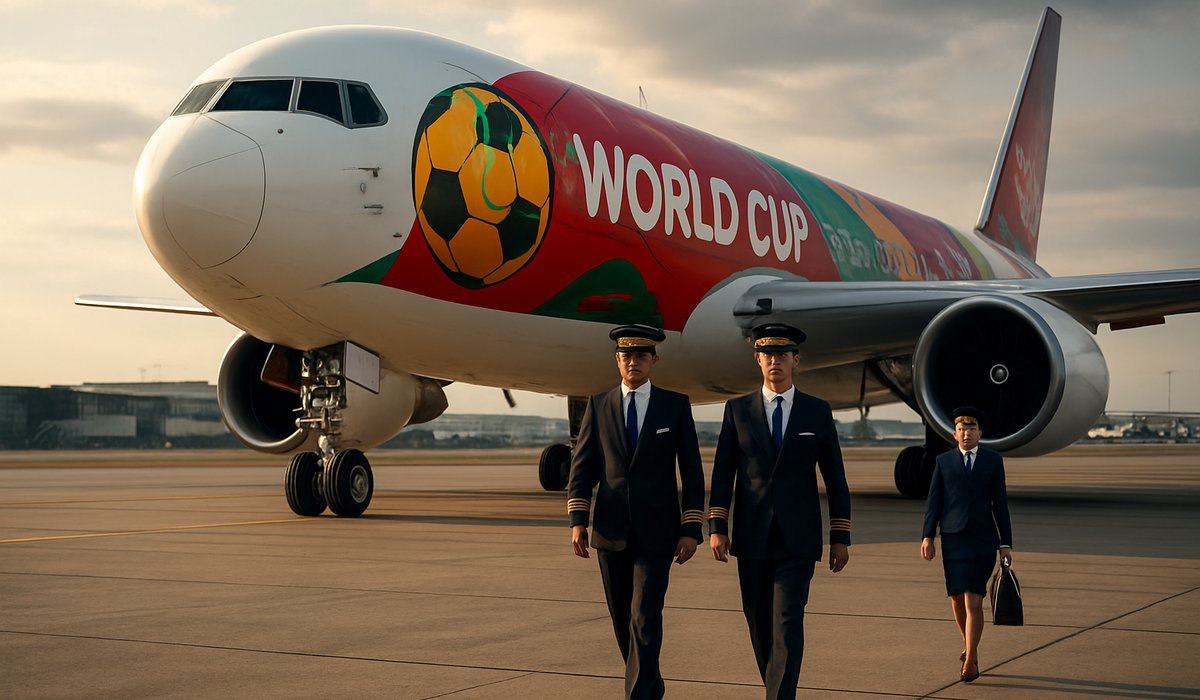
Image generated by AI
World Cup Teams Arrive in Luxury: Airlines Deploy Premium Aircraft and Custom Liveries for 2026 Tournament
National delegations leverage high-profile aviation to amplify tournament prestige ahead of matches in the United States
Tournament Travel Becomes Centerpiece of Global Spectacle
As international football delegations converge on the United States for the 2026 FIFA World Cup, airlines and national federations are transforming team transportation into a high-stakes showcase of national identity and organizational prestige. The arrival phase of the tournament has evolved beyond logistical necessity, with carriers deploying premium widebody aircraft, bespoke paint schemes, and VIP configurations that signal each nation's commitment to the competition.
Brazil's delegation has emerged as the most visible example of this trend, traveling via a privately chartered Boeing 767—a twin-engine widebody that has become emblematic of the tournament's aviation footprint. The aircraft movement underscores a broader pattern across participating nations, where travel arrangements serve as an extension of competitive preparation and diplomatic messaging.
Custom Liveries and Fleet Upgrades Define Tournament Aviation
Beyond Brazil's high-profile charter, several national airlines supporting World Cup teams have introduced special tournament liveries and cabin configurations designed to celebrate participating nations. These aircraft modifications—ranging from exterior graphics to upgraded seating arrangements—represent significant investments in brand visibility during a global sporting event anticipated to attract billions of viewers.
The deployment of widebody jets for team transport reflects the operational demands of moving large delegations, coaching staff, medical teams, and equipment across North American venues. Airlines have coordinated closely with football federations to ensure flight schedules accommodate training sessions, media obligations, and strategic preparation windows leading into matches.
Industry Context: Premium Aviation and Tournament Economics
The aviation sector's prominent role in World Cup logistics demonstrates the intersection of sports marketing and commercial aviation. Charter operators and legacy carriers have capitalized on tournament demand, with premium configurations commanding significant premiums during the competition window. Fuel costs, crew requirements, and landing fees at major U.S. hubs have contributed to elevated transportation expenses for participating nations.
The visibility of aircraft arrivals—often broadcast across social media and sports networks—has transformed team travel into a marketing asset for both airlines and national football associations. Each touchdown represents an opportunity to reinforce national branding before supporters and international audiences.
What Lies Ahead for Tournament Transportation
As additional teams arrive throughout the coming weeks, the aviation dimension of the 2026 World Cup will continue shaping how nations project confidence and organizational excellence. The interplay between fleet selection, visual branding, and operational logistics underscores how modern sports tournaments leverage every element—including air travel—to amplify global impact.
FAQ: World Cup Teams and Aviation
Q: Why do World Cup teams fly on chartered aircraft instead of commercial airlines? A: Chartered flights provide flexibility for team schedules, direct routing to training facilities, privacy for strategic discussions, and customizable cabin configurations that accommodate large delegations and specialized equipment.
Q: How much does it cost to charter a Boeing 767 for international travel? A: Charter costs for widebody aircraft typically range from $100,000 to $300,000+ per flight hour, depending on availability, distance, and market conditions during peak sporting events.
Q: What are special liveries in aviation? A: Special liveries are custom paint schemes applied to aircraft exteriors, featuring national colors, tournament branding, or commemorative designs that enhance visibility and create lasting promotional impact.
Q: How do fuel prices affect World Cup team transportation costs? A: Rising jet fuel prices directly increase charter operating expenses, which federations must absorb through travel budgets or cost-sharing arrangements with sponsorship partners.
Q: Which airlines typically support international football delegations? A: Major carriers like LATAM, Air France, Lufthansa, and specialized charter operators like VistaJet and XO provide tournament support, with selection based on route availability, capacity requirements, and national partnerships.
Related Travel Guides
- Flights Cancelled Throughout Asia As Singapore, Delhi, and 20 Other Airports Face 106 Cancellations And 1,578 Delays, Impacting Travel
- Breaking Airline News: Fiji Airways Launches Direct Nadi-Gold Coast Route to Shield Tourists from Travel Chaos
- Capital Region International (LAN) Hit by Targeted Schedule Cuts: SkyWest and Endeavor Air Ground 4 Flights to Detroit and Cincinnati; Major Aviation Updates for Michigan’s Regional Gateway
Disclaimer
This article is for informational and educational purposes only. It does not constitute legal, financial, or professional advice. While we strive to provide accurate and up-to-date information, travel policies, regulations, and conditions change rapidly. Always verify information with official sources before making travel decisions. Nomad Lawyer makes no representations about the accuracy, reliability, completeness, or suitability of the information provided. Readers should consult qualified professionals for advice specific to their circumstances. The views expressed in this article are those of the author and do not necessarily reflect the views of Nomad Lawyer.
Raushan Kumar
Founder & Lead Developer
Full-stack developer with 11+ years of experience and a passionate traveller. Raushan built Nomad Lawyer from the ground up with a vision to create the best travel and law experience on the web.
Learn more about our team →