
EU Biometric Border System Chaos Sparks Strains at European Hubs
British Airways, Ryanair, and EasyJet raise alarms over EU digital border system chaos, warning of 5-hour queues and boarding delays at key European hubs.

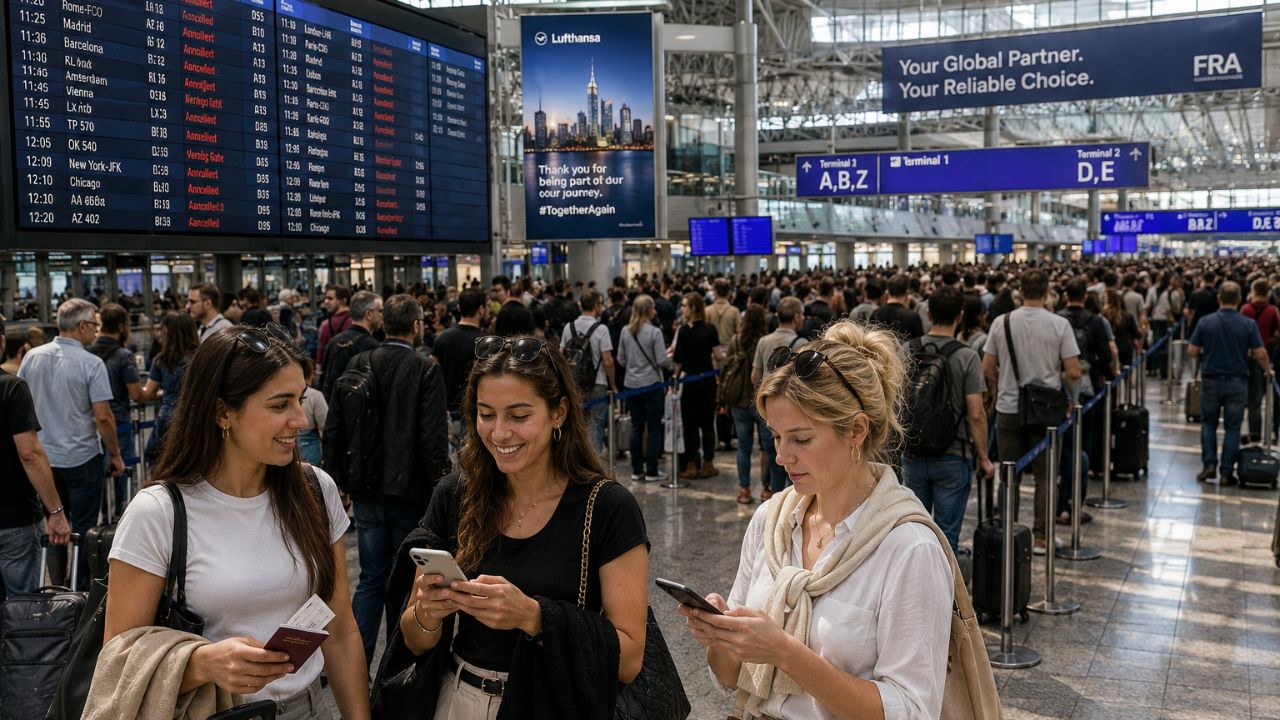
Image generated by AI
[Frankfurt, Germany – July 2, 2026] — Severe EU digital border system chaos is disrupting passenger flows at Frankfurt, Paris Charles de Gaulle, Fiumicino, and Ciampino airports, causing queues of up to five hours. Leading airlines, including British Airways, Ryanair, and EasyJet, are warning of cascading delays and missed connections across the Schengen region as summer traffic peaks. Aviation planners indicate that the slow biometric verification process is pushing terminal infrastructure beyond its limits.
Severe Congestion and Boarding Delays at Major Gateways
Under the new Schengen security protocols, passengers entering or leaving the zone must undergo biometric registration, including fingerprint scans and facial imaging. The transition from manual passport stamping to biometric database entry has significantly slowed down customs processing. Airport operators report that immigration clearance times have increased by up to 70 percent since the system's launch.
Consequently, passenger backlogs are growing rapidly at high-volume hubs. Security queues at Frankfurt Airport (FRA) and Paris Charles de Gaulle (CDG) are stretching into airport lobbies during peak departure hours. In several instances, aircraft have departed with empty seats because booked passengers were unable to clear passport control before their scheduled flight departure slots.
Major Airlines Join Forces to Alarm Regulatory Authorities
The operational strain has led to coordinated action from the continent's largest carriers. In a joint appeal to European Commission regulators, airline groups and airport representatives warn that the current border infrastructure cannot handle peak summer volumes. Carrier networks are facing daily schedule disruption due to boarding delays at European customs gates.
Aviation representatives from Airlines for Europe (A4E) are requesting temporary flexibility measures to prevent a complete system breakdown. They urge member states to suspend the biometric registration requirement during periods of extreme terminal congestion. Without immediate regulatory relief, airlines warn that flight delays will intensify as passenger traffic increases.
Key Takeaways of the Schengen Border Congestion
- Hub Bottlenecks: Five-hour queues are reported at Frankfurt, Paris CDG, Rome Fiumicino, and Ciampino airports.
- Carrier Alarms: British Airways, Ryanair, and EasyJet warn of systemic flight delays and rebooking issues.
- Processing Slowdown: Biometric checks, including facial scans and fingerprint captures, have increased processing times.
- Empty Departures: Aircraft are forced to take off with empty seats to comply with strict airport departure slots.
- Peak Volume Risks: An additional 40 million travelers are expected across July and August, threatening further strain.
- Policy Appeals: Airlines request temporary waivers allowing border staff to bypass biometric checks during extreme surges.
Financial and Tourism Risks for the European Economy
Tourism associations are warning of the potential economic fallout if border delays continue through the summer. Reports suggest that some international visitors are reconsidering European travel due to the widely reported transit delays. The loss of confidence among travelers could impact bookings for regional hotels, rail operators, and hospitality sectors.
Estimates from tourism groups suggest that persistent delays could lead to visitor spending losses exceeding 40 billion US dollars. Mediterranean destinations that rely heavily on summer tourism, including Italy, Spain, Portugal, and Greece, face the highest risk of financial loss. Airline representatives warn that if border delays become normalized, Europe will lose its status as a seamless tourism destination.
Systemic Challenges of Biometric Registration
The EU Entry/Exit System was designed to improve security by recording visitor identity, movement history, and biometric data in a centralized database. However, the system's rollout has exposed operational weaknesses at high-volume airports. Existing customs halls lack the physical space and equipment needed to register thousands of travelers simultaneously.
Additionally, technical glitches and database slowdowns have contributed to passenger backlogs. The automated screening kiosks frequently require manual assistance from customs officers, slowing down passenger flows. As airlines adjust their schedules to accommodate these delays, the entire European aviation network faces growing operational instability.
European Hubs Impacted by Digital Border Backlogs
| Airport Location | Airport Codes (IATA) | Average Border Wait Times | Primary Affected Carriers |
|---|---|---|---|
| Frankfurt Airport | FRA | 3 to 5 Hours | Lufthansa, British Airways, Star Alliance |
| Paris Charles de Gaulle | CDG | 4 to 5 Hours | Air France, EasyJet, SkyTeam |
| Rome Fiumicino | FCO | 3 to 4 Hours | ITA Airways, Ryanair, Wizz Air |
| Rome Ciampino | CIA | 3 to 5 Hours | Ryanair, Wizz Air, Budget Carriers |
Project EES Operational Impact Analysis
| Operational Area | Impact Metrics & Details | Strategic Business Consequence |
|---|---|---|
| Customs Processing Speed | Slower by ~70% per passenger | Cascading terminal queues and flight departures |
| Peak Summer Passenger Surge | +40 Million travelers (July-August) | Severe terminal overcrowding at major entry points |
| Projected Economic Risk | Up to $40 Billion in tourism losses | Decreased visitor spending in hotels and local transport |
| Airline Slot Compliance | Flights departing with empty seats | Reduced load factors and increased passenger rebooking costs |
Why This Matters
Our analysis of terminal traffic indicates that the introduction of biometric checks without sufficient terminal infrastructure has created a major aviation bottleneck. Because airlines must comply with strict departure slots to protect their networks, they cannot delay flights for passengers trapped in customs lines. Consequently, the digital entry system is forcing carriers to choose between slot compliance and passenger convenience.
This operational conflict leads to empty seats on flights, reducing airline revenue and increasing rebooking costs. The failure to align digital security policies with airport terminal capacity has created a challenging travel environment for international visitors. This situation highlights the need for closer coordination between border security agencies and aviation operators when deploying new digital border systems.
Industry Outlook
Expect border control agencies to deploy additional mobile registration units to help clear customs queues during peak arrival windows. Airline customer support teams will expand rebooking capacities to assist passengers who miss flights due to customs delays. Additionally, European transportation ministries will review the request for temporary biometric waivers to stabilize flight schedules during the busy summer travel season.
Related Travel Guides
- Breeze Airways Commences Salisbury to Fort Lauderdale Direct Flights
- Delta Airlines LAX Delta One Lounge Travel Chaos 2026
- Air India Boeing 777 Melbourne Flights Travel Chaos 2026
Disclaimer: This article is strictly for informational and travel planning purposes. Airport wait times, EES registration rules, and airline operations are based on industry disclosures available at the time of publication. Border regulations, system performance, slot policies, and queue times are highly dynamic and subject to immediate change. Travelers should check flight statuses and border alerts before departing.
Disclaimer
This article is for informational and educational purposes only. It does not constitute legal, financial, or professional advice. While we strive to provide accurate and up-to-date information, travel policies, regulations, and conditions change rapidly. Always verify information with official sources before making travel decisions. Nomad Lawyer makes no representations about the accuracy, reliability, completeness, or suitability of the information provided. Readers should consult qualified professionals for advice specific to their circumstances. The views expressed in this article are those of the author and do not necessarily reflect the views of Nomad Lawyer.
Raushan Kumar
Founder & Lead Developer
Full-stack developer with 11+ years of experience and a passionate traveller. Raushan built Nomad Lawyer from the ground up with a vision to create the best travel and law experience on the web.
Learn more about our team →