
France Alongside UK And More Markets Boost Algeria Tourism Boom As Visa Reforms Attract Global Visitors
France Alongside UK And More Markets Boost Algeria Tourism Boom As Visa Reforms Attract Global Visitors

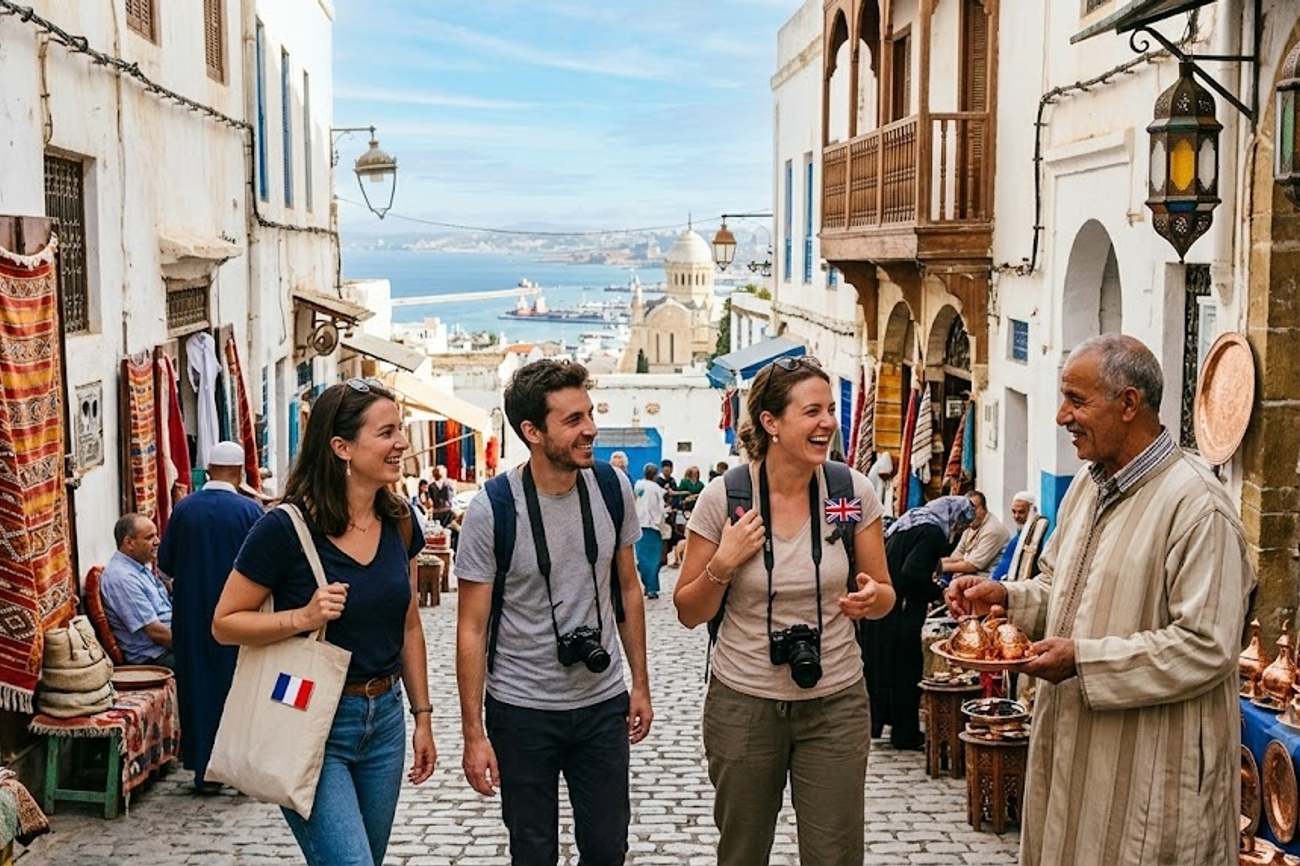
Image generated by AI
International tourist arrivals to Algeria climbed from 3.2 million in 2023 to 3.5 million in 2024, a growth trajectory that mirrors a broader continental shift toward diversifying African tourism hubs. This 9.3% year-over-year increase is not an isolated spike but a direct result of strategic policy shifts in visa accessibility and a systemic expansion of aviation capacity across North Africa.
The Algerian Growth Engine in Numbers
The current surge in Algerian tourism is underpinned by a calculated alignment of diplomatic easing and infrastructure scaling. The rise to 3.5 million visitors in 2024 signals a transition from a niche destination to a scalable market. This growth is primarily driven by three specific levers: simplified visa procedures, increased direct flight availability, and a pivot toward cultural and nature-based tourism.
The data indicates that Algeria is successfully capturing "alternative destination" demand. As traditional North African hotspots face saturation, Algeria’s mix of Mediterranean coastlines, Roman archaeological sites, and Saharan landscapes is attracting a demographic of travelers seeking authenticity over mass tourism. This shift is supported by the broader aviation trends tracked by IATA, which show a systemic increase in connectivity between European source markets and the Maghreb region.
The aviation component is particularly aggressive. The continent is preparing for a massive leap in available air seats. For the first ten months of 2026, available seat capacity across Africa is projected to reach 182.4 million, a significant jump from the 160.4 million seats expected during the same period in 2025. This represents a 13.7% increase in capacity in just one year, providing the necessary physical infrastructure to sustain the arrival growth seen in 2024.
Comparative Capacity and Market Positioning
Algeria’s ascent is most visible when examining the competitive landscape of African carriers. Air Algérie has successfully penetrated the top tier of the continent's aviation providers, now ranking as one of the five largest airlines by available seat capacity.
When compared to the dominant players in the African market, Air Algérie is positioning itself as a regional powerhouse, though it still trails the massive hubs of East and North Africa. The following table breaks down the scheduled seat capacity for the ten-month period leading into 2026, illustrating the hierarchy of African aviation.
| Airline | Scheduled Seat Capacity (10-Month Period 2026) | Market Position |
|---|---|---|
| Ethiopian Airlines | 23.8 million | Continental Leader |
| EgyptAir | 10.28 million | North African Hub |
| Safair | 10.27 million | Regional Specialist |
| Royal Air Maroc | 9.1 million | Maghreb Connector |
| Air Algérie | 7.3 million | Emerging Major |
The data shows that while Ethiopian Airlines maintains a commanding lead—more than triple the capacity of Air Algérie—the gap between the second-tier carriers (EgyptAir, Safair, Royal Air Maroc) and Air Algérie is narrowing. This capacity growth is essential for maintaining the momentum of the 3.5 million arrivals recorded in 2024.
The source markets for this growth are heavily weighted toward Western Europe. France and the United Kingdom remain the primary drivers, alongside Italy and the Netherlands. This reliance on European corridors is a strategic advantage given Algeria's geographic proximity, but the industry is now seeing a secondary surge from Middle Eastern markets, as noted in regional UNWTO trends regarding intra-regional travel.
What This Means for Travelers
The transition from 3.2 million to 3.5 million arrivals, combined with the projected seat capacity increase to 182.4 million across Africa by 2026, creates a specific set of conditions for the individual traveler.
First, the "visa friction" that previously deterred casual tourists is evaporating. The introduction of simplified entry rules means that travelers from the UK and France can now plan trips with shorter lead times. However, as capacity grows, the window for securing affordable flights on Air Algérie—which is now managing 7.3 million seats—will likely tighten during peak Saharan trekking seasons (typically Q4 and Q1).
Second, the shift toward cultural tourism means that infrastructure in ancient Roman sites and Saharan oases is under development. Travelers should expect a transition period where aviation capacity outpaces hotel inventory. For those planning visits to the interior or the coast, booking accommodation 3-4 months in advance is now recommended to avoid the volatility associated with a rapidly growing market.
Third, the increase in air connectivity means more direct routes. Travelers should monitor new flight paths from Western European hubs, as the expansion of Air Algérie’s network is designed to reduce reliance on connecting flights, thereby lowering the total travel time and cost.
Projecting the 2026 Trajectory
Based on the current growth rate of 9.3% in arrivals and the projected 13.7% increase in continental seat capacity, Algeria is on a trajectory to exceed 4 million annual visitors by 2026. This growth is not merely organic; it is the result of a deliberate "open-border" policy that aligns with a wider African trend of reducing intra-continental travel barriers.
The data suggests a move toward "hub-and-spoke" tourism. As Air Algérie strengthens its position among the top five African carriers, Algiers is likely to become a more prominent transit point for travelers moving between Europe and Sub-Saharan Africa. This will likely lead to an increase in short-stay "stopover tourism," where travelers visit the capital's cultural sites before continuing to other African destinations.
Furthermore, the investment in tourism infrastructure will likely pivot toward the "authentic" experiences currently driving the 2024 numbers. We can expect a surge in boutique eco-lodges in the Sahara and upgraded heritage facilities in ancient cities to accommodate the shift from mass leisure to high-value cultural tourism.
FAQ: Algeria Tourism Trends 2024-2026
Will flight prices to Algeria increase as demand grows? While demand is rising, the projected increase in seat capacity to 182.4 million across Africa by 2026 suggests that supply is keeping pace. Prices may stabilize or even drop as Air Algérie expands its competitive footprint against other regional carriers.
Is now a good time to visit Algeria? Yes. The current window is ideal because visa regulations have simplified, but the destination has not yet reached the saturation levels of other North African hubs. This allows for a more authentic experience in the Sahara and Roman ruins.
Which airlines offer the best connectivity to Algeria? Air Algérie is the primary driver, now ranking as one of Africa's top five carriers by capacity with 7.3 million scheduled seats. Travelers from France and the UK have the most direct options due to strengthened bilateral air links.
Are visa requirements still a major barrier? No. The recent shift toward simplified and flexible entry measures is a primary reason arrivals grew from 3.2 million to 3.5 million. These reforms are designed specifically to attract international markets and encourage longer stays.
As Algeria scales its aviation capacity to match its diplomatic openness, the country is successfully pivoting from a hidden gem to a measurable pillar of North African tourism.
#AlgeriaTourismGrowth2024 #AirAlgerieCapacity #NorthAfricaAviationTrends #AfricanVisaReform #CulturalTourismData #MaghrebTravelMarket
Related Travel Guides
Disclaimer
This article is for informational and educational purposes only. It does not constitute legal, financial, or professional advice. While we strive to provide accurate and up-to-date information, travel policies, regulations, and conditions change rapidly. Always verify information with official sources before making travel decisions. Nomad Lawyer makes no representations about the accuracy, reliability, completeness, or suitability of the information provided. Readers should consult qualified professionals for advice specific to their circumstances. The views expressed in this article are those of the author and do not necessarily reflect the views of Nomad Lawyer.
Raushan Kumar
Founder & Lead Developer
Full-stack developer with 11+ years of experience and a passionate traveller. Raushan built Nomad Lawyer from the ground up with a vision to create the best travel and law experience on the web.
Learn more about our team →