
FlySafair FA388 Bomb Scare at King Phalo International Airport: Security Response Analysis 2026
A 179-minute security operation at King Phalo International Airport following a bomb threat on FlySafair flight FA388 reveals the strict isolation protocols used by South African aviation authorities.

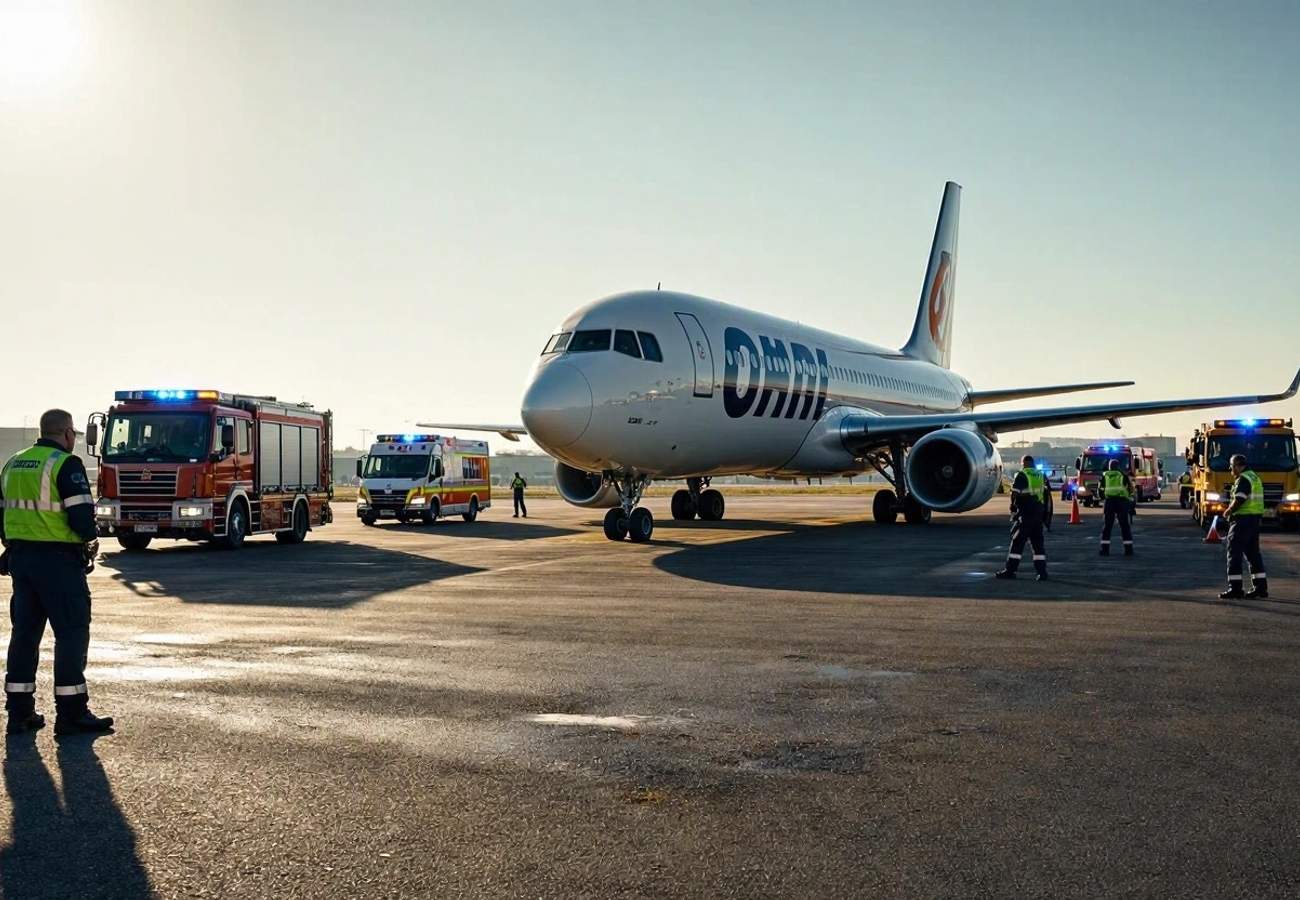
Image generated by AI
Two hours and 59 minutes elapsed between the initial bomb threat notification and the final security stand-down during a high-tension operation involving FlySafair flight FA388 at King Phalo International Airport on October 21, 2026. The incident triggered a full-scale activation of emergency protocols, moving the aircraft from standard arrival gates to a restricted isolation zone to mitigate risk to the terminal and the general public.
Protocol Activation and Crisis Chronology
The security event began at 07:59 when Passenger Services received a telephonic warning regarding a potential explosive device on flight FA388. This immediate trigger shifted the airport's operational status from routine to emergency, involving the Airports Company South Africa (ACSA) and the Emergency Control Centre (ECC).
Rather than allowing the aircraft to dock at a passenger terminal, authorities implemented a "sterile reception" strategy. This involved prepping a designated isolation area—a remote section of the airfield far removed from the main terminal infrastructure—where the aircraft could be contained and inspected without endangering thousands of other travelers.
Operational Timeline and Resource Deployment
The response required a multi-agency effort, integrating municipal fire services, national police, and aviation security. The following table breaks down the precise sequence of events that governed the FA388 incident.
| Event Milestone | Timestamp | Action Taken | Authority Involved |
|---|---|---|---|
| Initial Threat Report | 07:59 | Telephonic bomb threat received by Passenger Services | ACSA / Terminal Supervisor |
| Coordination Phase | 08:00 - 09:37 | Activation of ECC and positioning of isolation teams | ECC / SAPS / BCMM |
| Passenger Disembarkation | 09:38 | Pilot authorized exit of all passengers and crew | FlySafair Flight Crew |
| Security Sweep | 09:39 - 10:57 | Full explosives detection sweep of aircraft interior | SAPS Bomb Squad |
| Incident Resolution | 10:58 | Official "stand-down" and return to normal operations | ACSA |
The operation involved the South African Police Service (SAPS) bomb squad and the Buffalo City Metropolitan Municipality (BCMM) Fire Chief. By the time the wheels touched the tarmac, the isolation area was already staffed with emergency vehicles and detection specialists, ensuring no gap in security coverage between landing and inspection.
Expert Analysis: The Logistics of Aviation Isolation
For travelers, the most jarring part of this incident was the 09:38 disembarkation time, which occurred nearly two hours after the threat was reported. This delay is a direct result of "Safety First" regulatory frameworks. In bomb threat scenarios, aircraft are never taxied to the terminal; doing so would risk a catastrophic blast near the airport's primary hub, potentially disabling the entire facility.
The direct consequence for FlySafair passengers was a prolonged period of uncertainty on the tarmac. However, from a legal and regulatory standpoint, the International Air Transport Association (IATA) standards dictate that the aircraft must be isolated before any movement of people occurs.
The pricing and operational pressure created by such events is significant. When a "Business Continuity Plan" is activated, as it was here, the airport must balance the security of one flight against the scheduling of dozens of others. The fact that King Phalo Airport maintained operational continuity suggests a highly efficient segregation of the "hot zone" (the isolated aircraft) from the "green zone" (the active terminal).
Key Takeaways
- Response Duration: The entire event, from the 07:59 call to the 10:58 resolution, lasted exactly 179 minutes.
- Isolation Strategy: Flight FA388 was diverted to a remote area to prevent any potential blast from impacting the main terminal.
- Multi-Agency Coordination: The resolution required a synchronized effort between ACSA, SAPS, and BCMM.
- Passenger Safety: All passengers and crew were confirmed safe, with no explosives found during the comprehensive sweep.
- Reporting Mandate: ACSA continues to urge travelers to report unattended items immediately rather than attempting to investigate them.
FAQ: King Phalo Airport Security 2026
What happens to my luggage during a bomb scare? Luggage remains on the aircraft until a certified bomb squad (such as SAPS) completes a full sweep. Passengers are evacuated first to ensure life safety before cargo is handled.
Are flights usually canceled during these incidents? Not necessarily. As seen with FA388, ACSA uses Business Continuity Plans to keep the rest of the airport running while one specific aircraft is isolated.
What are my rights if my flight is delayed by a security sweep? Passengers are generally subject to the airline's contract of carriage. While security threats are "extraordinary circumstances," airlines may provide basic refreshments during long tarmac delays.
The precision of the 179-minute window between threat and resolution serves as a benchmark for regional aviation security efficiency.
Related Travel Guides
Disclaimer
This article is for informational and educational purposes only. It does not constitute legal, financial, or professional advice. While we strive to provide accurate and up-to-date information, travel policies, regulations, and conditions change rapidly. Always verify information with official sources before making travel decisions. Nomad Lawyer makes no representations about the accuracy, reliability, completeness, or suitability of the information provided. Readers should consult qualified professionals for advice specific to their circumstances. The views expressed in this article are those of the author and do not necessarily reflect the views of Nomad Lawyer.
Naina Thakur
Contributor & Travel Specialist
Travel enthusiast and legal writer covering visa regulations, responsible tourism, and cultural journeys across global destinations.
Learn more about our team →