
Florida Orders Highway License Plate Readers Removed in Road Privacy Shift
FDOT orders the removal of automated license plate readers across 12,273 miles of state highways within 30 days, reshaping driver privacy for 143M annual visitors.

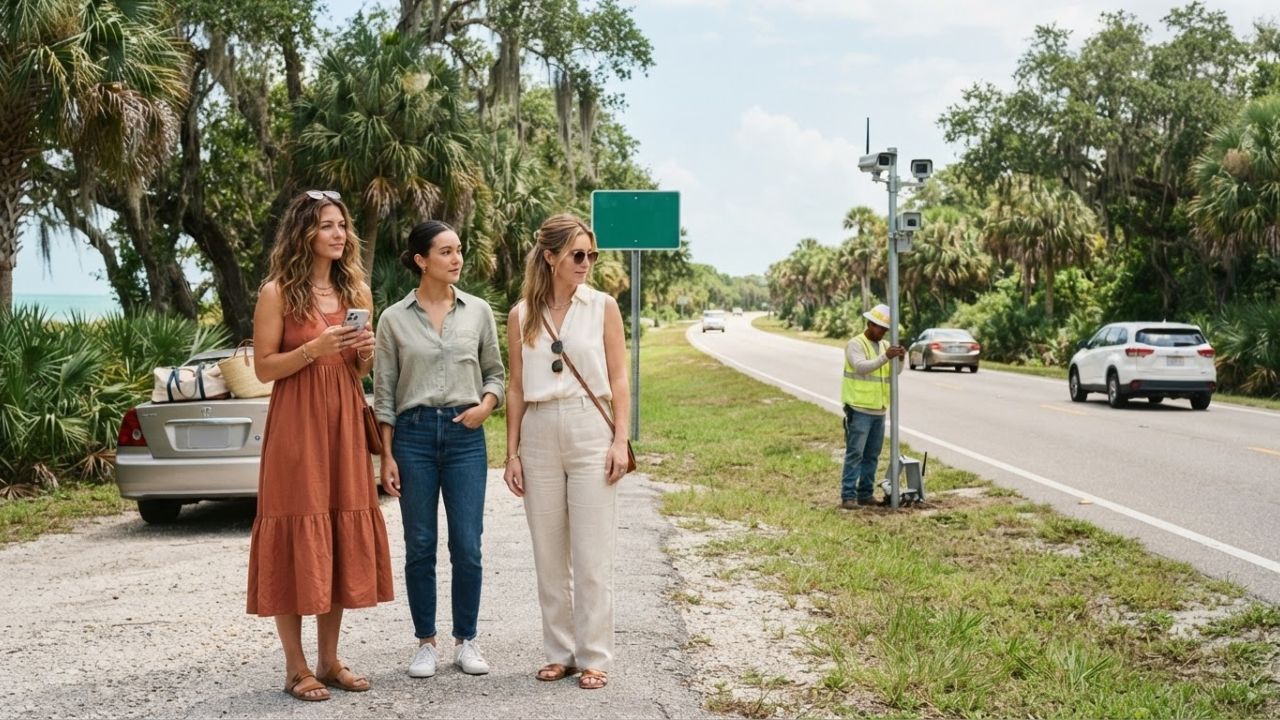
Image generated by AI
Affecting over 12,273 miles of state-managed highway corridors where nearly 60% of Florida's 143.33 million annual visitors travel by road, the Florida Department of Transportation has issued a mandatory 30-day order revoking all permits and removing automated license plate readers from state rights-of-way.
The Local Trend: Reining in Roadside Surveillance on Major Tourism Arteries
In a landmark regulatory pivot regarding vehicular privacy, the Florida Department of Transportation (FDOT) has issued Engineering and Operations Memorandum 26-01, effective August 31, 2026. The executive directive formally rescinds all general-use permits previously granted for automated license plate recognition (ALPR/LPR) cameras mounted within state highway rights-of-way, immediately halting all new permit applications.
Law enforcement agencies and municipal operators have been given a strict 30-day window to dismantle and remove permitted camera systems from state road corridors, after which FDOT will remove non-compliant equipment directly. The decision addresses mounting public concerns regarding data retention periods, inter-agency tracking, and unauthorized data sharing, positioning Florida at the forefront of digital privacy governance along high-traffic tourist routes.
Tourism Scale: How Florida’s Drive Market Intersects with Digital Privacy
Highway travel forms the backbone of Florida’s vacation economy:
- Massive Drive-Market Reliance: Revised data from VISIT FLORIDA indicates that the Sunshine State welcomed a record 143.33 million visitors in 2025 (a 0.2% increase year-over-year). Of those arrivals, 59.3% (over 85 million travelers) arrived via non-air road transit.
- Sustained 2026 Vacation Momentum: During the first quarter of 2026 alone, Florida welcomed 39.88 million visitors (including 36.54 million domestic travelers and 2.29 million overseas visitors—led by a 17.2% surge from the UK and 14.5% from Ireland), millions of whom rely on rental cars to navigate between theme parks, Gulf Coast beaches, and the Florida Keys.
- State Versus Local Road Jurisdictions: The FDOT order strictly governs the 12,273 miles of state-maintained public highways. The state’s 110,029 miles of city- and county-maintained roads remain under local municipal jurisdiction, creating a differentiated road-monitoring environment across municipal borders.
Florida Highway Surveillance Shift & Tourism Data Profile (2026)
| Policy / Tourism Parameter | Benchmark Metric & Scope | Strategic Traveler Impact |
|---|---|---|
| FDOT Directive | Memorandum 26-01 (Aug 31, 2026) | Revokes ALPR permits on State Highway System |
| Removal Compliance Window | 30 Days from issuance | Agencies must remove state-corridor cameras |
| State Highway Network | 12,273 State-maintained miles | Direct removal zone across primary interstates & routes |
| Local Road Network | 110,029 City & county road miles | Managed by local police; separate regulations apply |
| Annual Visitor Volume (2025) | 143.33 Million visitors | 59.3% Non-air (road trip) arrivals |
| Q1 2026 Inbound Travel | 39.88M Visitors (2.29M overseas) | Strong road-trip car rental demand across UK & Ireland |
| Local Enforcement Shifts | Tampa removing 17 LPR devices | St. Petersburg reviewing 50+ Flock camera network |
| Flock Safety Data Window | 7-Day encrypted storage window | Tighter retention and access controls enacted |
Jurisdictional Realities: What Drivers Need to Know
While roadside data collection on state corridors will diminish, travelers should understand key boundaries:
- Targeted Camera Removals: Municipal agencies are already complying; the Tampa Police Department confirmed the immediate removal of 17 ALPR devices from state rights-of-way, while Hillsborough County and St. Petersburg (which operates over 50 Flock Safety cameras) review local deployments.
- Unchanged Traffic Laws and SunPass Tolling: The order does not alter standard traffic law enforcement, speed limits, or Florida SunPass / E-PASS electronic tolling systems, which operate under separate statutory transportation frameworks.
- Commercial Rental Vehicle Tracking: Visitors renting vehicles should note that private rental car telematics and GPS fleet tracking operate under private rental agreements separate from state roadside cameras.
Destination Specialist Local Insider Tips
Road-trippers and international vacationers planning scenic drives across Florida can enhance their travel experience with these local insights:
- Navigate Scenic State Corridors with Peace of Mind: Drive Florida’s scenic state routes—such as Highway A1A along the Atlantic coast or the Overseas Highway (US-1) through the Florida Keys—knowing state right-of-way vehicular tracking has been significantly curtailed.
- Utilize SunPass Portable Transponders for Rental Cars: Avoid costly daily rental agency toll administrative surcharges by purchasing an inexpensive SunPass Mini or SunPass Portable transponder at Florida grocery stores (Publix, Walgreens) to manage highway tolls directly.
- Explore Florida’s Spring System via State Route 44: Route off congested interstates to visit crystal-clear freshwater springs such as Weeki Wachee or Silver Springs, where manatees gather in protected state park preserves.
- Verify Rental Car Document Requirements: Ensure international drivers carry a valid driver’s license and passport; while roadside cameras are being removed, routine Highway Patrol traffic enforcement remains standard.
- Consult the Official FDOT Florida 511 App: For real-time construction updates, bridge openings, and interstate traffic alerts across Florida’s 12,273 miles of state highways, download the free FL511 app.
Future Outlook
Florida Attorney General James Uthmeier and state lawmakers are preparing broader legislative frameworks to balance legitimate law enforcement capabilities with robust consumer privacy protections. By eliminating passive roadside tracking on major state routes, Florida reinforces its reputation as a welcoming, privacy-respecting destination for tens of millions of annual road-trip travelers.
Related Travel Guides
Disclaimer
This article is for informational and educational purposes only. It does not constitute legal, financial, or professional advice. While we strive to provide accurate and up-to-date information, travel policies, regulations, and conditions change rapidly. Always verify information with official sources before making travel decisions. Nomad Lawyer makes no representations about the accuracy, reliability, completeness, or suitability of the information provided. Readers should consult qualified professionals for advice specific to their circumstances. The views expressed in this article are those of the author and do not necessarily reflect the views of Nomad Lawyer.
Raushan Kumar
Founder & Lead Developer
Full-stack developer with 11+ years of experience and a passionate traveller. Raushan built Nomad Lawyer from the ground up with a vision to create the best travel and law experience on the web.
Learn more about our team →