
Air New Zealand's Premium 'Works' Class Delivers Solid Value on Trans-Tasman Route, But Questions Remain on Long-Haul Competitiveness
Breaking airline news and aviation industry updates for 2026.

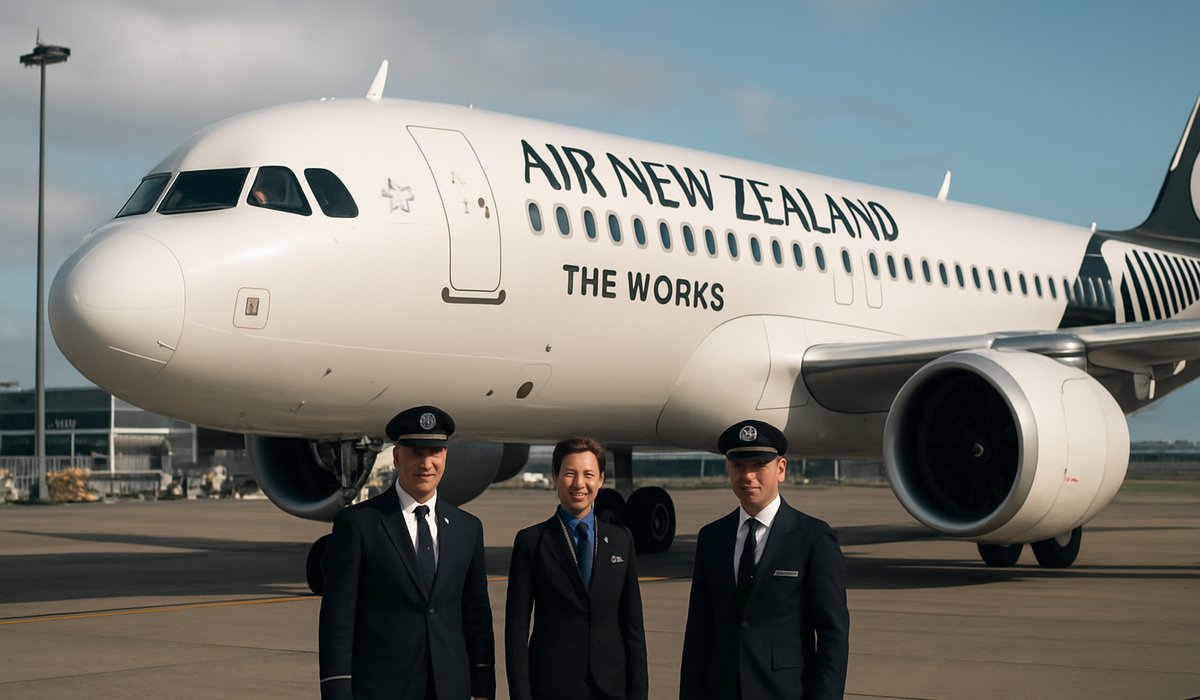
Image generated by AI
Air New Zealand's Premium 'Works' Class Delivers Solid Value on Trans-Tasman Route, But Questions Remain on Long-Haul Competitiveness
A family's early morning journey from Christchurch to Sydney reveals what the Kiwi carrier's mid-tier offering actually delivers—and where it falls short against international rivals
The Journey Begins: A Pre-Dawn Departure Sets the Stage
Air New Zealand passengers traveling the competitive Christchurch-to-Sydney corridor are increasingly turning to the airline's "Works" class—a premium economy tier designed to bridge the gap between basic economy and full business-class fares. On a recent Saturday morning in early June, one traveling family of three experienced firsthand what this mid-tier product delivers on the carrier's A320neo aircraft, the modern workhorse now dominating Air New Zealand's regional and short-haul operations across the Tasman Sea.
The early 6:30 AM departure from Christchurch Airport demanded an unusually punctual 3:00 AM arrival, a reality that underscores the broader challenge facing regional aviation: balancing passenger convenience with operational efficiency in an era of rising jet fuel costs and tightening airline margins.
What 'Works' Class Actually Offers on Regional Routes
Air New Zealand's "Works" fare sits at a critical juncture in the airline's product strategy. As carriers worldwide have restructured their cabin offerings—partly driven by volatile fuel surcharges and pressure to maximize revenue per seat—the New Zealand flag carrier has positioned this cabin class as offering enhanced comfort without the premium price tag of business travel.
The A320neo aircraft selected for this Christchurch-Sydney service represents Air New Zealand's strategic investment in fuel-efficient narrowbody jets. With improved fuel economy compared to older generation aircraft, the neo variant allows carriers to maintain competitive pricing while managing operational costs—a crucial advantage as international travel demand rebounds across the Asia-Pacific region.
Broader Industry Context: Pricing Pressure Across the Tasman
The Christchurch-Sydney route operates in an increasingly crowded marketplace. Qantas, Virgin Australia, and low-cost carrier Jetstar all compete aggressively on this corridor, placing sustained pressure on Air New Zealand's pricing and product differentiation. Airlines across the region continue adjusting baggage charges, seat selection fees, and ancillary service pricing as they navigate post-pandemic capacity adjustments and volatile operating costs.
For families considering premium economy options—where baggage allowances, seat pitch, and meal service become deciding factors—the Works class presents a legitimate alternative to economy-plus offerings from competitors, provided the airline maintains consistent product delivery.
The Verdict: Solid Performance, but Competitive Pressures Persist
Air New Zealand's "Works" class demonstrates the carrier's understanding of regional market dynamics, yet broader questions linger about whether such mid-tier products can sustain profitability as fuel prices fluctuate and competition intensifies.
FAQ: Air New Zealand 'Works' Class and Regional Aviation
What exactly is Air New Zealand's 'Works' class? Works is Air New Zealand's premium economy offering, positioned between standard economy and business class. It typically includes enhanced meal service, seat selection, and baggage allowances on regional routes like Christchurch-Sydney.
How does Works class pricing compare to economy on the Tasman route? Works fares command a significant premium over basic economy, though they remain substantially cheaper than business class. Pricing varies seasonally and by demand, reflecting industry-wide yield management practices.
What are typical baggage allowances in Works class? Baggage policies vary by route and booking date. Passengers should verify current allowances directly with Air New Zealand, as carriers frequently adjust these policies in response to operational costs and competitive pressures.
Why do airlines keep adjusting cabin products and fees? Volatile jet fuel prices, labor cost inflation, and fierce competition force airlines to continuously refine their offerings and ancillary charges to maintain margins while remaining competitive.
Is Works class worth booking for families on short-haul flights? For families prioritizing comfort and meal service on regional routes, Works class can offer reasonable value—though direct comparison with competitor offerings is essential before booking.
Related Travel Guides
-
Airlines Summer Expect Record Travel Despite Fuel Cost Pressures
-
Indonesia Aviation Boom: 4.4M Passengers Surge During Eid 2026
External Resources
Disclaimer
This article is for informational and educational purposes only. It does not constitute legal, financial, or professional advice. While we strive to provide accurate and up-to-date information, travel policies, regulations, and conditions change rapidly. Always verify information with official sources before making travel decisions. Nomad Lawyer makes no representations about the accuracy, reliability, completeness, or suitability of the information provided. Readers should consult qualified professionals for advice specific to their circumstances. The views expressed in this article are those of the author and do not necessarily reflect the views of Nomad Lawyer.
Raushan Kumar
Founder & Lead Developer
Full-stack developer with 11+ years of experience and a passionate traveller. Raushan built Nomad Lawyer from the ground up with a vision to create the best travel and law experience on the web.
Learn more about our team →