
Flight Real Reason: Why Attendants Greet Boarding Passengers
Flight attendants' cabin greetings serve a critical safety function beyond customer service in 2026. Learn what really happens when you board and why those hellos matter for passenger security.

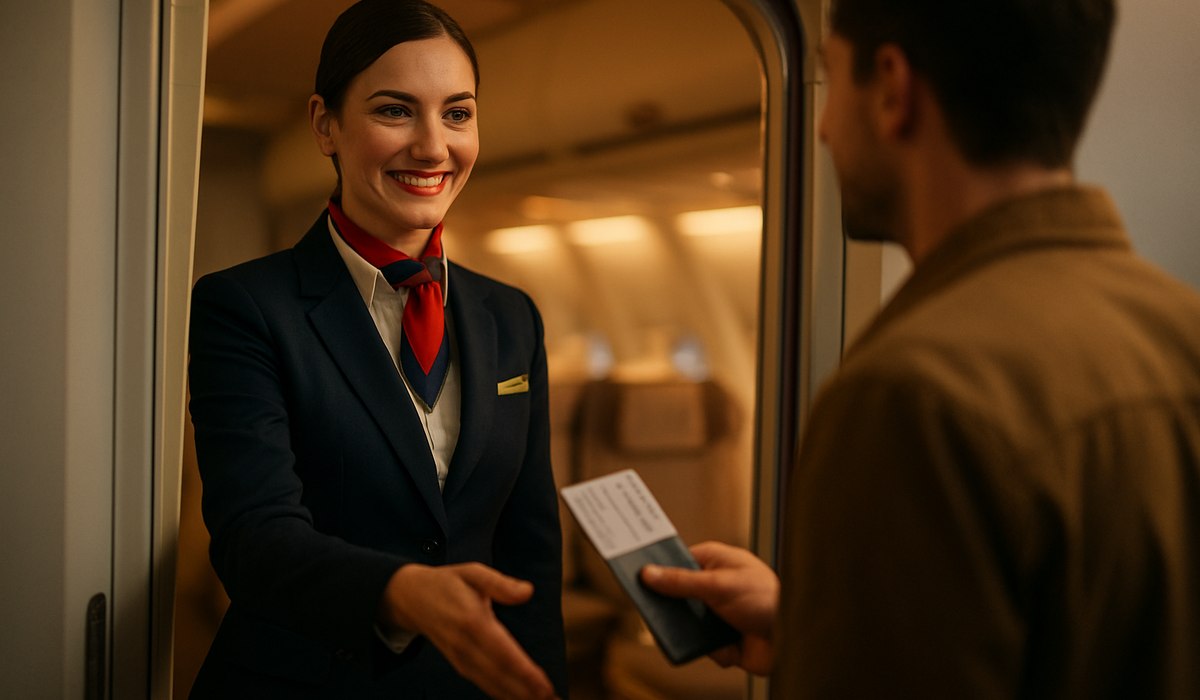
Image generated by AI
That Friendly Hello Serves a Mission Beyond Politeness
When passengers step through the aircraft door in 2026, flight attendants extend warm greetings that accomplish far more than hospitality. That cheerful "hello" and welcoming smile represent a sophisticated safety assessment protocol embedded in modern aviation procedures. While passengers assume crew members are simply being courteous, these critical seconds enable flight attendants to evaluate passenger mobility, detect behavioral anomalies, and identify potential security concerns before anyone reaches their seat. Understanding the flight real reason behind these greetings reveals how airlines prioritize passenger protection through behavioral observation.
The boarding process represents a vulnerability window in aircraft operations. Every passenger who walks through that door is observed by trained crew members using assessment techniques refined over decades of aviation safety evolution. This systematic approach protects everyone aboard while maintaining the welcoming atmosphere passengers expect from customer service.
The Hidden Safety Protocol Behind Greetings
Flight attendants receive extensive training in passenger assessment during their initial certifications and recurrent training cycles. The flight real reason crew members greet each boarding passenger involves evaluating several critical factors within seconds.
Crew members assess physical mobility and potential medical considerations through observation. A passenger's gait, balance, and physical presentation inform crew about whether individuals might need assistance during emergencies. Someone with mobility limitations may require reassignment to designated accessible seating near exits. Attendants identify passengers who could assist during evacuations versus those requiring assistance themselves.
Behavioral observation occurs simultaneously with greeting interactions. Crew members trained in threat assessment techniques evaluate demeanor, eye contact, and interaction patterns. Unusual aggression, extreme anxiety, or evasive behavior triggers mental notes for the flight deck crew. These observations prove invaluable for cabin management and security protocols.
Communication ability represents another assessment dimension. Crew members determine whether passengers speak English or require translation assistance for safety briefings. This information ensures everyone receives emergency procedure communications in comprehensible formats, a regulatory requirement under FAA guidelines. The FAA safety standards mandate that all passengers understand evacuation procedures before departure.
How Crew Assessments Protect Passengers
The cumulative data gathered during boarding greetings creates a comprehensive passenger manifest profile. When flight attendants say hello, they're simultaneously creating mental security profiles that persist throughout the flight.
Crew members communicate significant observations to pilots and cabin leadership before doors close. This intelligence-sharing system enables proactive management of potential disruptions. Airlines have documented that this protocol prevents numerous incidents annually by identifying concerning passengers before problems develop mid-flight.
Medical emergencies respond more effectively when crew members already understand passenger limitations. A flight attendant who noticed boarding difficulties can provide faster assistance when cardiac events or injuries occur. This prior knowledge saves critical seconds during genuine emergencies.
The greeting interaction also establishes relationship foundations between crew and passengers. Passengers who received genuine attention during boarding demonstrate higher compliance with safety instructions. They're more likely to follow crew directives during turbulence or evacuations because they've already acknowledged crew authority through that initial greeting.
Security and Behavioral Observations
Modern aviation security extends beyond TSA checkpoints and baggage screening. Real-time behavioral assessment during boarding represents aviation's human intelligence layer—critical observations no metal detector captures.
Crew members identify passengers exhibiting behavioral red flags: excessive nervousness beyond normal flight anxiety, attempts to conceal items, inappropriate focus on safety features, or suspicious interest in emergency equipment. These observations receive documented attention and pilot notification when concerning patterns emerge.
The greeting process also reveals substance impairment risks. Flight attendants trained in recognizing intoxication or drug influence can identify passengers potentially endangering flight safety. Early identification enables crew to manage behavior before conflicts develop and flight operations risk compromise.
Crew members assess passenger legitimacy verification. Proper identification review during boarding ensures ticketed passengers match passport and identification documents. This brief moment when attendants check credentials identifies fraudulent travel documents or ticket irregularities before departure.
Airlines share assessment protocols across carriers through industry organizations. The Transportation Security Administration coordinates with airlines to ensure consistent threat assessment standards across the aviation network.
Training and Industry Standards
Flight attendant certification programs dedicate significant curriculum time to passenger assessment protocols. Initial training covers threat recognition, behavioral analysis, medical condition identification, and communication techniques refined through security research.
Recurrent training refreshes these competencies annually. Airlines emphasize that assessment capability requires continuous skill maintenance as threat landscapes evolve. Crew members receive updates on emerging patterns observed industry-wide, incorporating lessons from security incidents at other carriers.
The International Air Transport Association establishes guidelines for passenger interaction during boarding. These standards ensure consistency across global aviation operations, enabling international crew members to apply uniform assessment protocols regardless of boarding location.
Crew members receive training specific to protected characteristics. Assessment focuses on behavioral elements—not demographic profiling. Crew training explicitly prohibits bias-based evaluation while emphasizing behavioral observation that genuinely indicates safety concerns. This training reflects decades of aviation security research demonstrating that behavioral assessment outperforms demographic-based threat identification.
Quality assurance programs monitor crew assessment accuracy. Airlines conduct regular evaluations to ensure crew members apply protocols consistently and appropriately. Crew members demonstrating superior assessment skills often serve as training coordinators for new hire classes.
Key Data: Flight Boarding Assessment Standards
| Assessment Element | Duration | Purpose | Regulatory Basis |
|---|---|---|---|
| Physical mobility evaluation | 3-5 seconds | Emergency evacuation capability determination | FAA Part 121 |
| Behavioral observation | 5-8 seconds | Threat identification and security assessment | TSA aviation security |
| Communication capability check | 2-3 seconds | Emergency briefing comprehension verification | FAA safety mandates |
| Identification verification | 4-6 seconds | Fraud prevention and legitimate passenger confirmation | Department of Homeland Security |
| Medical condition assessment | 3-4 seconds | Health emergency preparedness and seating accommodation | FAA medical protocols |
| Overall boarding greeting | 15-30 seconds | Comprehensive safety profile creation | Industry best practices |
What This Means for Travelers
Understanding the flight real reason behind crew greetings helps passengers appreciate modern aviation safety sophistication. These brief interactions represent cumulative security improvements developed through decades of operational experience and research.
Traveler Action Checklist:
-
Expect authentic engagement during boarding - Flight attendants greeting you genuinely enhances your flight safety experience; respond naturally to these interactions.
-
Present clear identification and credentials - Have your ID accessible and ready during the greeting exchange; this facilitates efficient verification and crew assessment.
-
Disclose medical considerations proactively - If you have mobility limitations or medical conditions, inform crew members during boarding rather than waiting for emergencies.
-
Familiarize yourself with emergency procedures - Pay attention to safety briefings and understand exit locations; crew members speaking with you during boarding assess your comprehension level.
-
Report unusual passenger behavior - If you observe concerning behavior from other passengers, notify crew members; your observations complement crew assessments.
-
Maintain cooperative demeanor during interactions - Your respectful engagement with crew members supports the safety assessment process.
-
Understand that assessment continues throughout flight - The initial boarding greeting initiates ongoing crew observation; maintain appropriate behavior throughout your flight.
Passengers who recognize these protocols as essential safety measures rather than mere courtesy develop better flight experiences. Airlines operate more smoothly when everyone understands that every interaction serves protective purposes beyond surface-level hospitality.
Frequently Asked Questions
Why do flight attendants ask so many questions during boarding?
Flight attendants use boarding questions to assess passengers comprehensively. These questions—about seat numbers, luggage, mobility needs—enable crew members to gather behavioral and physical information simultaneously. The questioning technique serves dual purposes: facilitating seating efficiency while evaluating potential safety considerations. This efficient information-gathering protects everyone aboard.
Can flight attendants refuse boarding based on assessment observations?
Yes, crew members possess authority to deny boarding when safety concerns emerge during assessment. If boarding evaluation reveals intoxication, aggressive behavior, or other indicators suggesting passenger danger, crew members
Disclaimer
This article is for informational and educational purposes only. It does not constitute legal, financial, or professional advice. While we strive to provide accurate and up-to-date information, travel policies, regulations, and conditions change rapidly. Always verify information with official sources before making travel decisions. Nomad Lawyer makes no representations about the accuracy, reliability, completeness, or suitability of the information provided. Readers should consult qualified professionals for advice specific to their circumstances. The views expressed in this article are those of the author and do not necessarily reflect the views of Nomad Lawyer.
Preeti Gunjan
Contributor & Community Manager
A passionate traveller and community builder. Preeti helps grow the Nomad Lawyer community, fostering engagement and bringing the reader experience to life.
Learn more about our team →