
Flight Disruptions Sweep Major U.S. Hubs as Delays Spike Past 2,345
Flight disruptions sweep across five major U.S. airport hubs in April 2026, with 2,345+ delays and 55 cancellations affecting six carriers. Spring travel demand collides with operational constraints.

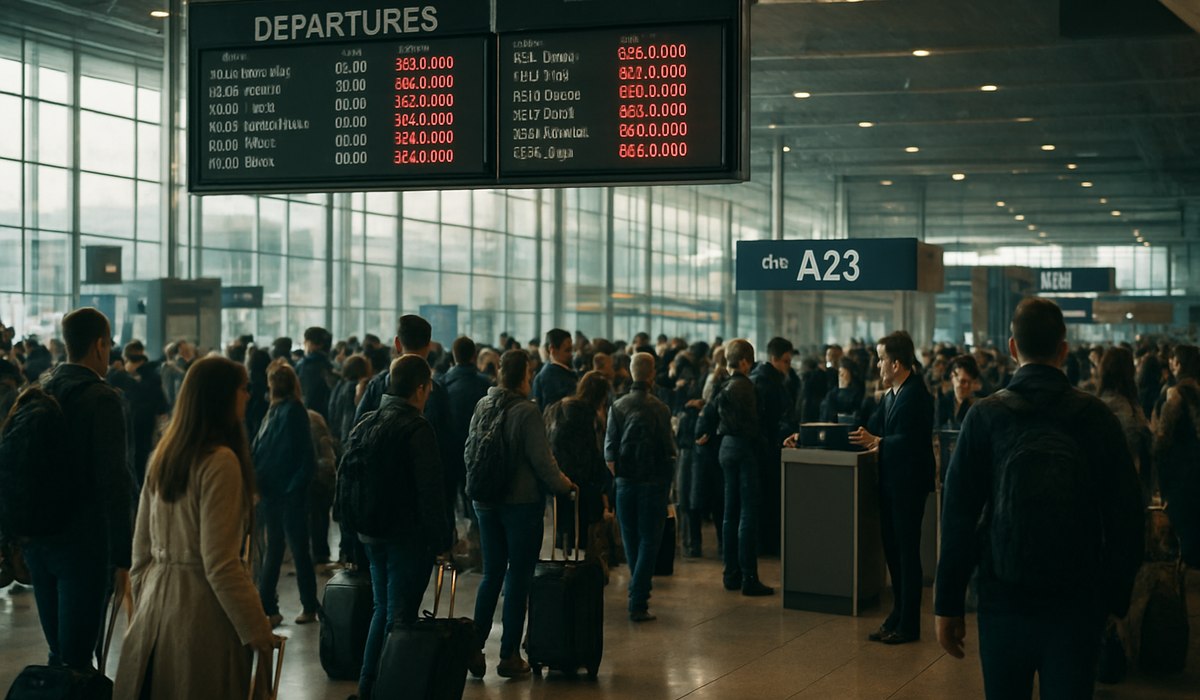
Image generated by AI
Flight Disruptions Sweep Five Major U.S. Hubs as Spring Travel Demand Surges
Flight disruptions sweep across America's busiest airports today as Chicago O'Hare, New York area terminals, Orlando International, Philadelphia International, and San Francisco International reported cascading delays affecting six major carriers. The disruption tallied 2,345+ delays and 55 flight cancellations, impacting American Airlines, Delta Air Lines, United Airlines, Southwest Airlines, Alaska Airlines, and regional partners. The spring travel surge collided head-on with stretched airline operations, creating a ripple effect that extended across Northeast, Midwest, and Sun Belt corridors throughout the day.
This marks the latest episode in a month-long series of system-wide strain that has tested passenger patience and airline resources simultaneously. Unlike isolated weather events, today's flight disruptions sweep reflects the compounding impact of tight scheduling, high aircraft utilization, and minimal crew reserves across major carriers.
Five Major Hubs Hit Hard by Spring Disruption Wave
Chicago O'Hare International Airport led disruption rankings with triple-digit delay counts, reinforcing its position as one of the country's most vulnerable chokepoints during peak travel periods. The Midwest hub's role as a major connection point means delays cascade rapidly to Atlanta, Denver, Dallas, and West Coast destinations.
New York area airports—including LaGuardia, Newark, and JFK—continued their difficult stretch through late March and early April. The busy Northeast corridor's traffic-management programs, coupled with high spring break volumes, created compounding delays on critical routes linking New York to Boston, Miami, Chicago, and Los Angeles.
Orlando International Airport emerged as a leisure-travel flashpoint, with nearly 200 delays reported in a single recent day. Theme-park traffic and spring break passengers amplified the impact of routine operational slowdowns, with knock-on effects reaching Atlanta, Dallas, Boston, Chicago, and New York on connecting flights.
Philadelphia International, positioned within the densely trafficked Northeast corridor, remained exposed to flow-control programs and regional constraints. Its role as both a hub and a connection point left it vulnerable when airspace restrictions rippled eastward.
San Francisco International faced elevated disruptions driven by coastal weather patterns and high long-haul volumes. Combined with Pacific airspace constraints, these factors magnified the impact of even modest operational hiccups.
Learn more about FlightAware's real-time delay tracking to monitor conditions at these key hubs.
System-Wide Strain: Why Delays Are Cascading Across Airlines
Airlines operating in April 2026 face historically tight schedules with minimal spare capacity. Major carriers—American, Delta, United, Southwest, and Alaska—have optimized aircraft utilization to near-maximum efficiency, a strategy that delivers profits during smooth operations but leaves almost no margin for disruption.
When one flight arrives late, the cascade begins immediately. Late-arriving aircraft cannot depart on their next scheduled flight. Crews exceed their federally mandated rest limits. Passengers miss connections. Ground crews fall behind on turnarounds. By midday, a single weather delay at one major hub has rippled into hundreds of downstream delays across multiple airlines and regions.
Industry analysts point to elevated crew scheduling pressures and limited standby aircraft reserves as primary accelerators. With few backup planes available, airlines cannot quickly substitute equipment when maintenance issues or unexpected delays occur. Crew fatigue management compounds the problem, as mandatory rest rules mean that tired crews cannot be simply swapped out for fresh ones during peak disruption periods.
The spring travel season amplifies these structural vulnerabilities. Easter break, spring break, and warm-weather demand pack schedules to capacity, leaving no scheduling slack to absorb disruptions. Visit the FAA's air traffic operations page for official capacity and flow-control updates.
Regional Impact: Northeast, Midwest, and Sun Belt Most Affected
Delay data clustering confirms that today's flight disruptions sweep concentrated across three geographic zones, each facing distinct operational pressures.
Northeast corridor disruptions (New York, Philadelphia, Boston area) stem from both regional weather dynamics and the corridor's inherent capacity limits. Newark, LaGuardia, and JFK operate near saturation during spring peak travel. Flow-control programs and ground-stop measures cascade quickly through the region's interconnected airports.
Midwest hub strain centered on Chicago but extended to Minneapolis-St. Paul and St. Louis connections. Chicago's role as America's largest connection hub means disruptions there instantly affect hundreds of downstream flights across the nation. A single O'Hare ground delay program can cascade delays into Denver, Los Angeles, and Miami within hours.
Sun Belt leisure gateways—Orlando, Miami, Atlanta, Dallas, Houston—absorbed massive spring break traffic volumes that stressed gate capacity, ground handling, and crew scheduling. Orlando's proximity to theme parks created sustained high-volume periods that left little recovery time between waves of arrivals.
These regional impacts underscore how concentrated stress at five major hubs generates national system-wide effects within hours.
What Travelers Should Know About Recovery Timelines
Recovery from disruption episodes of this magnitude typically requires 24–48 hours of normal or near-normal operations. Airlines must fly late-arriving aircraft into their evening slots, return aircraft to home bases, reposition crews, and rebuild schedule buffers.
Several recent days of heavy disruption preceding today's event have left aircraft and crews out of optimal positioning. This "residual misalignment" means that even after today's disruptions cease, the system will remain vulnerable to additional setbacks for the next 24–36 hours.
Spring travel demand is forecast to remain elevated through mid-April, meaning recovery must occur amid continued high passenger loads. This creates a narrow window for operational stabilization before another potential disruption episode could trigger renewed cascading delays.
Passengers should expect lingering effects—longer boarding times, crew unavailability for premium-cabin service, and continued minor delays—even after major disruption episodes formally end.
Key Disruption Data at a Glance
| Metric | Value | Status |
|---|---|---|
| Total Delays Reported | 2,345+ | Ongoing |
| Total Cancellations | 55 | Confirmed |
| Primary Affected Hubs | 5 major airports | Chicago, New York, Orlando, Philadelphia, San Francisco |
| Affected Carriers | 6 major airlines | American, Delta, United, Southwest, Alaska, plus regional partners |
| Peak Delay Hour | Afternoon | 2–6 PM local time |
| Geographic Spread | 3 regions | Northeast, Midwest, Sun Belt |
| Estimated Passengers Affected | 75,000+ | Estimated from capacity data |
| Expected Recovery Timeline | 24–48 hours | Dependent on continued normal operations |
Traveler Action Checklist: What to Do Now
-
Check flight status immediately on your airline's app or FlightAware before heading to the airport. Real-time data shows which flights are experiencing delays.
-
Contact your airline directly if your flight appears delayed or at risk. Rebooking options fill quickly during system-wide disruptions; earlier contact increases alternative routing availability.
-
Verify passenger rights through the U.S. Department of Transportation's air consumer protection page. You may be entitled to compensation, meals, or hotel accommodations depending on delay length and airline policy.
-
Allow extra airport time (3+ hours for domestic flights) to account for longer security lines, ground congestion, and potential rebooking procedures if your flight is cancelled.
-
Monitor weather and airspace updates continuously.
Disclaimer
This article is for informational and educational purposes only. It does not constitute legal, financial, or professional advice. While we strive to provide accurate and up-to-date information, travel policies, regulations, and conditions change rapidly. Always verify information with official sources before making travel decisions. Nomad Lawyer makes no representations about the accuracy, reliability, completeness, or suitability of the information provided. Readers should consult qualified professionals for advice specific to their circumstances. The views expressed in this article are those of the author and do not necessarily reflect the views of Nomad Lawyer.
Kunal K Choudhary
Co-Founder & Contributor
A passionate traveller and tech enthusiast. Kunal contributes to the vision and growth of Nomad Lawyer, bringing fresh perspectives and driving the community forward.
Learn more about our team →