
Flight Disruptions Slam Major U.S. Hubs as Spring Storms Wreak Havoc
Over 5,500 flights delayed nationwide in April 2026 as spring storms converge with Easter travel demand at major U.S. airport hubs. Nomad lawyers and remote workers face significant disruptions.

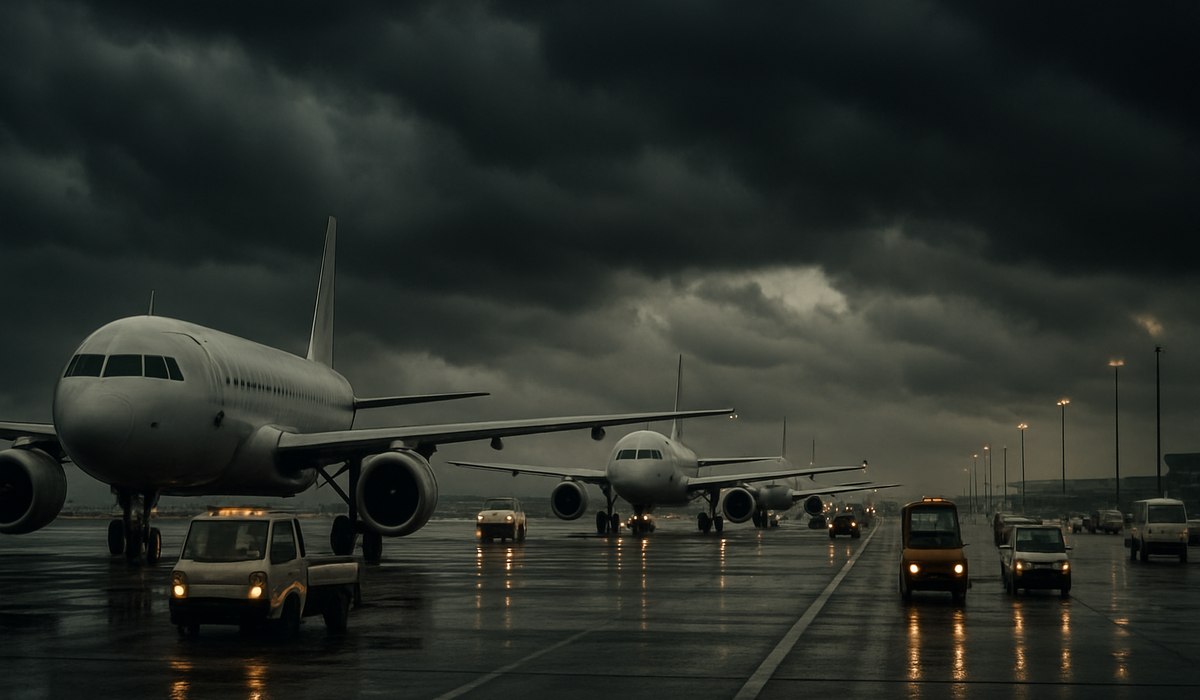
Image generated by AI
Breaking: Flight Disruptions Slam U.S. Major Hubs
Over 5,500 flights faced delays nationwide on April 8, 2026, as spring storms and Easter holiday travel demand converged at America's busiest airports. Chicago O'Hare, Atlanta Hartsfield-Jackson, and New York LaGuardia emerged as the hardest-hit hubs, with cascading cancellations affecting major carriers including Delta, American, United, Southwest, and Spirit. The disruption has left thousands of passengers stranded and highlighted the fragility of tightly scheduled airline networks during severe weather events.
Delays Mount Across Major U.S. Hubs
Flight tracking data reveals unprecedented congestion across the nation's aviation network. In a single 24-hour period, publicly available sources recorded more than 4,300 flight delays and over 200 cancellations affecting major gateway airports. Chicago O'Hare alone reported more than 200 delayed departures, demonstrating how rapidly congestion builds at high-capacity hubs. Atlanta's Hartsfield-Jackson, the world's busiest airport, logged nearly 280 delayed flights with over 70 cancellations. Houston, Orlando, Los Angeles, and Boston experienced similarly severe disruptions. The sheer scale underscores how interconnected modern aviation has become—delays in one hub quickly ripple through connecting flights nationwide. Track real-time flight status updates via FlightAware for current conditions.
Chicago O'Hare and LaGuardia Hit Hardest
New York LaGuardia Airport became a focal point of the crisis during the Easter weekend surge. Peak disruption tallies showed approximately 600 delayed flights and roughly 80 cancellations attributed to fog, thunderstorms, and mandatory ground stops. The cascading effects extended far beyond New York, with diverted aircraft and stranded crews impacting downline destinations across the eastern seaboard. Chicago O'Hare's geographical importance as a major connecting hub meant that even moderate weather delays triggered system-wide ripple effects. Both airports operate at or near maximum capacity during holiday periods, leaving virtually no buffer for weather disruptions. When ground stops occur, aircraft queuing, crew timing violations, and passenger rebooking challenges create compounding delays lasting days. Airlines struggled to recover schedule integrity as Easter travel demand remained elevated throughout the period.
Weather, Holiday Demand and Tight Schedules Collide
The flight disruptions slam phenomenon resulted from a perfect storm of operational pressures. Spring thunderstorms, strong winds, and low-visibility conditions reduced runway capacity across multiple southeastern and northeastern airports simultaneously. Easter holiday travel demand pushed passenger volumes to or above pre-pandemic levels, meaning flights operated at full capacity with minimal flexibility. Modern airline scheduling prioritizes efficiency, packing flights tightly to maximize aircraft utilization and crew productivity. This leaves almost no spare capacity to absorb weather shocks. When severe thunderstorms triggered air traffic flow restrictions and ground stops, the compressed schedule immediately failed. One aircraft delay cascaded through multiple connecting flights as crews and planes missed subsequent departure windows. The Federal Aviation Administration (FAA) issued flow restrictions, but even controlled delays stacked up rapidly given network density. According to research on hub-and-spoke operations, localized disruptions propagate fastest through tightly timed connection banks—exactly the structure U.S. carriers employ. Monitor FAA traffic updates at FAA.gov.
Miami, Atlanta, and New York Emerge as Critical Pressure Points
Miami International Airport faced severe disruptions on April 6 linked to southeastern thunderstorms and network cascade effects. As a critical gateway connecting North America with Latin America and Europe for American Airlines and partners, Miami delays immediately affected intercontinental itineraries. Crew imbalances created by late-running aircraft multiplied scheduling challenges. Atlanta Hartsfield-Jackson experienced weather-related delays, congestion in critical U.S. airspace sectors, and tight crew scheduling constraints. The airport's position as Delta's primary hub meant that disruptions affected the entire regional network. LaGuardia's Easter weekend ground stops extended impacts far beyond New York. Rolling weather delays, fog, and thunderstorms kept runways at reduced capacity, forcing airline operations to queue flights and eventually cancel services. Each cancellation created hundreds of rebooking requirements, further stressing airline customer service systems already overwhelmed by delayed passengers seeking alternate flights.
Key Data: Flight Disruptions Slam Scope and Scale
| Metric | Value | Impact |
|---|---|---|
| Total Delayed Flights (24-hour period) | 4,300+ | Thousands of passengers missed connections |
| Cancellations (peak day) | 200–207 | Hotels, rebooking, financial losses |
| LaGuardia Delays (Easter weekend) | ~600 | Major East Coast hub dysfunction |
| LaGuardia Cancellations (Easter weekend) | ~80 | Network cascade to downline airports |
| Chicago O'Hare Delays (snapshot) | 200+ | Western connection delays |
| National Delays (broader estimate) | 5,500 | System-wide capacity strain |
| Affected Carriers | 8+ (Delta, American, United, Southwest, Spirit, Alaska, Frontier) | All major operators impacted equally |
What This Means for Travelers
Remote workers, nomad lawyers, and business travelers must prepare for ongoing spring storm disruptions. Here's what you need to know:
Traveler Action Checklist:
-
Book flights with buffer time. Schedule departures at least one hour earlier than your needed arrival, allowing buffer for delays and rebooking if cancellations occur.
-
Purchase travel insurance. Comprehensive policies covering trip delays, cancellations, and rebooking expenses protect against financial loss from weather events.
-
Monitor real-time flight status. Set alerts on FlightAware for your specific flight and check 24 hours before departure for weather advisories.
-
Know your passenger rights. Review U.S. Department of Transportation guidelines on compensation, rebooking, and meal vouchers for weather-related disruptions.
-
Arrive extra early during spring months. Weather-related security delays are common April through June; budget 3+ hours for domestic flights at major hubs.
-
Choose airports strategically. Avoid the highest-traffic hubs (Atlanta, Chicago, New York, Dallas) when possible during holiday periods; secondary airports often have better on-time performance.
-
Maintain backup itineraries. Identify alternative flights and airports before travel; flexibility is your greatest asset during widespread disruptions.
FAQ
Q: What passenger rights do I have if my flight is cancelled due to weather?
A: Weather-related cancellations are classified as "acts of God" by the FAA, making them exempt from mandatory compensation. However, airlines must provide rebooking on the next available flight at no additional charge and offer meals or hotel accommodations for overnight delays. The U.S. DOT enforces these rights.
Q: How long do cascading flight delays typically last after a major disruption?
A: Recovery time depends on magnitude and airline size. At major hubs, 24–72 hours of rolling delays are typical after major weather events. The compressed modern airline schedule makes recovery difficult; crews must complete rest requirements before flying again, extending disruption chains.
Q: Should I rebook immediately if my flight shows delays?
A: Contact your airline directly rather than rebooking online. Agent-assisted rebooking
Disclaimer
This article is for informational and educational purposes only. It does not constitute legal, financial, or professional advice. While we strive to provide accurate and up-to-date information, travel policies, regulations, and conditions change rapidly. Always verify information with official sources before making travel decisions. Nomad Lawyer makes no representations about the accuracy, reliability, completeness, or suitability of the information provided. Readers should consult qualified professionals for advice specific to their circumstances. The views expressed in this article are those of the author and do not necessarily reflect the views of Nomad Lawyer.
Raushan Kumar
Founder & Lead Developer
Full-stack developer with 11+ years of experience and a passionate traveller. Raushan built Nomad Lawyer from the ground up with a vision to create the best travel and law experience on the web.
Learn more about our team →