
Flight Disruptions Snarl Toronto Pearson: 39 Cancellations, 210+ Delays March 2026
Flight disruptions snarl Toronto Pearson International Airport on March 27, 2026, with 39 cancellations and 210+ delays affecting major routes to Vancouver, Montreal, Calgary, and New York. Multiple airlines impacted.

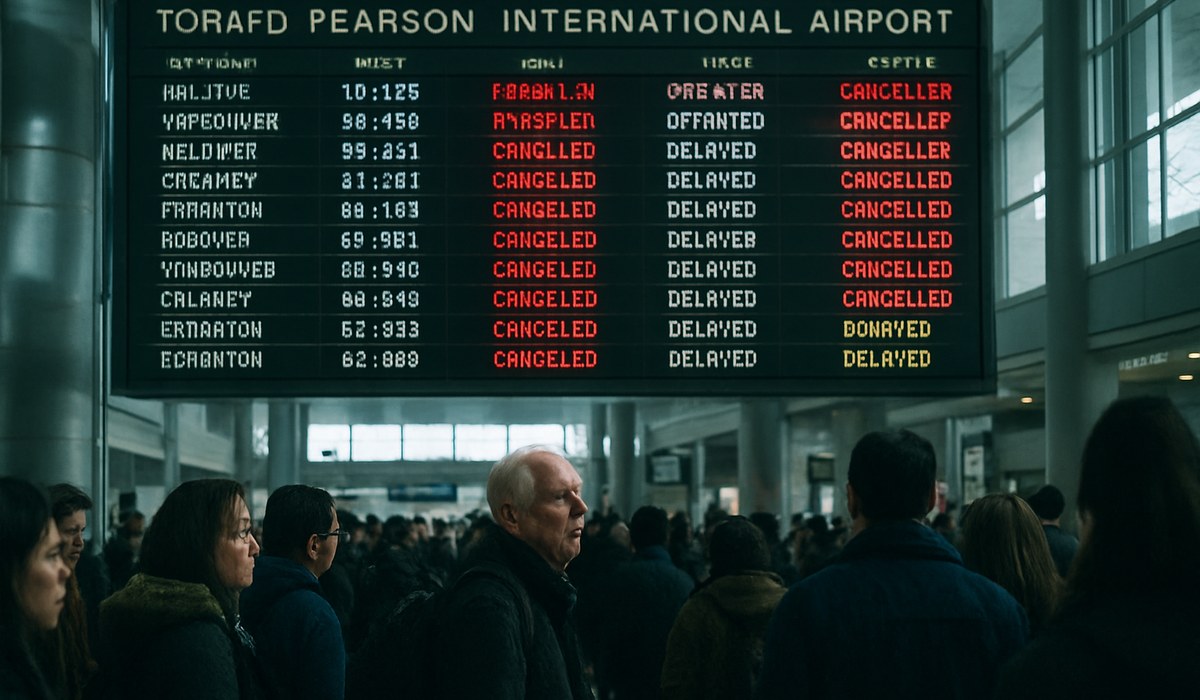
Image generated by AI
Flight Disruptions Snarl Toronto Pearson With 39 Cancellations and 210+ Delays
Toronto Pearson International Airport (YYZ) experienced severe operational strain on March 27, 2026, as flight disruptions snarl grounded 39 aircraft and delayed more than 210 flights across multiple carriers. The cascading delays rippled through Canada's busiest aviation hub, affecting thousands of travelers on domestic and transborder routes to Vancouver, Montreal, Calgary, and New York-area airports. Both legacy carriers and regional operators—including Air Canada, WestJet, Porter Airlines, and U.S. regional partners Republic Airways and Endeavor Air—reported significant schedule disruptions throughout the day.
Winter Weather and De-Icing Backlogs Drive Major Operational Strain
Winter weather systems across Ontario and Quebec created a perfect storm for aviation disruptions at Toronto Pearson. Heavy snowfall combined with strong crosswinds forced the airport to temporarily reduce runway capacity, triggering de-icing backlogs that held aircraft on the ground for extended periods. When planes sit idle waiting for de-icing procedures or departure slots, they arrive late at downstream destinations, compressing turnaround windows and pushing subsequent flights beyond scheduled times.
The cascading effect proved difficult to manage. According to FlightAware, the concentration of delays spread rapidly across the network as aircraft and crews positioned out of sync with the master schedule. Ground handling teams and air traffic control resources reached capacity limits, preventing quick recovery even as weather conditions improved. Toronto Pearson's role as Canada's primary connection point means even modest absolute numbers of disruptions translate into network-wide impacts affecting thousands of passengers.
Air Canada and Jazz Aviation Face Widespread Route Cancellations
Air Canada and its regional partner Jazz Aviation bore the heaviest operational impact across Toronto Pearson's domestic network. The carrier's key trunk services linking Toronto to Vancouver, Montreal, and Calgary—routes that form the backbone of Air Canada's network and depend on high-frequency scheduling—experienced multiple cancellations and extended delays. These routes serve both business travelers requiring same-day connections and leisure passengers linking to international services on long-haul flights.
Air Canada's transborder services to New York-area airports, including Newark (EWR), LaGuardia (LGA), and JFK, also faced disruptions that compressed the airline's schedule recovery timeline. According to industry operational data, when large domestic services are disrupted, carriers often prioritize long-haul international departures, which can mean consolidating or trimming short-haul frequencies where rebooking capacity is greater. Jazz Aviation's regional feeder flights similarly experienced delays that rippled backward into Air Canada's hub operations, preventing smooth aircraft rotations throughout the day.
WestJet, Porter Airlines, and U.S. Regional Carriers Affected
WestJet recorded multiple delayed and cancelled flights at Toronto Pearson, with particular strain visible on high-demand Western Canada routes connecting Toronto to Calgary (YYC) and other Prairie destinations. The airline's schedule recovery proved challenging given the compressed turnaround windows and limited spare aircraft capacity across its network. Porter Airlines, which has expanded operations at Toronto Pearson alongside its long-standing presence at Billy Bishop Toronto City Airport (YTZ), also experienced significant congestion-related delays.
U.S. regional operators Republic Airways and Endeavor Air—flying under major American carrier banners on Toronto-to-New York routes—reported delays that echoed backward into their domestic U.S. networks. These carriers operate critical feed services linking Toronto to Northeast hubs, and schedule disruptions at Pearson immediately affected their ability to maintain on-time performance across the Atlantic corridor. The interconnected nature of North American aviation networks meant delays propagated rapidly from Canada into U.S. operations.
Knock-On Effects Hit Vancouver, Montreal, Calgary, and New York Hubs
Flight disruptions at Toronto Pearson immediately created secondary impacts at major downstream airports. Vancouver International Airport (YVR), one of Canada's primary gateways to Asia-Pacific markets, received late inbound aircraft from Toronto, compressing ground maintenance and cleaning times. Departures for transpacific services experienced push-back delays as crews and aircraft arrived behind schedule, directly affecting connections for passengers continuing to Asia.
Montreal-Trudeau Airport (YUL) faced similar cascading delays, particularly on transatlantic services that depend heavily on feed traffic from Toronto and other Canadian cities. Late-arriving passengers from Pearson consumed rebooking and accommodation resources at a faster pace than normal, straining hotel arrangements and customer service capacity. Calgary International Airport (YYC) similarly experienced delays on return services and secondary departures as crews reached duty-time limits and aircraft rotations fell out of sync.
Transborder routes between Toronto and New York-area airports complicated matters further. Passengers connecting from delayed flights in Toronto missed tight international connections through U.S. hubs, requiring immediate rebooking onto later flights or multi-day itinerary changes. The FAA manages airspace coordination with Transport Canada, and notification of Canadian hub disruptions helps U.S. operations prepare for secondary impacts.
Passenger Rights and Compensation During Flight Disruptions
Travelers affected by flight disruptions snarl at Toronto Pearson retain specific rights under Canadian and U.S. transportation regulations. The U.S. Department of Transportation sets standards for domestic U.S. flights, while Canadian carriers follow Transport Canada's Air Passenger Rights regulations. Passengers on cancelled flights are entitled to rebooking on the next available flight or full refund; passengers on flights delayed more than three hours qualify for compensation ranging from CAD $400 to CAD $2,400 depending on flight distance and circumstances.
Airlines must provide meals, accommodation if an overnight stay is required, and communication services when delays extend beyond normal operation. However, airlines are not liable if delays result from extraordinary circumstances beyond their control—including severe weather, air traffic control decisions, or airport congestion. Travelers should document all expenses incurred during disruptions, including hotel stays, meals, and ground transportation, to support compensation claims submitted within six months of the disruption. Consult your airline's customer service team or contact Transport Canada's air passenger rights office for claim procedures specific to your flight.
Key Operational and Passenger Impact Data
| Metric | Details |
|---|---|
| Airport Code | YYZ (Toronto Pearson International) |
| Flights Cancelled | 39 aircraft grounded |
| Flights Delayed | 210+ delays across all airlines |
| Primary Cause | Winter weather, de-icing backlogs, reduced runway capacity |
| Most Affected Airlines | Air Canada, Jazz Aviation, WestJet, Porter Airlines |
| Key Affected Routes | Toronto–Vancouver, Toronto–Montreal, Toronto–Calgary, Toronto–New York |
| Downstream Impacts | Delays at YVR, YUL, YYC; transborder complications at NYC-area airports |
| Estimated Passengers Impacted | Thousands across domestic and transborder networks |
What This Means for Travelers: Actionable Steps
If your flight at Toronto Pearson was affected by the March 27 disruptions, take these steps immediately:
-
Contact your airline directly through their customer service phone line or website to confirm your rebooking status and next available flight.
-
Document all expenses related to the disruption, including hotel accommodations, meals, ground transportation, and communication services. Retain receipts for compensation claims.
-
Request a written delay or cancellation notification from your airline confirming the flight number, original departure time, actual departure or cancellation, and stated cause. This document supports regulatory compensation claims.
-
File a compensation claim with Transport Canada if your flight was delayed more than three hours or cancelled, providing your booking confirmation, receipt, and delay notification. Submit claims within six months of the disruption.
-
Monitor your airline's schedule recovery updates via their website or app to anticipate further cascading delays on rebooked flights. Plan extra time at the airport for connections.
-
Review your travel insurance policy to determine if the disruption qualifies for coverage under trip delay or cancellation provisions. Submit claims with required documentation within your policy's specified timeframe.
-
Track future flight status using FlightAware before arriving at Toronto Pearson to confirm your rebooked flight's on-time status.
FAQ: Flight Disruptions Snarl and Passenger Resources
What caused the flight disruptions snarl at Toronto Pearson on March 27, 2026? Heavy winter snowfall, strong crosswinds, and de-icing backlogs reduced runway capacity at Toronto Pearson International Airport on March 27, 2026. These weather-related factors triggered cascading delays and 39 cancellations across multiple airlines, affecting thousands of passengers on domestic and transborder routes.
How many flights were cancelled or delayed in the March 27 flight disruptions snarl? Thirty-nine flights were cancelled and 210+ flights experienced delays across all airlines operating at Toronto Pearson on March 27, 2026. The disruptions affected air Canada, WestJet, Porter Airlines, and U.S. regional carriers including Republic Airways and Endeavor Air.
Which routes were most affected by the Toronto Pearson flight disruptions? Major routes between Toronto and Vancouver, Montreal, Calgary, and New York-area airports experienced the most significant delays and cancellations. Transborder services to Newark, LaGuardia, and JFK airports also faced extended delays, with secondary impacts at downstream hubs in the U.S. and Canada.
Am I entitled to compensation if my Toronto Pearson flight was delayed on March 27? Yes. Passengers on flights delayed more than three hours at Toronto Pearson are entitled to compensation between CAD $400 and CAD $2,400 under Transport Canada's Air Passenger Rights regulations, unless the airline proves the disruption resulted from extraordinary circumstances beyond its control. File claims within six months of the disruption with your airline or Transport Canada.
Related Travel Guides
Toronto Pearson Airport Travel Guide: Terminal Map, Parking, and Dining 2026
Flight Delay Rights in Canada: Passenger Compensation and Refund Policies
Transborder Travel Tips: Toronto to New York Airport Connections
Disclaimer
This article is for informational and educational purposes only. It does not constitute legal, financial, or professional advice. While we strive to provide accurate and up-to-date information, travel policies, regulations, and conditions change rapidly. Always verify information with official sources before making travel decisions. Nomad Lawyer makes no representations about the accuracy, reliability, completeness, or suitability of the information provided. Readers should consult qualified professionals for advice specific to their circumstances. The views expressed in this article are those of the author and do not necessarily reflect the views of Nomad Lawyer.
Raushan Kumar
Founder & Lead Developer
Full-stack developer with 11+ years of experience and a passionate traveller. Raushan built Nomad Lawyer from the ground up with a vision to create the best travel and law experience on the web.
Learn more about our team →