
Flight Delays Expose $34 Billion Annual Strain on Global Aviation
Flight delays and cancellations are costing global aviation $34 billion annually in 2026, growing three times faster than passenger demand. Airlines, airports, and air traffic control systems face mounting operational strain.

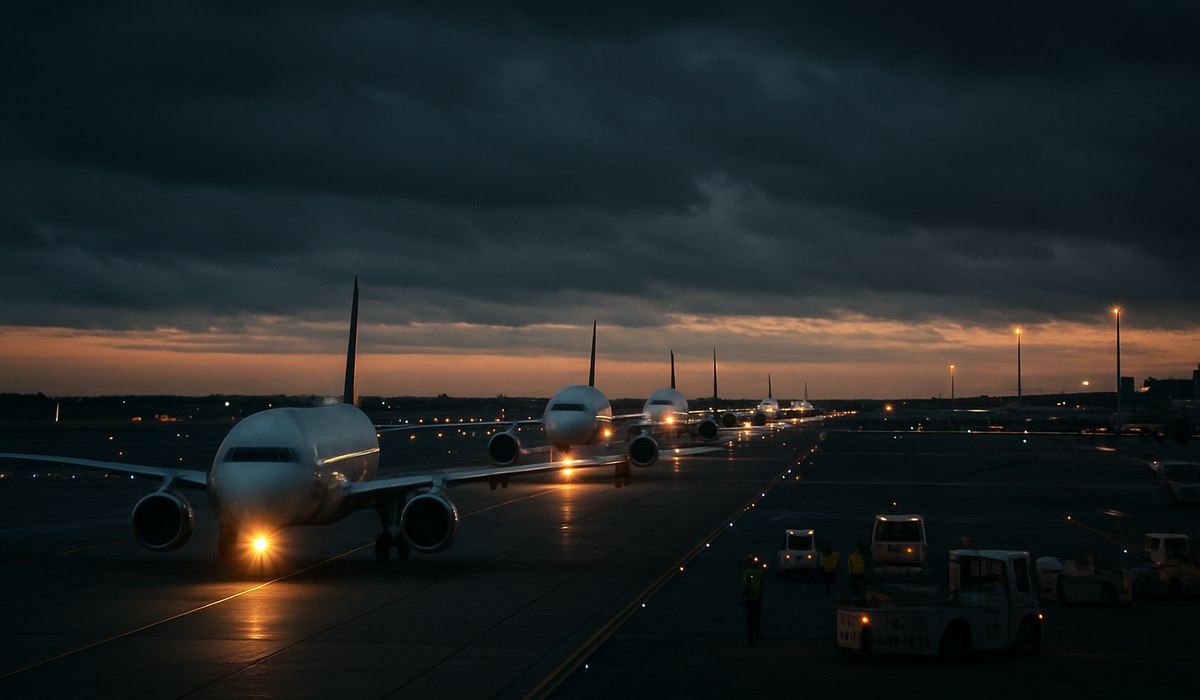
Image generated by AI
Flight Delays Expose Record $34 Billion Crisis Across Global Aviation Network
Global aviation is hemorrhaging an estimated $34 billion annually from flight delays and cancellations, according to comprehensive industry analysis released in April 2026. The disruption crisis is intensifying faster than ever, with operational problems climbing nearly three times quicker than passenger traffic growth. This mounting financial toll reflects structural failures in staffing, air traffic management, and technology systems that are straining carriers, airports, and regulatory bodies worldwide.
The severity of the situation underscores how disruption has shifted from occasional operational shock to permanent cost structure for airlines. Major hubs in North America and Europe are bearing the brunt of congestion, while cascading delays continue to ripple through the global network, affecting millions of travelers monthly.
The $34 Billion Crisis: Understanding Aviation's Mounting Costs
The $34 billion annual impact represents a convergence of direct and indirect expenses plaguing the aviation sector. Lost ticket revenue, mandatory passenger compensation, crew repositioning expenses, and aircraft downtime collectively form this staggering financial burden. When broader economic consequences—including missed business connections and disrupted supply chains—are factored in, the true cost expands significantly.
Recent data shows that flight volumes grew roughly 6 to 7 percent year-over-year between 2024 and early 2025, while delays and cancellations surged at nearly triple that rate. This imbalance reveals a fundamental infrastructure-to-demand mismatch. European carriers faced particularly severe hits, with air navigation service provider delays alone costing over 16 billion euros through October 2025, underscoring how congested airspace contributes directly to global economic loss.
Travel insurance claims validate the passenger-side impact. Analysis of U.S. flights from mid-2024 through mid-2025 documented nearly one in four trips experiencing delays or cancellations. Individual traveler claims averaged hundreds of dollars per disrupted itinerary, compounding the overall crisis with mounting reimbursement obligations across the industry.
Disruption Outpacing Growth: Why Airlines Can't Keep Up
Airlines are losing the race between capacity expansion and disruption growth. The industry projected modest traffic increases aligned with pre-pandemic recovery patterns, yet operational breakdowns accelerated unexpectedly. Thin profit margins—already compressed by fuel costs and labor expenses—provide no cushion for sustained disruption impacts.
Staffing shortages rank as the primary culprit driving this imbalance. The U.S. air traffic control system operates with a deficit of several thousand certified controllers, with approximately 90 percent of control towers classified as understaffed. Major U.S. hubs now run below target staffing levels, forcing systematic slowdowns and ground delay programs that cascade through the continental network.
Airlines themselves struggle with crew constraints intensified by updated flight duty and rest regulations across multiple markets. Labor disputes among cabin crew and ground workers periodically remove additional capacity. A major North American carrier experienced widespread cancellations following recent flight attendant strikes, highlighting how compensation structures that don't account for gate delays continue fueling workforce friction.
Industry consultants emphasize that the staffing crisis will persist for years. Training new air traffic controllers requires 3-5 years from hire to full certification. Pilot and cabin crew pipelines face similar delays, meaning current shortages will shape operational capacity well beyond 2026.
Europe's Air Traffic Management Bottleneck Amplifies Global Problem
European aviation faces particularly acute challenges from air traffic management inefficiencies. The fragmented airspace operated by multiple national service providers creates redundant handoffs and coordination delays that North American and Asian carriers don't experience with unified systems.
Air navigation service provider delays alone cost European carriers over 16 billion euros annually—nearly half the global $34 billion disruption bill. These delays don't simply frustrate passengers; they trigger cascading cancellations, missed connections, and extended crew duty days that multiply throughout the network. Extended gate holds force hotels, catering, and passenger service expenses that squeeze already-thin margins.
Recent operational analysis of major European hubs—Frankfurt, Charles de Gaulle, London Heathrow—documents how limited airspace capacity meets rising demand. Single-runway constraints at several megacarriers' primary hubs amplify weather-related disruptions. Unlike North American hubs with parallel runway configurations, European airports lack infrastructure redundancy, making every delay more disruptive.
Technology modernization efforts, including the Single European Sky initiative, remain years behind original timelines. Until fragmented air traffic management systems consolidate under unified protocols, European delays will continue exporting disruption costs to global carriers operating transatlantic and connecting routes.
Passenger Impact and Insurance Claims Reveal Widespread Disruption
Travelers bore the immediate cost of aviation's 2026 disruption crisis through canceled trips, missed connections, and compensation claims. Data analyzing U.S. domestic and international flights reveals that nearly 25 percent of scheduled trips experienced delays exceeding two hours or complete cancellations between mid-2024 and mid-2025.
Travel insurance claims show average payouts of $300-$800 per disrupted itinerary, accounting for hotel rebooking, meal vouchers, and missed business expenses. Major insurers report claims volumes up 40-60 percent compared to 2023, straining reserves and forcing premium increases for 2027 bookings.
Frequent flyer loyalty programs absorbed significant costs through complimentary rebooking, seat upgrades, and point compensations offered to retain frustrated passengers. These voluntary gesture expenses, combined with mandatory compensation under EU Regulation 261/2004 and U.S. DOT rules, significantly increased airline liability exposure.
International carriers report that U.S. market disruption costs exceed those in other regions due to the combination of understaffed air traffic control and weather volatility across major hubs. Transatlantic routes saw 35-40 percent more delays than historical averages, directly correlating with North American staffing deficits documented by FAA oversight reports.
Technology Failures and Cyber Risks Compound Operational Fragility
Modern aviation depends entirely on interconnected technology systems, yet 2024-2025 exposed vulnerabilities that threaten network stability. A major IT security provider's faulty software update cascaded through global airline and airport networks, triggering thousands of cancellations at leading carriers and leaving passengers stranded across continents.
Similar incidents followed, including hardware failures at major North American airline data centers that forced ground stops rippling into subsequent days' operations. These technology incidents demonstrated how digital infrastructure fragility can instantly erase operational gains from staff planning and weather management.
Cybersecurity threats add further complexity. Aviation's critical infrastructure increasingly faces sophistication attacks targeting air traffic management systems, airport operations, and airline reservations platforms. Recent incidents have prompted elevated security protocols that paradoxically slow throughput at already-constrained facilities.
Regulatory bodies, including the FAA and EASA, now mandate redundancy and failover systems for core aviation technology. Implementation costs and scheduling requirements for system upgrades will further strain carrier budgets already absorbing disruption losses.
Traveler Action Checklist
Passengers navigating 2026's disruption-heavy aviation environment should implement systematic protections:
-
Purchase comprehensive travel insurance covering flight delays exceeding 4 hours, cancellations, and missed connections before booking flights.
-
Book connecting flights with minimum 3-hour layovers on North American routes and 2.5-hour layovers on European flights to absorb typical delay patterns.
-
Monitor flight status actively using FlightAware 24 hours pre-departure and request rebooking options proactively before official cancellations.
-
Document all flight disruptions with timestamps, photos of delay notices, and communication with airlines for potential compensation claims under US DOT or EU Regulation 261/2004.
-
Check airline rebooking policies before purchasing tickets, prioritizing carriers with flexible change options and transparent delay compensation
Disclaimer
This article is for informational and educational purposes only. It does not constitute legal, financial, or professional advice. While we strive to provide accurate and up-to-date information, travel policies, regulations, and conditions change rapidly. Always verify information with official sources before making travel decisions. Nomad Lawyer makes no representations about the accuracy, reliability, completeness, or suitability of the information provided. Readers should consult qualified professionals for advice specific to their circumstances. The views expressed in this article are those of the author and do not necessarily reflect the views of Nomad Lawyer.
Kunal K Choudhary
Co-Founder & Contributor
A passionate traveller and tech enthusiast. Kunal contributes to the vision and growth of Nomad Lawyer, bringing fresh perspectives and driving the community forward.
Learn more about our team →