
Flight Chaos Strands Thousands Across Five US States in April 2026
Easter weekend storm surge triggers cascading flight chaos strands affecting thousands across five US states. Over 339 flights canceled and 3,500+ delayed on April 5, 2026, as severe weather collides with holiday travel demand.

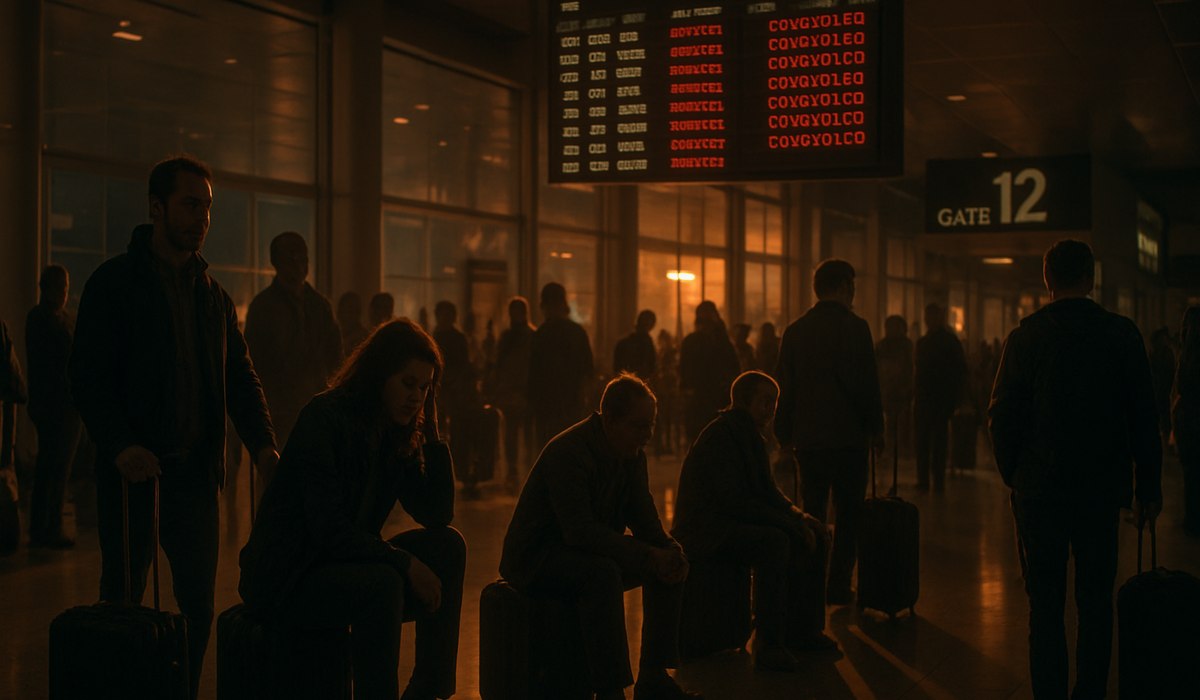
Image generated by AI
Easter Weekend Storm Triggers Massive Flight Chaos Strands Across America
Thousands of travelers faced flight chaos strands across at least five major US states during Easter weekend 2026 as severe spring thunderstorms collided with peak holiday demand. On April 5, Easter Saturday, a volatile weather system forced US airlines to cancel 339 flights and delay more than 3,500 others—a cascading disruption that left passengers stranded overnight in terminals and hotel waiting areas. The storm corridor intersected with one of the busiest travel weekends of the year, amplifying the impact across Chicago, Dallas, Atlanta, Orlando, and Phoenix as lightning, crosswinds, and saturated runways hampered operations at critical national hubs.
Midwest and Southern Hubs Bear Brunt of Weather Impact
The epicenter of disruption centered on five states experiencing the most severe weather encounters. Chicago O'Hare International Airport emerged as the disruption flashpoint in Illinois, with a single April 1 thunderstorm outbreak triggering over 100 cancellations and 1,200+ delays. Regional carriers including Envoy Air, Republic Airways, and SkyWest absorbed significant operational strain as aircraft and crews fell out of sequence.
In Texas, Dallas area airports—including Dallas/Fort Worth International—absorbed hundreds of cancellations across multiple carriers. Houston connections also experienced cascading delays as passengers missed onward flights, creating secondary disruptions throughout the Southeast. Atlanta's position as one of the world's busiest aviation hubs meant it absorbed both direct weather impacts and knock-on effects from upstream delays. Orlando International, a major gateway for spring break and cruise-bound travelers, faced compounded pressure from weather slowdowns and aircraft shortages caused by distant storm systems.
Phoenix Sky Harbor International, while experiencing favorable local weather, remained constrained by inbound aircraft delayed or stranded in the Midwest and South. This geographic separation illustrated how localized storm systems create nationwide ripple effects across the interconnected US airline network.
Cascading Delays: How March Storms Created April's Fragile Operating Environment
The April disruption didn't emerge in isolation. A sequence of March weather systems—including winter storms and severe thunderstorm outbreaks—left airline crews and aircraft significantly out of position heading into spring. Analysts noted that March's blizzards created a "fragile operating environment" where even modest April weather complications could trigger widespread cancellations.
This operational fragility meant that when fresh spring storms impacted the Midwest and South during Easter week, airlines lacked sufficient reserve capacity to absorb disruptions. Aircraft maintenance schedules had compressed, crew rest positions were strained, and gate availability remained limited. The compounded effect transformed what might have been isolated delays into system-wide flight chaos strands affecting thousands of passengers.
Weather forecasts during April 1–7 identified a broad storm risk corridor stretching from the Midwest through the Mid-Atlantic, placing a "weather bottleneck" over several of the nation's most critical airport hubs. Repeated rounds of thunderstorms, heavy rain, and localized flooding extended delays across multiple days rather than resolving quickly.
Specific Impact on Major US Carriers and Routes
All major US carriers experienced significant operational pressure during the flight chaos strands period. American Airlines, Delta Air Lines, United Airlines, and Southwest Airlines all posted substantial delay and cancellation figures. Regional partners operated by Envoy Air (American Eagle), SkyWest, and Republic Airways (operating as American Eagle and Delta Connection flights) absorbed disproportionate impact due to their concentration in Midwest hub operations.
Critical transcontinental routes experienced severe disruption. Cross-country connections through Chicago, Dallas, and Atlanta—typically carrying 40,000+ daily passengers—saw cancellation rates exceeding 8% on peak disruption days. This meant that passengers booking flights on April 5–6 faced roughly 1-in-12 odds of cancellation.
Florida-bound routes from northern states experienced particular strain as spring break and Easter holiday traffic peaked simultaneously with weather disruption. Routes from New York to Orlando, Boston to Miami, and Chicago to Tampa saw cascading delays averaging 2–4 hours beyond scheduled arrival times.
Real-Time Flight Tracking and Passenger Updates
Passengers seeking current information during the flight chaos strands period relied on multiple tracking platforms. FlightAware provided real-time delay and cancellation information, allowing travelers to monitor specific flight statuses and understand airport-specific disruption levels. The platform's historical data revealed that cancellation rates at Chicago O'Hare peaked at 18% on April 5, while Dallas/Fort Worth experienced 12% cancellation rates.
For official guidance, the FAA (Federal Aviation Administration) posted travel advisories and real-time capacity information for affected airports. The FAA's Ground Stop program managed demand at saturated hubs, strategically delaying departures from originating airports rather than allowing aircraft to depart into holding patterns, a practice that conserves fuel and reduces overall system strain.
Airlines posted updates through their official apps and website systems, though real-time information often lagged behind on-the-ground conditions due to rapid situation changes. Passengers checking alternative routes discovered that flights through secondary hubs (Indianapolis, Nashville, Memphis) were more likely to operate on schedule, a finding that informed rebooking decisions.
What Nomad Lawyers and Business Travelers Should Know About Flight Disruption Rights
Remote workers and traveling professionals holding nomad lawyer credentials faced particular challenges during the flight chaos strands event. Extended delays and overnight cancellations disrupted client meetings, depositions, and court deadlines across multiple states. Understanding passenger rights became essential for protecting both personal schedules and professional obligations.
US Department of Transportation regulations require airlines to offer rebooking on the next available flight to the final destination at no additional cost when operational circumstances (including weather) cause cancellations or significant delays. Passengers traveling on paid tickets earned automatic rebooke rights, though eligibility for monetary compensation depends on delay duration and airline responsibility classification. Weather-related delays typically exempt airlines from $400–$800 per-passenger compensation, though some credit card travel insurance policies cover such losses.
Nomad lawyers booking business travel should review airline policies regarding:
- Standby rebooking on earlier flights if available
- Hotel and meal vouchers for overnight delays
- Alternative routing through secondary hubs when weather impacts primary routes
- Laptop power availability in airport terminals during extended waits
- VPN security protocols if using airport Wi-Fi for confidential client work
The flight chaos strands event demonstrated that during peak holiday periods, backup flights fill quickly. Passengers rebooked onto April 6–7 flights sometimes faced 24–36 hour delays before securing seats, requiring contingency planning for time-sensitive professional obligations.
Traveler Action Checklist
If you face flight disruptions similar to the Easter 2026 chaos strands, follow these prioritized steps:
-
Check official airline sources immediately — Visit your carrier's website or call their reservation line rather than relying on social media, which often contains outdated information during rapidly evolving disruptions.
-
Document delay circumstances for your records — Take screenshots of flight status pages, boarding pass information, and airport departure boards showing delay times. This documentation supports future compensation claims.
-
Request written confirmation of rebooking — Airlines must provide written rebooking confirmations including new flight numbers and departure times. Request this via email for your records.
-
Contact your travel insurance provider if applicable — Business travel policies often cover hotel accommodations and meal expenses during weather delays. Report the disruption within the required timeframe.
-
Monitor alternative routes in real-time — Use FlightAware to identify flights through secondary hubs that might operate despite primary hub closures or slowdowns.
-
Preserve receipts for out-of-pocket expenses — Keep all hotel, meal, and transportation receipts incurred due to disru
Raushan Kumar
Founder & Lead Developer
Full-stack developer with 11+ years of experience and a passionate traveller. Raushan built Nomad Lawyer from the ground up with a vision to create the best travel and law experience on the web.
Learn more about our team →