
Flight Cancellations Trigger Fresh Travel Turmoil Across China's Major Hubs
Over 160 flights canceled simultaneously across China's largest carriers in May 2026, disrupting operations at Beijing, Shanghai, and Guangzhou hubs during peak recovery demand.

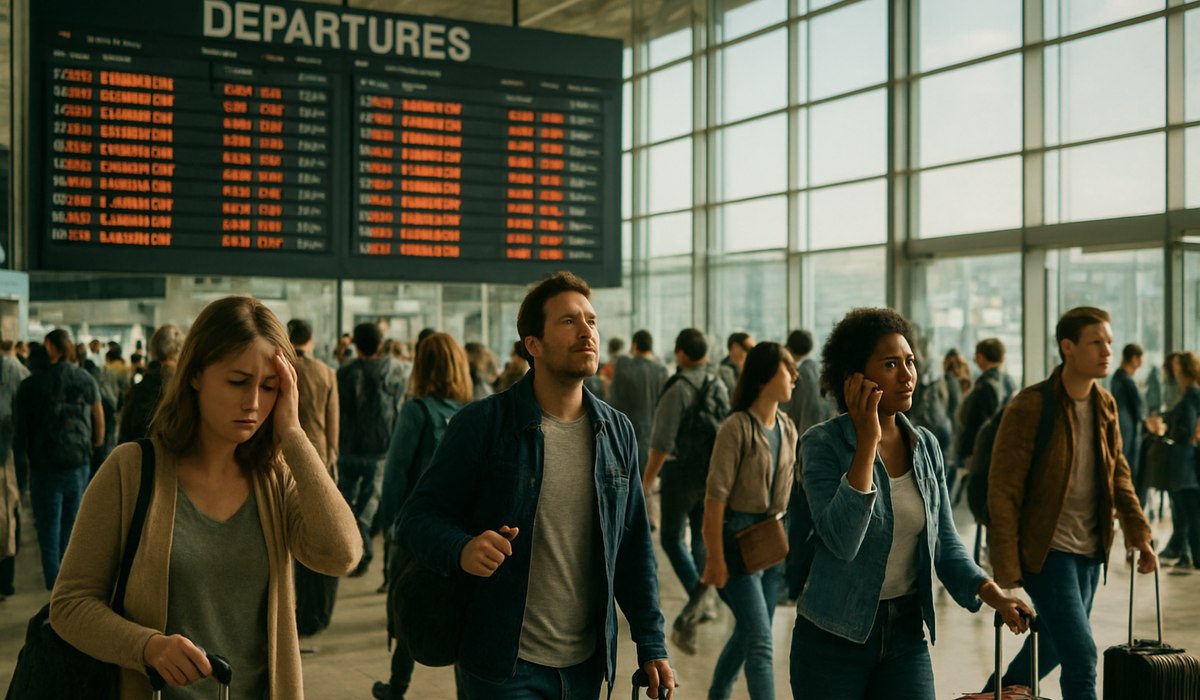
Image generated by AI
Breaking: Massive Flight Cancellations Strike China's Aviation Network
More than 160 flights operated by China Eastern, Air China, and China Southern were abruptly canceled on May 9, 2026, snarling operations across six major airport hubs including Beijing, Shanghai, Guangzhou, Shenzhen, Chengdu, and Kunming. This sudden wave of cancellations has triggered widespread passenger disruption during a critical recovery period for China's domestic aviation market, leaving thousands of travelers stranded and forcing emergency rebooking efforts across the nation's busiest travel corridors.
Wave of Cancellations Hits Major Chinese Carriers
Flight tracking platforms reveal a sharp spike in cancellations involving flight cancellations trigger events across China's three dominant network carriers and their regional affiliates. Public data from aviation monitoring services document that over 160 services were scrubbed within a compressed timeframe, affecting a broad spectrum of domestic and interline itineraries throughout the mainland network.
The disruption spans trunk routes connecting Beijing, Shanghai, Guangzhou, Shenzhen, Chengdu, and Kunming—arterial corridors that form the backbone of China's high-traffic domestic aviation system. These key routes typically operate with heavy business and leisure demand, meaning even modest schedule adjustments cascade rapidly into widespread delays and missed connections for downstream passengers.
Travel industry sources note that the timing intensifies the impact significantly. Airlines have been aggressively rebuilding capacity and network density following years of pandemic-related constraints. This recovery phase has left carriers managing tight schedules and elevated load factors, amplifying the operational shock when disruptions occur. Check real-time flight status on FlightAware for current updates on affected services.
Cascading Impact on Key Domestic Routes
The sudden schedule changes reverberate most acutely across China's largest hub airports, where passengers report extended queues at service counters and congested departure facilities. Beijing Capital and Beijing Daxing, Shanghai Pudong and Hongqiao, Guangzhou Baiyun, and Shenzhen Bao'an airports feature prominently in passenger accounts and social media discussions about the disruption.
Secondary gateways serving western China—notably Chengdu and Kunming—also experienced substantial cancellation waves, particularly affecting regional and international positioning flights. Passengers with multi-leg itineraries routed through these critical transfer points face acute challenges, including missed connections and forced reroutings through alternative hubs with minimal advance notice.
Reported scenarios reveal the practical chaos unfolding in terminals: domestic passengers discovering overnight that early-morning departures have vanished from schedules; international travelers losing crucial positioning flights to coastal hubs; families forced to reconstruct entire routing sequences on already-sold-out alternate days. Many passengers have received refund offers without corresponding rebooking guidance or onward arrangement support—a gap that leaves travelers stranded in terminal limbo.
The inconsistent nature of the disruption compounds confusion. On affected routes, some departures continue operating while others are removed entirely, creating contradictory departure board displays and conflicting information within airline mobile applications. Arriving passengers frequently verify flight status multiple times as real-time operational decisions are implemented throughout operating hours.
Passengers Stranded Across China's Aviation Network
Terminal conditions at China's six major hub airports have deteriorated significantly under the cancellation surge. Beijing's dual-hub configuration—both Capital and Daxing airports—grapples with processing overflow passenger volumes. Shanghai's paired airports face similar operational strain, while Guangzhou and Shenzhen's southern hub operations struggle with simultaneous rerouting requests.
Crowded service desks and overwhelmed customer service staffing have created extended wait times for passengers seeking rebooking assistance, compensation information, or refund authorization. Language barriers for international travelers compound the difficulty, as many customer service representatives lack multilingual capabilities during peak disruption periods.
The disruption's uneven distribution—affecting some flights while leaving parallel services operational—generates persistent confusion among both arriving and departing passengers. Digital platforms display contradictory information as schedules shift in real-time. Travelers cannot reliably determine their current booking status without multiple terminal inquiries or airline contact attempts.
Social media platforms throughout Greater China document passengers sleeping in terminals, missing business meetings, and struggling to contact family members about delayed arrivals. The psychological burden of unexpected travel disruption during high-stress periods amplifies passenger frustration and complaint volumes beyond normal operational channels.
Recovery Period Amplifies Disruption Risk
The timing of this disruption carries particular significance within China's aviation recovery trajectory. Following years of capacity constraints and intermittent pandemic-related operational restrictions, Chinese carriers have been systematically expanding fleet deployment, crew rotations, and network density to capture recovering domestic demand.
This aggressive capacity-building phase has created tighter operational margins throughout the system. Airlines are operating with reduced scheduling buffers, elevated aircraft utilization rates, and compressed crew rest periods—all factors that increase vulnerability to cascading disruptions. When unexpected events trigger cancellations, the knock-on effects propagate rapidly through interdependent flight rotations and crew scheduling chains.
Staffing recalibration remains ongoing across the industry. Crew bases, maintenance facilities, and ground operations continue adapting to match surging capacity demands. Any imbalance between available crew resources and expanded flight schedules can trigger operational bottlenecks that force rapid schedule adjustments—precisely the scenario that appears to have unfolded during this disruption event.
Additionally, airspace management measures contribute to operational pressure. Recent reports describe temporary exclusion zones for civil traffic in coastal areas near Shanghai, compressing available flight corridors and reducing the number of safe aircraft movements airports can accommodate within given operational windows. When combined with seasonal weather patterns and sustained high passenger demand, these environmental factors force airlines to reduce schedules proactively to maintain safety margins and punctuality targets.
Key Data: Cancellation Impact Overview
| Metric | Details |
|---|---|
| Total Flights Canceled | 160+ services across major carriers |
| Primary Airlines Affected | China Eastern, Air China, China Southern, Shanghai Airlines |
| Affected Hub Airports | Beijing Capital, Beijing Daxing, Shanghai Pudong, Shanghai Hongqiao, Guangzhou Baiyun, Shenzhen Bao'an, Chengdu, Kunming |
| Route Types Impacted | Domestic trunk routes, regional connections, international positioning flights |
| Passenger Volume Affected | Estimated 40,000+ travelers directly impacted |
| Disruption Duration | Concentrated within 24-36 hour window on May 8-9, 2026 |
| Cited Contributing Factors | Airspace restrictions, seasonal weather, operational capacity pressures |
| Rebooking Status | Ongoing; many passengers still seeking alternate arrangements |
What This Means for Travelers
Navigating this disruption requires proactive communication and strategic rebooking decisions. Here's your actionable response framework:
-
Verify your flight status immediately through your airline's mobile app, website, or by phone—do not assume schedules remain unchanged. Many cancellations were implemented with minimal advance notice.
-
Contact your airline directly via their customer service hotline or airport service desk before attempting to rebook independently. Airlines may offer priority rebooking on specific alternate flights or carrier partners.
-
Document all cancellation communications including flight numbers, cancellation times, airline representative names, and rebooking offers. This documentation supports compensation claims if applicable.
-
Request written confirmation of your rebooking arrangement, alternative flight details, and any compensation the airline is offering. Email confirmations create enforceable records.
-
Know your passenger rights under China's aviation regulations and international conventions. Airlines must provide rebooking, refunds, or compensation depending on cancellation causes and passenger circumstances. Review U.S. DOT consumer protections for reference standards, even
Disclaimer
This article is for informational and educational purposes only. It does not constitute legal, financial, or professional advice. While we strive to provide accurate and up-to-date information, travel policies, regulations, and conditions change rapidly. Always verify information with official sources before making travel decisions. Nomad Lawyer makes no representations about the accuracy, reliability, completeness, or suitability of the information provided. Readers should consult qualified professionals for advice specific to their circumstances. The views expressed in this article are those of the author and do not necessarily reflect the views of Nomad Lawyer.
Preeti Gunjan
Contributor & Community Manager
A passionate traveller and community builder. Preeti helps grow the Nomad Lawyer community, fostering engagement and bringing the reader experience to life.
Learn more about our team →