
Flight Attendant Boarding Stress Peaks During Gate Operations in 2026
Flight attendants reveal why flight attendant boarding creates peak stress levels compared to other airline operations. Cabin crew management challenges in 2026 affect passenger safety and airline efficiency worldwide.

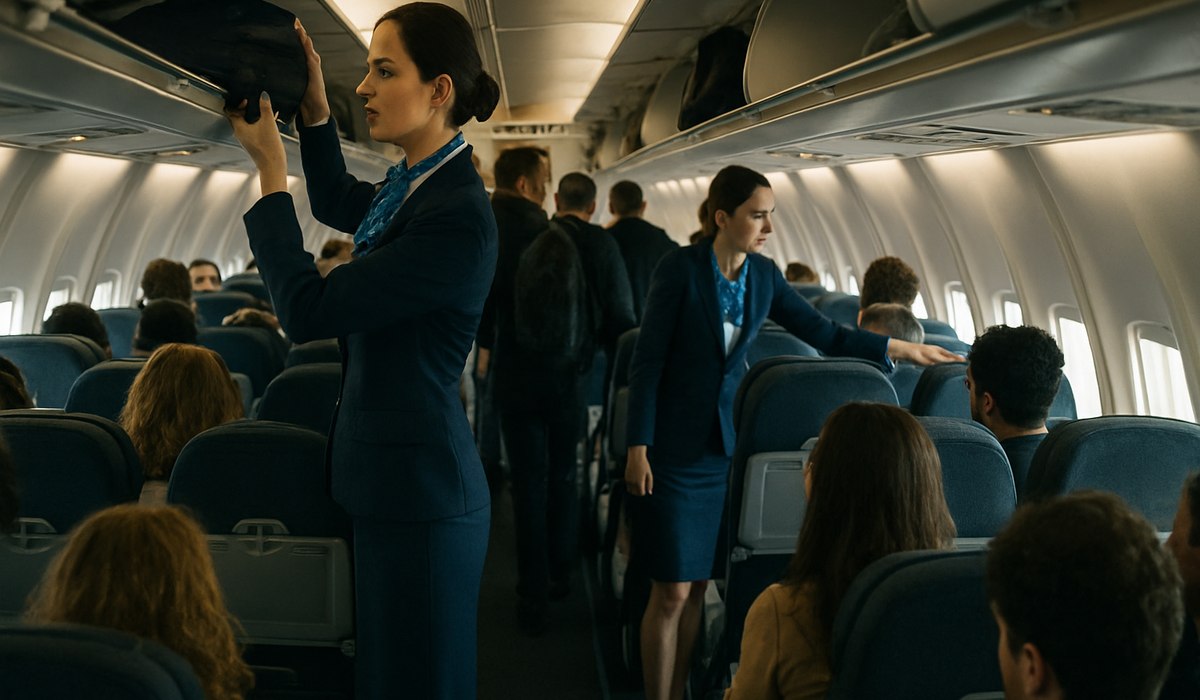
Image generated by AI
Why Flight Attendant Boarding Ranks as Peak Stress Period
Cabin crew members across major global carriers confirm that flight attendant boarding represents the most demanding phase of flight operations. Unlike mid-flight service or landing procedures, the boarding window compresses dozens of simultaneous challenges into 20-45 minutes. Flight attendants juggle passenger compliance, safety briefing delivery, luggage management, and customer service expectations while maintaining regulatory adherence and personal composure. This convergence of logistical, psychological, and safety demands transforms boarding into a crucible that tests every competency a flight attendant possesses.
The boarding process fundamentally differs from other flight phases because variables remain unpredictable. A smooth takeoff follows standardized procedures. A landing responds to predictable sequences. Boarding, however, introduces human behavior as an overwhelming unknown factor that no training fully prepares crew members to manage consistently.
Why Boarding Creates Peak Stress for Cabin Crew
The stress intensity during flight attendant boarding stems from multiple converging pressures that don't exist during other flight phases. Safety protocols must be communicated clearly despite passenger inattention and ambient airport noise. Flight attendants monitor overhead bin capacity while managing passenger frustration over luggage restrictions. They verify passenger counts, confirm identification when needed, and ensure seat assignments match ticket information—all while smiling professionally.
Timing pressure intensifies stress significantly. Airlines operate under strict gate schedules and on-time performance metrics. Delays during boarding cascade through daily operations, affecting subsequent flights and crew connections. Flight attendants absorb blame for delays they cannot control, from slow passengers to gate agent inefficiencies. This accountability for factors beyond their influence creates genuine psychological distress that persists throughout flights.
Physical demands compound the mental strain. Flight attendants remain standing for entire boarding periods in confined galleys. They lift heavy luggage into overhead bins despite airline restrictions designed to prevent such work. The galley environment grows increasingly warm and humid as hundreds of passengers board simultaneously. By takeoff, flight attendants face fatigue before the flight even begins—a reality most passengers never observe.
The Hidden Logistics Behind Gate-to-Takeoff Operations
Flight attendant boarding complexity extends far beyond greeting passengers. Crew members must verify emergency equipment functionality, including oxygen masks, life vests, and evacuation slides. They confirm that galley equipment is properly secured for flight. They conduct head counts against manifest totals. They identify passengers with special needs requiring assistance during emergency situations. Each responsibility demands attention while passenger interactions escalate around them.
Gate agents and flight attendants lack unified communication systems at many airports. Passenger miscounts occur frequently. Luggage gate-checks remain unscheduled until the last moment, requiring flight attendants to manage unexpected delays. Mechanical issues discovered during boarding create uncertainty about departure timing. Flight attendants must communicate calmly about these disruptions while maintaining safety standards that never compromise.
Staffing imbalances worsen boarding stress considerably. Narrow-body aircraft operate with fewer flight attendants than passenger volume sometimes requires. International flights introduce language barriers and complex documentation verification. Cross-cultural passenger behaviors differ markedly, requiring flight attendants to adapt communication styles rapidly. Training cannot prepare crew members for every permutation of boarding scenarios they will encounter throughout their careers.
Passenger Behavior and Safety Compliance Challenges
Passenger noncompliance with safety instructions and boarding procedures creates substantial stress for flight attendants managing flight attendant boarding phases. Approximately 30-40 percent of passengers worldwide fail to locate assigned seats efficiently, creating bottlenecks in cabin aisles. Passengers ignore overhead bin space limitations, forcing flight attendants to redistribute luggage or gate-check items while maintaining composure under pressure.
Electronic device usage during safety briefings remains endemic. Flight attendants observe passengers using phones, headphones, and tablets while safety instructions proceed. This inattention potentially compromises emergency response capabilities, yet enforcement feels awkward and confrontational. Flight attendants must educate rather than punish, creating stress through repeated soft corrections that feel ineffective.
Intoxicated passengers represent a distinct category of boarding challenge. Pre-flight alcohol consumption, increasingly normalized in airport lounges, sometimes results in passengers boarding impaired. Flight attendants must assess behavioral risks, arrange seating for safety, and potentially refuse boarding to protect other passengers—responsibilities that demand psychological fortitude and conflict management skills most people never develop.
Baggage disputes consume disproportionate boarding time. Passengers challenge weight restrictions, carry-on dimensions, and gate-check policies established before they board. Flight attendants serve as enforcement agents for policies they didn't create, absorbing customer frustration while remaining neutral professionally. This emotional labor exhausts crew members before flight operations even commence.
How Airlines Can Better Support Flight Attendants
Modern airline operations must acknowledge that flight attendant boarding stress is a structural issue requiring systematic solutions, not individual coping strategies. Increased staffing during peak boarding periods would distribute workload more sustainably. Cross-training gate agents to assist with cabin safety checks could reduce crew member responsibilities during the most stressful phase.
Technology integration offers measurable improvements. Digital seat maps available to flight attendants would accelerate passenger location verification. Pre-boarding mobile check-in and seat selection would reduce booking errors and gate-agent corrections. Real-time luggage tracking systems could communicate capacity issues to passengers before boarding begins, reducing last-minute gate checks.
Airline leadership must examine scheduling practices that compound fatigue. Flight attendants serving consecutive boarding periods without adequate breaks experience cumulative stress that impairs decision-making. Mandatory rest periods between flights, while economically costly, would enhance safety and improve crew retention. Investment in flight attendant mental health resources and stress management training acknowledges the psychological demands of boarding operations.
Gate operations optimization represents another critical intervention. Airlines could implement timed boarding zones more strictly, preventing passenger clusters that create galley congestion. Transparent communication about boarding delays, mechanical issues, and gate changes would reduce passenger frustration and secondary stress for flight attendants managing angry customers.
What This Means for Travelers
Understanding flight attendant stress levels during boarding helps passengers recognize their behavior's impact on crew safety and well-being. Travelers can actively support smoother boarding processes and create professional environments where flight attendants maintain focus on safety.
Here are actionable steps to enhance boarding experiences for everyone:
-
Arrive at your gate 15-20 minutes before boarding announcement to avoid rushing and last-minute seat location confusion
-
Verify your carry-on luggage dimensions before arrival at the airport using airline specifications available on official websites
-
Download airline apps to confirm seat assignments and boarding group information in advance of airport arrival
-
Locate your assigned seat quickly using digital seat maps, moving directly to your location without blocking aisles or discussing changes with flight attendants during boarding
-
Comply with safety briefing requirements by storing devices, securing seatbelts, and maintaining awareness of emergency procedures regardless of flight frequency
-
Report mechanical concerns or safety violations you observe to flight attendants after boarding completes rather than raising issues during the boarding window
-
Accept luggage policies gracefully, understanding that overhead bin limitations exist for safety and operational reasons, not revenue generation
-
Respond to flight attendant instructions immediately without negotiation, as boarding timelines affect subsequent flight operations and crew connections
Key Boarding Stress Data Points
| Factor | Impact Level | Frequency | Crew Response |
|---|---|---|---|
| Passenger luggage noncompliance | High | 35-45% of flights | Gate checks, physical movement |
| Inattention to safety briefings | Medium-High | 30-40% of passengers | Repeated instructions, frustration |
| Seat location confusion | High | 25-35% of boardings | Individual guidance, delays |
| Intoxicated passenger boarding | Medium | 5-10% of flights | Assessment, refusal authority |
| Mechanical delays announced during boarding | High | 8-12% of flights | Communication, uncertainty |
| Understaffed cabin crew | High | 15-20% of flights | Rushed procedures, safety risks |
Traveler Action Checklist
Passengers can meaningfully reduce boarding stress through simple behavioral adjustments that respect flight attendant responsibilities and safety priorities:
-
Check in online 24 hours before departure to secure seat assignments and reduce gate-agent workload during boarding
-
Pack carry-on luggage to manufacturer specifications and airline guidelines before arriving at the airport terminal
-
Proceed directly to your assigned seat without consulting flight attendants, other passengers, or overhead bin space availability
-
Maintain silence and focused attention during safety briefing delivery, setting an example for adjacent passengers
-
Secure personal items completely in overhead bins or under seats, preventing protrusion into aisles or adjacent seating areas
-
Respond to boarding announcements immediately rather than negotiating timing or group assignments with gate agents
-
Arrive at the gate minimum 30 minutes before scheduled departure for domestic flights, 45 minutes before international departures
-
Report safety concerns to flight crew after boarding completes rather than raising issues during the boarding window
FAQ
Q: Why do flight attendants seem stressed during boarding when it's part of their regular job? Boarding compresses dozens of simultaneous safety, operational, and customer service responsibilities into a brief window. Unlike other flight phases with standardized procedures, boarding introduces unpredictable passenger behavior, luggage management, timing pressures, and safety verification that creates peak stress levels. Flight attendants manage safety-critical functions while providing customer service—a combination that demands sustained attention and emotional regulation simultaneously.
Q: What is the most common cause of boarding delays that frustrates flight attendants? Passenger luggage management represents the leading boarding delay factor. Passengers ignore overhead bin limitations, requiring flight attendants to redistribute luggage or arrange gate checks. Secondary causes include passengers unable to locate assigned seats and incomplete pre-flight paperwork or identification verification. These delays directly impact subsequent flight schedules and crew connections, creating accountability pressures flight attendants cannot control.
Q: How long does flight attendant boarding typically require for standard aircraft? Boarding duration varies by aircraft size and airline procedures. Narrow-body aircraft typically complete boarding in 25-35 minutes. Wide-body international aircraft require 35-50 minutes depending on size and passenger count. Actual times depend on passenger cooperation, luggage management efficiency, and mechanical issues discovered during the boarding window. Airlines publish standard boarding times but rarely achieve them consistently.
Q: Can flight attendants refuse boarding to passengers for non-safety reasons? Flight attendants possess authority to refuse boarding for safety, security, and regulatory compliance reasons. They can deny boarding to intoxicated passengers, individuals without required documentation, and passengers with prohibited items. However, refusing boarding for behavioral or dress code reasons requires airline management authorization. Flight attendants operate within corporate policies that sometimes conflict with their personal judgment about passenger suitability.
Related Travel Guides
- Understanding Airline Safety Procedures: A Comprehensive Guide for Modern Travelers
- Flight Operations: How Airlines Optimize Gate Efficiency and On-Time Performance
- Passenger Rights During Flight Delays and Cancellations: Global Regulations Explained
Disclaimer
This article presents information based on operational practices documented across major international airlines and insights from aviation industry professionals. Content reflects boarding procedures, crew responsibilities, and passenger management practices in effect as of March 2026. Airlines continuously modify boarding procedures, staffing protocols, and operational requirements in response to regulatory changes and operational data.
Specific policies regarding luggage restrictions, boarding procedures, passenger compliance requirements, and flight attendant authority vary significantly between airlines, aircraft types, and airports. Passengers should verify current boarding procedures, baggage policies, and operational requirements directly with their airline before travel. For regulatory information about flight operations and passenger rights, consult the FAA, US DOT, and FlightAware.
Always verify specific operational requirements, boarding procedures, baggage policies, and flight status information directly with your airline or travel provider before travel. Airline policies and operational procedures change frequently and may differ substantially from content in this article.
Disclaimer
This article is for informational and educational purposes only. It does not constitute legal, financial, or professional advice. While we strive to provide accurate and up-to-date information, travel policies, regulations, and conditions change rapidly. Always verify information with official sources before making travel decisions. Nomad Lawyer makes no representations about the accuracy, reliability, completeness, or suitability of the information provided. Readers should consult qualified professionals for advice specific to their circumstances. The views expressed in this article are those of the author and do not necessarily reflect the views of Nomad Lawyer.
Raushan Kumar
Founder & Lead Developer
Full-stack developer with 11+ years of experience and a passionate traveller. Raushan built Nomad Lawyer from the ground up with a vision to create the best travel and law experience on the web.
Learn more about our team →