
Five Natural Wonders of America: Travel Guide to the Grand Canyon, Yellowstone, Everglades, Redwood Forests, and Hawaii's Volcanoes
Discover five of the most iconic natural wonders in the United States, featuring travel tips, safety guidelines, and regional highlight maps.

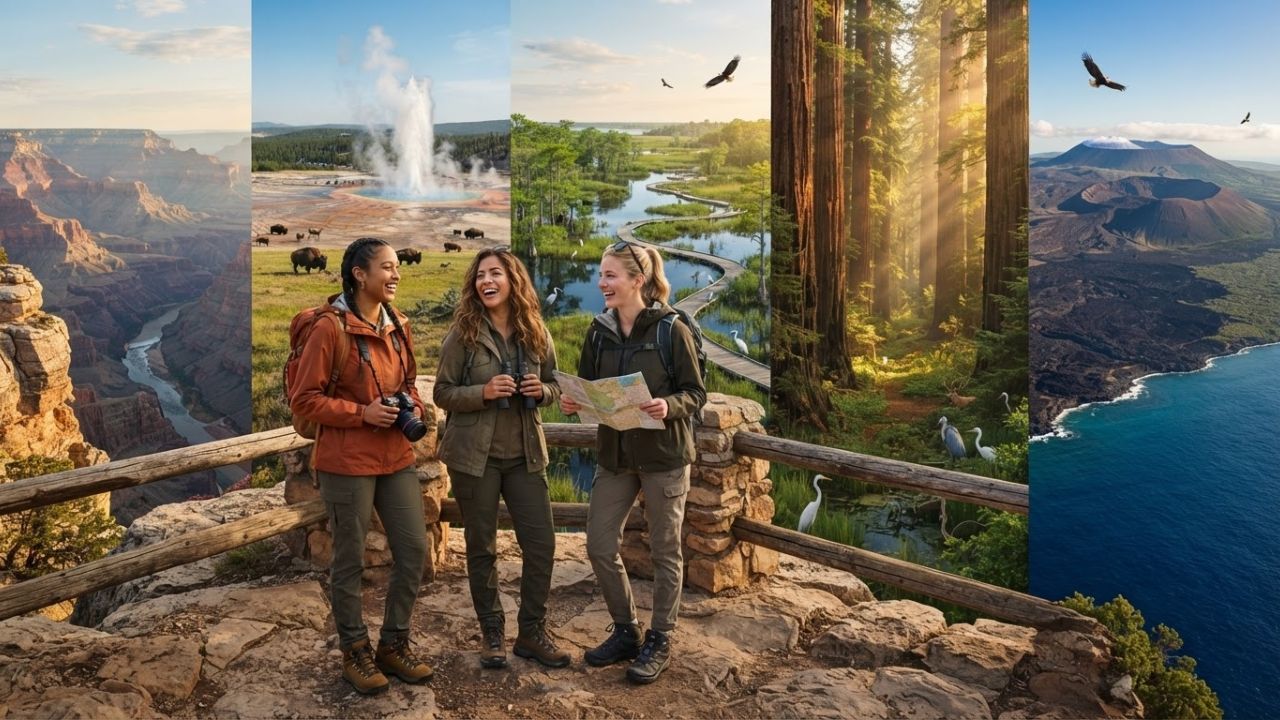
Image generated by AI
America's protected parks protect some of the most diverse ecosystems and geological formations on Earth. This guide provides travel details for visiting the country's five most celebrated natural destinations.
National Conservation Networks Preserve Regional Habitats
According to reports, outdoor tourism demand remains high as travelers seek nature-based getaways.
Conservation funds supported by the National Park Foundation (NPF) help protect delicate park environments from high visitor traffic.
Safety warnings issued by the National Park Service (NPS) advise hikers to review weather and elevation profiles before starting remote trails.
Because these sites feature unique geomorphic and biological systems, they require structured visitor management to prevent habitat degradation.
The table below summarizes the key features of the five natural wonders analyzed in this guide.
Core Features of America's Five Natural Wonders
| Natural Wonder | Geographic Location | Key Geological / Biological Features | Best Time for Sightseeing |
|---|---|---|---|
| Grand Canyon | Northern Arizona | Multi-layered rock gorge, Colorado River views | Spring and Autumn (mild canyon temperatures) |
| Yellowstone | Wyoming, Montana, Idaho | Active supervolcano, geysers, hot springs, wild bison | Summer (for complete road access) |
| Everglades | Southern Florida | Slow-moving freshwater wetlands, mangrove islands | Winter (dry season with fewer insects) |
| Redwood Forests | Northern California | Giant coastal redwoods, old-growth forests | Late Spring to Early Autumn |
| Hawaii Volcanoes | Big Island of Hawaii | Shield volcanoes, active lava flows, basalt plains | Year-round (subject to volcanic alerts) |
Grand Canyon Showcases Massive Geological Erosion
The Grand Canyon is one of the most prominent erosion gorges on the continent.
Carved by the Colorado River, the canyon exposes rock strata that chronicle two billion years of Earth's history.
The South Rim features accessible viewpoints, paved walking paths, and historic visitor lodges.
- Trail Safety: Routes like the Bright Angel Trail feature steep descents, requiring hikers to carry extra water and salty snacks.
- Seasonal Access: The North Rim offers a more isolated forest experience but closes during the winter season due to heavy snow.
- Environmental Rules: Park regulations forbid removing rocks or feeding local wildlife to preserve the natural setting.
Yellowstone Preserves Active Continental Geothermal Systems
Yellowstone National Park holds the distinction of being the world's first national park.
The park sits atop a major volcanic caldera, driving thousands of active hydrothermal features.
Features like the Old Faithful geyser erupt regularly, while the Grand Prismatic Spring displays vivid colors caused by thermophilic bacteria.
Beyond heat features, the park serves as a primary sanctuary for large North American mammals.
Bison, grizzly bears, and gray wolves roam the open valleys, requiring visitors to keep a safe distance of at least 25 yards from large animals.
Florida Everglades Hosts Slow-Moving Wetland Habitats
The Everglades in Florida is a massive wetland system characterized by shallow, slow-flowing fresh water.
Often called the "River of Grass," this system filters water across southern Florida before entering the Gulf of Mexico.
- Wildlife Diversity: The park supports a unique mix of fresh and saltwater species, including the American alligator.
- Endangered Species: The Florida panther and West Indian manatee rely on these protected wetlands for survival.
- Guided Excursions: Travelers can explore the channels using guided kayaks or shallow-draft airboats to limit vegetation damage.
Redwood Reserves Protect Ancient Coastal Forests
California's Redwood National and State Parks protect some of the tallest living organisms on Earth.
Coastal redwoods thrive in the cool, foggy climate of Northern California, growing over 300 feet tall.
Walking through groves like the Lady Bird Johnson Grove offers visitors an experience of scale that is rare in other forest systems.
These ancient trees can live for more than 2,000 years, relying on thick bark to resist fires and pests.
Joint management by state and federal teams focuses on restoring cut-over lands and preventing soil compaction around tree roots.
Hawaii Volcanoes Highlight Continuous Island Creation
Located on the Big Island, Hawaii Volcanoes National Park showcases the dynamic forces of active volcanism.
The park includes the active shield volcanoes of Kīlauea and Mauna Loa, which regularly reshape the coast with fresh lava.
- Volcanic Features: Visitors can walk through historic lava tubes, view active steam vents, and explore black basalt plains.
- Safety Protocols: Park rangers monitor sulfur dioxide gas levels to keep tourists away from toxic fumes.
- Native Ecosystems: The park protects unique plants and birds that evolved on isolated volcanic islands.
Why This Matters
Our analysis of visitor data indicates that national parks serve as crucial anchors for regional tourism economies. Gateway towns rely on park traffic to support lodging, dining, and outdoor guiding businesses.
However, high visitor volumes create management challenges, including waste disposal and trail erosion.
By maintaining strict entry caps and promoting off-peak travel, parks can preserve these landscapes.
This balance shows that conservation is essential to keep nature tourism sustainable.
Ultimately, these five natural wonders demonstrate the value of preserving wild spaces for education and scientific study.
Forward Outlook
Market trends suggest that national park administrators will implement more reservation systems to manage peak summer crowds. Ecotourism developers are projected to build low-impact accommodations outside park boundaries.
Expect park transport networks to transition to electric buses to reduce noise and emissions in wilderness zones. The demand for guided educational nature tours is projected to rise steadily over the next decade.
Disclaimer
This article is for informational and educational purposes only. It does not constitute legal, financial, or professional advice. While we strive to provide accurate and up-to-date information, travel policies, regulations, and conditions change rapidly. Always verify information with official sources before making travel decisions. Nomad Lawyer makes no representations about the accuracy, reliability, completeness, or suitability of the information provided. Readers should consult qualified professionals for advice specific to their circumstances. The views expressed in this article are those of the author and do not necessarily reflect the views of Nomad Lawyer.
Kunal K Choudhary
Co-Founder & Contributor
A passionate traveller and tech enthusiast. Kunal contributes to the vision and growth of Nomad Lawyer, bringing fresh perspectives and driving the community forward.
Learn more about our team →