
Finland Launches Helsinki-Tallinn Electric Aviation Study to Deploy Ultra Short Aircraft by 2026
Finland, the City of Helsinki, and Electra are analyzing the feasibility of ultra-short electric aircraft to connect Helsinki and Tallinn, targeting a reduction in travel friction for 7.5 million annual passengers.
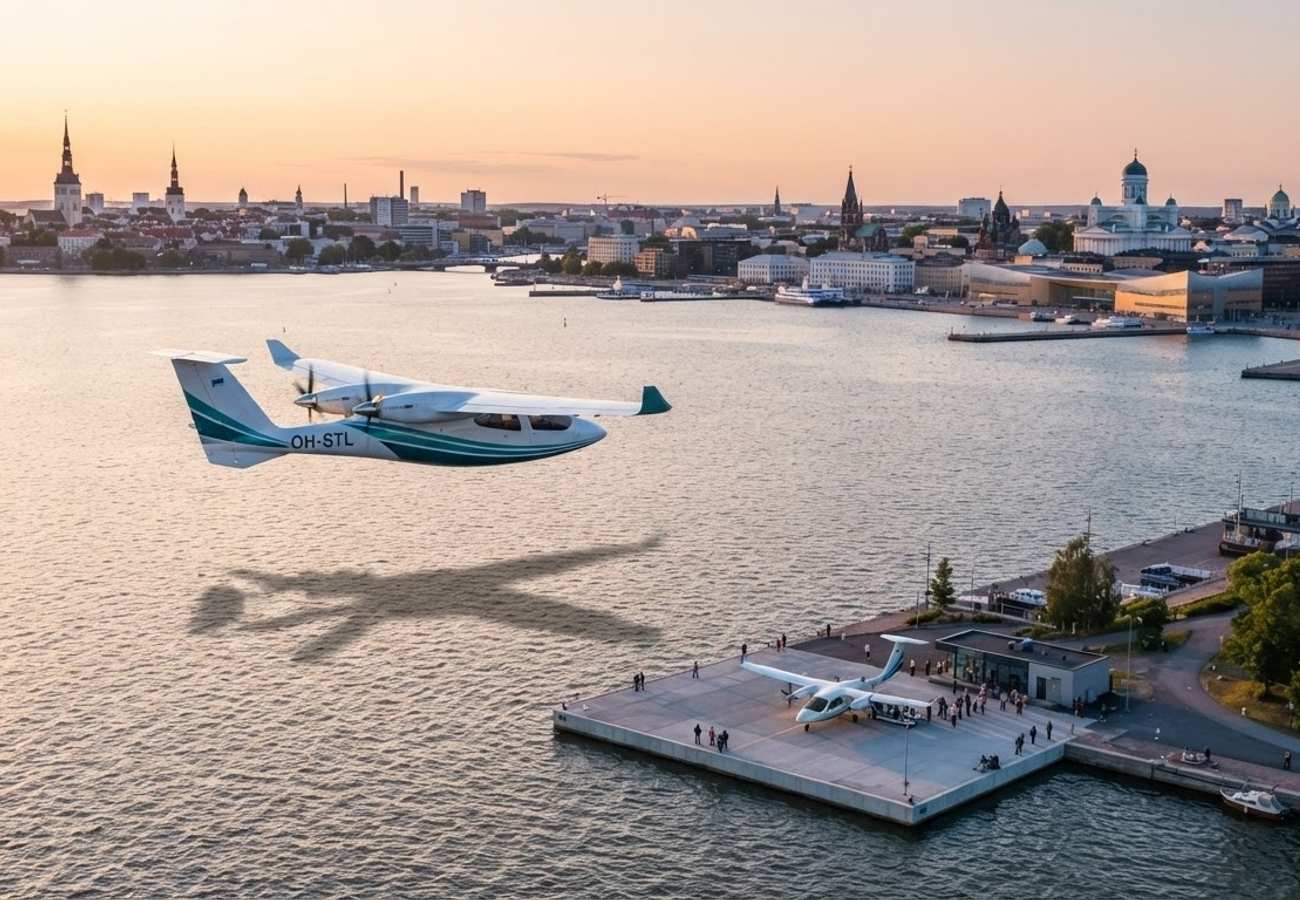
Image generated by AI
A strategic partnership between the City of Helsinki, Electra, and Haaga-Helia University of Applied Sciences aims to bypass traditional airport congestion via ultra-short electric aircraft. This initiative targets one of Northern Europe's most congested corridors, where 7.5 million passengers travel annually.
The Helsinki-Tallinn Electric Corridor
Finland has initiated a comprehensive feasibility study to integrate electric aviation into the transit link between Helsinki and Tallinn. The project centers on the "Direct Aviation" model, which utilizes next-generation Ultra Short aircraft designed to operate from compact access points rather than traditional international airport terminals.
The primary objective is to reduce the "travel friction" associated with the 80-kilometer crossing of the Gulf of Finland. By moving aviation access points closer to urban centers, businesses, and tourism hubs, the partners aim to create a sustainable alternative to current transit methods.
Infrastructure and Technical Specifications
The study focuses on the deployment of Electra’s specific aircraft technology, which diverges significantly from conventional regional jets.
- Take-off and Landing Distance: The Ultra Short aircraft require only approximately 50 metres of runway.
- Access Points: The model replaces massive terminals with compact aviation access points located within city limits.
- Operational Goal: Reducing ground transfer times and eliminating the lengthy security and boarding queues typical of major hubs.
- Timeline: The feasibility assessment is scheduled for completion by the end of 2026.
Current Transit Impact Breakdown
Our analysis of the Gulf of Finland corridor highlights the inefficiency of existing options for the 7.5 million annual travelers:
- Ferry Services: While frequent, the crossing generally takes two hours, excluding boarding and transfer time.
- Traditional Air Travel: Limited by the requirement to travel to international airports and navigate standard aviation security protocols, often negating the speed advantage of flight over short distances.
- Economic Drivers: High passenger volume is driven by consistent cross-border demand for business, education, and tourism.
Passenger Rights & Advisory: The Shift to Regional Air Mobility (RAM)
For the affected passenger, the transition from traditional hubs to "Direct Aviation" access points will fundamentally change the travel experience and the associated legal protections.
Rebooking and Delay Rights Our analysis of current aviation policy suggests that if these services operate under "Regional Air Mobility" (RAM) frameworks rather than standard commercial airline licenses, passenger rights may shift. However, for flights operating within the EU, passengers should expect the following:
- EU261/2004 Protections: If the service is classified as a commercial flight, passengers remain entitled to compensation for cancellations or significant delays, regardless of the aircraft's size or "ultra-short" status.
- Ground Access Shifts: Because the Direct Aviation model moves the "airport" closer to the city, the "departure time" will be more strictly enforced. Passengers should anticipate shorter check-in windows but less flexibility regarding late arrivals.
- Intermodal Connectivity: For those combining electric flights with rail or ferry, we advise documenting all legs of the journey to ensure comprehensive insurance coverage in the event of a missed connection.
The Helsinki-Tallinn corridor is an ideal testing ground for electric aviation due to the high density of short-haul traffic and the existing economic synergy between Finland and Estonia. The use of the EL2 technology demonstrator aircraft could provide a blueprint for other European city-pairs where traditional infrastructure is too costly or environmentally damaging to expand.
The success of this model depends on regulatory approval for urban access points. If the City of Helsinki can successfully integrate these compact sites into the urban fabric, it will signal a shift toward "decentralized aviation," where the aircraft comes to the passenger, rather than the passenger traveling to the aircraft.
The era of the mega-terminal may be giving way to the era of the urban air-port.
Related Travel Guides
Disclaimer
This article is for informational and educational purposes only. It does not constitute legal, financial, or professional advice. While we strive to provide accurate and up-to-date information, travel policies, regulations, and conditions change rapidly. Always verify information with official sources before making travel decisions. Nomad Lawyer makes no representations about the accuracy, reliability, completeness, or suitability of the information provided. Readers should consult qualified professionals for advice specific to their circumstances. The views expressed in this article are those of the author and do not necessarily reflect the views of Nomad Lawyer.