
Fastest Fighter Jets in Service 2026: Cold War Speed Still Dominates
Cold War-era fighter jets remain the fastest aircraft in service today, with speeds exceeding Mach 2 defining modern air force doctrine and deterrence strategy in 2026.

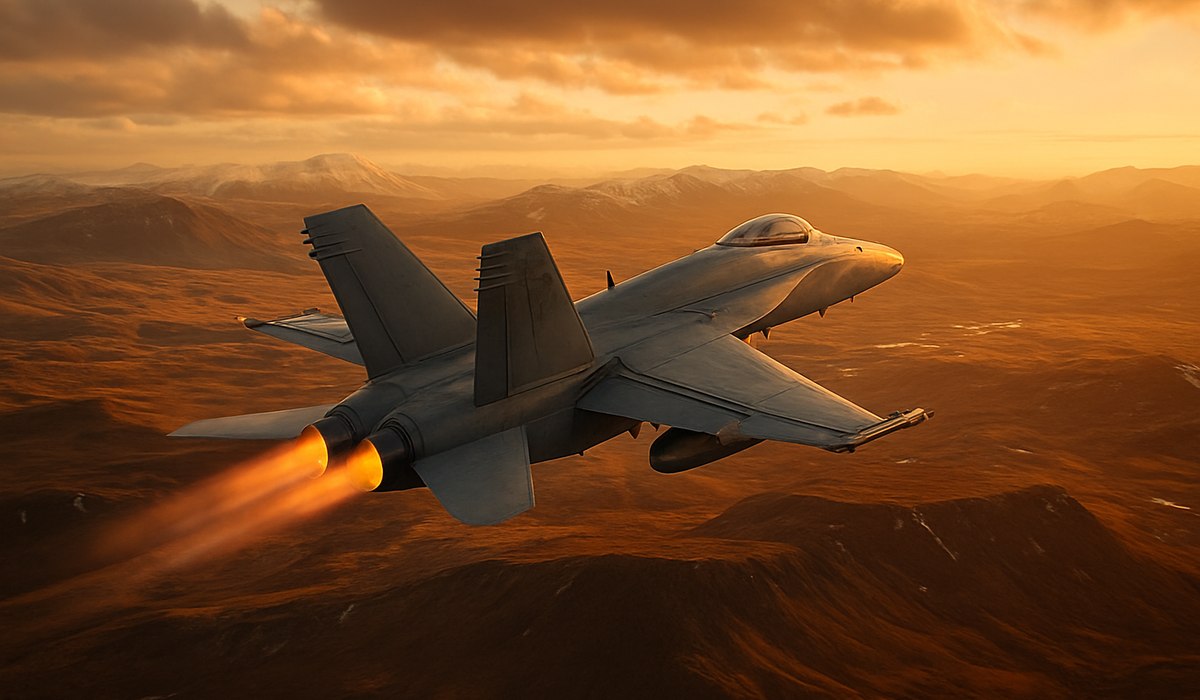
Image generated by AI
Decades-Old Speed Records Continue Defining Global Air Defense Networks
The fastest fighter jets operational worldwide in 2026 remain Cold War relics, with the Russian MiG-31 and American F-15 leading a select group of hypersonic interceptors that continue dominating global air forces. These aircraft, designed during the 1970s space race mentality, still fly critical patrol missions across Arctic territories, NATO airspace, and contested zones where rapid interception capabilities determine strategic advantage. Their extreme velocities—exceeding Mach 2.5 in most cases—remain irreplaceable in modern military doctrine, shaping how nations defend continental airspace and respond to aerial threats within minutes rather than hours.
Speed defines the fastest fighter jets in active service today, and understanding these aircraft matters for aviation enthusiasts, defense analysts, and travelers affected by airspace restrictions. The persistence of decades-old platforms reflects both engineering longevity and the continued strategic necessity of raw acceleration capability in modern deterrence frameworks.
Why Fighter Jet Speed Still Matters in Modern Warfare
Modern air defense doctrine hasn't abandoned speed despite advances in missile technology and drone systems. The fastest fighter jets provide irreplaceable interception coverage for nations requiring rapid scramble capabilities across vast territories. Russia's Arctic operations demand aircraft capable of reaching remote sectors in minutes, not hours—a requirement only the MiG-31's Mach 2.83 velocity satisfies reliably. Similarly, United States Air Force doctrinal planning centers on F-15 squadrons maintaining continental coverage, where the jet's Mach 2.5 performance enables response times measured in moments.
Speed enables several critical military functions: long-range patrol capability, rapid response to unknown aircraft, maintenance of deterrent presence in contested airspace, and the psychological reassurance that high-performance interceptors remain continuously operational. The fastest fighter jets also facilitate rapid deployment between distant bases, with their velocity advantage compressing strategic distances and permitting flexible force posturing. Manufacturers and defense ministries continue investing in hypersonic upgrades precisely because velocity remains strategically valuable in an era of advanced sensors and networked warfare.
The Fastest Fighter Jets Currently in Service
Five aircraft define the current hierarchy of operational speed performance in global air forces. The MiG-31, Russia's crown jewel of interceptor aviation, achieves an official top speed of Mach 2.83—approximately 1,865 miles per hour—making it the fastest fighter jet in active service. Developed during the 1980s as an advanced variant of the earlier MiG-25, the MiG-31 remains the primary long-range interceptor protecting Russian airspace and Arctic approaches. Its sustained high-speed capability allows patrols across enormous geographic ranges, critical for monitoring transcontinental flight corridors and detecting intrusion attempts.
The American F-15 Eagle, another 1970s-era design that continues serving multiple air forces worldwide, achieves Mach 2.5 speeds. Developed by McDonnell Douglas, the F-15 remains in service with the United States, Israel, Japan, and Saudi Arabia due to its exceptional sustained performance and combat reliability. Its speed advantage permits rapid interception across North American airspace and remains central to NORAD's continental defense strategy. Japan's Air Self-Defense Force depends on F-15 squadrons to monitor vast Pacific approaches, while Israeli Air Force F-15s provide deterrence capabilities across Middle Eastern operational zones.
The French-built Mirage 2000, operational in multiple nations' air forces, achieves speeds around Mach 2.2. Originally designed in the 1980s for European air forces and subsequently exported to nations including Egypt, Greece, and the United Arab Emirates, the Mirage 2000 combines speed with multi-role capability. Its velocity allows rapid interception missions while maintaining the agility required for modern air-to-air engagement.
Russia's MiG-29, another Cold War platform now operating in dozens of nations' air forces, reaches approximately Mach 2.3 at altitude. Designed during the 1980s as a lightweight interceptor complement to the heavier MiG-31, the MiG-29 became the most widely exported fighter jet globally. Its speed, combined with maneuverability and relatively modest operational costs, ensured its adoption by NATO members, post-Soviet nations, and numerous defense forces across Africa, Asia, and the Middle East.
The F-16 Fighting Falcon, manufactured by Lockheed Martin and operated by over 30 nations, achieves speeds near Mach 2.0. While newer than earlier platforms on this list, the F-16 represents the modern pinnacle of affordable, versatile supersonic aviation. Its exceptional speed-to-weight ratio, combined with sophisticated avionics and multi-role capability, made it the most widely adopted fighter jet design in history.
Cold War Engineering Meets 21st Century Doctrine
The persistence of 1970s and 1980s-era aircraft in 2026 reflects both pragmatic force structure decisions and the fundamental endurance of speed as a strategic advantage. Engineering solutions developed during the Cold War—titanium airframes withstanding hypersonic heating, engine technologies maximizing thrust-to-weight ratios, and fuel system designs enabling sustained supersonic cruise—remain largely unsurpassed. Modern upgrades have refreshed avionics, extended airframe service lives through structural inspections, and improved sensor integration without fundamentally compromising the original velocity specifications.
Nations continue operating the fastest fighter jets because replacement programs require decades and extraordinary funding. Developing entirely new interceptor platforms involves engineering challenges that legacy systems have already solved through decades of operational validation. The MiG-31, despite approaching 45 years of continuous service, continues receiving modernization packages extending its operational viability through 2030 and beyond. Russian aerospace manufacturers have implemented digital cockpit upgrades, enhanced radar systems, and improved air-to-air missile integration while maintaining the core speed advantage.
American F-15 variants similarly represent ongoing evolution rather than retirement. The F-15EX, produced recently for international customers and the United States Air Force, incorporates contemporary sensors and weapons systems while preserving the essential Mach 2.5 performance envelope that defines the platform's operational doctrine. This approach—retrofitting Cold War airframes with modern technology—proves economically rational for nations requiring continuous operational capability without committing to expensive multi-decade development programs for entirely new designs.
Speed's Role in Deterrence and Global Defense
The fastest fighter jets function as visible symbols of national air defense capability, with their operational status communicating strategic intent and readiness to potential adversaries. Russia's continued MiG-31 operations across Arctic territories signal sustained commitment to high-latitude sovereignty despite economic constraints. Similarly, continuous F-15 deployment across North American airspace, NATO borders, and Pacific regions underscores American commitment to regional security partnerships and continental defense.
Speed enables the rapid response capability that underpins modern air defense doctrine. When unknown aircraft approach national airspace, minutes matter. The fastest fighter jets compress response times, allowing scrambled interceptors to intercept targets before they penetrate sensitive airspace or approach critical infrastructure. This interception capability, demonstrated repeatedly through peacetime intercepts of foreign military aircraft and unauthorized civilian intrusions, depends directly on speed performance.
Deterrence also derives from visibility and historical reputation. Nations maintain the fastest fighter jets partly because their continued operation communicates sustained air defense capability. The psychological impact of high-performance interceptors patrolling contested airspace contributes to strategic stability through credible deterrence. Adversaries calculating risks associated with airspace violation must account for the rapid response capability that only Mach 2+ interceptors provide.
Key Operational Specifications and Performance Data
| Aircraft Model | Manufacturer | Nation of Origin | Top Speed (Mach) | Speed in MPH | Year Introduced | Current Operators |
|---|---|---|---|---|---|---|
| MiG-31 | Mikoyan | Soviet Union/Russia | 2.83 | 1 |
Disclaimer
This article is for informational and educational purposes only. It does not constitute legal, financial, or professional advice. While we strive to provide accurate and up-to-date information, travel policies, regulations, and conditions change rapidly. Always verify information with official sources before making travel decisions. Nomad Lawyer makes no representations about the accuracy, reliability, completeness, or suitability of the information provided. Readers should consult qualified professionals for advice specific to their circumstances. The views expressed in this article are those of the author and do not necessarily reflect the views of Nomad Lawyer.
Kunal K Choudhary
Co-Founder & Contributor
A passionate traveller and tech enthusiast. Kunal contributes to the vision and growth of Nomad Lawyer, bringing fresh perspectives and driving the community forward.
Learn more about our team →