
AirAsia Customer Scams: How to Spot Fake Support on Social Media in 2026
AirAsia warns travelers against fake customer service scams spreading on social media platforms in March 2026. Learn how to identify fraudulent accounts and protect yourself during booking and travel.

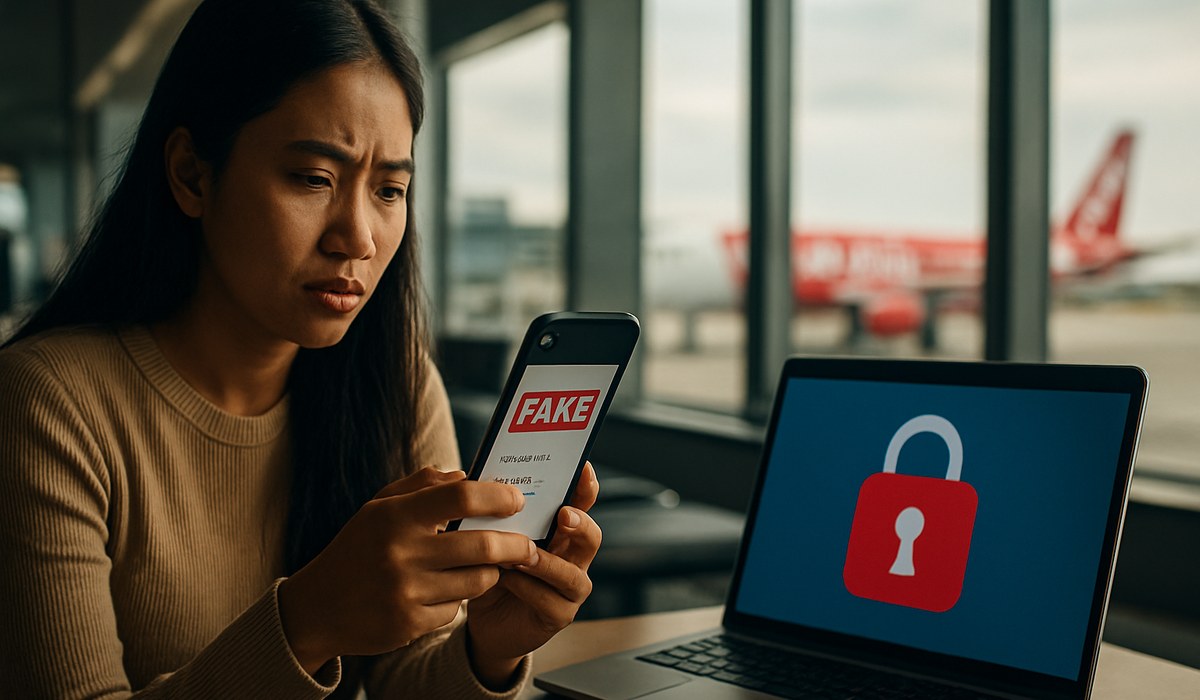
Image generated by AI
AirAsia has issued an urgent alert to passengers regarding fraudulent customer service accounts operating across major social media platforms. The airline emphasizes that travelers must use only official digital channels to avoid becoming victims of AirAsia customer scams that target unsuspecting travelers seeking booking assistance and flight support.
The low-cost carrier operates across Southeast Asia, serving millions of annual passengers from major hubs including Kuala Lumpur International Airport (KUL), Bangkok's Suvarnabhumi Airport (BKK), and Manila's Ninoy Aquino International Airport (MNL). Cybercriminals are exploiting travelers' trust in recognizable airline branding to steal personal data, payment information, and travel credentials through impersonation schemes on social platforms.
Understanding the AirAsia Customer Scams on Social Media
AirAsia customer scams typically begin when fake accounts impersonate official airline representatives on platforms like Facebook, Instagram, WhatsApp, and Twitter/X. Scammers respond to genuine customer inquiries with fake support links that redirect travelers to counterfeit websites designed to harvest login credentials and credit card details.
The fraudulent accounts use logos, brand colors, and official-sounding names to appear legitimate. When passengers message these fake profiles seeking help with bookings, cancellations, or refunds, scammers request payment through untraceable methods like cryptocurrency or wire transfers. AirAsia has documented hundreds of reports where travelers lost between $50 and $500 per incident to these scams.
The airline's actual customer service operates through verified channels only. Official support is available via the legitimate AirAsia mobile app, the company website (airasia.com), and verified social media accounts that display authentication checkmarks. Travelers should never click links provided through unsolicited social media messages, even if they appear to come from AirAsia.
How to Identify Fake Customer Service Accounts
Distinguishing between legitimate and fraudulent AirAsia support requires checking specific verification markers. Official accounts always display blue checkmarks next to the username on Facebook, Instagram, and Twitter/X indicating verified business status. Scammers cannot replicate this authentication, though they may create near-identical usernames with slight character variations.
Genuine AirAsia service representatives never request passwords, booking references, or payment information through direct messages or chat. They never ask travelers to download third-party apps or provide credentials via email links. The official AirAsia support team always directs customers to secure login pages on the verified mobile app or official website.
Fake profiles typically have minimal post history, few followers compared to the main AirAsia account, and generic response templates. Their messages contain spelling errors, awkward phrasing, or grammatical mistakes uncommon in professional airline communication. Legitimate customer service employs trained staff who provide personalized, coherent responses addressing specific booking details.
Visit IATA's traveler protection page to review industry standards for secure airline customer support. The International Air Transport Association provides guidelines helping passengers identify legitimate airline channels versus fraudulent operations.
Secure Digital Support Options Verified by AirAsia
The airline maintains multiple official channels for travelers to contact customer service safely. The primary method is the verified AirAsia mobile application, available on iOS and Android devices, where support chats are encrypted end-to-end. Users can access booking management, refund requests, and flight status updates directly within the app's verified portal.
The official website airasia.com provides a secure "Contact Us" section with live chat functionality and ticketed support systems. Emails submitted through the website contact form are handled by verified AirAsia staff members. Response times typically range from 24 to 72 hours depending on query complexity.
Phone support remains available through verified hotline numbers listed exclusively on the AirAsia website. These numbers vary by country and region, with Southeast Asian travelers accessing regional support centers. AirAsia operates customer service hubs in Kuala Lumpur, Bangkok, and Manila with multilingual staff capable of handling complex travel disruptions and booking modifications.
Social media verification through official handles (@AirAsia on Twitter/X, AirAsia on Facebook) offers limited support for urgent issues. However, the airline directs detailed requests to the mobile app or website. This tiered approach ensures that travelers with critical needs reach human agents rather than automated responses or scam accounts.
Real Consequences of AirAsia Customer Scams for Travelers
Victims of AirAsia customer scams face multiple consequences extending beyond immediate financial loss. When scammers obtain booking references and personal identification details, they can access legitimate AirAsia accounts, modify flight bookings, and redirect itineraries. Travelers have arrived at airports to discover their reservations changed to different dates or seats.
Identity theft represents a severe secondary risk when scams capture passport numbers, dates of birth, and travel document information. Criminal networks use this data to apply for credit cards, secure loans, or commit fraud under victims' identities months after the initial scam. Recovery requires filing police reports and working with credit agencies across multiple countries.
Payment fraud occurs when travelers share credit card details with scammers posing as AirAsia representatives. Even after reporting unauthorized charges to banks, the fraud investigation process takes 30 to 90 days. During this period, travelers may face declined transactions, account freezes, and disrupted access to legitimate flight bookings.
Emotional distress affects victims who trusted recognizable airline branding. Many travelers report anxiety when booking subsequent flights and hesitation using digital platforms for legitimate travel purchases. This understandably impacts their willingness to use convenient mobile booking services even from verified, secure airlines.
Travel Protection Measures Against Digital Scams
Travelers must implement proactive security habits when researching airlines and communicating with customer service. Start by bookmarking the official AirAsia website (airasia.com) and accessing it only through direct URLs or authenticated search results. Never click booking links shared through emails, text messages, or social media messages, regardless of sender claims.
Enable two-factor authentication on AirAsia app accounts using authenticator apps rather than SMS-based verification. SMS interception by sophisticated scammers is technically possible, while authenticator app codes cannot be remotely stolen. Update passwords regularly and use unique, complex passwords not recycled across multiple accounts.
Before sharing any personal information with customer service representatives, verify their legitimacy independently. Call AirAsia's verified hotline number (found on the official website) to confirm that an agent handling your request is legitimate. Never rely on phone numbers provided through social media or unsolicited communications.
Consider using credit card protections and dispute resolution services when purchasing through airline platforms. Credit cards offer stronger fraud protection than debit cards or direct bank transfers. Many travelers register for travel insurance that includes identity theft coverage and emergency rebooking assistance.
| Security Indicator | Legitimate AirAsia Support | Common Scam Tactics | Verification Method |
|---|---|---|---|
| Account Status | Blue verified checkmarks on all platforms | No checkmarks; slight name variations | Check official account badges |
| Communication Method | Encrypted app, website portal, verified phone | Direct messages, email links, WhatsApp | Use only app/website/hotline |
| Information Requests | General booking questions only | Passwords, full card numbers, OTP codes | Official support never asks these |
| Response Quality | Personalized, specific to your booking | Generic templates, spelling errors | Read message tone and detail |
| Resolution Process | Direct refunds to original payment method | Requests for cryptocurrency or wire transfers | Legitimate airlines refund originally |
| Link Authenticity | airasia.com domain only | Lookalike domains (.co, .net, .app variations) | Verify complete URL in browser |
Traveler Action Checklist
-
Verify the Account: Before messaging any airline account on social media, confirm it displays a blue verification checkmark and has high follower counts consistent with official brands.
-
Bookmark Official Sites: Save the legitimate AirAsia website (airasia.com) in your browser to avoid clicking malicious search results or phishing links.
-
Download the Official App: Get the AirAsia mobile app exclusively from Apple App Store or Google Play Store, never from third-party sources or links shared via messages.
-
Never Share Passwords: Official customer service representatives never request passwords, personal identification numbers, or one-time passwords under any circumstances.
-
Verify Through Alternate Channels: If you receive suspicious communications, independently call the AirAsia verified hotline number listed on the official website to confirm legitimacy.
-
Report Fraudulent Accounts: Use the social media platform's native reporting tools to flag fake AirAsia accounts, then contact AirAsia directly through verified channels to report the scam.
-
Monitor Your Accounts: Check your AirAsia account and linked payment methods regularly for unauthorized changes, unfamiliar bookings, or suspicious activity.
-
Document Everything: Save screenshots of any suspicious communications, including fake account names, message content, and timestamps for potential police reports.
What This Means for Travelers in 2026
The proliferation of AirAsia customer scams highlights critical gaps between traveler digital literacy and sophisticated fraud tactics. Airlines cannot prevent every scam attempt, placing responsibility on individual passengers to implement protective measures.
For frequent travelers to Southeast Asia, this means treating any unsolicited customer service contact with skepticism regardless of apparent legitimacy. Airlines with millions of users cannot realistically contact passengers first; legitimate customer service responds only to traveler-initiated inquiries through official channels.
Budget-conscious travelers using low-cost carriers like AirAsia should allocate time for independent verification before completing any transactions initiated through social platforms. A five-minute verification call costs nothing compared to $200+ losses from payment fraud or identity theft recovery complications.
Travel insurance becomes increasingly valuable in 2026, with leading policies including coverage for identity theft, emergency rebooking, and fraud recovery assistance. Policies specifically addressing digital travel scams remain uncommon, making personal vigilance the most reliable protection mechanism.
Frequently Asked Questions
What are the most common AirAsia customer scams targeting travelers? The predominant AirAsia customer scams involve fake social media accounts impersonating airline representatives who request payment for booking modifications, refunds, or service fees through untraceable payment methods. Scammers create near-identical usernames without verification badges and direct victims to counterfeit websites harvesting login credentials.
How can I report suspected AirAsia customer scams to the airline? Report fake accounts directly to AirAsia through the verified customer service channels: contact the mobile app support chat, submit a complaint through airasia.com's contact form, or call the official hotline number listed on the website. Additionally, use the social media platform's reporting tools to flag fraudulent accounts impersonating AirAsia.
What should I do if I already provided payment information to a scammer claiming to be AirAsia support? Immediately contact your bank or credit card company to report fraudulent charges and request account monitoring. File a police report in your jurisdiction and contact AirAsia's verified support channels to report the scam. Change your AirAsia account password and enable two-factor authentication to prevent further unauthorized access.
Are AirAsia customer scams affecting bookings made through the official app and website? Bookings made exclusively through the verified AirAsia mobile app and official website (airasia.com) are protected by the airline's security infrastructure. Scams primarily target travelers who interact with fake accounts on social media or click links in unsolicited communications, bypassing official booking security entirely.
Related Travel Guides
Southeast Asia Flight Safety: How to Book Securely on Budget Airlines
Digital Travel Scams: Protecting Your Identity While Booking International Flights
AirAsia Baggage Policy and Customer Service: Everything Travelers Need to Know
Disclaimer
This article is for informational and educational purposes only. It does not constitute legal, financial, or professional advice. While we strive to provide accurate and up-to-date information, travel policies, regulations, and conditions change rapidly. Always verify information with official sources before making travel decisions. Nomad Lawyer makes no representations about the accuracy, reliability, completeness, or suitability of the information provided. Readers should consult qualified professionals for advice specific to their circumstances. The views expressed in this article are those of the author and do not necessarily reflect the views of Nomad Lawyer.
Raushan Kumar
Founder & Lead Developer
Full-stack developer with 11+ years of experience and a passionate traveller. Raushan built Nomad Lawyer from the ground up with a vision to create the best travel and law experience on the web.
Learn more about our team →