
FAA Ground Stops at Chicago O'Hare and Atlanta Hartsfield-Jackson Trigger Massive US Flight Cancellations in 2026
Severe weather and critical staffing shortages led the FAA to issue ground stops at six major US hubs, including Chicago O'Hare and Atlanta, resulting in over 1,700 cancellations.

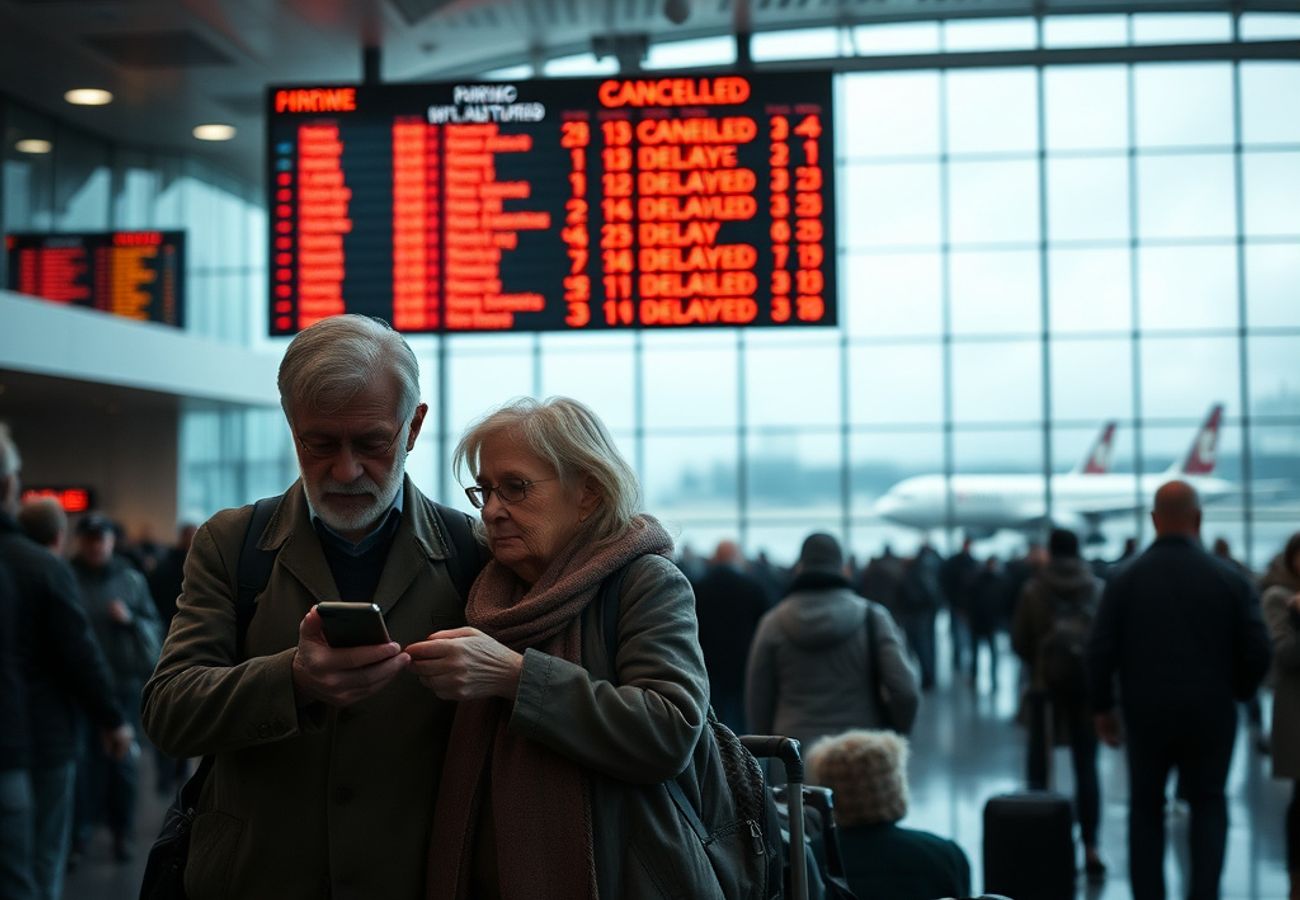
Image generated by AI
[Chicago, July 29, 2026] — A combination of volatile weather systems and acute air traffic control staffing shortages forced the Federal Aviation Administration (FAA) to implement sweeping ground stops across six of the United States' most critical aviation hubs on Monday. The disruptions centered on the world's highest-volume airports, Chicago O'Hare International Airport (ORD) and Atlanta Hartsfield-Jackson International Airport (ATL), leaving thousands of passengers stranded and triggering a ripple effect of cancellations that extended into Tuesday.
The systemic failure highlights a fragile aviation infrastructure struggling to balance peak summer demand with operational constraints. As thunderstorms swept through the Midwest and East Coast, the FAA was forced to halt aircraft departures to ensure safety, while simultaneous staffing deficits at New York-area airports exacerbated the gridlock.
Severe Weather and Staffing Deficits Trigger Ground Stops
The operational paralysis began on Monday, June 27, as the FAA issued ground stops at several primary gateways. While atmospheric conditions were the primary driver in the Midwest, the situation on the East Coast was complicated by a lack of available air traffic control personnel.
The following airports were officially placed under ground stop orders:
- O'Hare International Airport (ORD)
- Newark Liberty International Airport (EWR)
- LaGuardia Airport (LGA)
- John F. Kennedy International Airport (JFK)
- Chicago Midway International Airport (MDW)
- Atlanta Hartsfield-Jackson International Airport (ATL)
The impact was felt most acutely at Chicago O'Hare, where thunderstorms created a bottleneck that saw more than 1,000 combined arrivals and departures cancelled. According to FAA data, the average ground delay at ORD reached 438 minutes, effectively freezing movement at the airport that handles the highest flight volume globally.
Quantitative Analysis of Flight Disruptions
Data from FlightAware reveals a staggering scale of instability across the national airspace. On Monday, 1,737 flights were cancelled within, into, or out of the United States. Beyond cancellations, the system suffered 9,034 delays.
Atlanta's Hartsfield-Jackson International Airport emerged as a primary hotspot for delays, recording 491 departure delays, which impacted approximately 39% of its total scheduled flight volume.
Top Airports by Departure Cancellations (July 27)
| Rank | Airport | Cancellations |
|---|---|---|
| 1 | O'Hare International Airport | 531 |
| 2 | LaGuardia Airport | 119 |
| 3 | Newark Liberty International Airport | 82 |
| 4 | Chicago Midway International Airport | 62 |
| 5 | John F. Kennedy International Airport | 43 |
Airline Impact and Regional Carrier Vulnerability
While legacy carriers bore the brunt of the volume, regional operators faced the most severe proportional disruptions. SkyWest reported the highest number of cancellations for a single carrier on Monday, totaling 298 flights.
The major U.S. airlines also saw significant operational hits, with United Airlines and American Airlines leading the legacy group in cancelled services.
Top Airlines by Cancelled Flights (July 27)
| Rank | Airline | Cancellations |
|---|---|---|
| 1 | SkyWest | 298 |
| 2 | Republic | 268 |
| 3 | United Airlines | 234 |
| 4 | American Airlines | 173 |
Passenger Recovery and Flexible Rebooking Policies
In response to the chaos, several major carriers initiated flexible rebooking windows to mitigate passenger frustration. United Airlines announced a waiver for change fees and fare differences for affected travelers, provided the new flight departs between July 27, 2026, and July 30, 2026. To qualify, tickets must remain in the same cabin and serve the same city pair.
Delta Air Lines implemented similar rebooking measures for its New York-area hubs, including Newark (EWR), White Plains (HPN), JFK, and LaGuardia (LGA).
American Airlines: Eligible Hubs for Flexible Rebooking (July 28)
- Baltimore, Maryland (BWI)
- Charlotte, North Carolina (CLT)
- New York Kennedy, New York (JFK)
- New York LaGuardia, New York (LGA)
- Newark, New Jersey (EWR)
- Philadelphia, Pennsylvania (PHL)
- Washington Dulles, Washington D.C. (IAD)
- Washington Reagan, Washington D.C. (DCA)
- White Plains / Westchester County, New York (HPN)
United Airlines: Eligible Hubs for Flexible Rebooking (July 28)
- Baltimore, MD (BWI)
- Washington, DC (DCA)
- Newark, NJ/New York, NY (EWR)
- Washington, DC (IAD)
- New York, NY (JFK)
- New York, NY (LGA)
- Philadelphia, PA (PHL)
Real-World Impact on Traveler Logistics
The disruptions extended beyond the tarmac, impacting ground transportation and airport accessibility. Travelers reporting from O'Hare noted that expressways were heavily congested and the Blue Line train service was operating at a crawl, urging others to arrive hours earlier than scheduled.
At the New York hubs, the frustration was centered on the "invisible" cause of the delays. Passengers reported spending entire days in terminals at JFK, LGA, and Newark, citing official notices that the ground stops were the result of insufficient air traffic control staffing rather than weather.
The instability persisted into Tuesday morning, with JetBlue reporting 223 cancellations, primarily affecting its New York operations. Industry observers expect continued volatility as further thunderstorms are forecasted and staffing shortages remain unresolved.
Why This Matters: The Logistical and Legal Reality
For the modern traveler, these events signal a shift in how "uncontrollable" delays should be managed. When a ground stop is issued by the FAA, it is typically classified as a "force majeure" or an "act of God" (in the case of weather), which often exempts airlines from providing hotel vouchers or cash compensation under standard contract of carriage terms.
However, the mention of "staffing shortages" introduces a critical legal grey area. If delays are caused by an airline's inability to staff its own crews, the liability is clear. But when the FAA—a government entity—fails to provide enough air traffic controllers, the passenger is often left in a regulatory vacuum where neither the airline nor the government is held financially accountable for the lost time.
From a logistical standpoint, the 438-minute average delay at O'Hare demonstrates that the "hub-and-spoke" model is highly vulnerable. A failure at a single mega-hub like ORD or ATL doesn't just affect local passengers; it disrupts the timing of connecting flights across the entire North American continent.
Travelers are advised to monitor flight status in real-time and maintain flexible itineraries during the peak summer thunderstorm season.
Related Travel Guides
Disclaimer
This article is for informational and educational purposes only. It does not constitute legal, financial, or professional advice. While we strive to provide accurate and up-to-date information, travel policies, regulations, and conditions change rapidly. Always verify information with official sources before making travel decisions. Nomad Lawyer makes no representations about the accuracy, reliability, completeness, or suitability of the information provided. Readers should consult qualified professionals for advice specific to their circumstances. The views expressed in this article are those of the author and do not necessarily reflect the views of Nomad Lawyer.
Raushan Kumar
Founder & Lead Developer
Full-stack developer with 11+ years of experience and a passionate traveller. Raushan built Nomad Lawyer from the ground up with a vision to create the best travel and law experience on the web.
Learn more about our team →