
Aviation Updates: FAA Bans SFO Side-by-Side Landings, Triggering Summer Travel Chaos and Massive Flight Delays
A strict new FAA safety mandate forces staggered arrivals at San Francisco International Airport, colliding with runway construction to cause severe airport disruptions.

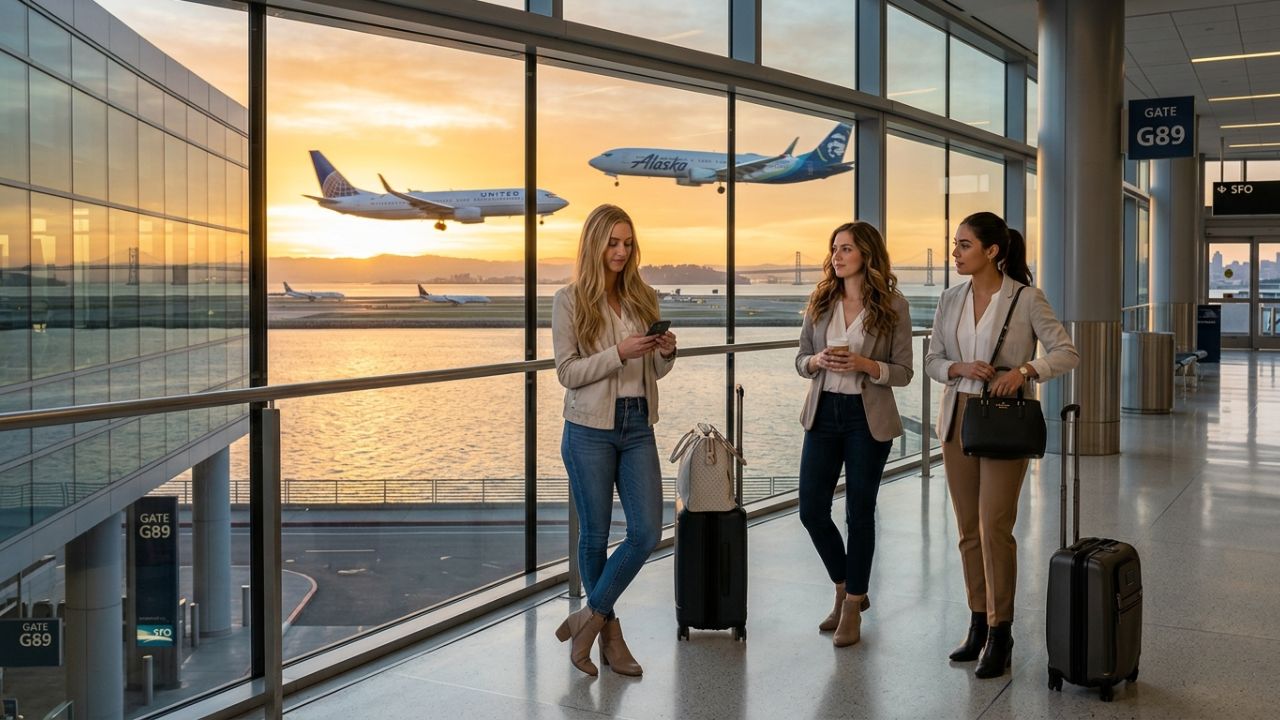
Image generated by AI
Aviation Updates: FAA Bans SFO Side-by-Side Landings, Triggering Summer Travel Chaos and Massive Flight Delays
In a massive blow to West Coast aviation capacity, the Federal Aviation Administration has aggressively banned San Francisco International Airport’s iconic side-by-side parallel landings, instantly creating an operational bottleneck that threatens to plunge the peak summer season into systemic travel chaos.
Image generated by AI
As urgent airline news platforms and critical aviation updates relentlessly analyze the terrifying fragility of major US airport infrastructure, a severe new regulatory mandate has just crippled arrival capacity in Northern California. The Federal Aviation Administration (FAA) has officially executed a massive safety intervention at San Francisco International Airport (SFO), strictly prohibiting the airport's highly famous side-by-side visual approaches during clear weather. Because SFO's primary east-west arrival corridors—Runways 28L and 28R—feature a highly compressed centreline spacing of just 750 feet, the FAA now legally mandates a staggered arrival sequence to enforce greater longitudinal separation. This massive restriction instantly destroys the airport's historical arrival efficiency. To make matters vastly worse, this severe regulatory crackdown violently intersects with a massive, six-month runway repaving project. By severely reducing hourly throughput just as peak summer demand explodes, this toxic combination of construction and regulation practically guarantees massive airport disruptions, cascading connection failures, and the terrifying threat of rolling flight cancellations across the entire Bay Area travel grid.
Expanded Overview: The SFO Capacity Crunch
When analyzing the massive logistical complexity of global aviation hubs, SFO's geographic constraints represent a terrifying vulnerability.
SFO’s entire punctuality profile relies heavily on maximizing the throughput of its closely spaced parallel runways. Airports possessing massive footprints with widely spaced runways can easily execute simultaneous operations, completely shielding themselves from sudden capacity drops. SFO simply does not have this luxury; its historic Bay-side footprint forces extreme reliance on tight operational sequencing. When standard, side-by-side visual separation is stripped away by federal regulators, the airport loses its absolute primary advantage. For the global travel trade—including massive tour operators, cruise lines, and corporate convention planners—this sudden loss of arrival flexibility violently transforms the 2026 summer itinerary planning phase into an agonizing exercise in risk management, as delayed arrivals become a mathematical certainty.
Section-Wise Breakdown: The Staggered Arrival Mandate
The precise mathematics dictating this new FAA mandate expose exactly why SFO is facing a massive summer meltdown.
Historically, during normal, fair-weather conditions using side-by-side visual approaches, SFO could efficiently accommodate approximately 45 arrivals per hour. By forcing aircraft into a staggered, single-file arrival pattern to maintain greater separation over the 750-foot parallel gap, the FAA has brutally slashed that arrival rate down to approximately 36 per hour. While a drop of nine aircraft per hour may appear modest, during massive morning, early afternoon, and evening banking peaks—when international wide-bodies and domestic narrow-bodies aggressively converge on the airport simultaneously—that missing capacity instantly triggers massive airborne holding patterns, destroying block times and severely straining fuel reserves.
Section-Wise Breakdown: The Infrastructure Collision
This terrifying capacity reduction would be a massive crisis on its own, but it has violently collided with a massive infrastructure overhaul.
SFO is currently executing a brutal six-month repaving closure of Runway 1R/19L, operating from 30 March 2026 through 2 October 2026. Costing a massive 180 million US dollars (with 92.1 million heavily funded by the FAA), the project forces the airport to use Runway 1L solely to reduce ground congestion, completely removing vital north-south capacity. Before the FAA visual approach ban, SFO projected less than 10% of flights would suffer delays due to the construction. Now, with both the construction and the staggered arrival mandate active, official SFO commission data explicitly warns that an agonizing 25% of all incoming flights face severe delay exposure, instantly turning the airport into a massive operational chokepoint.
Flight Details: SFO Operational Capacity Constraint Matrix
The exact operational telemetry outlining this highly critical capacity reduction, detailing specific runway spacing metrics and massive delay projections, has been consolidated into the mandatory matrix below.
SFO Operational Capacity Constraint Matrix (2026)
| Operational Metric | Verified Aviation Data |
|---|---|
| Airport Facility | San Francisco International Airport (SFO) |
| Runway Pair Affected | 28L and 28R (East-West parallel runways) |
| Runway Centreline Spacing | 750 feet |
| Normal Arrival Rate (Clear) | ~45 arrivals per hour |
| New Staggered Arrival Rate | ~36 arrivals per hour |
| Simultaneous Construction | Runway 1R/19L repaving (30 March – 2 October 2026) |
| Projected Delay Exposure | ~25% of all incoming flights |
Passenger Impact: The Threat to Conventions and Connections
For the millions of passengers utilizing this massive West Coast hub, the loss of arrival capacity guarantees highly stressful itineraries.
SFO handled a massive 54,118,814 passengers across 55 airlines in fiscal year 2025, operating 7,226 weekly nonstop departures. It heavily relies on feeding domestic traffic into major international routes serving Taipei, London, Seoul, Vancouver, and Hong Kong. The new delay matrix severely threatens these complex, high-yield connections. Furthermore, the massive San Francisco MICE (Meetings, Incentives, Conferences, and Exhibitions) sector is highly vulnerable. In 2026 alone, the city expects 38 massive Moscone Center events to generate 674,000 room nights. When group arrivals suffer massive 30-minute to one-hour delays due to staggered landing rates, heavily orchestrated coach dispatches, hotel check-in waves, and vital convention opening ceremonies are violently thrown into absolute chaos.
Industry Analysis: A Multi-Billion Dollar Economic Risk
Aviation economists explicitly warn that SFO’s operational stability is the absolute foundation of the entire Bay Area economy.
The region expects to welcome a massive 24.2 million visitors in 2026, generating an incredible 9.9 billion US dollars in spending (including 2.3 million international visitors spending 5.2 billion). The airport's economic footprint is staggering: generating over 14.4 billion US dollars in on-airport revenues and supporting over 42,000 airport jobs. When air service visitor spending is factored in (supporting over 54,000 jobs), SFO's total regional economic impact sits at a massive 85 billion US dollars, supporting nearly 248,000 total jobs. A 25% delay exposure across the airport violently threatens this massive economic engine, causing catastrophic ripple effects for hotels, restaurants, and premium regional tourism sectors.
Conclusion: Adapting to the New Reality
Ultimately, the FAA's massive safety intervention permanently ends the iconic era of side-by-side visual approaches at SFO, radically altering the operational reality of the Bay Area. While the mandate drastically improves baseline safety margins for closely spaced parallel runways, it completely destroys the airport's historical arrival efficiency. As SFO battles through a brutal summer of massive runway construction, airlines and travel operators must aggressively overhaul their network planning. To prevent total travel chaos, itineraries must feature heavily padded connection buffers, entirely accepting that massive delays at SFO are no longer a rare exception, but an absolute structural guarantee throughout the entirety of the 2026 summer season.
Key Takeaways
- Massive Safety Mandate: The FAA has officially banned side-by-side visual approaches to SFO's tightly spaced (750 feet) parallel Runways 28L and 28R.
- Crushed Capacity: Forcing staggered, single-file arrivals slashes SFO’s clear-weather arrival rate from approximately 45 down to just 36 aircraft per hour.
- Simultaneous Construction: The severe capacity drop collides with a massive, six-month, 180 million US dollar repaving closure of Runway 1R/19L running until 2 October 2026.
- Massive Delays Guaranteed: SFO data warns that the combination of the FAA mandate and runway closure exposes an incredible 25% of all incoming flights to severe delays.
- Economic Threat: The operational bottleneck severely threatens SFO's massive 85 billion US dollar regional economic impact and 2026 Moscone Center convention traffic.
FAQ: SFO FAA Runway Mandate & Delays 2026
Why did the FAA ban side-by-side landings at SFO? Because SFO's parallel Runways 28L and 28R are separated by a highly compressed 750 feet, the FAA strictly mandated staggered arrivals to guarantee vastly superior longitudinal separation between arriving aircraft.
How much arrival capacity is SFO losing due to the new staggered rule? By eliminating simultaneous visual approaches, SFO's hourly clear-weather arrival capacity has been brutally reduced from approximately 45 arrivals per hour down to just 36.
When does the SFO runway construction end? The massive 180 million US dollar repaving project on Runway 1R/19L, which severely limits airport flexibility, is officially scheduled to conclude on 2 October 2026.
Related Travel Guides
- American, Delta, United Airlines Adopt Identical Loyalty Math in 2026
- Gulf Air Elevates Falcon Gold Business Class with Historic French Skincare House PAYOT and Eco-Design Kits
- Defeating Maintenance Delays: Vietjet and EECO Launch Massive U-Tapao MRO Centre to Shield ASEAN Passengers from Sudden Airport Disruptions
Disclaimer: This article is strictly for informational purposes. The aviation operational data, specific runway spacing metrics (750 feet between 28L and 28R), capacity reduction statistics (45 to 36 arrivals per hour), construction timelines (30 March to 2 October 2026), and regional economic impact figures (85 billion US dollars) are based on official FAA safety mandates and San Francisco International Airport commission reports available at the time of publication. Federal aviation safety regulations, specific airport operating procedures, and massive runway construction schedules are highly dynamic and subject to continuous modification based on complex air traffic control requirements and regional weather conditions. Passengers must explicitly expect severe delays and verify exact flight connection buffers directly with their operating airlines prior to booking travel through SFO during the 2026 summer season.
Disclaimer
This article is for informational and educational purposes only. It does not constitute legal, financial, or professional advice. While we strive to provide accurate and up-to-date information, travel policies, regulations, and conditions change rapidly. Always verify information with official sources before making travel decisions. Nomad Lawyer makes no representations about the accuracy, reliability, completeness, or suitability of the information provided. Readers should consult qualified professionals for advice specific to their circumstances. The views expressed in this article are those of the author and do not necessarily reflect the views of Nomad Lawyer.
Raushan Kumar
Founder & Lead Developer
Full-stack developer with 11+ years of experience and a passionate traveller. Raushan built Nomad Lawyer from the ground up with a vision to create the best travel and law experience on the web.
Learn more about our team →