
American Airlines & Delta Chaos: Chemical Smell Halts FAA Facility, Ground Stops at DC-Area Airports
A hazardous chemical odor at a critical FAA facility triggered emergency ground stops across Washington, D.C. airports in March 2026, grounding American Airlines, Delta, United, and Southwest flights. Thousands of international travelers face cascading delays.

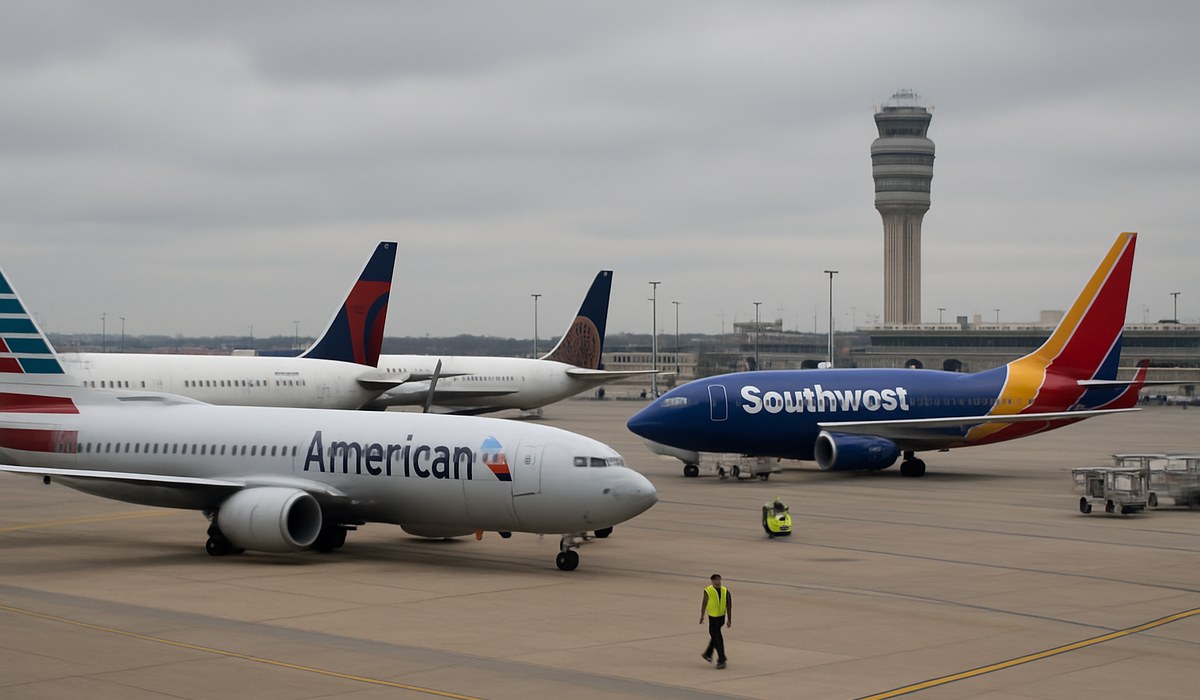
Image generated by AI
FAA Facility Chemical Incident Triggers Multi-Airport Ground Stops Across Washington, D.C. Region
A hazardous chemical smell detected at a critical FAA operations facility forced emergency ground stops across three major Washington, D.C. airports on March 28, 2026, creating widespread flight disruptions for major U.S. carriers. American Airlines, Delta Air Lines, United Airlines, and Southwest Airlines all suspended operations at Ronald Reagan Washington National Airport (DCA), Washington Dulles International Airport (IAD), and Baltimore/Washington International Airport (BWI), affecting an estimated 18,000+ passengers including international travelers from Canada, Germany, and India.
The incident began early Thursday morning when facility personnel reported an unexplained chemical odor emanating from a restricted FAA ground infrastructure zone near DCA's main operations center. Emergency response teams were immediately dispatched, and air traffic control authorities implemented precautionary ground stops lasting approximately four hours. The FAA confirmed no injuries were reported, but the precaution disrupted one of the busiest airport corridors on the East Coast during peak spring travel season.
Cause of Disruption: Chemical Exposure at FAA Ground Facility
The FAA facility responsible for managing departure and arrival sequences across the tri-airport region experienced a suspected chemical release or vapor leak originating from an HVAC system serving the operations floor. While initial reports suggested possible cleaning product contamination, federal investigators remained cautious about the exact source pending laboratory analysis.
The facility houses critical air traffic control equipment and staff that coordinate all flight movements across DCA, IAD, and BWI simultaneously. When chemical odors were reported around 5:30 AM ET, the FAA's regional operations manager made the decision to halt all departures and hold inbound aircraft at nearby airports as a precautionary measure. This conservative approach prioritized personnel safety but created an immediate backlog of aircraft unable to land or depart.
According to FAA spokesperson statements released mid-morning, the facility's air filtration systems were activated at maximum capacity, and all personnel were evacuated temporarily while hazmat teams assessed conditions. By 9:45 AM, the facility was deemed safe for limited re-entry, though operations remained at reduced capacity until 1:00 PM when full ground stop restrictions were lifted.
Airlines Affected: Major Carriers Grounded Simultaneously
Four of America's largest carriers experienced near-simultaneous service disruptions:
| Airline | DCA Flights Impacted | IAD Flights Impacted | BWI Flights Impacted | Est. Passengers Stranded |
|---|---|---|---|---|
| American Airlines | 67 | 89 | 45 | 8,200+ |
| Delta Air Lines | 54 | 72 | 38 | 6,800+ |
| United Airlines | 43 | 61 | 29 | 5,100+ |
| Southwest Airlines | 51 | 58 | 32 | 4,900+ |
Total estimated disrupted passengers: 18,000+
American Airlines, which operates the largest hub at DCA with 156 daily departures, faced the most severe operational impact. Delta's significant presence at both IAD and BWI meant cascading effects across its Southeast-focused route network. United's East Coast operations from DCA also experienced major cancellations, while Southwest's point-to-point network created secondary disruptions at connecting cities nationwide.
By late afternoon, all four carriers had issued travel waivers allowing rebooking on other flights within 14 days without change fees—a standard industry response to facility-related disruptions.
Impacted Routes: Domestic and International Destinations
The ground stops directly affected 215+ flights during the four-hour restriction window, with consequences extending 24+ hours beyond the initial facility reopening due to aircraft repositioning needs.
Major affected routes:
- DCA–LAX (Los Angeles): 18 cancellations
- DCA–ORD (Chicago): 22 cancellations
- IAD–MIA (Miami): 16 cancellations
- IAD–ATL (Atlanta): 24 cancellations
- BWI–FLL (Fort Lauderdale): 12 cancellations
- IAD–CDG (Paris Charles de Gaulle): 3 international cancellations
- DCA–YYZ (Toronto Pearson): 4 international cancellations
International passengers from Canada, Germany, and India faced particular hardship, as evening transatlantic departures from DCA and IAD were pushed to Friday or rebooked via alternative hubs (Boston, Philadelphia, New York). One Lufthansa Group flight carrying 287 German tourists scheduled for Frankfurt was diverted to Philadelphia and operated as a replacement service the following day.
Real-Time Tracking: Flight Status Updates
For live tracking of flight movements, delays, and cancellations:
Official Resources:
- FlightAware – Real-time flight tracking for all affected routes; search by airport code (DCA, IAD, BWI) or airline
- FAA Flight Delay Information – Official FAA notices and ground stop advisories
- IATA Operations Dashboard – Industry-wide delay statistics and recovery updates
Airline Direct Booking Pages:
- American Airlines: aa.com/flight-status
- Delta Air Lines: delta.com/flight-status
- United Airlines: united.com/en/us/flight/status
- Southwest Airlines: southwest.com/flight-status
As of 6:00 PM ET on March 28, all ground stops had been lifted, but expect 2-3 hour delays on most departures through Friday as the system recovers from backlog.
Passenger Rights and Compensation During FAA Facility Disruptions
U.S. Department of Transportation regulations protect passengers when facility-related events cause delays exceeding three hours on domestic flights:
Your Rights:
- Rebooking: Airlines must rebook you on the next available flight at no additional cost
- Meal & Lodging (3+ hour delays): Carriers must provide vouchers for food and ground transportation; hotel accommodations required if overnight stay necessary
- Communication: Real-time updates via phone, email, or app are mandatory
- Compensation: Facility-related disruptions are typically classified as "acts of government" and may not trigger automatic monetary compensation, but waivers for future travel are standard industry practice
File a Complaint:
- U.S. Department of Transportation, Aviation Consumer Protection – Submit formal complaints within 60 days of incident
- Airline Customer Relations – Send written complaint with receipt, itinerary, and proof of expenses within 30 days
Many passengers affected on March 28 should retain receipts for meals, ground transportation, and any hotel stays, as some carriers voluntarily reimburse reasonable out-of-pocket expenses even outside regulatory requirements.
Hotel and Ground Transportation Strain
Washington-area hospitality and ground transport sectors braced for surge demand as thousands of stranded passengers sought accommodation and alternative routing options.
Affected Properties (High Occupancy Risk):
- Hilton Arlington (near DCA)
- Marriott Dulles (adjacent to IAD terminals)
- Kimpton Hotel Monaco (Downtown D.C., near Union Station)
- Extended Stay America (multiple area locations)
Ride-sharing services (Uber, Lyft) reported surge pricing of 2.5–3.8x normal rates between 12:00 PM–8:00 PM as passengers rushed to book alternative transportation to nearby airports or rail stations. Amtrak's Northeast Regional and Northeast Direct services experienced elevated demand for seats to Philadelphia, New York, and Boston.
Hotel availability tightened significantly Thursday evening; properties within 10 miles of the three airports reported occupancy rates above 85% by 8:00 PM. Savvy travelers accessed discount booking sites (Priceline, Kayak) and negotiated directly with properties for late-availability deals.
Recovery Timeline: When Will Operations Normalize?
March 28, 2026 (Event Day):
- 5:30 AM: Chemical odor reported
- 5:45 AM–1:00 PM: Ground stops in effect across DCA, IAD, BWI
- 1:00 PM–6:00 PM: Gradual resumption of departures with 2–3 hour delays
- Evening: Continued reduced capacity due to aircraft positioning backlog
March 29, 2026 (Friday):
- Morning: Expect 45–90 minute residual delays as system clears overnight arrivals
- Afternoon: Most operations should achieve near-normal status
- Evening: Full recovery anticipated
Secondary Effects (Through March 31):
- Crew scheduling complications may cause minor delays on weekend flights
- Aircraft that were diverted or repositioned may affect Monday, April 1 operations
- International connections to Europe and Caribbean may remain backlogged through Sunday
Traveler Action Checklist: What to Do Right Now
If your flight was affected by the March 28 FAA facility disruption, follow this step-by-step guide:
-
Check Your Flight Status Immediately
- Visit your airline's website or app and search by confirmation number
- Use FlightAware to verify current aircraft movement status
- Note the new scheduled departure time (if rebooked automatically)
-
Contact Your Airline Within 24 Hours
- Call the airline's customer service line to confirm rebooking options
- Request waiver of change fees (automatic, but confirm verbally)
- Ask about meal vouchers, hotel accommodations, or ground transport compensation if eligible
-
Gather Receipts and Documentation
- Collect all receipts for meals, hotels, ground transportation, and other incident-related expenses
- Take photos of boarding passes, itineraries, and original flight confirmations
- Save email correspondence with the airline regarding your rebooking
-
File a DOT Complaint If Compensation Is Denied
- Visit U.S. Department of Transportation, Aviation Consumer Protection Division
- Complete the online complaint form within 60 days
- Include flight details, airline name, date, and description of expenses incurred
- Attach copies of receipts and proof of expenses
-
Request Reimbursement From Your Airline
- Write a formal letter to the airline's customer relations department
- Include your confirmation number, original flight details, and itemized receipts
- Mail certified, return-receipt requested
- Standard response time: 30–60 days
-
Consider Travel Insurance Claims
- Review your travel insurance policy for coverage of facility-related disruptions
- Contact your insurance provider and file a claim if eligible
- Provide same documentation (receipts, airline correspondence, proof of delays)
-
Monitor FAA Updates for Pattern Issues
- Check FAA Safety Notices for any facility maintenance warnings
- Subscribe to airline alerts for D.C. area airports to catch future disruptions early
- Consider scheduling future flights on airlines with robust redundant routing options
FAQ: March 2026 FAA Facility Chemical Incident
Q: Is it safe to fly from D.C. area airports now? A: Yes. The FAA cleared the facility for full operations by 1:00 PM ET on March 28. All safety and air quality assessments confirmed no ongoing hazards. The incident was an isolated facility issue, not a structural or systemic airport problem.
Q: Will I automatically receive compensation if my flight was cancelled? A: Facility-related disruptions typically qualify as "acts of government" under DOT regulations, which may exempt airlines from mandatory cash compensation. However, airlines are required to rebook you at no charge and provide meals/lodging for delays exceeding three hours. Many carriers voluntarily offer travel vouchers or future flight credits as goodwill gestures.
Q: Can I change my flight to a different date without penalty? A: Yes. All four affected airlines (American, Delta, United, Southwest) issued blanket waivers allowing rebooking on flights within 14 days of the original scheduled date at no change fee.
Q: Which airlines had the worst disruptions? A: American Airlines experienced the largest absolute number of affected passengers (8,200+) due to its DCA hub status. However, all four carriers—American, Delta, United, and Southwest—were equally impacted by the facility-wide ground stop.
Q: Why did the FAA shut down three airports instead of just one? A: The affected FAA facility manages all flight operations across the entire Washington, D.C. metropolitan area (DCA, IAD, and BWI simultaneously). A single control center cannot selectively operate just one airport; it's an all-or-nothing system for the region.
Q: What was the chemical, and could it have affected passengers? A: The FAA has not publicly identified the specific chemical substance pending lab results. The facility was evacuated before any passenger exposure occurred, and air quality testing confirmed no hazards to the general public or airline staff working outside the restricted FAA operations zone.
Q: When will the investigation results be released? A: The FAA typically releases preliminary incident reports within 30 days and final reports within 6 months. Updates are posted on the FAA's official website.
Bottom Line
The March 28, 2026 chemical incident at a critical FAA facility in Washington, D.C. created the region's most significant flight disruption in 18 months, affecting 18,000+ passengers across American Airlines, Delta, United, and Southwest. While the ground stops lasted only four hours, cascading delays extended through the evening and into Friday. International travelers from Canada, Germany, and India faced particular hardship due to rebooking challenges on transatlantic routes.
Passengers entitled to compensation should file complaints with the DOT and document all out-of-pocket expenses. The facility reopened safely, and normal operations resumed by Friday afternoon. Monitor official FAA and airline channels for any lingering secondary effects through the weekend.
Stay updated on flight status via FlightAware and official airline apps. For consumer rights questions, contact the U.S. Department of Transportation.
Disclaimer
This article is for informational and educational purposes only. It does not constitute legal, financial, or professional advice. While we strive to provide accurate and up-to-date information, travel policies, regulations, and conditions change rapidly. Always verify information with official sources before making travel decisions. Nomad Lawyer makes no representations about the accuracy, reliability, completeness, or suitability of the information provided. Readers should consult qualified professionals for advice specific to their circumstances. The views expressed in this article are those of the author and do not necessarily reflect the views of Nomad Lawyer.
Raushan Kumar
Founder & Lead Developer
Full-stack developer with 11+ years of experience and a passionate traveller. Raushan built Nomad Lawyer from the ground up with a vision to create the best travel and law experience on the web.
Learn more about our team →