
Europe's Culinary Travel Map: 20 Restaurants Outside the Traditional Capitals Redefine Gastronomy in 2026
Europe captured 40% of the 2026 World's 50 Best extended ranking with 20 restaurants across 11 nations, as provincial kitchens from Senigallia to Kobarid outshine conventional culinary capitals.

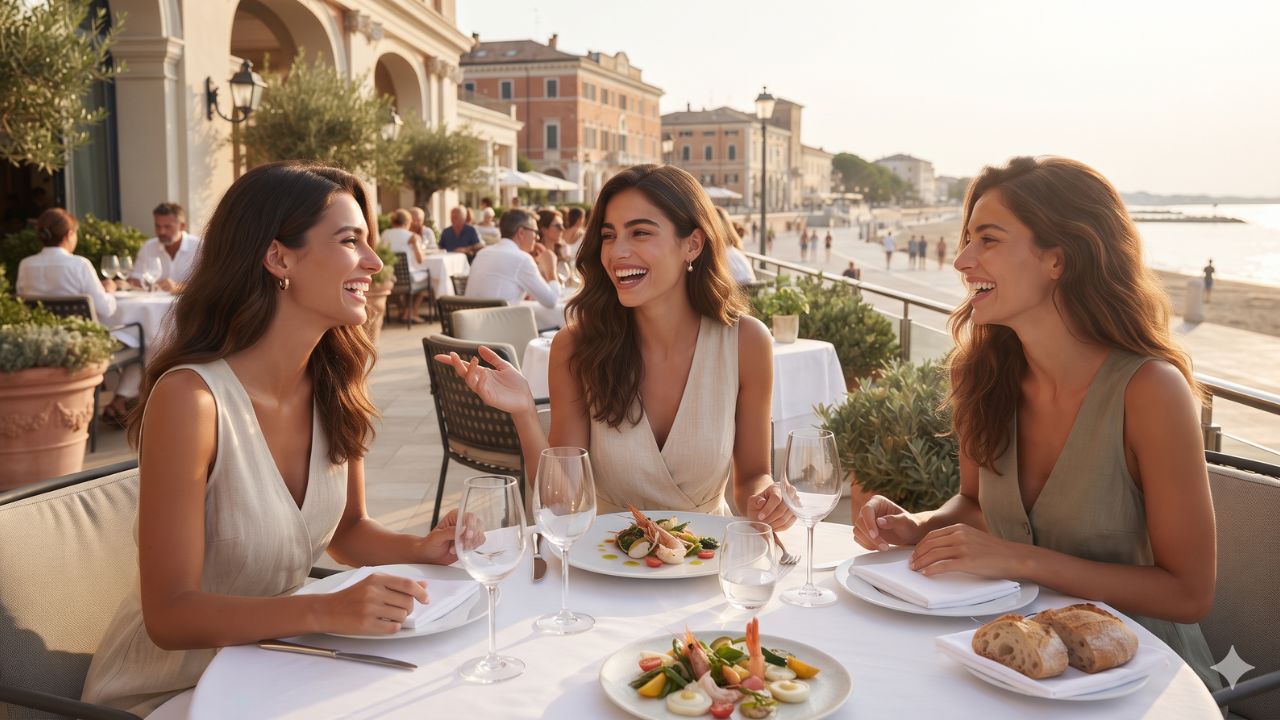
While international epicures traditionally book flights directly into Paris, London, or Rome, the highest-rated European kitchen in the 2026 World's 50 Best extended ranking is located in the Adriatic coastal town of Senigallia, where Uliassi claimed the global No. 51 position. Released on 21 October 2026 by publishing group William Reed, the 51–100 extended classification demonstrates that contemporary gastronomic travelers are stepping away from metropolitan centers to discover family-run kitchens, agrarian estates, and coastal harbors.
The European continent secured 20 of the 50 spots in the extended ranking—commanding an impressive 40% global share across 11 nations. Asia followed with 17 listings (34%), North America earned six (12%), South America claimed three (6%), while Africa and the Middle East secured two entries each (4%). The selections, independently audited by Deloitte and voted on by an international academy of over 1,100 culinary specialists, precede the formal gala presentation set for 4 November 2026 at the Teatro Municipal de Lima in Peru.
The Provincial Shift: Why Europe's Celebrated Dining Rooms Are Leaving the Capitals
The geographic spread across Europe reveals a structural decentralization in fine dining. Rather than congregating exclusively within dense corporate capitals, culinary excellence is thriving in remote valleys and coastal hamlets. Belgium, France, Germany, and Spain tied for the largest national presence with three entries each, followed by the United Kingdom with two, and single entries from Denmark, Italy, Portugal, Slovenia, Sweden, and Türkiye.
In Italy, Mauro Uliassi's seaside restaurant in Senigallia, highlighted by the Italian National Tourist Board, leads the entire European contingent at No. 51. Overlooking the Adriatic waters of the Marche region, the kitchen transforms local marine catches into avant-garde seafood degustations. Similarly, in Slovenia, chef Ana Roš at Hiša Franko (No. 60) in the remote alpine settlement of Kobarid demonstrates how hyper-seasonal foraging in the Soča Valley, supported by the Slovenian Tourist Board, creates an international travel destination out of a mountain village.
Spain's three entries illustrate this balance between urban energy and rural isolation. While Cocina Hermanos Torres anchors Barcelona at No. 69, former Asador Etxebarri chef Tetsuro Maeda presents Japanese-Basque wood-fire cooking at Txispa (No. 80) in the quiet mountain village of Atxondo. At the southern tip in El Puerto de Santa María, chef Ángel León operates Aponiente (No. 100) inside an eighteenth-century tidal mill, pioneering marine research and edible plankton cuisine.
Urban Concentration Versus Agrarian Retreats
The 2026 rankings document two distinct models of European culinary exploration:
- The Concentrated Urban Cluster: Germany presents an exceptional urban density, with all three of its recognized restaurants located in Berlin. Nobelhart & Schmutzig (No. 76) enforces a strict regional sourcing philosophy, Coda (No. 82) delivers boundary-pushing dessert gastronomy, and Tim Raue (No. 85) fuses Asian street flavours with European technique. This allows food travelers to experience three globally recognized dining rooms within a single weekend. London achieved a similar urban presence with Kol (No. 70), blending Mexican heritage with British ingredients, alongside The Ledbury (No. 83), which returns to the global ranking for the first time since 2019.
- The Field-to-Plate Agrarian Sanctuaries: In France, while Paris features Alain Passard's legendary vegetable-focused Arpège (No. 67) and the lively neo-bistro Septime (No. 81), culinary voyagers are venturing to Saint-Vrain in the Essonne countryside. Here, Le Doyenné (No. 84) operates on a historic farm estate, where chefs James Henry and Shaun Kelly cultivate heirloom vegetable gardens that dictate daily menus. In Belgium, urban dining at The Jane in Antwerp (No. 63) and new global entry Eliane in Brussels (No. 86) is balanced by Willem Hiele (No. 66), who cooks over open peat fires in the coastal polders of Oudenburg.
Data Breakdown: The 20 European Restaurants in the 2026 Extended Global Top 100
The comprehensive registry below details all 20 European establishments recognized in the 51–100 extended ranking by The World's 50 Best Restaurants:
| Global Rank | Restaurant Name | Location / Destination | Country | Culinary Identity & Regional Travel Focus |
|---|---|---|---|---|
| 51 | Uliassi | Senigallia (Marche) | Italy | Adriatic seafood gastronomy; highest European ranking |
| 57 | Koan | Copenhagen | Denmark | Korean-Nordic fermentation; second-highest in Europe |
| 58 | Frantzén | Stockholm | Sweden | Multi-story Nordic-Japanese sensory fine dining |
| 60 | Hiša Franko | Kobarid (Soča Valley) | Slovenia | Mountain foraging and dairy heritage in the Julian Alps |
| 63 | The Jane | Antwerp | Belgium | Contemporary dining set in a restored military chapel |
| 66 | Willem Hiele | Oudenburg | Belgium | Flemish coastal polder cooking and open-fire craft |
| 67 | Arpège | Paris | France | Alain Passard's biodynamic vegetable mastery |
| 69 | Cocina Hermanos Torres | Barcelona | Spain | Open-kitchen theater and Catalan culinary technique |
| 70 | Kol | London | United Kingdom | Mexican culinary heritage using native British ingredients |
| 75 | Belcanto | Lisbon | Portugal | José Avillez's modern evolution of Portuguese classics |
| 76 | Nobelhart & Schmutzig | Berlin | Germany | Brutally local sourcing excluding non-regional produce |
| 80 | Txispa | Atxondo (Biscay) | Spain | Japanese-Basque wood-fire technique in the mountains |
| 81 | Septime | Paris | France | Seasonal neo-bistro dining and natural wine curation |
| 82 | Coda | Berlin | Germany | Innovative dessert-based dining and fermentation craft |
| 83 | The Ledbury | London | United Kingdom | Classic British game and farm sourcing; returns since 2019 |
| 84 | Le Doyenné | Saint-Vrain | France | Working farm kitchen and regenerative agriculture |
| 85 | Tim Raue | Berlin | Germany | Bold Asian flavours interpreted through European discipline |
| 86 | Eliane | Brussels | Belgium | New global entry celebrating seasonal Belgian cuisine |
| 94 | Neolokal | Istanbul | Türkiye | Maksut Aşkar's revival of Anatolian culinary heritage |
| 100 | Aponiente | El Puerto de Santa María | Spain | Marine conservation, plankton, and tidal mill cooking |
Visitor Insider Tips
Planning an international itinerary around Europe's top dining rooms requires forward planning, transportation coordination, and booking discipline.
- Managing Booking Release Calendars: Top-ranked establishments release reservation windows between 30 and 90 days in advance, typically on the first day of each month at midnight local time. For ultra-competitive tables like Frantzén in Stockholm or Uliassi in Senigallia, create user profiles on their booking portals in advance and reserve immediately upon calendar release.
- Reaching Rural Dining Destinations: Establishments like Hiša Franko in Kobarid, Txispa in Atxondo, and Willem Hiele in Oudenburg require rental cars or arranged private drivers. If dining at Hiša Franko, fly into Venice Marco Polo or Ljubljana Airport and drive through the mountain passes of the Julian Alps, booking overnight accommodations directly at the estate.
- Pacing the Tasting Experience: Multi-course degustation menus at this level routinely last between three and five hours. Avoid booking back-to-back fine dining reservations on consecutive evenings. Pair a major evening reservation with simple midday meals at regional village taverns, bakeries, or municipal food markets.
- Pairing With Regional Wine Corridors: Take advantage of estate wine programs that highlight small-scale biodynamic growers. When dining at Neolokal in Istanbul, request pairings featuring indigenous Anatolian grape varietals like Öküzgözü and Boğazkere to experience regional winemaking traditions that date back thousands of years.
- Urban Multi-Table Itineraries: If visiting Berlin, base yourself in central Kreuzberg or Mitte. This provides easy access to Nobelhart & Schmutzig, Coda, and Tim Raue via public transit, allowing you to combine world-class dining with museum visits on Museum Island.
Cultural and Environmental Context
The rise of destination restaurants situated outside primary metropolitan hubs provides a vital economic boost for rural communities. Establishments like Le Doyenné in Saint-Vrain and Willem Hiele in Oudenburg act as economic anchors for regional agriculture. By partnering directly with smallholder vegetable farmers, heritage livestock breeders, and artisanal cheese makers, these dining rooms ensure that international tourist spending flows straight into rural hamlets.
At the same time, top culinary institutions are leading international conversations around environmental sustainability. At Aponiente in southern Spain, chef Ángel León's work extends into marine biology, cultivating sustainable sea grapes and harvesting marine flora that require no fresh water or chemical fertilizers. Similarly, Nobelhart & Schmutzig's refusal to use non-local ingredients—eschewing black pepper, lemons, and chocolate in favor of regional vinegars, sea buckthorn, and local oils—challenges global food supply chains while celebrating seasonal geography.
FAQ: Planning a European Fine Dining Journey 2026 and 2027
How far in advance should I book Europe's top-ranked restaurants?
Most establishments release tables one to three months ahead. Secure reservations immediately when the monthly booking calendar opens, especially for weekend dinner services.
Are dress codes strictly formal at these fine dining venues?
Most modern European restaurants, including Septime and Nobelhart & Schmutzig, welcome smart-casual attire. While tailored jackets are appropriate, formal ties and evening wear are rarely required unless specified.
What is the best way to handle dietary restrictions on tasting menus?
Inform the restaurant of any severe allergies or dietary preferences at least 72 hours before arrival. Many rural kitchens plan daily ingredient harvests based on confirmed guest requirements.
Can I visit these provincial restaurants without a rental car?
While urban restaurants in Berlin, London, and Paris are accessible by metro, rural destinations like Kobarid and Atxondo require private transfers or a self-drive vehicle.
The greatest journeys in European travel are discovered not on crowded tourist avenues, but around a quiet table in a distant village, where the true flavor of the land is served with passion and grace.
Related Travel Guides
Bruges Leads Europe's Autumn City Break Ranking as Travellers Shift Beyond Amsterdam
Bilbao Travel Guide: UK Short Flights & New TUI City Breaks
The 10 Best Gastronomy and Wine Escapes in Europe, According To Reddit
Disclaimer
This article is for informational and educational purposes only. It does not constitute legal, financial, or professional advice. While we strive to provide accurate and up-to-date information, travel policies, regulations, and conditions change rapidly. Always verify information with official sources before making travel decisions. Nomad Lawyer makes no representations about the accuracy, reliability, completeness, or suitability of the information provided. Readers should consult qualified professionals for advice specific to their circumstances. The views expressed in this article are those of the author and do not necessarily reflect the views of Nomad Lawyer.
Kunal K Choudhary
Co-Founder & Contributor
A passionate traveller and tech enthusiast. Kunal contributes to the vision and growth of Nomad Lawyer, bringing fresh perspectives and driving the community forward.
Learn more about our team →