
Breaking Airline News: European Airports Deploy Terrifying Biometric Borders and Contradictory Liquid Rules, Sparking Massive Travel Chaos
Breaking airline news: Amidst a terrifying era of uncoordinated regulation, European airports violently execute contradictory liquid limits and massive biometric border checks, plunging travelers into extreme regional travel chaos.

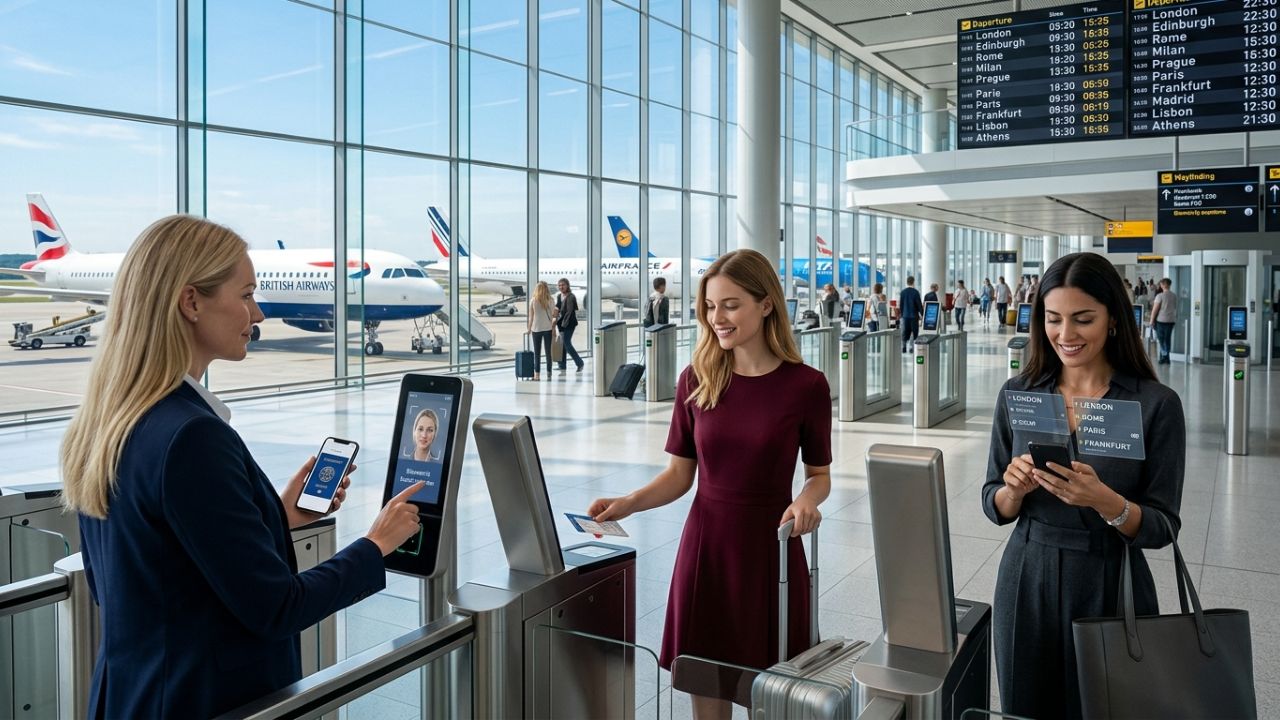
Image representing the intense strategic battle as major European hubs like London, Paris, and Frankfurt violently execute uncoordinated regulatory overhauls, combating severe terminal friction while triggering a massive operational meltdown for transit passengers.
Breaking Airline News: European Airports Deploy Terrifying Biometric Borders and Contradictory Liquid Rules, Sparking Massive Travel Chaos
As paralyzing terminal bottlenecks, terrifying regulatory inconsistencies, and severe operational fragility violently threaten to completely shatter passenger mobility across the continent, ten massive European hubs have executed a highly disruptive security overhaul. In a frantic, highly uncoordinated bid to integrate advanced biometric borders and overhaul liquid screening, London has joined Edinburgh, Rome, Milan, Prague, Paris, Frankfurt, Madrid, Lisbon, and Athens in throwing the aviation grid into absolute turmoil. This massive deployment of the Entry/Exit System (EES) and ETIAS pre-travel authorizations, combined with violently contradictory carry-on liquid limits, represents the ultimate logistical nightmare for the modern traveler. By aggressively arming security checkpoints with advanced CT scanners in some cities while maintaining archaic 100ml restrictions in adjacent hubs, these airports have actively built a terrifying regulatory trap. This operational paradigm shift is triggering extreme travel chaos, massive delays, and terrifying luggage confiscations, proving that when regulatory harmonization completely fails, the passenger pays the ultimate price through severe airport disruptions.
In a harrowing display of modern aviation vulnerability, the sheer logistical nightmare of attempting to navigate essential European corridors has historically forced passengers into terrifying transit scenarios. For years, securing a smooth connection meant risking extreme psychological exhaustion—navigating violently overloaded security checkpoints and arriving at the gate completely drained by the threat of flight cancellations. Today, the crisis is aggressively amplifying this structural paralysis. Travelers now face the absolute terrifying reality that attempting to connect between London and Paris will strip them of their property due to conflicting liquid rules, and force them into massive biometric processing queues that threaten to shatter their itineraries, leaving them entirely exposed to infrastructure-induced gridlock.
Expanded Overview: The Massive Scale of the Regulatory Meltdown
The terrifying crisis of overwhelming passenger stress currently gripping the European travel network brutally exposes the severe limitations of uncoordinated regulatory rollouts. Recognizing that aggressively forcing millions of passengers through conflicting security mandates leads directly to severe psychological friction, this massive overhaul fundamentally rewrites the continental matrix. The sheer scale of this infrastructural threat is immense. While prioritizing passenger rights and strictly enforcing compensation protocols for delays and overbooking, the sheer operational drag of laser baggage sizers, facial scans, and fingerprinting is aggressively slowing down passenger flow, risking a massive wave of flight cancellations if aircraft are forced to miss departure slots.
Section-Wise Breakdown: The Operational Realignment
London: The Inconsistent Extraction
London’s critical hubs, including Heathrow, Gatwick, and City Airport, have violently executed a regulatory transformation that is sparking massive confusion. The introduction of the two-liter carry-on liquid limit allows electronics and large liquids to remain in hand luggage. However, because this violently contradicts other European hubs maintaining the strict 100ml limit, connecting travelers face terrifying property confiscation upon arrival elsewhere. Furthermore, aggressive laser and optical baggage sizers now ruthlessly enforce overhead bin dimensions, triggering massive gate delays and punishing additional fees.
Edinburgh: The Technological Defense
Edinburgh Airport has successfully armed itself with advanced CT scanners, fully adopting the two-liter carry-on liquid rule. The integration of digital identity verification is designed to reduce manual intervention, but airport operations are currently locked in a brutal battle to prevent severe bottlenecks during peak periods, attempting to balance high passenger volumes with the new, strict legal frameworks regarding passenger rights during flight disruptions.
Rome: The EES Bottleneck
Rome’s Fiumicino Airport has executed a massive overhaul to enforce ETIAS pre-travel authorizations and the Entry/Exit System (EES). Visa-exempt travelers are now violently forced into an online biometric data registration matrix. While attempting to harmonize border security and enforce EU ETS environmental mandates, the massive digital registration requirements are triggering terrifying processing delays for first-time travelers, threatening massive airport disruptions at immigration checkpoints.
Milan: The Terminal Trap
Milan Linate and Malpensa airports represent the ultimate regulatory trap. They have adopted the two-liter liquid rule at select terminals, while retaining the archaic 100ml limit at others. This terrifying inconsistency means passengers face unexpected, aggressive confiscations simply by transferring terminals. Advanced CT scanners and precise baggage measurement technologies are ruthlessly enforced, pushing operational efficiency at the cost of massive passenger confusion.
Prague: The Biometric Lock
Prague Terminal 2 has deployed the two-liter liquid limit alongside aggressive laser baggage sizers. The security grid is now heavily fortified with fully integrated biometric verification systems. Mandatory facial scans and fingerprint registrations physically track passenger entry. While reducing manual processing, the sheer operational complexity of enforcing EES regulations and digital pre-clearances threatens to paralyze the hub during peak summer surges.
Paris: The Archaic Fortress
In stark, violently disruptive contrast to London and Edinburgh, Charles de Gaulle and Orly airports in Paris maintain the strict 100ml liquid limit across all checkpoints. This deliberate refusal to adopt the advanced two-liter threshold drastically increases wait times and massive passenger inconvenience. Paris has, however, aggressively deployed digital traveler identity systems, relying on strict legal frameworks regarding passenger compensation to maintain trust as the physical queues violently expand.
Frankfurt: The Digital Border Wall
Frankfurt Airport has aggressively deployed full EES operations and ETIAS enforcement, creating a highly secure, heavily fortified entry system for non-Schengen passengers. The manual passport stamp has been violently eradicated, replaced by mandatory facial images and fingerprint data collection. This massive dragnet improves fraud detection but is triggering severe processing delays. Simultaneously, Frankfurt strictly enforces EU ETS compliance and SAF allowances.
Madrid: The Capacity Crunch
Madrid-Barajas Airport ruthlessly enforces the 100ml carry-on liquid limit while simultaneously executing ETIAS pre-travel authorization and digital identity checks. Passengers are violently forced into online biometric registration before departure. Madrid’s operations are locked in a desperate battle to accommodate passenger flow under strict capacity caps and EU environmental policies, threatening travel chaos if the biometric queues breach terminal capacity.
Lisbon and Athens: The Strict Enforcers
Both Lisbon Airport and Athens Airport maintain a highly aggressive security posture, strictly enforcing the 100ml liquid restriction. Both hubs have violently integrated ETIAS, EES, and advanced biometric checks for incoming travelers. Lisbon further burdens its operations with strict carbon offsetting and SAF programs. Both airports are desperately attempting to manage the massive increase in processing times while avoiding the terrifying threat of catastrophic terminal gridlock.
European Airport Security & Compliance Matrix
To fully comprehend the massive logistical fallout of this terrifyingly uncoordinated network defense, corporate travel managers must review the exact operational metrics defining the European capacity strain. The following matrix provides a granular breakdown of the specific, officially verified security rules driving this massive disruption alert.
| City / Airport Hub | Liquid Policy Enforcement | Security & Biometric Technology |
|---|---|---|
| London (Heathrow, Gatwick, City) | Two-liter limit (selected hubs only) | Laser and optical baggage sizers; Strict boarding enforcement |
| Edinburgh | Two-liter limit implemented | Advanced CT scanners; Digital identity verification |
| Rome (Fiumicino) | Strict 100ml limit maintained | ETIAS & EES fully integrated; Biometric data registration |
| Milan (Linate, Malpensa) | Two-liter at select terminals, 100ml at others | CT scanners; Precise baggage measurement tech |
| Prague (Terminal 2) | Two-liter limit implemented | Laser baggage sizers; Facial scans & fingerprint registration |
| Paris (CDG, Orly) | Strict 100ml limit at ALL checkpoints | Biometric verification; Digital traveler identity systems |
| Frankfurt | N/A (Focus on Border Control) | Full EES & ETIAS; Mandatory facial/fingerprint data |
| Madrid (Barajas) | Strict 100ml limit maintained | ETIAS pre-travel auth; Digital identity systems |
| Lisbon | Strict liquid restrictions maintained | ETIAS & EES integration; Biometric registration |
| Athens | Strict 100ml limit maintained | ETIAS registration; Advanced biometric checks |
Passenger Impact: Surviving the Regulatory Minefield
For the millions of global executives attempting to navigate the rapidly collapsing transit corridors of Europe, this massive uncoordinated security rollout represents a highly dangerous logistical trap. The brutal reality of enduring a terrifyingly sudden luggage confiscation because Milan requires 100ml while Edinburgh permits two liters inflicts intense psychological stress. Furthermore, being trapped in a massive EES biometric queue at Rome or Frankfurt threatens critical missed connections. By aggressively preparing contingency plans, packing strictly to the 100ml minimum standard regardless of the departure airport, and anticipating extreme border delays, passengers drastically reduce their exposure to these terrifying logistical environments.
Industry Analysis: The Economics of Terminal Gridlock
From a strategic aviation perspective, the travel turmoil currently threatening Europe highlights the terrifying vulnerability of uncoordinated governmental mandates. Industry analysts confirm that while biometric borders enhance state security, deploying them without a unified timeline violently degrades airline operational efficiency. The massive confusion surrounding the liquid limit rollout effectively forces airlines to manage the fallout of enraged passengers at the gate, shifting the burden of travel chaos and delay compensation directly onto the carriers while the airports struggle under the weight of new technology.
Conclusion: A Strategic Retreat to Ensure Aviation Survival
As the extremely critical global travel season accelerates, the massive security overhauls executed across these ten European cities represent a massive warning to anyone attempting a multi-city itinerary. The aggressive maneuvering proves that surviving modern air travel requires terrifyingly swift and highly optimized passenger vigilance, assuming the absolute worst-case scenario at every checkpoint. For the modern traveler booking their flights, understanding this tactically hostile environment offers an incredibly secure way to execute flight discovery. By acting aggressively to pack compliant 100ml liquids and arriving hours early for biometric processing, travelers can successfully survive intense security surges and completely avoid the paralyzing physical threat of global travel chaos.
Key Takeaways
- Massive Tactical Overhaul: Ten major European cities (London, Edinburgh, Rome, Milan, Prague, Paris, Frankfurt, Madrid, Lisbon, Athens) have violently deployed massive security and biometric border updates.
- The Liquid Limit Trap: A terrifying lack of standardization exists. London, Edinburgh, and Prague utilize advanced CT scanners allowing two-liter liquids, while Paris, Rome, Madrid, and Athens strictly enforce the archaic 100ml limit. Milan violently splits the rules between its own terminals.
- Biometric Border Bottlenecks: The deployment of the Entry/Exit System (EES) and ETIAS forces non-Schengen travelers to surrender facial and fingerprint data, triggering severe processing delays at major hubs like Frankfurt and Rome.
- Aggressive Baggage Sizers: London, Milan, and Prague have deployed ruthless laser and optical baggage sizers, threatening passengers with sudden fees and gate delays.
- Traveler Advisory: Global tourists must aggressively pack all liquids to the strict 100ml standard to survive connections, and arrive up to four hours early to survive the terrifying new EES biometric queues.
Related Travel Guides
Disclaimer
This article is for informational and educational purposes only. It does not constitute legal, financial, or professional advice. While we strive to provide accurate and up-to-date information, travel policies, regulations, and conditions change rapidly. Always verify information with official sources before making travel decisions. Nomad Lawyer makes no representations about the accuracy, reliability, completeness, or suitability of the information provided. Readers should consult qualified professionals for advice specific to their circumstances. The views expressed in this article are those of the author and do not necessarily reflect the views of Nomad Lawyer.
Kunal K Choudhary
Co-Founder & Contributor
A passionate traveller and tech enthusiast. Kunal contributes to the vision and growth of Nomad Lawyer, bringing fresh perspectives and driving the community forward.
Learn more about our team →