
Severe Storms and Temperature Drops Disrupt European Transit Networks
Heavy rain and storms hit Spain, Italy, and France, while Northern Europe cools. Check updated transit risks and logistics for September 2026 travel.

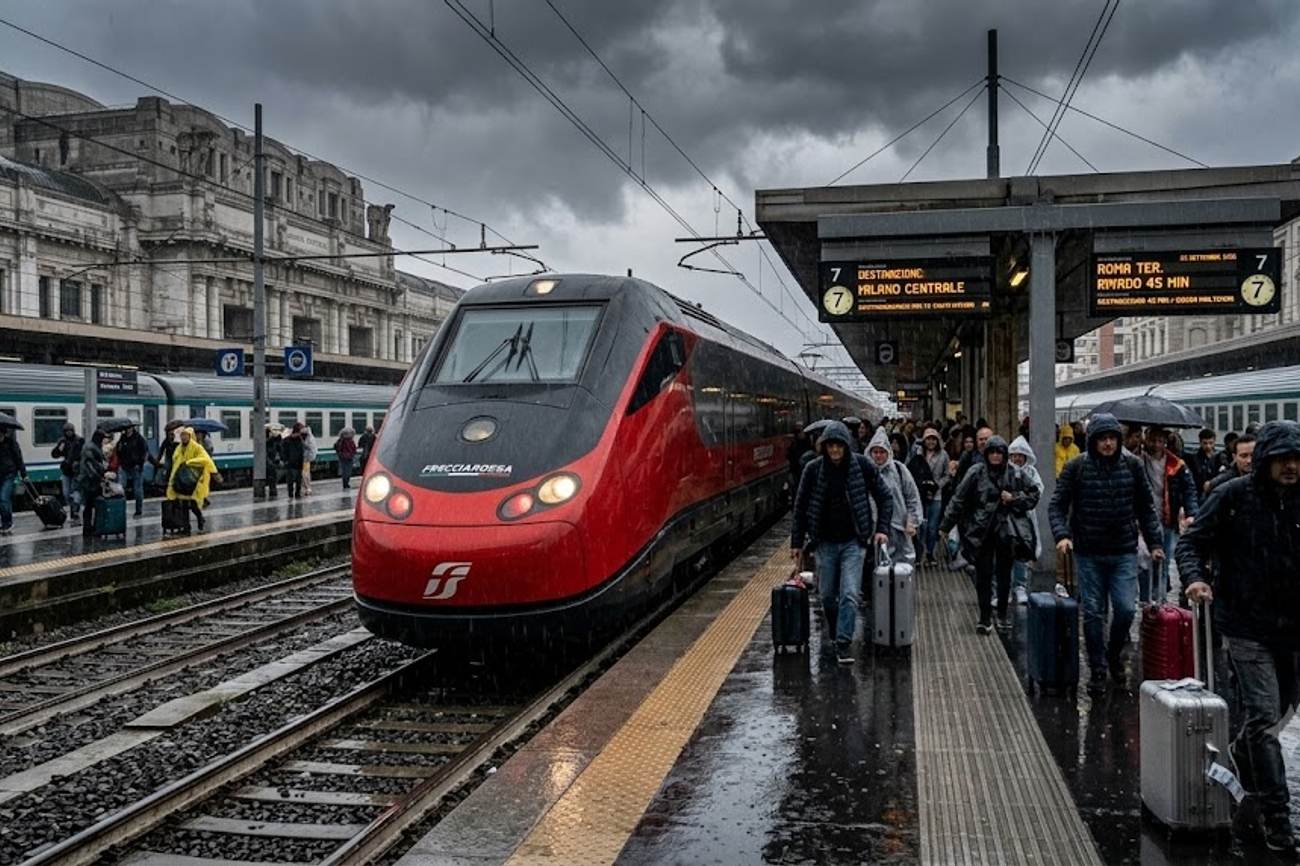
Image generated by AI
European transit corridors are facing significant volatility as the continent transitions from September heat to an unsettled autumn pattern. A dramatic shift in weather systems is currently impacting logistics, with southern nations facing severe storm risks and northern regions experiencing a rapid cooling phase.
The most acute disruptions are concentrated in Spain, Italy, and France. In Spain, a prolonged heatwave has been replaced by atmospheric instability. On 8 and 9 September, eastern and southeastern regions—specifically Catalonia, Valencia, Murcia, and Almería—faced torrential rain, hail, and high-velocity wind gusts. The Balearic Islands remain exposed to Mediterranean instability, posing risks to ferry schedules and coastal excursions.
Italy is reporting critical flooding levels, with Basilicata heavily impacted on 8 September. Northern Italy is now entering a secondary severe-storm phase, which typically results in rail delays and road closures. France is seeing a polarized climate; while the southeast remains warm, the Alps and Corsica are battling heavy rain and thunderstorms. Notably, France recorded September heat records on 8 September, with 36.4°C in Saint-Étienne and 35.1°C in Strasbourg, immediately preceding the current storm front.
Meanwhile, a cold front is moving through Germany, Switzerland, Austria, and Slovenia. Northern Europe is turning wetter and colder, with strong winds affecting German northern ports and Baltic shipping lanes.
Transit Schedule & Regional Weather Specifications (8–9 September 2026)
| Country | Weather Status (Sept 8–9) | Primary Transit Risk |
|---|---|---|
| Spain | Torrential rain, hail, wind gusts | Road/Ferry disruptions (East/SE) |
| Italy | Heavy rain, flooding (Basilicata) | Rail/Road closures (North) |
| France | Heat records $\rightarrow$ Severe storms | Alpine/Corsica transit delays |
| Germany | Cold front, heavy showers, strong winds | Northern port/Air delays |
| Austria | Cold front, showers, thunderstorms | Alpine pass instability |
| Belgium | Cloudy, rainy (Brussels ~18°C) | Localized road congestion |
| Denmark | Cool, unsettled (Copenhagen ~17°C) | Wind-related ferry delays |
| Finland | Rain, cool (Helsinki ~16°C) | Reduced visibility/Rain |
| Czechia | Cooler, rainy (Prague ~21°C) | Intercity transit delays |
| Greece | Warm, strong northerly winds (Aegean) | Maritime/Ferry instability |
| Hungary | Thunderstorms, hail, intense rain | Ground transport disruptions |
Traveler Logistics Guide
From a ground-level perspective, the best way to navigate this volatility is to decouple your itinerary from "seasonal expectations." September is often viewed as a stable shoulder season, but the current data shows high instability.
Booking Connections & Layovers:
- Air Transit: Given the wind gusts in Northern Germany and storms in France, increase layover buffers to at least 3 hours for connecting flights.
- Maritime Travel: If traveling to the Balearic Islands or via the Aegean, monitor port authority notices daily. Strong northerly winds in Greece frequently lead to ferry cancellations or rerouting.
- Ground Transport: In Northern Italy and Spain, prioritize rail over road during torrential rain events to avoid flash-flood-prone highways.
Digital Transit Policies: Ensure your roaming data is active for real-time alerts. Travelers in the EU should utilize official national meteorological apps (such as AEMET in Spain or Meteoalarm for EU-wide alerts) rather than generic weather apps, as official sources provide the specific "Warning Levels" required for insurance claims regarding travel delays.
Infrastructure Impact Assessment
This weather shift creates a dual-pressure system on European infrastructure. In the South, the primary concern is "flash-impact"—where sudden torrential rain overwhelms drainage systems in coastal resorts, affecting last-mile tourism logistics. In the North, the rapid temperature drop and wind increase put pressure on energy grids and maritime logistics in the Baltic and North Seas. The volatility in the Alpine region (Austria, Switzerland, Slovenia) specifically threatens the reliability of mountain passes and regional rail links, potentially bottlenecking transit between Central and Southern Europe.
Related Travel Guides
Disclaimer
This article is for informational and educational purposes only. It does not constitute legal, financial, or professional advice. While we strive to provide accurate and up-to-date information, travel policies, regulations, and conditions change rapidly. Always verify information with official sources before making travel decisions. Nomad Lawyer makes no representations about the accuracy, reliability, completeness, or suitability of the information provided. Readers should consult qualified professionals for advice specific to their circumstances. The views expressed in this article are those of the author and do not necessarily reflect the views of Nomad Lawyer.
Kunal K Choudhary
Co-Founder & Contributor
A passionate traveller and tech enthusiast. Kunal contributes to the vision and growth of Nomad Lawyer, bringing fresh perspectives and driving the community forward.
Learn more about our team →