
Europe Summer Tourism 2026: Foreign Visitors Drive Record Demand in Spain, Slovenia, and Austria
International travelers are reshaping Europe's 2026 summer economy, with foreign demand offsetting domestic declines in Spain and powering record-breaking Alpine seasons in Slovenia and Austria.

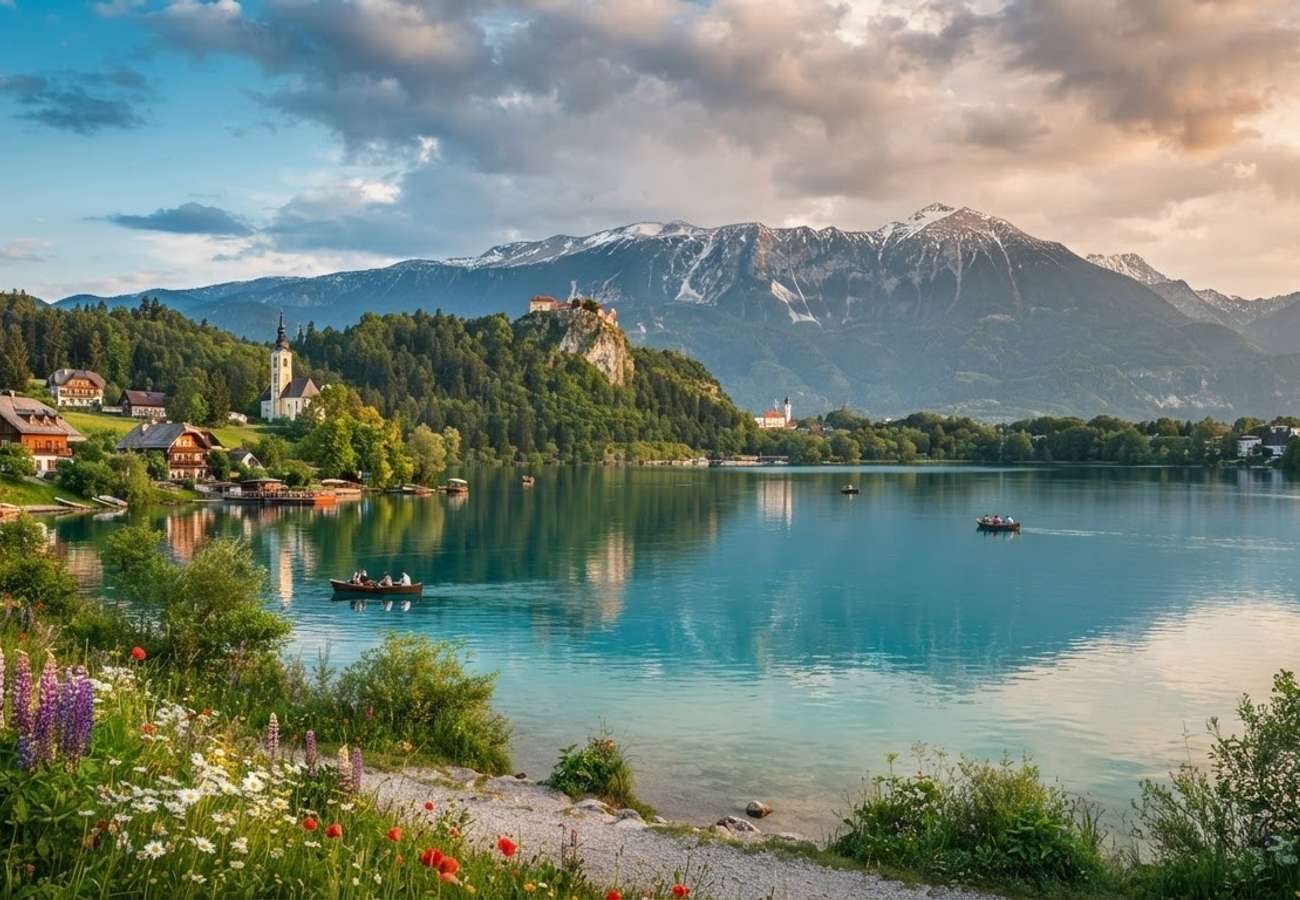
Image generated by AI
International travelers are no longer just visiting Europe; they are fundamentally restructuring the continent's tourism economy. In 2026, foreign demand is the primary engine preventing market stagnation in traditional hubs and catapulting secondary destinations into the global spotlight.
The summer of 2026 has revealed a critical shift in travel dynamics. While domestic tourism in several major European nations has softened, an influx of international visitors is maintaining high occupancy rates and driving up pricing. This trend is particularly evident in the Alps and the Mediterranean, where the "who" and "where" of travel are now more influential than the total number of arrivals.
Divergent Tourism Models Across Europe
The impact of international demand is not uniform. While some nations are seeing a surge in volume, others are focusing on extracting higher value from a stable number of guests.
| Destination | International Demand Signal | Strategic Impact |
|---|---|---|
| Spain | Non-resident hotel nights +1.1%; resident nights -1.1% | Foreign visitors are offsetting the decline in domestic stays |
| Slovenia | Foreign visitors generated ~83% of July overnight stays | International demand is driving record-breaking accommodation use |
| Austria | ~75% of July nights came from non-residents | Overseas markets are the primary engine of summer growth |
| Portugal | Non-residents generated 71.3% of qualifying short-term nights | International demand is deeply integrated into regional markets |
| Greece | H1 inbound travellers +15.4% | Rapid arrival growth is outpacing actual spending increases |
Spain: Price Hikes Outpace Visitor Growth
Spain's July 2026 data highlights a mature market shifting toward value over volume. According to the National Statistics Institute, the country recorded over 44.8 million hotel overnight stays in July, a marginal increase of 0.3% year-on-year.
However, a closer look reveals a stark divide:
- Non-resident hotel nights: Increased by 1.1%
- Spanish resident nights: Decreased by 1.1%
- January–July trend: Foreign nights rose 1.8%, while domestic nights grew only 0.8%
Geographically, demand remains concentrated. The Balearic Islands captured 33.4% of foreign hotel nights, followed by Catalonia (20.2%) and the Canary Islands (18.6%). The UK continues to be the dominant source market, accounting for 25.8% of all non-resident nights.
The most significant trend for travelers is the rise in cost. Spain's Hotel Price Index jumped 5.9%, with the Average Daily Rate (ADR) climbing 6.8% to €156.90. Revenue per available room (RevPAR) also increased by 6.6% to €119.30. This indicates that Spain is successfully increasing revenue even as total visitor growth remains flat.
The Alpine Shift: Slovenia and Austria
A major trend in 2026 is the transition of mountain resorts from winter-only destinations to year-round global products.
Slovenia's Record July Slovenia saw 1.16 million arrivals and 3.26 million overnight stays in July 2026. International visitors were the primary driver, contributing:
- 1.01 million arrivals
- 2.70 million overnight stays (approximately 83% of the total)
- A 10.1% increase in international overnight stays
Mountain resorts were the standout performers, generating 1.31 million overnight stays—roughly 40% of the national total—with demand in these areas increasing by 13.8%. Locations like Bled, Bohinj, and Kranjska Gora are now mainstream international hotspots.
Austria's Historic Season Austria has seen its most successful summer period since electronic records began in 1973. Between May and July, the country recorded a historic 41.87 million overnight stays.
In July alone, Statistics Austria reported:
- 19.46 million overnight stays
- 5.97 million arrivals (up 9.3%)
- 14.68 million nights generated by foreign travelers (roughly 75% of the total)
While domestic demand remained nearly flat (+0.1% for the May-July period), foreign nights grew by 4.5%. Germany remains the largest source market, providing 7.18 million nights in July.
Regional Nuances in Portugal and Greece
Portugal and Greece provide contrasting lessons in how international demand interacts with local economies.
Portugal's Regional Segmentation Data from 2,025 establishments with more than 10 beds shows that 71.3% of the 12.1 million overnight stays were generated by non-residents. However, the market is highly fragmented by region:
- Algarve: Heavily influenced by British visitors.
- Madeira: Strong demand from German travelers.
- Greater Lisbon: Significant influence from US visitors.
Greece's Volume Challenge Greece is experiencing a surge in arrivals that has not yet translated into proportional spending. Bank of Greece figures show 13.49 million inbound travelers in the first half of 2026, a 15.4% increase. Notably, road-border arrivals surged by 49.3%, signaling a massive increase in regional European mobility.
Key Takeaways for 2026 Travelers
- Expect Higher Costs: In markets like Spain, prices are rising even when visitor numbers are stable.
- Alpine Alternatives: Mountain destinations in Slovenia and Austria are now primary summer choices, leading to tighter accommodation supply in nature-focused hubs.
- Regional Planning: In countries like Portugal, national averages are misleading; pricing and availability vary wildly between the Algarve, Lisbon, and Madeira.
Frequently Asked Questions
Why are hotel prices rising in Spain if visitor numbers are flat? Spain is shifting toward a high-value model, increasing the Average Daily Rate (ADR) and revenue per room rather than relying solely on increasing the number of tourists.
Which European countries are seeing the biggest summer growth in 2026? Slovenia and Austria are seeing record-breaking growth in their mountain and nature-based tourism sectors, while Greece is seeing a significant surge in total arrivals.
Where is the most concentrated foreign demand in Spain? The Balearic Islands (33.4%), Catalonia (20.2%), and the Canary Islands (18.6%) remain the primary hubs for international visitors.
The European summer map is being redrawn, shifting the balance of power from traditional coastal resorts to high-altitude Alpine escapes.
Related Travel Guides
Disclaimer
This article is for informational and educational purposes only. It does not constitute legal, financial, or professional advice. While we strive to provide accurate and up-to-date information, travel policies, regulations, and conditions change rapidly. Always verify information with official sources before making travel decisions. Nomad Lawyer makes no representations about the accuracy, reliability, completeness, or suitability of the information provided. Readers should consult qualified professionals for advice specific to their circumstances. The views expressed in this article are those of the author and do not necessarily reflect the views of Nomad Lawyer.
Raushan Kumar
Founder & Lead Developer
Full-stack developer with 11+ years of experience and a passionate traveller. Raushan built Nomad Lawyer from the ground up with a vision to create the best travel and law experience on the web.
Learn more about our team →