
Europe’s September Itinerary: Six Prime Destinations for Coastlines, Culinary Trails, and Alpine Roads
Summer crowds recede and seasonal harvests peak across Europe. Here is where to head in September for optimized weather,

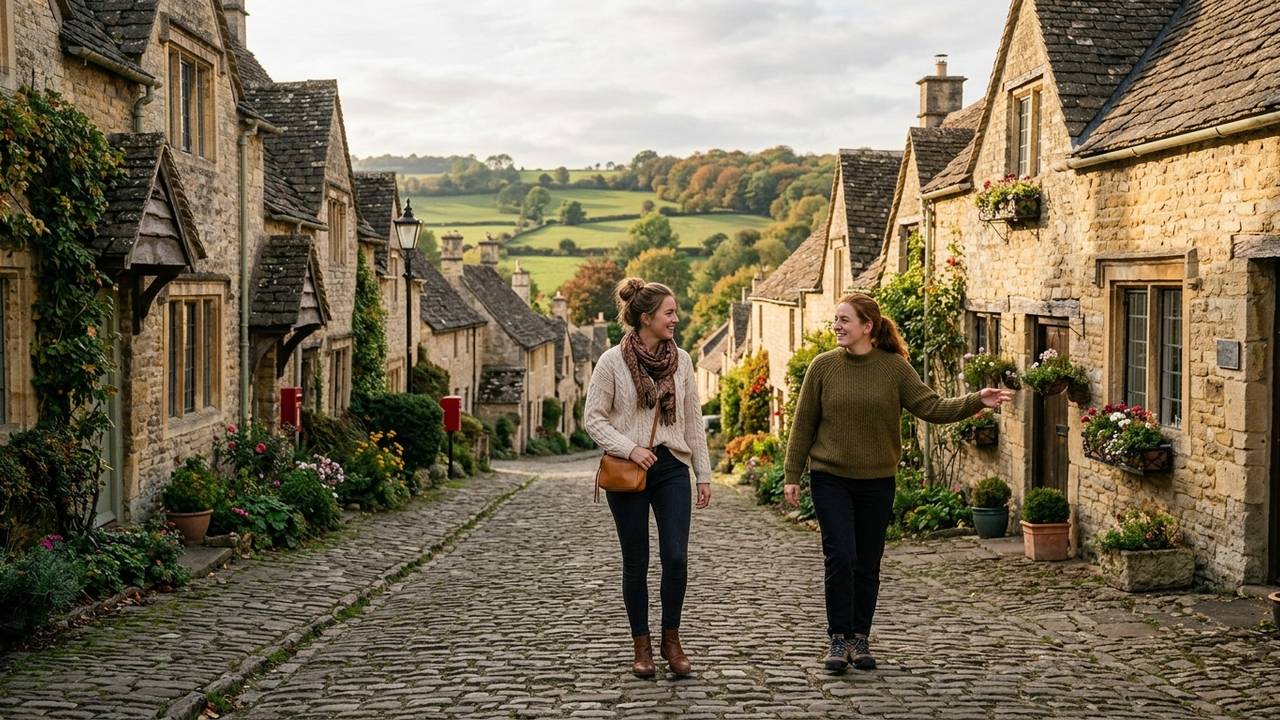
Image generated by AI
September marks a pivotal shift in European travel. Peak-season congestion lifts, temperatures moderate, and seasonal cycles align with agricultural and cultural events. For travelers prioritizing comfort, authentic experiences, and manageable itineraries, the month delivers distinct advantages across the continent. The following destinations offer optimized conditions for specific travel styles, from coastal sailing to mountain driving and culinary exploration.
The Cotswolds, United Kingdom: Autumn Foliage and Historic Villages
September light transforms the Cotswolds, accentuating the region’s honey-colored limestone architecture and rolling topography. While summer months draw heavy visitor numbers to hubs like Castle Combe and Bourton-on-the-Water, the autumn shoulder season provides a quieter experience. The landscape’s arboretums, particularly Westonbirt and Batsford, begin displaying early autumn coloration. A dense network of public footpaths crisscrosses the area, anchored by the Cotswold Way. This designated long-distance trail spans 164 kilometers, connecting Chipping Campden to Bath along the escarpment.
Istria, Croatia: Coastal Cycling and Autumn Harvests
The northwestern Croatian peninsula of Istria offers a blend of maritime access and agricultural abundance. September coincides with the grape harvest and the peak ripening of underground truffles, making it a focal point for culinary tourism. The region produces asparagus, olives, and Adriatic oysters, with coastal cycling routes providing accessible terrain. Historic urban centers include Rovinj, known for its Venetian architecture, and Pula, home to a well-preserved Roman amphitheater. Culinary excursions extend to northern hilltop towns such as Motovun, Buzet, and Hum, which serve as truffle markets and tasting centers. Wine production centers around Buje and Momjan, specializing in malvasia white and teran red varieties. For structured cycling, the Parenzana Trail utilizes a former railway corridor stretching 123 kilometers from Trieste, Italy, to Poreč, Croatia, with a minor segment traversing Slovenia.
La Palma, Spain: Volcanic Terrain and Extended Trail Networks
Positioned as the northwesternmost island in the Canary archipelago, La Palma is noted for its steep topography and extensive hiking infrastructure. The island maintains approximately 1,000 kilometers of marked footpaths. September delivers stable sunshine with reduced thermal intensity compared to midsummer, alongside improved lodging availability. Southern trails traverse solidified basaltic lava fields en route to Fuencaliente, featuring a historic lighthouse and traditional saltpans. The island’s central spine follows the Ruta de los Volcanes, offering elevated coastal vistas in both directions. The primary hiking objective remains a full-day traverse of the Caldera de Taburiente, characterized by deep ravines and endemic Canarian pine woodland. The capital, Santa Cruz de la Palma, features walkable historic streets lined with Renaissance ecclesiastical structures, heritage pharmacies, and eighteenth-century residential architecture. Post-hiking recovery typically occurs on the island’s dark volcanic sand beaches.
Bologna, Italy: Autumn Produce and Academic Heritage
Bologna operates under two established monikers: La Grassa, reflecting its reputation for rich regional cuisine including traditional ragù, and La Dotta, referencing the presence of Europe’s oldest continuously operating university. September weather supports extended al fresco dining while introducing autumnal ingredients such as wild mushrooms, pumpkins, game birds, and chestnuts. These seasonal items feature prominently across local restaurants, trattorias, and the Quadrilatero, the city’s historic food market district. The substantial student demographic sustains a vibrant evening bar culture. Key architectural and cultural landmarks include Piazza Maggiore, the Fontana del Nettuno, and the city’s archaeological museum. Physical activities range from climbing the 498 steps of the Torre degli Asinelli to walking the 666 arches of the portico leading to the Madonna di San Luca sanctuary, located on a hill southwest of the urban center.
Turquoise Coast, Türkiye: Seasonal Sailing and Heritage Stops
The Mediterranean and Aegean coastline of Türkiye, commonly referred to as the Turquoise Coast, maintains a long-standing association with traditional sailing holidays. The practice traces back over a century to Turkish author Cevat Şakir Kabaağaçlı, who chartered local sponge-fishing vessels for coastal excursions he termed “blue voyages.” Contemporary operations utilize both heritage-style and modern purpose-built yachts, routing between Bodrum, Marmaris, and Fethiye. Standard itineraries include stops at archaeological sites such as Letoön and Patara, alongside designated swimming and beach leisure areas. The corridor accommodates family-oriented travel. September reduces peak visitor density while maintaining warm sea surface temperatures and accessible archaeological sites.
Transylvania, Romania: Mountain Driving and Historical Landmarks
The Transfăgărăşan Highway spans 90 kilometers across the Southern Carpathians, characterized by continuous elevation changes and sharp gradient curves. The roadway was engineered over a four-year period under the directive of former Romanian president Nicolae Ceauşescu to establish a military transit corridor between the Transylvania and Wallachia regions. The route remains closed annually between October and June due to snow accumulation. September provides optimal driving conditions with moderate temperatures and peak autumn foliage. Traveling from north to south, the route intersects the Bâlea waterfall, ascends to the alpine Lake Bâlea, passes the elevated ruins of Poienari Citadel (historically linked to Vlad Țepeș and later literary adaptations), and descends toward the sixteenth-century Curtea de Argeş Monastery, which houses royal burial sites.
| Destination | Country | Primary Activity | Key Distance/Route | Notable Features |
|---|---|---|---|---|
| Cotswolds | United Kingdom | Village exploration & walking | Cotswold Way: 164 km (Chipping Campden to Bath) | Westonbirt & Batsford arboretums, Castle Combe, Bourton-on-the-Water |
| Istria | Croatia | Cycling & culinary tourism | Parenzana Trail: 123 km (Trieste to Poreč) | Rovinj, Pula amphitheater, Motovun/Buzet/Hum truffle regions, Buje & Momjan wine zones |
| La Palma | Spain | Hiking & coastal walks | ~1,000 km of footpaths | Caldera de Taburiente, Ruta de los Volcanes, Fuencaliente lava flows, Santa Cruz de la Palma |
| Bologna | Italy | Food & cultural walking | Torre degli Asinelli: 498 steps; San Luca portico: 666 arches | Quadrilatero market, Piazza Maggiore, Fontana del Nettuno, oldest European university |
| Turquoise Coast | Türkiye | Sailing & heritage tourism | Bodrum to Marmaris to Fethiye corridor | Blue voyages, Letoön & Patara archaeological sites, warm September sea temperatures |
| Transylvania | Romania | Road trip & mountain driving | Transfăgărăşan Highway: 90 km | Bâlea Lake & waterfall, Poienari Citadel, Curtea de Argeş Monastery, closed Oct–Jun |
Key Takeaways
- September offers reduced crowd density, moderate temperatures, and improved accommodation availability across all featured destinations.
- Culinary tourism peaks in Istria and Bologna, with truffle harvesting, grape picking, and autumn produce driving seasonal dining experiences.
- Active travel infrastructure is highly developed: 164 km of long-distance hiking in the Cotswolds, 123 km of coastal cycling in Croatia, and ~1,000 km of trails in La Palma.
- The Transfăgărăşan Highway in Romania opens exclusively for the September driving window before winter closures begin.
- Türkiye’s Turquoise Coast maintains bathwater-warm sea temperatures in September while easing peak-season yacht and tourist volume.
FAQ
When is the Transfăgărăşan Highway accessible for travel?
The 90-kilometer mountain route remains closed to traffic between October and June due to snow accumulation. September provides the primary seasonal window for driving.
What seasonal agricultural products define September in Istria and Bologna?
Istria’s September calendar centers on grape harvesting and underground truffle ripening, alongside asparagus, olives, and oysters. Bologna introduces wild mushrooms, pumpkins, game birds, and chestnuts to its traditional regional menus.
How does the Parenzana Trail connect multiple countries?
The 123-kilometer cycling route repurposes a disused railway line, starting in Trieste, Italy, crossing a short segment into Slovenia, and terminating on the Croatian coast at Poreč.
Why is September recommended for sailing on Türkiye’s Turquoise Coast?
Peak visitor numbers subside while sea surface temperatures remain warm. The corridor continues to support heritage-style and modern yachts, with consistent access to archaeological stops like Letoön and Patara.
What distinguishes La Palma’s hiking infrastructure?
The island maintains approximately 1,000 kilometers of marked footpaths across steep volcanic terrain, featuring major routes such as the Ruta de los Volcanes and the full-day Caldera de Taburiente traverse, complemented by accessible black-sand beaches for recovery.
Related Travel Guides
Disclaimer
This article is for informational and educational purposes only. It does not constitute legal, financial, or professional advice. While we strive to provide accurate and up-to-date information, travel policies, regulations, and conditions change rapidly. Always verify information with official sources before making travel decisions. Nomad Lawyer makes no representations about the accuracy, reliability, completeness, or suitability of the information provided. Readers should consult qualified professionals for advice specific to their circumstances. The views expressed in this article are those of the author and do not necessarily reflect the views of Nomad Lawyer.
Raushan Kumar
Founder & Lead Developer
Full-stack developer with 11+ years of experience and a passionate traveller. Raushan built Nomad Lawyer from the ground up with a vision to create the best travel and law experience on the web.
Learn more about our team →