
Europe Luxury Tourism Shift 2026: France and Greece Lead Move Beyond Major Capitals
High-spending travelers are abandoning crowded capitals for private châteaus and secluded islands as Europe's luxury tourism boom spreads to regional hubs in 2026.

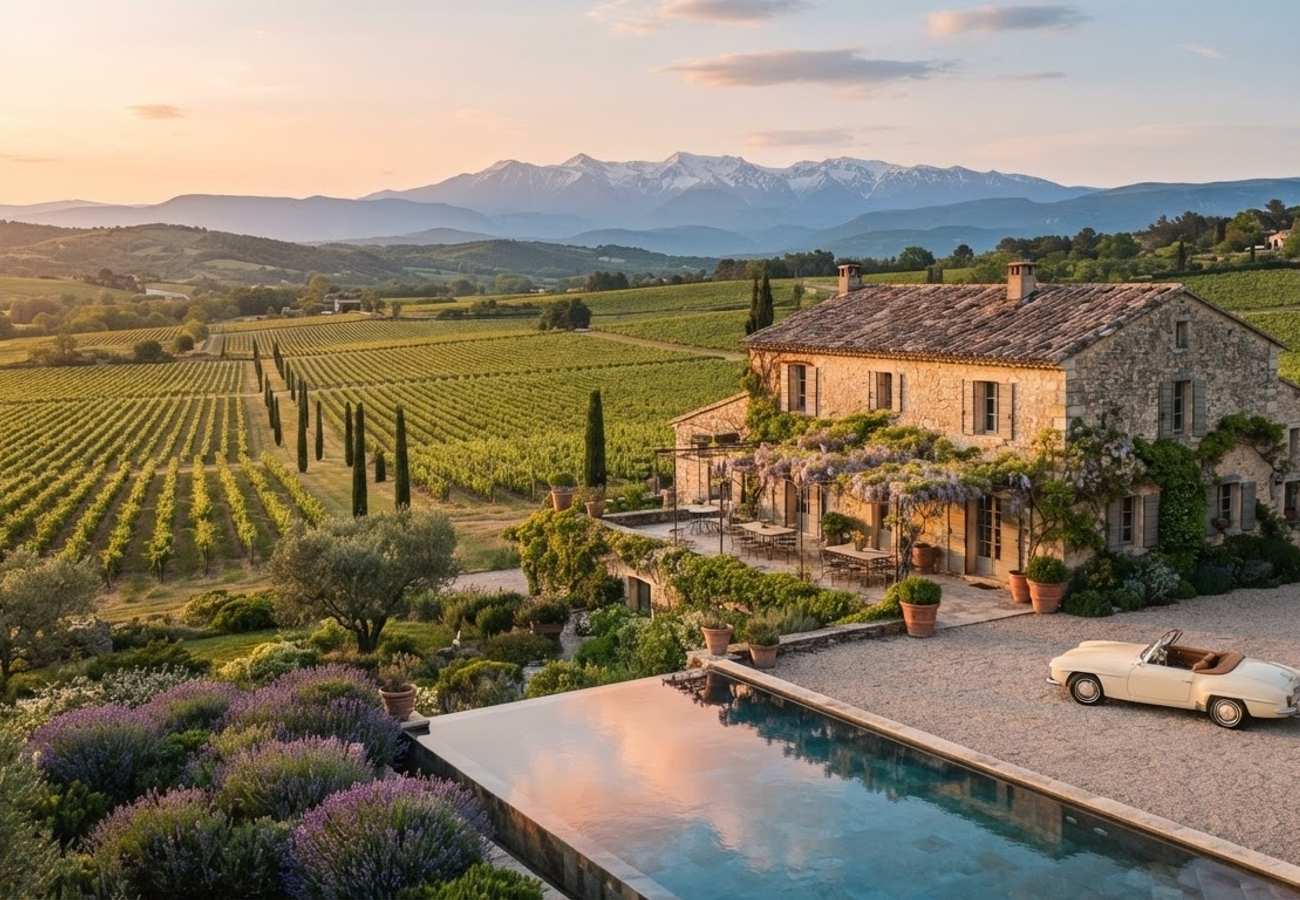
Image generated by AI
International arrivals to Europe rose 5% and overnight stays increased 4.8% in 2026, signaling a massive pivot where high-net-worth individuals are swapping crowded capitals for secluded regional estates.
The era of the "trophy city" vacation is evolving. While Paris, Rome, and London remain iconic, the 2026 luxury travel data reveals a sophisticated migration toward the periphery. Affluent travelers are no longer satisfied with a five-star hotel in a city center; they are seeking "access"—the ability to enter spaces and experiences that are unavailable to the general public.
This shift is transforming the economic map of Europe, moving wealth from urban hubs into vineyards, historic villages, and mountain retreats across France, Greece, Italy, Spain, Switzerland, Austria, Portugal, Croatia, and Slovenia.
The New Currency of Luxury: Access and Privacy
The modern luxury traveler has redefined "premium." The focus has shifted from visible opulence to invisible exclusivity. The demand is now centered on five core priorities:
| Travel Priority | Visitor Requirement |
|---|---|
| Privacy | Small-scale properties and secluded settings |
| Personalisation | Specialist guides and bespoke, non-replicable itineraries |
| Culture | Direct engagement with local heritage and authentic communities |
| Nature | Wellness-centric escapes and raw outdoor experiences |
| Exclusivity | Access to sites and events closed to mass tourism |
For the visitor, the real impact is a transition from being an observer of a culture to a participant in it. This is evident in the rise of "heritage stays," where guests reside in centuries-old structures that function as living museums rather than standardized hotels.
Regional Powerhouses: Beyond the Gateway Cities
France: The Expansion of the Art de Vivre
France continues to dominate global tourism, welcoming approximately 102 million international visitors. However, the growth is now regional. While Paris remains a magnet for fashion and gastronomy, the luxury boom has surged into the provinces.
- Provence & Bordeaux: A shift toward private vineyard experiences and countryside estates.
- Loire Valley: A resurgence in historic castle stays.
- French Alps & Côte d’Azur: A move toward wellness-integrated mountain resorts and exclusive coastal retreats.
Greece: The Search for the Authentic Mediterranean
The Bank of Greece reports that tourism receipts remain a cornerstone of the national economy, but the geography of spending is changing. The saturation of Santorini and Mykonos has pushed luxury seekers toward more discreet alternatives.
- Crete & Corfu: High demand for gastronomy and historic premium resorts.
- Peloponnese: A hotspot for archaeology and boutique nature stays.
- Small Aegean Islands: The new frontier for total seclusion and authentic island life.
Italy and Spain: Quality Over Volume
Italy is leveraging its "slow travel" appeal, moving beyond the Venice-Florence-Rome triangle into Puglia’s coastal villages and the rugged beauty of the Dolomites. Similarly, Spain is diversifying its high-value offer. By promoting the Basque Country and Andalusia, Spain is utilizing Eurostat data to manage overnight stay distributions, ensuring that luxury spending supports local regional economies rather than just Madrid and Barcelona.
Alpine Europe: The Year-Round Wellness Pivot
Switzerland and Austria have successfully decoupled "luxury mountain travel" from "winter skiing." The Alps are now year-round destinations focused on health and tranquility. Scenic rail journeys and premium mountain lodges now attract affluent visitors in July and September just as they do in January, treating the natural environment as a primary wellness asset.
Visitor Insider Tips for the Regional Luxury Traveler
To truly experience this shift away from the capitals, travelers should adopt a "slow-burn" itinerary:
- Off-Peak Windows: Visit the Provence vineyards in late September or the Greek Peloponnese in May to avoid the crowds while enjoying perfect weather.
- Cultural Etiquette: When staying in family-owned châteaus or villas, engage with the owners. These properties often hold oral histories of the region that aren't in any guidebook.
- Dining Specialty: Move beyond Michelin stars. Seek out "Table d'Hôte" experiences in rural France or "Agriturismo" in Italy, where the luxury is the freshness of the ingredients sourced from the immediate soil.
- Hidden Spot: Explore the Slovenian Alps or the Croatian coast—these are currently the fastest-growing "under-the-radar" luxury markets in Europe.
Tourism Outlook: A Sustainable Future
This decentralization of luxury tourism is a strategic win for European governments. By spreading high-spending visitors across a wider geographic area, destinations can protect fragile heritage sites from over-tourism while injecting capital directly into rural communities. The long-term trend points toward a "regenerative" model where luxury travel actively contributes to the preservation of the landscapes and traditions it seeks to enjoy.
The future of European luxury is no longer about where you are seen, but where you can disappear.
Related Travel Guides
Disclaimer
This article is for informational and educational purposes only. It does not constitute legal, financial, or professional advice. While we strive to provide accurate and up-to-date information, travel policies, regulations, and conditions change rapidly. Always verify information with official sources before making travel decisions. Nomad Lawyer makes no representations about the accuracy, reliability, completeness, or suitability of the information provided. Readers should consult qualified professionals for advice specific to their circumstances. The views expressed in this article are those of the author and do not necessarily reflect the views of Nomad Lawyer.
Kunal K Choudhary
Co-Founder & Contributor
A passionate traveller and tech enthusiast. Kunal contributes to the vision and growth of Nomad Lawyer, bringing fresh perspectives and driving the community forward.
Learn more about our team →