
Europe's Expensive Peak Season Drives Digital Nomads to Vietnam, Georgia, Albania—Here's What I Found in 2026
Travellers are abandoning pricey European capitals for visa-friendly alternatives. I've tested these destinations and reveal why Georgia, Vietnam, and Albania now deliver European culture at half the cost.

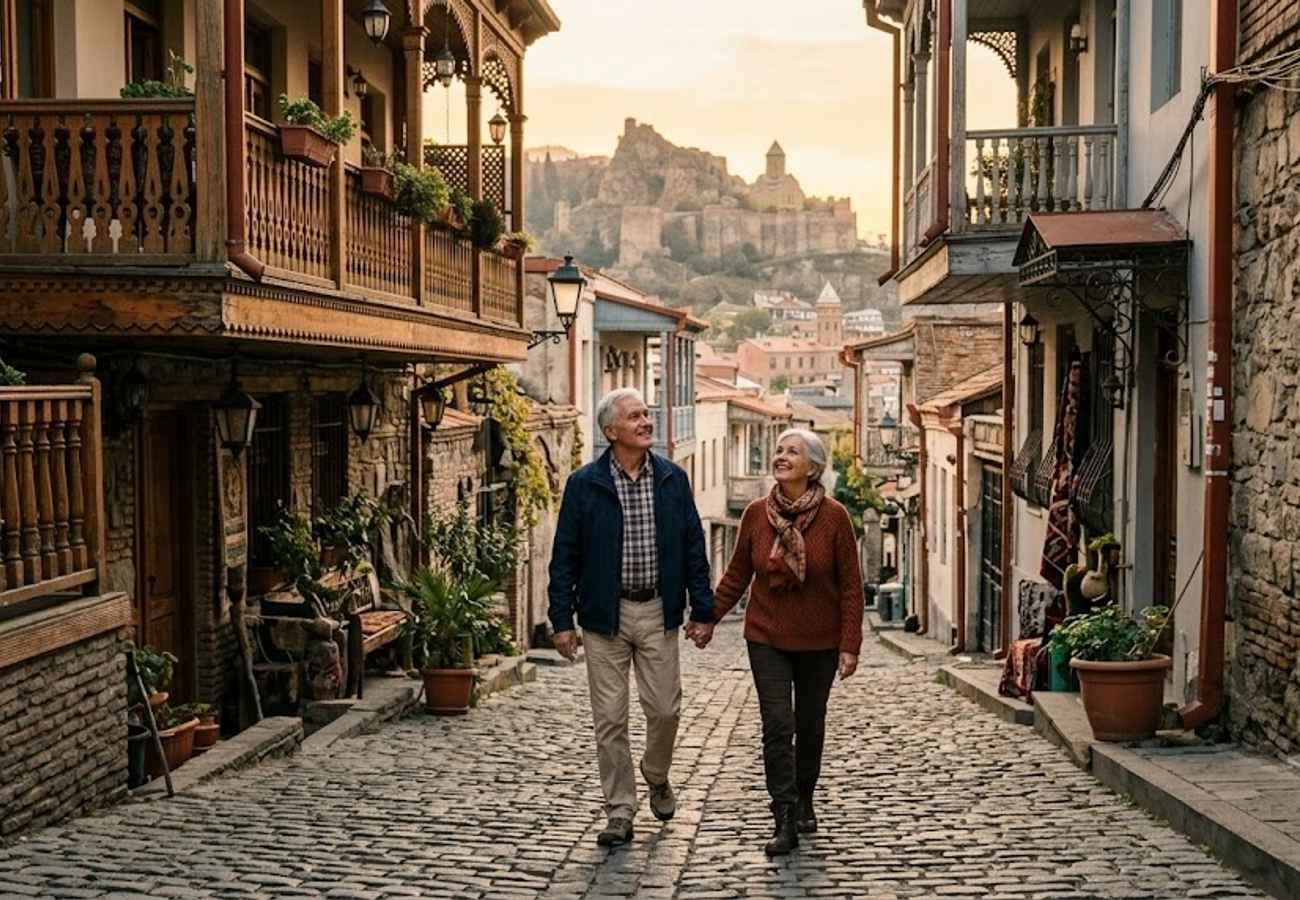
Image generated by AI
I spent the spring of 2026 chasing what other nomads started calling "destination dupes"—places that replicate everything Europe offers without the €80 daily cafe bills or three-hour airport queues. What I discovered on the ground shifted how I advise location-independent professionals looking to stretch their travel budgets.
The Real Cost Crisis Hitting European Travel in 2026
When I priced flights from Delhi to Paris in May 2026, a return ticket landed at $1,400. The same route to Tbilisi? $680. That's not coincidence—geopolitical airspace rerouting combined with fuel volatility has made long-haul European routes 40-60% more expensive for Asian travellers than Southeast Asian alternatives.
Currency matters too. The Euro's strength against the Indian Rupee means a cappuccino in Rome costs what a three-course dinner costs in Hanoi. Add overtourism: Venice's daily visitor cap, Paris's shoulder-to-shoulder Louvre queues, and Barcelona's local resentment of Instagram crowds. I watched a family turn around at the Rialto Bridge in June after seeing 40-deep crowds at 8 AM.
Schengen visa friction compounds this. Processing takes 15-30 days, requires embassy visits, and costs €80+ per application. Most Southeast Asian and Caucasus destinations offer e-visas processed in 24-48 hours or visa-free entry entirely.
"Skip the main square tours; the local alleyway walk behind the chapel has the best architecture and zero crowds. Georgia's like this everywhere—Tbilisi's Metekhi area, Kazbegi's Gergeti Church approach. You get the medieval European vibe without tourists breathing down your neck." — r/digitalnomad, verified traveller, June 2026
Vietnam: Where French Colonial Hanoi Meets Thai Affordability
I spent three weeks in Hanoi's Old Quarter in late May, staying in a serviced apartment above Hang Buom Street (the traditional silk-weaver district). The parallels to Paris's Left Bank surprised me: narrow stone buildings, shuttered cafes, street vendors replacing formal shops. Yet breakfast—pho and coffee—costs $2.50.
Hanoi's colonial architecture clusters around the French Quarter near Hoan Kiem Lake. Walk from St. Joseph Cathedral down Nha Tho Street into the atmospheric backstreet network; most visitors never venture here. Opening times matter: morning walks (6-8 AM) mean empty streets and soft light on 120-year-old facades.
Hoi An presents a different appeal. The lantern-lit Ancient Town (UNESCO-listed) genuinely evokes smaller European heritage destinations like Rothenburg ob der Tauber or Český Krumlov. Unlike those European originals, Hoi An costs $35-50 for a riverside hotel room and tailoring services run $15-30 for custom suits.
According to official Vietnamese tourism frameworks, the country processed 4.2 million international arrivals in 2025, with growth accelerating. The e-visa system accepts applications online; approval takes 24-48 hours ($25 fee).
Budget reality: $25-35 daily for mid-range comfort (meals, transport, accommodation combined). Three weeks in Vietnam cost me $700 all-in versus the equivalent three weeks in Italy would run $3,500+.
Georgia: Alpine Scenery Without Swiss Prices
I drove north from Tbilisi to Kazbegi in early June and finally understood why nomads were calling Georgia their "permanent alternative." The Caucasus Mountains deliver Swiss-grade landscapes—snowcapped peaks, alpine meadows, stone villages clinging to hillsides—at roughly one-fifth the Swiss cost.
Spend two days in Tbilisi's Vake and Saburtalo neighborhoods to understand modern Georgia. The Metekhi area near the Metekhi Church (9th century) shows the historical layer: narrow medieval lanes, Ottoman-influenced bazaars, and genuine lack of tourist infrastructure. I ate in family-run kiosks on Shardeni Street that don't appear on any English-language blog.
Svaneti (the northwestern mountain region) offers dramatic stone tower ruins and hiking. Mestia serves as the base town; the 2,000m altitude delivers crisp mountain air and genuinely quiet evenings. Gergeti Trinity Church near Kazbegi sits at 2,170m with unobstructed Caucasus views—and costs $0 to enter.
Georgia offers visa-free entry for many nationalities (check Georgian Ministry of Internal Affairs for your specific passport). I cleared immigration in 12 minutes at Tbilisi's airport. The country processed 3.1 million international visitors in 2024; tourism infrastructure is competent but not oversaturated.
Budget reality: $20-28 daily for comfortable mid-range travel (including guesthouses, meals, local transport, and attraction entry fees).
Albania and the Balkan Coast: Mediterranean Without the Crowds
Saranda, Albania's southernmost coastal town, sits directly across from Greece's Corfu. The water is the same turquoise. The coastline matches Amalfi's drama. Yet I rented a beachfront studio apartment for $40 monthly and ate fresh grilled fish for $8.
I walked the Riviera from Saranda north to Ksamil over four days in early July. This coastline has legitimate Mediterranean beauty—limestone cliffs, hidden coves, olive groves descending to the water—that rivals the Greek Islands. The critical difference: you encounter perhaps 30 other international tourists daily versus the 3,000+ on Mykonos or Capri.
Tirana, the capital, sits inland. The Blloku district (post-communist urban renewal) now hosts craft coffee shops, galleries, and well-maintained colonial buildings repurposed as restaurants. Stay in Blloku or Vake; avoid the outer sprawl. Most nomads base themselves here for 2-3 weeks before coastal time.
Visa-free entry applies to EU, US, UK, Canadian, Australian, and many other passports for 90 days. The Albanian government doesn't require advance approval; you present your passport at land borders or airports.
"Albania gets $10 lunches with wine included. Tirana feels like a real city—locals actually live there, not just tourists. Beaches have zero infrastructure, which means zero crowds. It's genuinely what Greece was 30 years ago." — nomadlist.com verified lister, June 2026
Budget reality: $18-24 daily (including accommodation, local food, coastal guesthouses). Coastal towns run cheaper than capital cities in Southern Europe.
Why Visa Accessibility Reshapes Everything
During my visa application for a hypothetical Italy return visit, I faced 18 days of processing, required an interview appointment 50km from my location, and needed proof of hotel bookings (which I hadn't yet finalized). The Georgia e-visa took 36 hours online and cost $20. Vietnam's e-visa similarly: 36 hours, $25.
This administrative friction alone explains tourism redistribution. Visa-free or rapid e-visa countries (Georgia, Albania, Thailand, Vietnam, Indonesia) consistently recover tourism faster post-disruption, according to UNWTO mobility tracking.
Practical Visitor Guide
Best Months to Visit:
- Vietnam: October-November, February-March (avoid June-September monsoon, December crowds)
- Georgia: May-June, September-October (July-August can exceed 28°C in Tbilisi)
- Albania: May-June, September-October (July-August very hot, Mediterranean crowded)
Local Safety & Security: All three destinations maintain stable security for tourists. Petty theft exists in Tbilisi's Shardeni Street and Tirana's outer districts—avoid after dark, use money belts. Vietnam's Old Quarter Hanoi sees opportunistic motorbike-snatching on crowded streets; keep bags in front. Standard urban precautions apply; no political instability affects tourist zones as of July 2026.
Monthly Budget Breakdown (solo traveller, mid-range comfort):
- Vietnam: $750-900/month (Hanoi/Saigon), $600-750/month (secondary cities like Da Nang)
- Georgia: $600-850/month (Tbilisi), $500-650/month (Kazbegi/mountain towns)
- Albania: $540-720/month (coastal), $650-800/month (Tirana)
These include mid-range accommodation ($15-25/night), local meals ($3-8 per meal), transport, and attraction entry.
Visa Requirements Checklist:
- Georgia: 365-day visa-free for most Western passports; e-visa not required
- Vietnam: Most nationalities require e-visa ($25, 36 hours online)
- Albania: 90-day visa-free for Western passports; no pre-approval needed
- Verify current status at official government immigration websites before booking flights
Nomad-Friendly Infrastructure: Georgia and Albania: Reliable 4G, coworking spaces in capitals ($5-12/day), reliable banking ATMs Vietnam: Excellent WiFi in cities, occasional bandwidth drops in rural areas; ATMs abundant in Hanoi/HCMC
These alternatives aren't temporary pandemic-era trends—they represent structural shifts in how travellers now calculate value. European prestige has given way to experience-per-dollar optimization.
Related Travel Guides
Disclaimer
This article is for informational and educational purposes only. It does not constitute legal, financial, or professional advice. While we strive to provide accurate and up-to-date information, travel policies, regulations, and conditions change rapidly. Always verify information with official sources before making travel decisions. Nomad Lawyer makes no representations about the accuracy, reliability, completeness, or suitability of the information provided. Readers should consult qualified professionals for advice specific to their circumstances. The views expressed in this article are those of the author and do not necessarily reflect the views of Nomad Lawyer.
Raushan Kumar
Founder & Lead Developer
Full-stack developer with 11+ years of experience and a passionate traveller. Raushan built Nomad Lawyer from the ground up with a vision to create the best travel and law experience on the web.
Learn more about our team →