
EU EES Border Chaos Hits Canadian Travelers in Paris and Rome
The EU's new Entry/Exit System (EES) has sparked massive border control delays, causing travel chaos for Canadians arriving in major hubs like Paris and Rome.

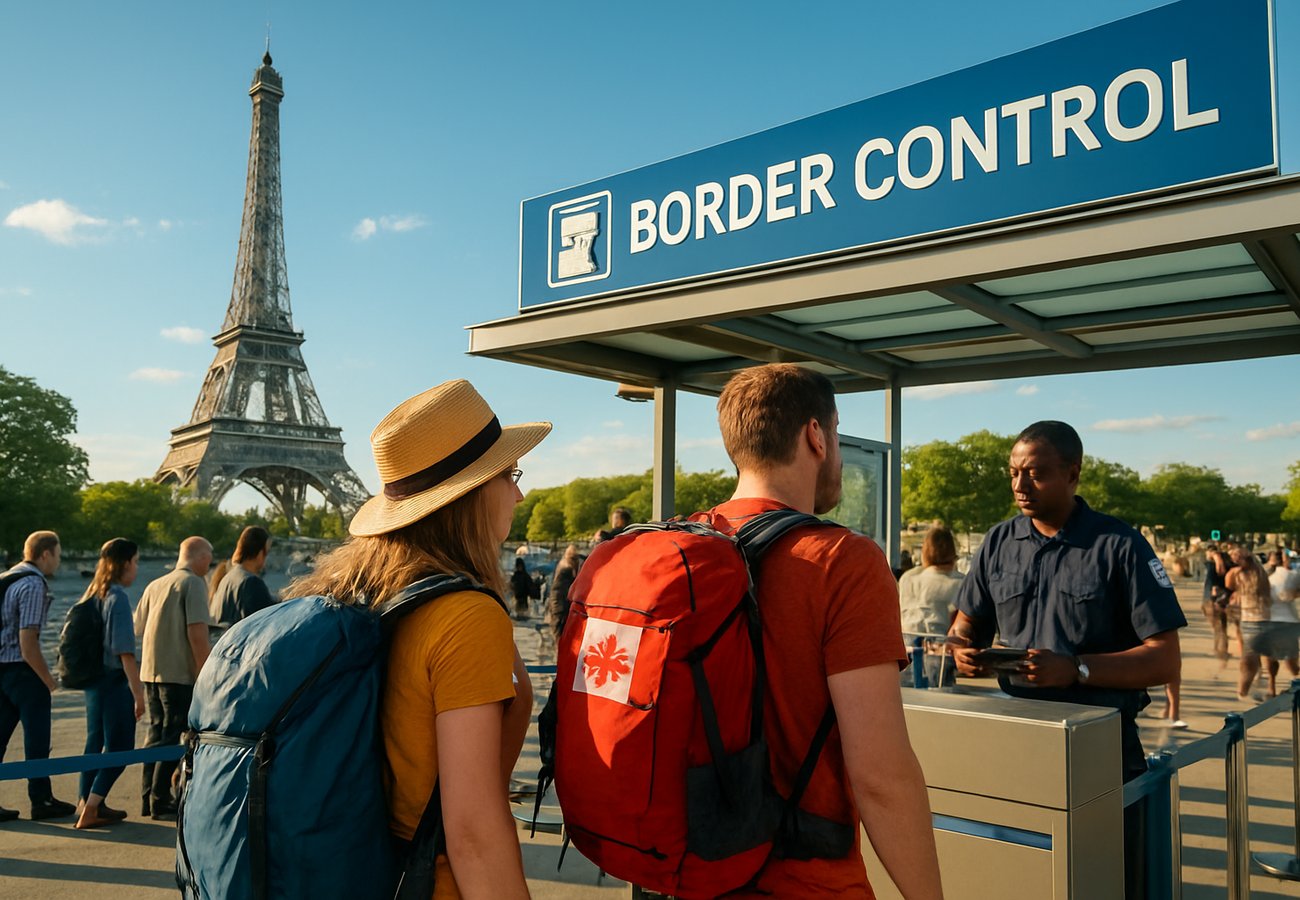
Image generated by AI
Breaking: Massive European Travel Chaos as EU's New Biometric Entry Rules Trigger Severe Border Delays from Paris to Rome
The highly anticipated rollout of the European Union's Entry/Exit System (EES) has instantly sparked unprecedented travel chaos, plunging millions of international tourists—including Canadian travelers—into massive immigration bottlenecks across 29 Schengen borders.
A monumental and highly disruptive overhaul in European border control has rapidly ignited widespread travel chaos affecting millions of inbound tourists from outside the European Union. Beginning heavily in April 2026, the European Union’s brand-new Entry/Exit System (EES) became fully operational, permanently replacing traditional passport stamps with stringent biometric checks, including mandatory fingerprints and facial recognition scans. Intended to modernize and streamline how travelers enter the Schengen Area, the abrupt rollout has instead generated intense confusion, sparking massive processing bottlenecks that have severely impacted Canadian travelers arriving in major European hubs from Paris to Rome.
For millions of leisure and business travelers attempting to navigate the 29 Schengen external checkpoints, this technological transition was deeply unexpected and highly disruptive. Videos and firsthand accounts flooding social media perfectly capture the chaotic scenes at airport passport controls, with dense queues surging, connections routinely missed, and wait times aggressively ballooning.
EXPANDED OVERVIEW: The Digitization of the Schengen Border
The Entry/Exit System (EES) represents one of the most drastic, sweeping updates to European travel protocol in decades. Administered directly by eu-LISA—the EU agency responsible for large-scale IT systems governing border security—the EES became legally mandatory across all external Schengen checkpoints on April 10, 2026.
By aggressively phasing out physical ink stamps in favor of an automated, digital system, the EU aims to perfectly track the strict 90-day short-stay travel limit (within a rolling 180-day period) for visa-exempt tourists from Canada, the United States, the United Kingdom, and Australia. While the long-term intent of the EES is to dramatically enhance border efficiency and security accuracy, the initial implementation phase has aggressively buckled under the sheer volume of peak spring and Easter travel, resulting in massive systemic congestion.
SECTION-WISE BREAKDOWN: The Impact at Major Hubs
Paris-Charles de Gaulle Airport (CDG)
As a massive global gateway, Paris-Charles de Gaulle Airport was immediately overwhelmed by the influx of North American flights. Canadian travelers stepping off grueling long-haul routes were confronted with heavily congested terminals, struggling to decipher multilingual biometric signage. The sudden requirement to process first-time biometric enrollments caused lines to snake entirely through terminal halls, aggressively pushing processing speeds to a near halt and causing cascading delays for connecting flights across France.
Rome Fiumicino Airport (FCO)
In Italy, Rome's Fiumicino Airport similarly buckled under the technological transition. Passengers heavily accustomed to a rapid passport stamp and swift exit were utterly unprepared for the intense EES kiosk procedures. With dense clusters of inbound tourists arriving simultaneously, the lack of sufficient self-service kiosks and manual processing lanes resulted in wait times routinely exceeding 60 to 120 minutes, severely disrupting tight rail itineraries and pre-booked tour schedules.
Amsterdam and Milan Hubs
The massive logistical friction was not isolated to Paris and Rome. Major secondary gateways like Amsterdam Airport Schiphol and Milan Malpensa reported severe congestion. Airlines openly reported surges in missed flight connections as the mandatory biometric processing continuously pushed departure times late, trapping transit passengers in international purgatory.
INCIDENT DETAILS AND BORDER PROTOCOL SNAPSHOT
Understanding the precise mechanics of the EES implementation is crucial for mitigating travel disruptions.
Schengen EES Implementation Data
| Policy Metric | Factual Data |
|---|---|
| System Name | Entry/Exit System (EES) |
| Operational Date | April 10, 2026 |
| Affected Checkpoints | 29 Schengen External Borders |
| Administering Agency | eu-LISA |
| Data Captured | Facial Images and Fingerprints |
| Estimated Delays | 60–120 Minutes at Major Hubs |
| Impacted Nationals | Canadians, Americans, UK, Australians |
PASSENGER IMPACT: Navigating the New Rules
For Canadian tourists currently attempting to navigate the 2026 European travel season, understanding the severe logistical impact of the EES is absolutely critical. First-time biometric enrollment undeniably adds multiple minutes per passenger. When multiplied by thousands of simultaneous arrivals at airports like CDG or FCO, the compound delay traps passengers for hours.
Travelers must now anticipate that traditional passport stamps are effectively dead; physical stamps will no longer be issued once EES enrollment is complete. Furthermore, despite the high-tech biometric scan, overwhelmed border agents are still routinely aggressively questioning tourists regarding accommodation proof, return tickets, and funding, meaning passengers must have physical or digital documents ready instantly to avoid further stalling the line.
INDUSTRY ANALYSIS: The Airline and Tourism Backlash
From a global aviation and tourism industry perspective, the chaotic rollout of the EES has triggered massive operational anxiety. While border officials fiercely defend the system as a necessary upgrade for securing the 29-member Schengen space against visa overstays, major airline executives and international airport associations are warning of severe reputational damage.
Travel bodies are actively demanding immediate flexibility from the EU, urgently requesting the ability for member states to temporarily suspend biometric requirements during intense peak holiday periods. Notably, nations heavily reliant on summer tourism, such as Greece, have already implemented localized waivers for specific visitor groups to aggressively smooth arrival experiences and prevent complete terminal gridlock.
CONCLUSION: A Difficult Transition to Digital Travel
The explosive rollout of the EU Entry/Exit System has undeniably introduced severe short-term travel chaos for Canadians arriving in Paris, Rome, and beyond. However, this massive disruption clearly underscores a permanent, global shift toward highly digitized, biometric border management. With the European Union also actively preparing to launch the European Travel Information and Authorisation System (ETIAS) by late 2026, travelers must rapidly accept that extensive pre-travel preparedness and extreme patience at passport control are now permanent fixtures of the European vacation experience.
KEY TAKEAWAYS
- System Launch: The EU's Entry/Exit System (EES) became fully operational on April 10, 2026, across 29 Schengen borders.
- Biometric Mandate: Traditional passport stamps are replaced entirely by mandatory facial recognition and fingerprint data capture.
- Massive Delays: Major hubs like Paris (CDG) and Rome (FCO) are experiencing peak wait times of 60 to 120 minutes for arriving Canadians.
- Logistical Chaos: The rollout has triggered massive terminal congestion, missed airline connections, and delayed high-speed rail itineraries.
- Future Protocols: The EES launch serves as a precursor to the mandatory ETIAS pre-travel authorization system arriving in late 2026.
Disclaimer
This article is for informational and educational purposes only. It does not constitute legal, financial, or professional advice. While we strive to provide accurate and up-to-date information, travel policies, regulations, and conditions change rapidly. Always verify information with official sources before making travel decisions. Nomad Lawyer makes no representations about the accuracy, reliability, completeness, or suitability of the information provided. Readers should consult qualified professionals for advice specific to their circumstances. The views expressed in this article are those of the author and do not necessarily reflect the views of Nomad Lawyer.
Kunal K Choudhary
Co-Founder & Contributor
A passionate traveller and tech enthusiast. Kunal contributes to the vision and growth of Nomad Lawyer, bringing fresh perspectives and driving the community forward.
Learn more about our team →