
UAE Road Closure: Etihad Rail Construction Hits Maliha Road Through June 10
Dubai's Maliha Road exit closes nightly May 31–June 10 for Etihad Rail infrastructure work. Alternative routes and travel planning essential for commuters between Dubai and Sharjah.

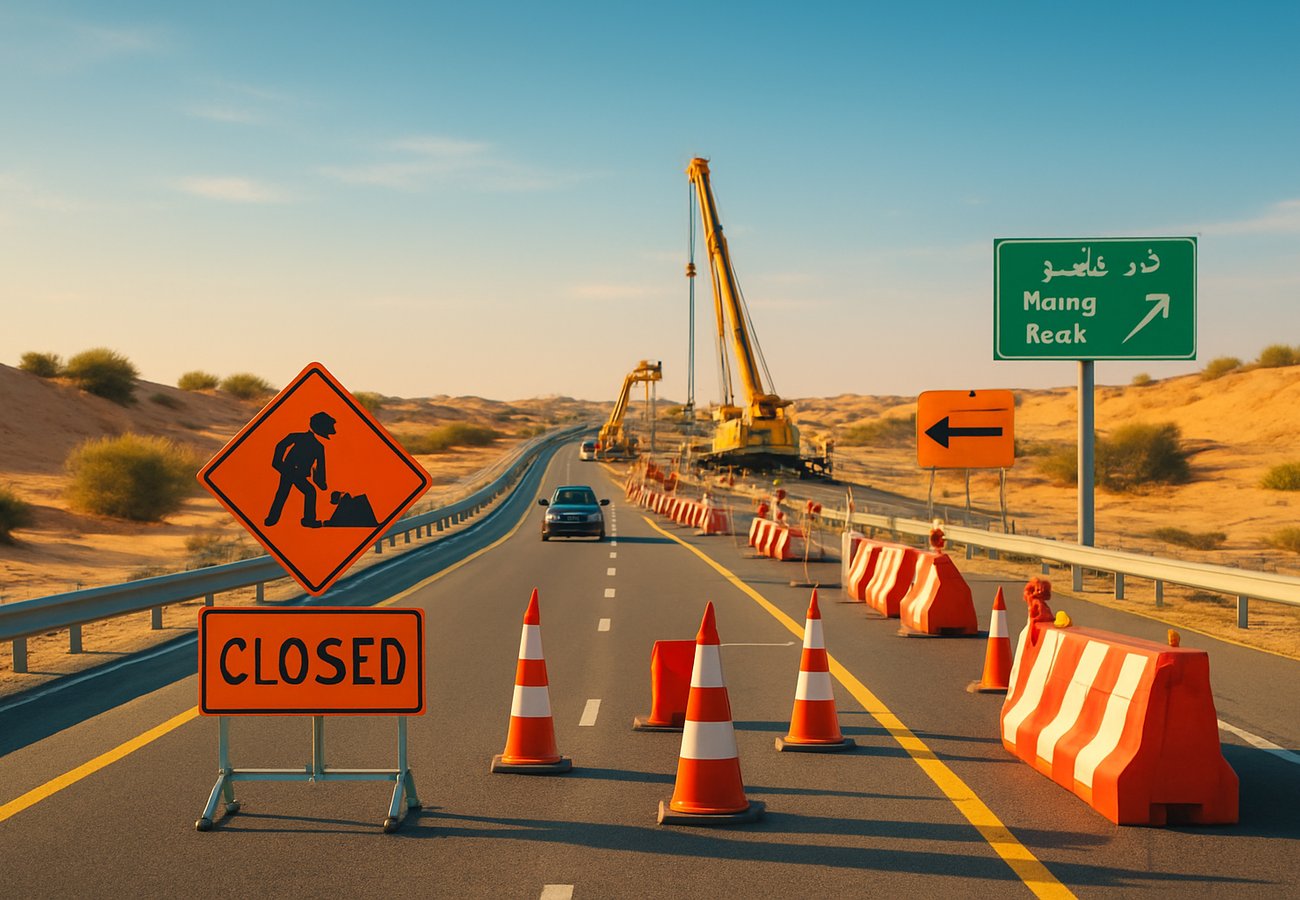
Image generated by AI
The next ten nights will test the patience of anyone commuting between Dubai and Sharjah after midnight. Starting May 31 and running through June 10, 2026, authorities have announced a nightly closure of the Dubai-bound exit on Maliha Road, a major thoroughfare connecting the two emirates. The reason? One of the UAE's most ambitious infrastructure projects—the national Etihad Rail network—is advancing at pace, and the roads must yield to progress.
For night-shift workers, early-morning airport travelers, and logistics operators, the coming days mean extra planning. But behind this temporary inconvenience lies something far larger: a railway system that could fundamentally reshape how the Emirates moves freight, connects communities, and competes regionally.
The Closure Window: What You Need to Know
The nightly shutdown runs from midnight to 6:00 a.m. every night for the eleven-day period. Authorities deliberately scheduled the work during off-peak hours to minimize disruption on peak-traffic commutes, but let's be honest—when you're running freight or working a night shift, midnight closure is still midnight closure.
Groups most affected include:
- Night-shift workers in both emirates
- Logistics and freight operators
- Airport passengers traveling during early-morning hours
- Taxi and ride-hailing drivers
- Long-distance travelers using Emirates Road connections
Traffic authorities are urging drivers to allow extra travel time and stay alert for temporary diversion signage. This isn't optional advice—it's survival strategy for the next ten days.
Why This Road Must Close: The Rail Priority
The temporary restriction exists for a reason rooted in engineering necessity. Government-backed rail infrastructure requires modifications to existing road networks that can't happen during daylight hours when traffic demands peak. Think bridge construction, track installation, utility relocation, and interchange upgrades—the kind of heavy work that demands uninterrupted time and safety protocols.
Reddit: "Infrastructure work on major routes always happens at night in the Gulf. It's frustrating, but honestly necessary if they want to build something that actually works." — r/dubai
The authorities have apologized for the inconvenience while thanking road users for cooperation. That's diplomatic language for: bear with us while we build something transformational.
Etihad Rail: The Bigger Picture
The Etihad Rail project isn't a typical highway upgrade—it's a national strategy document written in steel and concrete. Established under Federal Law No. 2 of 2009, the network was designed to connect major cities, ports, industrial zones, and logistics hubs throughout the UAE while eventually supporting regional connectivity across Gulf Cooperation Council (GCC) nations.
The numbers tell the story: the railway currently spans approximately 900 kilometers and forms a central pillar of the UAE's long-term economic diversification strategy. Freight operations are already active on large portions of the network. More importantly, passenger rail services are expected to launch in phases during 2026—the year we're currently in.
According to Etihad Rail data, a single freight train can replace hundreds of trucks on the road network, contributing directly to sustainability goals and reducing highway congestion. That's the genuine payoff when construction finally wraps.
Impact on the Dubai–Sharjah Corridor
The Dubai–Sharjah route ranks among the busiest transportation corridors in the entire region. Thousands of residents traverse it daily for work, education, and business. While the closure happens during off-peak hours, several critical commuter groups face real disruptions.
Night-shift workers in industrial zones, healthcare facilities, and hospitality sectors depend on predictable travel times. Logistics operators moving freight across emirate lines operate on tight schedules. Airport staff and passengers catching early-morning flights can't simply wait twelve hours. Even taxi and ride-hailing drivers—operating in their peak earning hours—will face route delays and longer passenger trips.
The infrastructure calculus always involves trade-offs. This time, the equation favors the long-term railway vision over short-term road convenience.
Navigating Around the Closure
Motorists have options. Previous Etihad Rail-related road diversions in the area have directed drivers toward nearby networks including Sheikh Mohammed Bin Zayed Road and Khorfakkan Road, depending on final destination. The specific diversion route depends on where you're headed, so individual navigation apps should provide real-time guidance.
Here's the practical playbook:
- Download your navigation app before the closure period begins
- Enable live traffic alerts
- Check official Dubai Police Traffic advisories regularly
- Allow 30–45 minutes extra travel time for overnight journeys
- Familiarize yourself with alternate routes before May 31
Authorities will continue monitoring traffic flow and adjusting diversion measures throughout the construction window. That's not just bureaucratic promise—it's operational necessity when dealing with one of the region's busiest commuter corridors.
The Broader Construction Momentum
This single closure reflects a larger pattern across the UAE. Over recent years, multiple temporary closures and route modifications have been announced in Dubai and Sharjah as construction crews accelerate completion of national rail sections. Projects involving bridges, tunnels, interchanges, and passenger stations continue across several emirates.
Industry experts view the railway as a game-changer for regional transportation. The system could eventually reduce highway congestion, improve freight efficiency, lower transportation emissions, and provide a genuine alternative travel option between the country's major cities. When a single freight train replaces hundreds of trucks, environmental and economic benefits compound.
The UAE isn't building this network for novelty. It's building it because the current road-dependent system has hit capacity limits during peak periods.
The Passenger Rail Era Is Coming
The emirates are approaching a transportation inflection point. Recent updates indicate that initial passenger routes are expected to connect major destinations including Abu Dhabi, Dubai, and Fujairah, with additional stations introduced gradually. The network is projected to serve millions of passengers annually while offering faster and more sustainable inter-emirate travel options.
Transportation planners view this as a milestone equivalent to the Dubai Metro transformation of the early 2010s—a project that redefined urban mobility patterns across the entire emirate. The Etihad Rail network is operating at that scale of ambition.
Think about it: currently, if you need to move from Dubai to Abu Dhabi, you drive. In twelve months, you'll have a choice. That choice will change commute patterns, reduce highway strain, and create genuine alternatives for millions of residents.
The Final Stretch: June 10 and Beyond
For residents regularly traveling the Dubai–Sharjah corridor, the next ten nights will involve minor detours and longer travel times. Behind the temporary inconvenience lies a vision focused on creating transportation networks that connect communities, strengthen economic activity, and support the UAE's future growth.
As construction crews work through overnight hours, authorities are asking motorists to remain patient, follow posted traffic instructions, and plan ahead until the affected route reopens after June 10. The work continues because the bigger vision demands it.
Check live traffic feeds. Allow extra time. Use alternate routes. And remember—you're watching infrastructure transformation happen in real time.
Construction's temporary; connected emirates are forever.
Related Travel Guides
Nice Airport Adds 10 Routes, Boston Service: 130 Destinations Across 47 Countries Summer 2026
Disclaimer
This article is for informational and educational purposes only. It does not constitute legal, financial, or professional advice. While we strive to provide accurate and up-to-date information, travel policies, regulations, and conditions change rapidly. Always verify information with official sources before making travel decisions. Nomad Lawyer makes no representations about the accuracy, reliability, completeness, or suitability of the information provided. Readers should consult qualified professionals for advice specific to their circumstances. The views expressed in this article are those of the author and do not necessarily reflect the views of Nomad Lawyer.
Raushan Kumar
Founder & Lead Developer
Full-stack developer with 11+ years of experience and a passionate traveller. Raushan built Nomad Lawyer from the ground up with a vision to create the best travel and law experience on the web.
Learn more about our team →