
Emirates Resumes Dubai–Jakarta Flights Following Mount Anak Krakatau Ash Disruption: Indonesia Travel Guide 2026

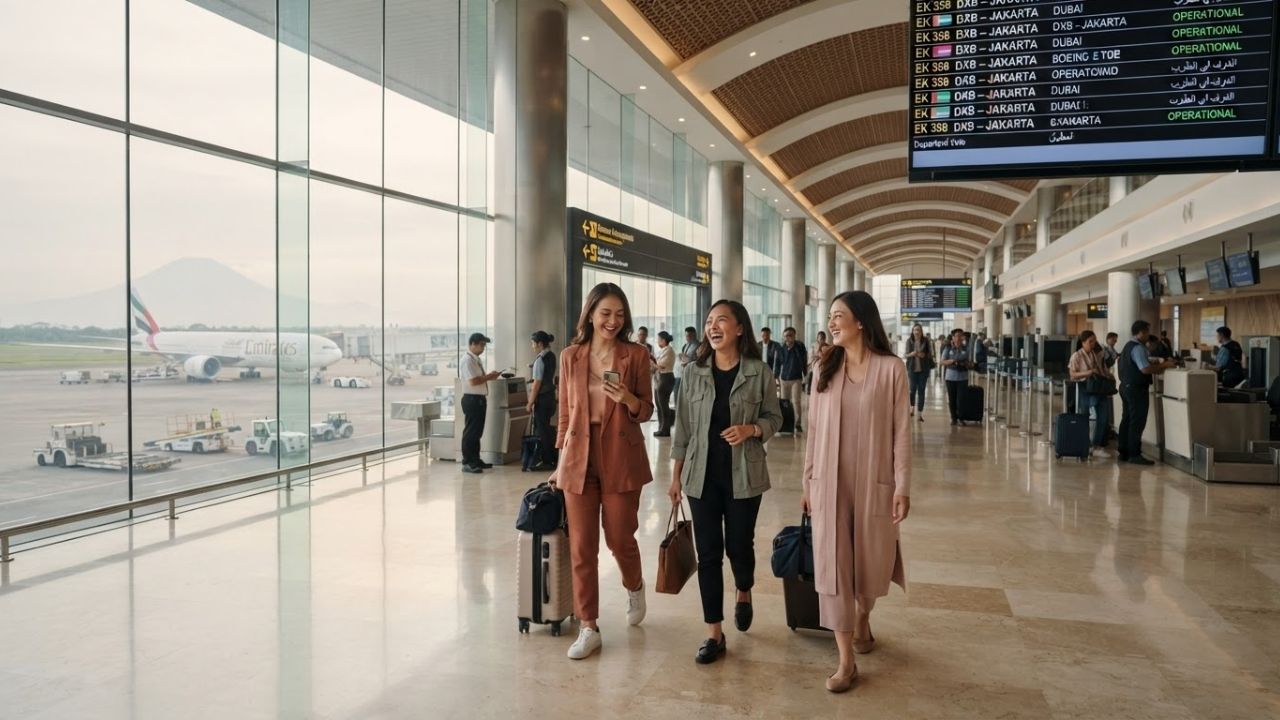
Emirates has resumed its scheduled services between Dubai International Airport and Jakarta's Soekarno-Hatta International Airport on Tuesday, 8 September 2026, following a 48-hour disruption caused by explosive ash plumes from Mount Anak Krakatau that reached 50,000 feet and closed eight regional airports. After cancelling five scheduled flights on 7 and 8 September affecting over 170,000 regional air travelers, the carrier restored services EK357, EK8359, and EK358 as atmospheric conditions and runway operations stabilized.
Long-haul connectivity between the Middle East and Southeast Asia is regaining momentum following one of the most significant volcanic airspace shutdowns of 2026. The explosive eruptions of Mount Anak Krakatau in the Sunda Strait severed vital air corridors across western Java and southern Sumatra, prompting emergency groundings to protect aircraft jet engines from abrasive airborne silicate debris.
With safety inspections completed and airspace corridors declared clear by Indonesian civil aviation authorities, Dubai-based mega-carrier Emirates has recommenced operations into Jakarta. The restoration re-establishes a critical intercontinental conduit for business travelers, long-haul tourists, and connecting passengers traveling through Dubai’s global hub.
The Local Trend Revealed: Reconnecting the Dubai–Jakarta Axis
Operating typically as a high-frequency link with two daily widebody flights between Dubai International Airport (DXB) and Jakarta Soekarno-Hatta International Airport (CGK), the route serves as a principal artery for travelers moving between the Gulf region, Europe, the Americas, and Indonesia.
The sudden escalation of Mount Anak Krakatau from Friday, 4 September to Sunday, 6 September 2026 sent continuous ash clouds across the Java Sea. Operations were halted from Sunday, 6 September until the early morning hours of Tuesday, 8 September.
During the height of the safety closure, Emirates cancelled five scheduled flight sectors across 7 and 8 September:
| Flight Number | Route | Scheduled Date | Operational Status | Aircraft & Impact |
|---|---|---|---|---|
| EK356 | Dubai (DXB) to Jakarta (CGK) | 7 September 2026 | Cancelled | Grounded due to ash clouds |
| EK357 | Jakarta (CGK) to Dubai (DXB) | 7 September 2026 | Cancelled | Turnaround aircraft unavailable |
| EK358 | Dubai (DXB) to Jakarta (CGK) | 7 September 2026 | Cancelled | Protective fleet disposition |
| EK359 | Jakarta (CGK) to Dubai (DXB) | 7 September 2026 | Cancelled | Aircraft held in Dubai |
| EK356 | Jakarta (CGK) to Dubai (DXB) | 8 September 2026 | Cancelled | Morning operational recovery |
| EK357 | Jakarta (CGK) to Dubai (DXB) | 8 September 2026 | Resumed (Operated) | Restored scheduled service |
| EK8359 | Dubai (DXB) to Jakarta (CGK) | 8 September 2026 | Resumed (Operated) | Recovery supplementary flight |
| EK358 | Dubai (DXB) to Jakarta (CGK) | 8 September 2026 | Resumed (Operated) | Evening scheduled rotation |
Following the reopening of Soekarno-Hatta International Airport on Tuesday, Emirates restored services EK357, EK8359, and EK358 to normal operations, progressively rebooking stranded passengers through its Dubai terminal network.
Regional Volcanic Crisis: 50,000-Foot Plumes and 8 Closed Airports
The scale of disruption across Indonesia highlights the unique operational challenges of navigating the Pacific Ring of Fire. Mount Anak Krakatau—an active volcanic island born from the remnants of the catastrophic 1883 Krakatoa eruption—unleashed severe explosive venting that carried dense ash layers into commercial flight corridors.
Meteorological evaluations and Volcanic Ash Advisory alerts confirmed that particulate plumes climbed to 50,000 feet, where high-altitude stratospheric winds pushed abrasive dust directly over Banten and the greater Jakarta capital region. Because volcanic ash consists of pulverized rock, glass, and mineral crystals that melt inside high-temperature jet turbines to cause engine flameouts, safety regulations mandated immediate runway closures.
In total, eight airports suspended operations across western Indonesia, affecting more than 170,000 passengers and hundreds of international and domestic flights before winds shifted the ash cloud away from terminal arrival paths.
| Disruption Metric | Recorded Dimension | Regional Significance |
|---|---|---|
| Volcanic Source | Mount Anak Krakatau (Sunda Strait) | Intense continuous venting 4–6 September 2026 |
| Maximum Plume Altitude | Up to 50,000 feet | Severe risk to commercial jet turbine cruising levels |
| Operational Shutdown Window | Sunday, 6 Sept – Early Tuesday, 8 Sept | 48-hour emergency aviation closure |
| Affected Regional Airports | 8 facilities across Java and Sumatra | Coordinated by Indonesian transport ministry |
| Impacted Traveler Count | More than 170,000 passengers | Displaced domestic and intercontinental journeys |
| Primary Hub Reopening | Soekarno-Hatta International (CGK) | Resumed phased operations on Tuesday, 8 September |
Cultural & Environmental Value: Living with Indonesia's Volcanic Geography
For the visitor, the real impact is gaining an authentic perspective on how Indonesia’s geography shapes both its breathtaking natural beauty and its daily infrastructure resilience. The same geological forces that fuel the fertile volcanic soils of Java and produce dramatic caldera peaks also demand respect and procedural adaptability from global transport providers.
Emirates’ rapid resumption underscores the collaborative protocols established between international airlines and local authorities like Badan Meteorologi, Klimatologi, dan Geofisika (BMKG) and the Center for Volcanology and Geological Hazard Mitigation (PVMBG). By adhering strictly to safety advisories rather than risking flight paths through thin particulate clouds, the industry protects passengers while safeguarding high-value aircraft assets.
Economically, restoring the Dubai–Jakarta air bridge is essential for Indonesia’s regional tourism communities. Jakarta serves as the primary international distribution hub for visitors traveling onward to the cultural heritage monuments of Borobudur and Prambanan in Central Java, the surf breaks of West Java, and the resort enclaves of Bali and Lombok. Restoring long-haul flights directly injects spending back into family-owned homestays, local transport cooperatives, and heritage craft centers.
Visitor Insider Tips: Managing Dubai–Jakarta Travel Post-Disruption
Travelers flying between the United Arab Emirates and Indonesia during post-volcanic recovery periods should observe these practical guidelines:
- Leverage Digital Booking Tools: Update your emergency contact details immediately in the "Manage Your Booking" section on the Emirates website or mobile app. Push notifications and SMS alerts provide the earliest warnings of gate changes or retimed departures. If booked via a travel agency, contact your agent directly for rebooking arrangements.
- Terminal 3 Navigation at Soekarno-Hatta: Emirates operates from Terminal 3 at Soekarno-Hatta International Airport. For arriving international travelers, use the modern automated biometric e-gates if holding an eligible passport with an approved electronic Visa on Arrival (e-VOA) to bypass physical immigration queues.
- Buffer Onward Domestic Flights: If your journey involves an independent domestic flight on an Indonesian carrier to Bali, Yogyakarta, or Sumatra, build a minimum transfer cushion of four to five hours. While Emirates widebodies have resumed operations, domestic regional schedules may take an additional 24 to 48 hours to clear backlogged rotations.
- Savor Post-Flight Comfort Dining in Jakarta: Recharge from transit fatigue with classic Indonesian culinary specialties. Sample aromatic Sop Buntut (braised oxtail in a spiced nutmeg broth with carrots and potatoes) or comforting Bubur Ayam (savory rice congee with shredded chicken, yellow curry broth, and crispy shallots).
- Pack Proper Respiratory Gear: In the event of lingering volcanic dust or post-eruption wind shifts in western Java, keep a certified N95 or KN95 mask in your carry-on luggage. Standard cloth face coverings do not filter fine volcanic silica particles.
Tourism Outlook: Strengthening Indonesia's Global Travel Corridors
The reopening of Soekarno-Hatta Airport and the swift reinstatement of Emirates flights EK357, EK8359, and EK358 demonstrate the structural resilience of Indonesia's aviation ecosystem. While unpredictable volcanic events pose short-term operational challenges, the country’s rapid recovery protocols ensure passenger safety without severing economic lifelines.
As flight schedules normalize and international travelers return to Indonesian destinations, the restored Dubai–Jakarta corridor reaffirms that global travel momentum remains robust across Southeast Asia—linking world travelers with the timeless wonders of the Indonesian archipelago.
Related Travel Guides
Disclaimer
This article is for informational and educational purposes only. It does not constitute legal, financial, or professional advice. While we strive to provide accurate and up-to-date information, travel policies, regulations, and conditions change rapidly. Always verify information with official sources before making travel decisions. Nomad Lawyer makes no representations about the accuracy, reliability, completeness, or suitability of the information provided. Readers should consult qualified professionals for advice specific to their circumstances. The views expressed in this article are those of the author and do not necessarily reflect the views of Nomad Lawyer.
Raushan Kumar
Founder & Lead Developer
Full-stack developer with 11+ years of experience and a passionate traveller. Raushan built Nomad Lawyer from the ground up with a vision to create the best travel and law experience on the web.
Learn more about our team →