
Breaking Airline News: Emirates Triggers Travel Chaos by Massively Reducing International Flights by 14% Amid Skyrocketing Fuel Prices
Breaking airline news: Terrifying travel chaos looms as Emirates violently slashes its international schedule, erasing 500,000 seats across massive global routes.

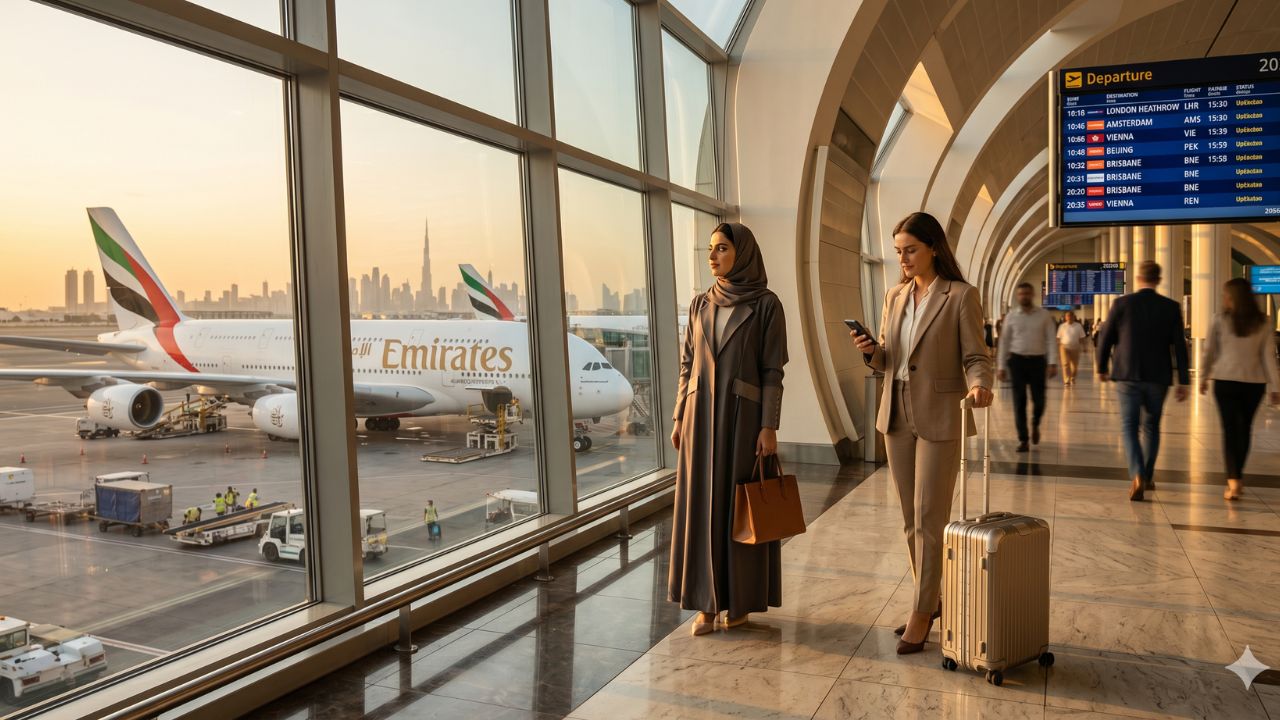
Image representing the severe flight disruptions and Emirates' massive route reductions.
Breaking Airline News: Emirates Triggers Travel Chaos by Massively Reducing International Flights by 14% Amid Skyrocketing Fuel Prices
The Middle Eastern aviation giant executes a massive network scale-back, plunging passengers into severe airport disruptions by violently erasing 500,000 seats across highly critical European and Asian corridors.
In an absolutely terrifying display of geopolitical and economic vulnerability, major operational disruptions are set to violently sweep across the global commercial aviation grid, mathematically guaranteeing severe travel chaos. Delivering highly urgent, breaking airline news, the massive Middle Eastern carrier Emirates has officially confirmed a sweeping wave of flight cancellations and schedule reductions. Specifically for June 2026, the airline has violently trimmed its operating schedule by a staggering 14%, aggressively responding to sustained, terrifying jet fuel costs and severe instability across Middle East air routes. This massive, extremely disruptive strategic withdrawal actively rips close to 500,000 seats directly out of its worldwide network. By aggressively prioritizing severe financial stability over international growth, Emirates' desperate network recalibration threatens to violently plunge thousands of global tourists and corporate travelers into complete logistical gridlock, severely disrupting connections out of its massive Dubai hub.
Expanded Overview: The Massive Scale of the Emirates Network Meltdown
The highly publicized execution of these mass route reductions serves as an absolutely undeniable example of how rapidly the incredibly fragile global travel economy can collapse under severe operational strain. Emirates traditionally operates an incredibly dominant global footprint, efficiently connecting the East to the West. However, the sudden, violent logistical nightmare announced today aggressively focuses its devastation by reducing operations down to close to 200 daily departures, a massive, terrifying drop from the approximately 237 daily departures executed in the exact same month last year.
This reduction does not represent widespread, complete route exits, but rather a deliberate, brutal cut in flight frequency across highly selected long-haul and high-traffic services. The temporary removal of this massive capacity marks an incredibly noticeable, highly disruptive shift in Emirates’ long-haul international coverage. Travelers frantically navigating the busiest hubs in the region now face incredibly long waits, severely shattered itineraries, and absolute uncertainty as the deadly combination of high fuel costs, terrifying airspace limitations, and sudden scheduling adjustments forcefully dictates this aviation disaster.
Section-Wise Breakdown of the Terrifying Route Reductions
The European Corridor Collapse (London, Amsterdam, Vienna)
Expanding an airline's presence into Europe relies heavily on massive, highly profitable corporate and tourist traffic. However, the sudden, terrifying frequency reductions targeting these specific destinations will aggressively sever the primary travel arteries utilized by thousands of passengers. Services violently linking Dubai with London Heathrow, Gatwick, and Stansted in the United Kingdom have been heavily slashed. Furthermore, incredibly critical connections to Amsterdam in the Netherlands and Vienna in Austria have also suffered brutal reductions. The severe drop in available seats actively threatens to violently plunge regional tourism operators into economic chaos, instantly creating massive logistical bottlenecks.
The Asia-Pacific Retreat (Beijing and Brisbane)
The terrifying travel chaos is incredibly merciless, aggressively expanding far beyond Europe to actively sever massive corporate supply chains in the Asia-Pacific sector. Crucial, high-demand routes linking Dubai to Beijing in China and Brisbane in Australia have also absorbed massive frequency cuts. Business executives and long-haul tourists will forcefully face terrifying scheduling disasters, as the elimination of these flights guarantees severely delayed international meetings and the total, forced rescheduling of vital commercial travel itineraries across the Pacific.
The Broader Gulf Aviation Retreat
The severe logistical pressure severely compromised regional continuity across the entire Gulf region as competing carriers executed defensive maneuvers. Swiss International Air Lines has aggressively extended its complete suspension of flights to Dubai. Simultaneously, major global titans like KLM Royal Dutch Airlines and Cathay Pacific continue to operate heavily reduced or selectively cancelled services on Gulf routes, proving that the terrifying airspace environment is actively repelling foreign carriers and heavily compounding regional travel chaos.
Verified Flight Details: Total Route Disruption Data
To completely comprehend the incredible scale of this violent regional aviation crisis, the following data table accurately reflects the exact timeline and operational metrics dictating Emirates' massive route reduction strategy:
| Operational Metric | Current Status (June 2026) |
|---|---|
| Schedule Reduction | 14% decrease |
| Removed Seat Capacity | ~500,000 seats |
| Daily Departures | ~200 (down from ~237) |
| Global Destinations Served | 138 (4 fewer than pre-disruption) |
| Dubai Hub Operational Level | 80% of pre-disruption capacity |
| Peak Jet Fuel Price | Above US$1,800 per tonne |
| Current Jet Fuel Price | Around US$1,560 per tonne |
(Despite these massive cuts, the airline aggressively continues to serve 138 destinations worldwide, maintaining operations out of its Dubai hub at roughly 80% of pre-disruption levels as the recovery process violently struggles to stabilize.)
Passenger Impact: Surviving the Terrifying Terminal Friction
For the desperate global commuter actively navigating this incredibly hostile environment, the severe passenger impact of this massive logistical failure is absolutely devastating. The elimination of 500,000 seats mathematically guarantees profoundly shattered itineraries, violently forcing innocent tourists to endure excruciating, incredibly expensive alternative connections. Passengers violently affected by these severe frequency cancellations must aggressively seek out rebooking options directly through Emirates' heavily congested customer service channels. This terrifying scenario inevitably forces severe financial hemorrhaging upon passengers who must secure emergency hotel accommodations, manage violently missed regional connections, and absorb exorbitant last-minute transportation costs from competing airlines operating on the same crippled routes.
Industry Analysis: What Triggered the Aviation Meltdown?
According to strict operational data maintained by global aviation monitors like the International Air Transport Association (IATA), a multi-route capacity collapse of this specific magnitude is historically triggered by incredibly severe economic and geopolitical volatility. A major pressure point actively choking the industry remains the terrifying cost of jet fuel. Prices violently surged during earlier phases of disruption, reaching absolute peaks above US$1,800 per tonne before easing slightly to around US$1,560 per tonne. Because long-haul operators are particularly exposed to massive fuel burns, these incredibly elevated operating costs directly influenced this scheduling massacre. Ironically, the Emirates Group just reported record profits for the financial year ending 31 March 2026. This creates a terrifying contrast: while financial results remain strong, severe operational realities (airspace restrictions and fuel prices) aggressively limit how fully the airline can deploy its massive fleet.
Conclusion: A Highly Disruptive Industrial Evolution
The massive, highly publicized route reductions executed by Emirates act as an absolutely terrifying wake-up call regarding the incredible operational fragility of the international commercial aviation sector. As the Gulf giant forcefully abandons half a million seats for the entire month of June, the entire global travel community must rapidly acknowledge the extreme vulnerability of long-haul networks operating under soaring fuel costs and regional instability. The industry recovery outlook heavily demands an immediate, incredibly aggressive stabilization of global airspace and fuel markets; otherwise, passengers must brace for a terrifying future dominated by continuous network contraction, escalating ticket prices, and widespread regional travel chaos.
What Guests Get: Immediate Passenger Ramifications
- Massive Seat Eliminations: Half a million seats have been violently stripped from Emirates' June schedule, stranding thousands of forward-booked passengers.
- European Route Cuts: Vital flights connecting Dubai to London, Amsterdam, and Vienna have suffered terrifying frequency reductions.
- Asia-Pacific Bottlenecks: Massive, long-haul routes to Beijing and Brisbane are violently impacted, ensuring severe international delays.
- Foreign Carrier Retreats: Swiss, KLM, and Cathay Pacific are aggressively backing away from Gulf operations, drastically limiting alternative rebooking options.
What This Means for Travelers: Navigating the Travel Chaos
If you are actively scheduled to travel on Emirates through its Dubai hub during June 2026, you must incredibly urgently prepare for severe operational disaster. Passengers are strongly advised to aggressively monitor their email and official airline applications continuously. Because flights are heavily reduced, any single cancellation will result in massive rebooking bottlenecks. Aggressively demand immediate rebooking on partner airlines if your flight frequency is cut, and actively protect your holiday budget from this unprecedented network reduction wave by maintaining high travel flexibility.
FAQ: Emirates International Route Reductions 2026
Why did Emirates suddenly slash its flight schedule by 14%? The unprecedented schedule reduction is violently fueled by incredibly high jet fuel costs, peaking over US$1,800 per tonne, combined with terrifying regional airspace instability.
Which major cities are actively affected by this massive frequency reduction? Highly critical flights to London (Heathrow, Gatwick, Stansted), Amsterdam, Vienna, Beijing, and Brisbane have all been aggressively reduced.
How many daily departures is Emirates operating now? The massive airline has violently dropped its frequency to close to 200 daily departures, down from approximately 237 flights executed daily during the same period last year.
Related Travel Guides
- Hong Kong Airport Launches Massive 2026 Expansion, Shielding Asia From Global Travel Chaos and Airport Disruptions
- Travel Lingus Transforms Transatlantic Routes: Starlink Wi-Fi Revolutionizes Dublin-JFK Service
- Dubai Imposes Strict Flight Cap on Foreign Carriers as Middle East Tensions Reshape Aviation Routes
Disclaimer
This article is for informational and educational purposes only. It does not constitute legal, financial, or professional advice. While we strive to provide accurate and up-to-date information, travel policies, regulations, and conditions change rapidly. Always verify information with official sources before making travel decisions. Nomad Lawyer makes no representations about the accuracy, reliability, completeness, or suitability of the information provided. Readers should consult qualified professionals for advice specific to their circumstances. The views expressed in this article are those of the author and do not necessarily reflect the views of Nomad Lawyer.
Kunal K Choudhary
Co-Founder & Contributor
A passionate traveller and tech enthusiast. Kunal contributes to the vision and growth of Nomad Lawyer, bringing fresh perspectives and driving the community forward.
Learn more about our team →