
Emirates Airlines First Class Private Bathrooms Reshape Luxury Travel in 2026
Emirates Airlines is developing private en-suite bathrooms in first class cabins during 2026, forcing premium carriers worldwide to reconsider their competitive positioning in ultra-luxury airline seating.

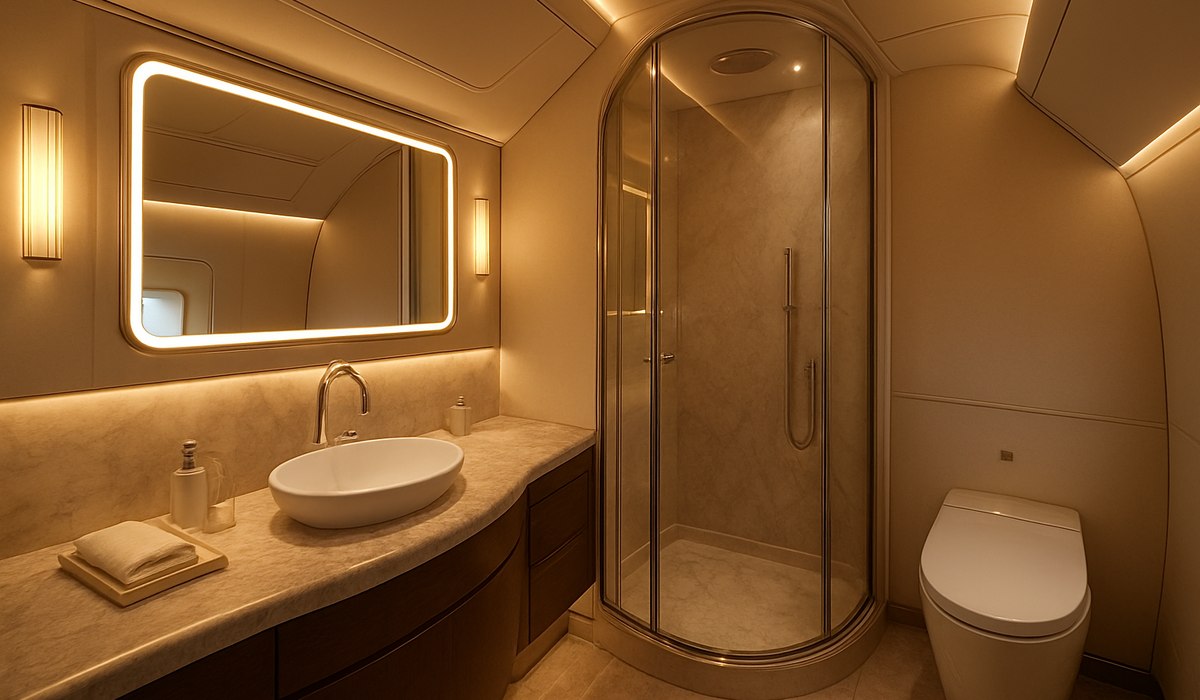
Image generated by AI
Emirates Airlines Pioneers En-Suite Bathrooms in First Class Cabins
Emirates Airlines is fundamentally reshaping premium cabin design by engineering private en-suite bathrooms directly within first class suites. This strategic initiative, unveiled in April 2026, represents a watershed moment in luxury aviation. The airline is doubling down on its positioning as the world's premier first class operator, compelling competitors to evaluate whether they can replicate this amenity without catastrophic economic consequences.
The move underscores how Emirates weaponizes first class as a brand differentiator. By embedding private bathroom facilities into individual suites, the carrier eliminates the shared lavatory model that even premium competitors rely upon. This exclusivity targets ultra-high-net-worth travelers who prioritize privacy and personalization above all other cabin features.
Emirates' Bold First Class Innovation Strategy
Emirates has consistently invested in first class as its primary competitive moat against global carriers. Private en-suite bathrooms extend this philosophy by converting the lavatory from shared infrastructure into an exclusive passenger amenity. Each bathroom would feature premium finishes, bespoke toiletries, and shower facilities that rival five-star hotel standards.
The engineering challenge is substantial. Aircraft fuselage space is finite. Dedicating cabin real estate to individual bathrooms reduces the number of first class seats and increases per-passenger infrastructure costs. Nevertheless, Emirates calculates that ticket price premiums justify the investment. First class passengers already pay $15,000 to $20,000+ per long-haul segment. Adding private bathroom access justifies incremental pricing power.
Competitors monitoring this development recognize the strategic implication: either invest similarly massive capital or concede first class differentiation to Emirates. The economics alone explain why most global carriers remain hesitant. Retrofitting existing aircraft requires expensive cabin reconfiguration. New aircraft orders incorporating this feature demand multi-year lead times and supply chain coordination.
How Airline Competitors Are Responding to This Trend
Singapore Airlines, Lufthansa, and British Airways are observing Emirates' innovations carefully. These carriers operate competitive first class programs but lack comparable private bathroom infrastructure. Industry analysts suggest that response strategies will vary by airline financial capacity and route strategy.
Singapore Airlines, which operates premium long-haul routes from Singapore to London and New York, may incorporate similar features in next-generation aircraft orders. Lufthansa's First Class product already emphasizes privacy through suite-style seating. However, adding en-suite bathrooms would require significant cabin redesign that existing Airbus fleets cannot accommodate without major reconstruction.
For most carriers, the competitive response will occur gradually. Airlines will monitor passenger demand metrics closely. If Emirates' en-suite bathrooms drive measurable booking increases or yield improvements on key routes, competitors will accelerate their own development timelines. Conversely, if the feature proves too expensive relative to actual passenger preference, carriers may pursue alternative innovations—premium bedding, enhanced dining experiences, or expanded shower spa facilities in dedicated areas.
The timeframe matters significantly. New aircraft entering service between 2028 and 2032 will determine whether this becomes an industry standard or remains an Emirates exclusive. Early adoption advantages accrue to carriers that move fastest while avoiding retrofitting costs on existing fleets.
The Economics of Ultra-Luxury Amenities in First Class
First class profitability depends on yield management and seat factor optimization. Emirates' private bathroom investment requires careful revenue analysis. A typical Emirates Boeing 777-300ER first class cabin contains 14 seats. Dedicating space to eight individual bathrooms (approximately 40 square feet per bathroom) reduces capacity to roughly 10 seats.
The math demands pricing discipline. If per-seat yield must increase 40% to justify 30% reduced capacity, Emirates needs passengers willing to pay $21,000-$28,000 per segment. Available data suggests ultra-high-net-worth travelers do pay these fares, particularly on premium routes like Dubai-London and Dubai-New York.
Maintenance cost implications are equally important. Individual bathrooms require more frequent servicing, water system redundancy, and waste management infrastructure. Aircraft turnaround times between flights may increase by 20-30 minutes per service. These operational costs must be absorbed by revenue increases or offset through improved passenger satisfaction metrics that drive repeat bookings.
Industry sources indicate Emirates is absorbing these cost increases as a strategic investment in brand positioning. The carrier views first class as a revenue anchor that justifies premium pricing across its entire network. If private bathrooms strengthen first class desirability, the spillover benefits extend to business class upgrades and premium economy demand.
What This Means for Premium Travelers in 2026 and Beyond
First class passengers seeking maximum privacy and exclusivity now have a compelling reason to book Emirates. The private en-suite bathroom feature addresses a genuine pain point in premium aviation: shared lavatory access and limited personalization of onboard spaces. This innovation particularly appeals to business travelers, celebrity passengers, and wealthy families who value discretion.
For frequent flyers accumulating loyalty points on other airlines, the competitive dynamic shifts. Emirates Skywards program members may find increased incentive to concentrate travel on Emirates routes. Business travelers choosing between United Airlines, American Airlines, and Emirates for transatlantic service now evaluate bathroom privacy alongside seating comfort and meal quality.
The broader implication extends to airline route strategy. Emirates currently operates first class service on approximately 60 international routes. Expanding en-suite bathroom availability to additional aircraft and routes over 2026-2027 could strengthen the airline's competitive position on key markets while potentially allowing premium fare increases.
Comparative First Class Amenities: Current Industry Standards
| Airline | Private Bathroom | Shower Spa | Suite Configuration | Max First Class Seats | Premium Bedding |
|---|---|---|---|---|---|
| Emirates | En-suite (2026+) | Yes | Individual suites | 14 | Hermes linens |
| Singapore Airlines | Shared lavatory | No | Suite-style | 12 | Premium cotton |
| Lufthansa | Shared lavatory | Dedicated space | Open-concept suites | 8 | Premium thread count |
| British Airways | Shared lavatory | No | Direct aisle access | 14 | Egyptian cotton |
| Qantas | Shared lavatory | No | Enclosed suites | 14 | Premium options |
| Swiss International | Shared lavatory | No | Open first cabin | 8 | Swiss linens |
Traveler Action Checklist: What Premium Passengers Should Do Now
-
Verify bathroom availability on your preferred Emirates routes before booking. Private en-suite bathrooms will roll out gradually. Check Emirates.com for specific aircraft configurations on Dubai-London, Dubai-New York, and Dubai-Paris routes where deployment begins in 2026.
-
Monitor Emirates Skywards elite status benefits. Platinum and Diamond members may receive guaranteed en-suite bathroom assignments or priority routing on aircraft featuring this amenity. Analyze whether concentrating travel on Emirates justifies status tier investments.
-
Compare total first class value across carriers. Private bathrooms enhance privacy but should be evaluated alongside meal quality, lounge access, ground transportation, and seat comfort. Use tools like FlightAware to track which aircraft on your routes feature this upgrade.
-
Book refundable tickets on Emirates first class routes through mid-2026. As en-suite bathrooms roll out unevenly across the fleet, securing changeable fares allows you to secure properly-configured aircraft once deployment schedules solidify.
-
Contact Emirates directly for aircraft confirmation. Before finalizing first class bookings, call Emirates customer service requesting confirmation of bathroom configuration on your specific flight. Aircraft assignments may change; direct confirmation ensures you receive the amenity you're paying premium fares to access.
-
Review competitor premium offerings on your routes. Singapore Airlines, Lufthansa, and British Airways may introduce competing innovations during 2026. Evaluate first class across your typical routes
Disclaimer
This article is for informational and educational purposes only. It does not constitute legal, financial, or professional advice. While we strive to provide accurate and up-to-date information, travel policies, regulations, and conditions change rapidly. Always verify information with official sources before making travel decisions. Nomad Lawyer makes no representations about the accuracy, reliability, completeness, or suitability of the information provided. Readers should consult qualified professionals for advice specific to their circumstances. The views expressed in this article are those of the author and do not necessarily reflect the views of Nomad Lawyer.
Kunal K Choudhary
Co-Founder & Contributor
A passionate traveller and tech enthusiast. Kunal contributes to the vision and growth of Nomad Lawyer, bringing fresh perspectives and driving the community forward.
Learn more about our team →