
Egypt Tourism Growth 2026: Nile River Corridors, Red Sea Luxury Resorts, and the Road to 30 Million Visitors
Egypt's tourism industry is surging toward an ambitious target of 30 million visitors by 2028, driven by luxury Red Sea resort expansions, historic Nile cruises, and streamlined e-visa entry.

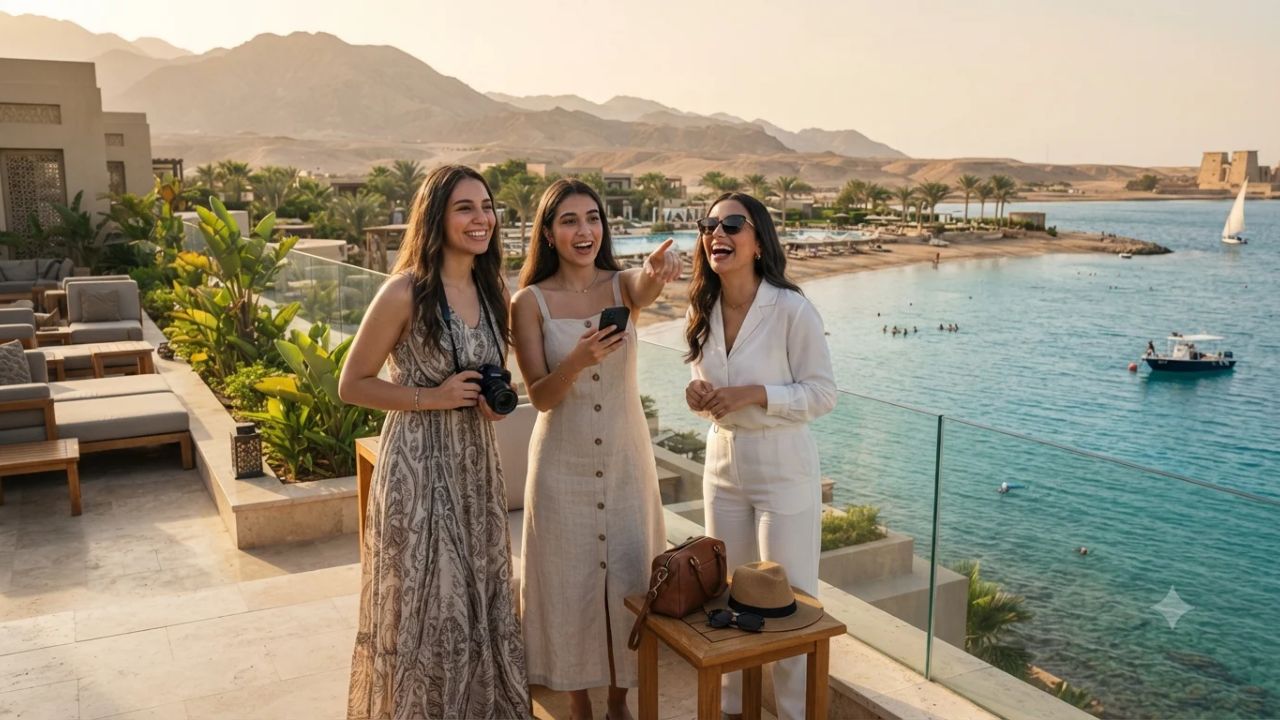
With 15.7 million international arrivals generating $14.1 billion in revenue, Egypt has entered a transformative era of travel expansion, setting its sights on welcoming 30 million annual visitors by 2028. Rather than relying solely on traditional pyramid day tours, travelers are charting extended itineraries that combine ancient Nile sanctuaries with world-class marine reserves along the Red Sea.
The revival of Egypt's travel sector marks a strategic evolution in how international visitors experience the country. While global travel benchmarks like Spain rely on mature European summer traffic, Egypt is building rapid momentum from an expanding foundation. By streamlining entry policies through digital visas, opening new luxury coastal retreats in Hurghada and Marsa Alam, and investing heavily in domestic transport corridors, Egypt is repositioning itself as a multi-dimensional year-round destination.
The Dual Growth Engine: Nile Heritage and Red Sea Escapes
Egypt’s travel landscape is anchored by two contrasting yet complementary travel products: ancient cultural corridors along the Nile Valley and high-end coastal tourism on the Red Sea. Following a strong summer surge in July 2026, international travelers are increasingly combining both regions within single multi-week itineraries.
The Nile River remains one of the world's most enduring cultural waterways. Modern river cruising between Luxor and Aswan allows travelers to explore monumental archaeological complexes—including Karnak, Philae, and the Valley of the Kings—while floating past rural riverbank communities unchanged for centuries. At the same time, coastal gateways including Hurghada, Sharm El Sheikh, and Marsa Alam have evolved into luxury resort havens. These destinations offer direct access to pristine coral reefs, deep-sea diving, and tranquil desert landscapes, attracting travelers seeking leisure alongside historical exploration.
To support this expansion, Egyptian authorities are upgrading airport handling facilities across regional hubs, improving intercity highway links between Cairo and coastal provinces, and expanding resort zones to capture longer stays and higher visitor yields.
| Tourism Metric / Indicator | Egypt (Current & Projected) | Spain (Global Benchmark Benchmark) | Strategic Travel Implication |
|---|---|---|---|
| Annual International Arrivals | 15.7 million (Target: 30M by 2028) | 58.1 million (Jan–July 2026 alone) | Egypt represents an expanding market with high growth headroom |
| Peak Month Arrivals (July 2026) | Rapid seasonal surge across Red Sea & Nile | 11.54 million visitors (+4.6% YoY) | Spain captures established European summer sun; Egypt diversifies year-round |
| Tourism Receipts & Revenue | $14.1 billion (Annual baseline) | €82 billion (Jan–July 2026; €18.2B in July) | Egypt focuses on increasing per-visitor spend and stay length |
| Primary Source Markets | Expanding from Europe/Russia to Gulf & India | UK (2.19M), France (1.59M), Germany (1.20M) | Egypt diversifies origin markets to reduce geopolitical exposure |
| Border Access Framework | Electronic visas for 44 nations + VoA | Schengen Border Network | Simplified digital entry expands independent travel accessibility |
What Sets Egypt's Travel Experience Apart
Unlike standard Mediterranean beach holidays, traveling through Egypt is an immersive journey through five millennia of recorded civilization. The ability to stand before the colossal hypostyle hall of Karnak in the morning and dive alongside dugongs and sea turtles in Marsa Alam by the following afternoon gives the country an unmatched geographic and historical duality.
Furthermore, Egypt’s visitor demographics are shifting fundamentally. Historically dependent on chartered European and Russian package tours, the destination is witnessing a rapid influx of independent travelers, cultural enthusiasts, and family vacationers from the Gulf Cooperation Council (GCC) states, India, and North America. This diversification protects local hospitality operators from regional fluctuations while encouraging investments in boutique heritage hotels, eco-lodges in the Western Desert oases, and culinary walking tours through historic Islamic Cairo.
Streamlined Border Access and Visa Flexibility
Access to Egypt has become significantly smoother through nationwide immigration modernization. The government currently provides an official electronic visa portal for citizens of 44 nations, allowing independent travelers to secure entry permits online prior to departure. Additionally, eligible passport holders from the United States, Canada, the European Union, and the United Kingdom can obtain visa-on-arrival stamps at major international airport entry points for short-term holiday stays.
These simplified entry procedures eliminate bureaucratic delays and give Egypt a competitive edge in capturing last-minute leisure bookings. When paired with expanded direct air routes into regional airports like Sphinx International Airport (serving Giza) and Hurghada International Airport, international travelers can bypass congested metropolitan transit routes and land directly at their primary destination.
Visitor Insider Tips
- Timing Archaeological Visits: To avoid peak heat and large tour coach arrivals at Luxor's Valley of the Kings and Karnak Temple, arrive at the gates when they open at 06:00. Carry plenty of water, wear light linen clothing, and hire a licensed local Egyptologist at the site rather than booking generic package excursions.
- Nile Cruise vs. Felucca: For luxury and comfort, book a 4-night cruise between Luxor and Aswan on a traditional dahabiya (a twin-masted wooden sailing boat), which carries only 10–15 guests and can moor at secluded island temples that large motor vessels cannot access.
- Red Sea Diving Seasons: Marine visibility in Marsa Alam and Sharm El Sheikh is optimal between April and November. For encounters with oceanic whitetip sharks and hammerheads at offshore sites like Elphinstone Reef, plan visits during early autumn.
- Currency and Local Tipping (Baksheesh): Keep a stack of small Egyptian Pound (EGP) banknotes in your pocket. Tipping is an integral social custom across Egypt for temple custodians, drivers, luggage porters, and restaurant staff. Always negotiate taxi fares beforehand or use verified ride-hailing apps in Cairo and Alexandria.
Cultural and Environmental Context
As visitor numbers rise toward national milestones, managing heritage preservation and marine conservation has become central to Egypt's tourism strategy. The sheer volume of foot traffic inside fragile underground tombs in the Valley of the Queens and Luxor has prompted conservation authorities, in coordination with UNESCO World Heritage Centre, to implement rotational tomb closures, moisture-monitoring sensors, and specialized lighting systems that prevent pigment degradation on ancient reliefs.
Along the Red Sea coast, delicate coral reef ecosystems face pressures from anchor damage, dive boat congestion, and coastal development. Marine park authorities have instituted strict mooring buoy systems, banned single-use plastics in coastal protectorates like Ras Mohammed National Park, and introduced mandatory reef conservation fees. Travelers directly support local conservation by choosing certified eco-dive operators, refraining from touching marine wildlife, and spending locally in Nubian villages in Aswan and Bedouin communities in the Sinai Peninsula.
FAQ: Visiting Egypt 2026
What is the best time of year to visit Egypt?
The optimal travel window spans from October to April, when daytime temperatures across Cairo, Luxor, and Aswan are pleasantly mild. Red Sea resort destinations like Hurghada and Sharm El Sheikh offer warm swimming conditions year-round.
How do I apply for an Egypt tourist visa?
Travelers from 44 eligible nations can apply for a single- or multiple-entry e-visa online before departure through the official government portal. Passport holders from the US, UK, and EU can also purchase a $25 visa-on-arrival stamp at airport immigration.
Is it easy to travel between Cairo, Luxor, and the Red Sea?
Yes. Domestic air carriers operate frequent 60-minute flights connecting Cairo with Luxor, Aswan, and Hurghada. Modern air-conditioned sleeper trains and express highways also link Cairo with Upper Egypt and coastal resort towns.
What should travelers wear when visiting historic and religious sites?
Modest clothing covering shoulders and knees is recommended when exploring mosques, traditional bazaars, and rural towns. Lightweight, breathable fabrics like linen and cotton are ideal for both temple sightseeing and warm afternoons.
From the silent grandeur of ancient desert sanctuaries to the crystal depths of the Red Sea, Egypt offers a timeless journey where history and relaxation converge.
Related Travel Guides
Disclaimer
This article is for informational and educational purposes only. It does not constitute legal, financial, or professional advice. While we strive to provide accurate and up-to-date information, travel policies, regulations, and conditions change rapidly. Always verify information with official sources before making travel decisions. Nomad Lawyer makes no representations about the accuracy, reliability, completeness, or suitability of the information provided. Readers should consult qualified professionals for advice specific to their circumstances. The views expressed in this article are those of the author and do not necessarily reflect the views of Nomad Lawyer.
Raushan Kumar
Founder & Lead Developer
Full-stack developer with 11+ years of experience and a passionate traveller. Raushan built Nomad Lawyer from the ground up with a vision to create the best travel and law experience on the web.
Learn more about our team →