
Australia's Regional Travel Reset 2026: The $126M Twelve Apostles Overhaul and the Alpine Four-Season Shift

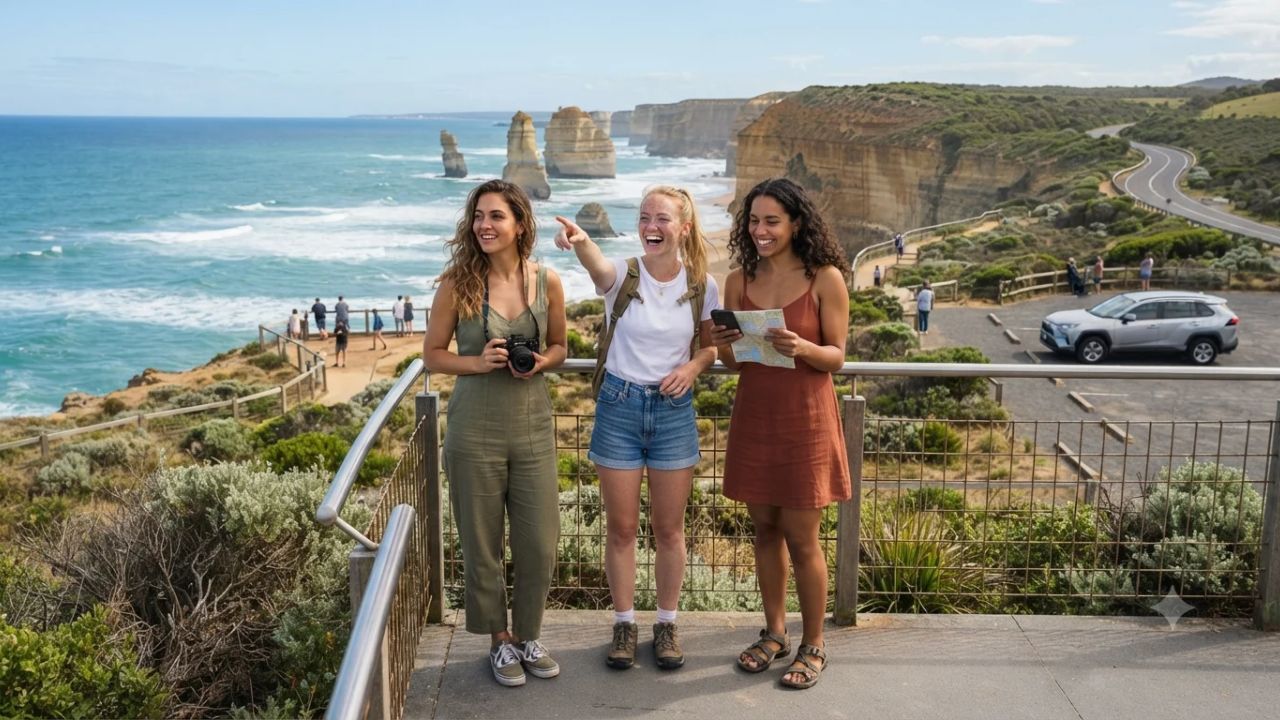
Australia's most iconic coastal landmark along the Shipwreck Coast—which draws between two and four million annual visitors—is ending decades of unmanaged roadside congestion with the opening of a $126 million Twelve Apostles Visitor Experience Centre in mid-October 2026. Funded through the Geelong City Deal and co-designed with the Eastern Maar Aboriginal Corporation, the project introduces a mandatory timed-entry reservation system in late 2026 that legally reinvests all booking revenues directly back into coastal conservation.
The precinct transformation represents the vanguard of a broader structural shift across the Australian visitor economy. Faced with high-volume, low-yielding day trips from state capitals, regional destinations are implementing site monetization, cultural co-management, and multi-season infrastructure. From the surf coast of Victoria to high-country alpine resorts in New South Wales, tourism planning is prioritizing economic yield and environmental preservation over raw passenger volume.
Modernizing the Shipwreck Coast: The Twelve Apostles Redevelopment
Positioned along Victoria’s Great Ocean Road, the Twelve Apostles has historically suffered from brief, unmanaged coach stops that caused dangerous highway parking hazards while contributing little economic benefit to local communities. The new 3,300-square-meter Visitor Experience Centre addresses these challenges with immersive digital galleries, regional dining, and an elevated rooftop observation deck. Civil upgrades include 600 formalized vehicle bays, 100 coach spaces, and redesigned road intersections.
Under the governance of the Great Ocean Road Coast and Parks Authority (GORCAPA), site management features a deep partnership with the Eastern Maar people, the Traditional Owners of Maar Territory. The precinct incorporates an authentic Welcome Garden and cultural storytelling elements, framing the limestone sea stacks as a living First Nations cultural site.
Net proceeds generated from timed-entry reservations, parking fees, and commercial leases are legislatively quarantined to fund long-term environmental restoration across coastal reserves, as documented by Visit Victoria. Crucially, the centre’s pre-arrival recommendation engines encourage visitors to stay overnight in neighboring towns such as Port Campbell, Apollo Bay, and Peterborough.
The High Country "Altitude Shift": Building Four-Season Alpine Economies
Simultaneously, Australia's alpine regions are executing an economic transition termed the "altitude shift." Facing shorter, more volatile winter snow seasons, mountain resorts are investing heavily in world-class mountain biking (MTB), long-distance trail running, and wellness tourism to capture high-spending summer and autumn travelers.
In Victoria, a $12 million state allocation expanded the Falls Creek downhill mountain bike network, complemented by cultural installations like the Flower of the Alpine Sun. In New South Wales, a $9.8 million investment extended the Thredbo Valley Track within Kosciuszko National Park, creating an uninterrupted cycling and hiking corridor linking Thredbo Resort to the Gaden Trout Hatchery and Lake Jindabyne.
According to baseline data from Tourism Research Australia, domestic overnight cycle tourists contribute $6.0 billion annually across 4.6 million trips, spending an average of $998 per trip ($246 per night) compared to $959 for general domestic travelers. In Victoria's Alpine Shire—encompassing Bright, Harrietville, and Mount Beauty—tourism generates over $519 million annually, with overnight visitors spending an average of $766 per stay.
Regional Infrastructure and Economic Yield Across Australia
The table below outlines key infrastructure investments, visitor volumes, and economic yields across Australia's evolving regional tourism corridors.
| Regional Hub & Jurisdiction | Project / Economic Metric | Capital / Economic Yield | Strategic Objective & Visitor Focus |
|---|---|---|---|
| Twelve Apostles Precinct (VIC) | 3,300 m² Visitor Experience Centre | $126 Million (Geelong City Deal) | Managed timed-entry, ~600 car bays, Eastern Maar co-management |
| Falls Creek Alpine Resort (VIC) | Downhill MTB trail expansion & arts | $12 Million state funding | Four-season active recreation, gravel cycling, and wellness |
| Thredbo to Jindabyne (NSW) | Thredbo Valley Track extension | $9.8 Million state allocation | Continuous long-distance alpine cycle touring & cross-country hiking |
| Alpine Shire (VIC) | High Country multi-season tourism | $519 Million annual output | Year-round employment stabilization; $766 average spend per stay |
| Mansfield Shire (VIC) | Tracks & Trails Strategy 2026–2046 | $190.74 Million overnight output | 1.2M annual visitors; 79% motivated by trail recreation and hiking |
| New South Wales Drive Corridors | Blue Mountains, Southern Highlands | $29.5B GSP (+12% YoY) | Total consumption reached $48.2B; short-break weekend micro-trips |
| Victoria Regional Drive Corridors | Daylesford, Yarra Valley, Mornington | $17.8B GSP (+13% YoY) | Total consumption expanded +$4.5B; remote-work Monday/Friday travel |
| National Cycle Tourism (TRA) | Domestic overnight cycling market | $6.0 Billion annual spend | 4.6M annual trips; $998 average trip spend ($246 per night) |
The $16.2 Billion Regional Drive Market and Workplace Flexibility
Australia’s domestic travel market is heavily anchored by localized drive corridors situated within two to three hours of capital cities. Driven by hybrid work patterns—with Australian Bureau of Statistics Census data showing that 21% of employed Australians regularly work from home—urban professionals are routinely extending weekends into three-day workcations in Daylesford, the Yarra Valley, the Blue Mountains, and the Sunshine Coast Hinterland.
Regional hospitality operators have responded by replacing rigid multi-night minimum bookings with dynamic single-night and midweek packages. This operational flexibility captures steady corporate revenue outside peak public holidays, keeping boutique hotels, farm-to-table restaurants, and artisan wineries profitable year-round.
Visitor Insider Tips for Regional Australian Road Trips
Exploring Australia’s regional corridors requires forward planning under newly introduced management systems.
- Book Twelve Apostles Entry Slots in Advance: Beginning in late 2026, reserve your timed-entry arrival window online before driving the Great Ocean Road. Early morning slots between 07:30 and 09:30 offer the clearest light and smallest tour group volumes.
- Base in Port Campbell or Timboon for Gourmet Trails: Rather than returning to Melbourne on a rushed 12-hour day trip, base yourself in Port Campbell or the hinterland dairy village of Timboon to sample single-malt whisky, artisan cheeses, and fresh seafood.
- Explore Bright and the Ovens Valley by E-Bike: In Victoria’s High Country, rent an e-bike to cruise the sealed Murray to Mountains Rail Trail connecting Bright, Porepunkah, and Myrtleford, stopping at independent hop farms and cool-climate wineries.
- Leverage Midweek Workation Rates: Book regional boutique accommodations for Sunday through Tuesday to access room rates discounted by 25% to 40% compared to peak Saturday nights, utilizing reliable regional NBN internet connections for remote working.
Cultural Context and First Nations Environmental Stewardship
The integration of Traditional Owner co-management frameworks at the Twelve Apostles marks a vital evolution in how Australia presents its natural heritage to the world. By centering Eastern Maar cultural interpretation and ecological knowledge, visitors are educated on the spiritual significance of the coastline, moving beyond superficial photography toward meaningful cultural engagement supported by Tourism Australia.
Similarly, across the sub-alpine national parks of Victoria and New South Wales, sustainable trail designs prevent soil erosion and protect delicate peat bogs and pygmy-possum habitats. By establishing designated multi-use tracks, conservation authorities safeguard biodiversity while providing high-value nature recreation.
FAQ: Regional Australia Travel in 2026
When does the new Twelve Apostles Visitor Experience Centre open?
The facility officially opens in mid-October 2026, with the timed-entry reservation and booking system launching in late 2026.
Will visitors have to pay to view the Twelve Apostles?
Under the new GORCAPA framework, managed booking fees and formal parking charges will apply, with all net proceeds reinvested directly into coastal park conservation.
What is the best season for mountain biking in the Australian Alps?
November through April offers ideal, snow-free conditions for mountain biking and trail hiking across Falls Creek, Mount Buller, and Thredbo.
How far is the Twelve Apostles from Melbourne?
The site is approximately 230 kilometers southwest of Melbourne, taking roughly four hours via the scenic Great Ocean Road or three hours via the inland Princes Highway.
By trading rushed day trips for deeper journeys and First Nations wisdom, Australia's regional landscapes offer their richest rewards to those who take the time to linger.
Related Travel Guides
Disclaimer
This article is for informational and educational purposes only. It does not constitute legal, financial, or professional advice. While we strive to provide accurate and up-to-date information, travel policies, regulations, and conditions change rapidly. Always verify information with official sources before making travel decisions. Nomad Lawyer makes no representations about the accuracy, reliability, completeness, or suitability of the information provided. Readers should consult qualified professionals for advice specific to their circumstances. The views expressed in this article are those of the author and do not necessarily reflect the views of Nomad Lawyer.
Preeti Gunjan
Contributor & Community Manager
A passionate traveller and community builder. Preeti helps grow the Nomad Lawyer community, fostering engagement and bringing the reader experience to life.
Learn more about our team →