
Egypt Commands 37.1% of Africa's Hotel Pipeline with 45,984 Branded Rooms Under Development
Egypt dominates Africa's hotel development with 45,984 pipeline rooms across 185 projects, backed by UAE and Qatari mega-investments.

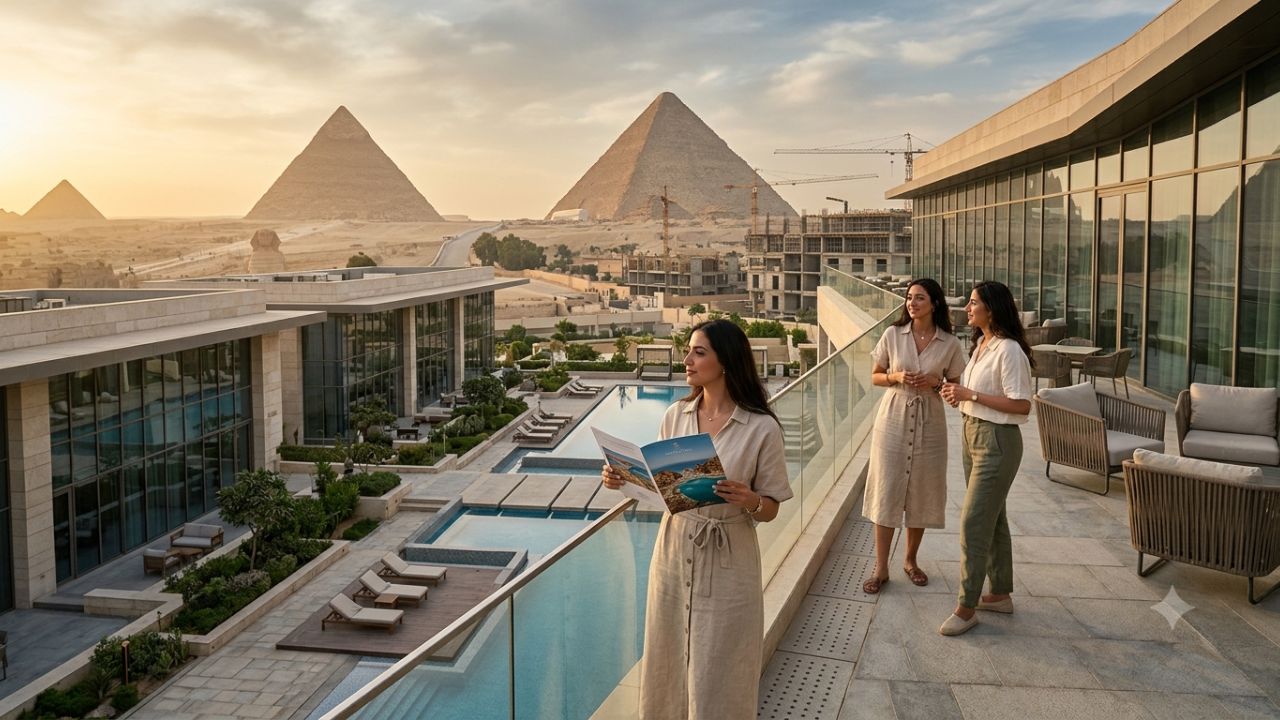
Image generated by AI
Egypt has asserted absolute dominance over Africa’s hospitality investment landscape, accounting for 37.1 percent of the continent’s total branded hotel pipeline with 45,984 rooms across 185 development projects.
Data tracking continental hospitality development reveals that Africa's total branded hotel pipeline reached 675 projects containing 123,846 rooms in 2026. Driven by multi-billion-dollar Mediterranean megaprojects, cultural tourism near the Grand Egyptian Museum, and surging visitor arrivals, Egypt’s room pipeline is more than four times larger than its nearest continental rival, Morocco.
Greater Cairo and North Coast Megaprojects Anchor Transformational Growth
Greater Cairo serves as a primary engine for Egypt’s hotel expansion, hosting 88 projects containing 22,111 pipeline rooms—a volume larger than the nationwide pipelines of most African countries.
Concurrently, multi-billion-dollar foreign investments are transforming Egypt’s Mediterranean coastline into year-round resort hubs:
- Ras El Hekma: A UAE-backed megaproject representing approximately $35 billion in investment, incorporating luxury hotel chains, marinas, residential districts, and entertainment venues.
- Alam Al Roum: A Qatari-backed development valued at approximately $29.7 billion, spanning 4,900 acres and 7.2 kilometers of Mediterranean coast.
Currently, 23,622 Egyptian hotel rooms (51.4 percent of its total pipeline) have reached the active on-site construction phase.
Global Hotel Operators Accelerate Expansion Across Egyptian Destinations
International hospitality chains are aggressively expanding their footprint across Egypt:
- Accor: Target adding approximately 25,000 hotel rooms over three years while partnering with the government to establish a specialist hospitality training academy.
- Marriott International: Signed agreements for nine new hotels and resorts totaling over 1,800 rooms and suites.
- Minor International & Sunrise Resorts: Executing a joint framework to develop up to 50 new properties across Ras El Hekma, New Zayed, and Ain Sokhna.
These investments align with national tourism goals aiming to expand annual international visitor arrivals from 19 million in 2025 to 30 million by the end of the decade. Between January and August 2026, Egypt welcomed 12.7 million international tourists, generating $12 billion in tourism revenue.
Top 10 Hotel Development Markets Across Africa in 2026
| Country | Total Projects | Pipeline Rooms | Rooms Under Construction | Construction Share (%) |
|---|---|---|---|---|
| Egypt | 185 | 45,984 | 23,622 | 51.4% |
| Morocco | 75 | 10,606 | 6,859 | 64.7% |
| Nigeria | 57 | 8,480 | 3,328 | 39.2% |
| Kenya | 35 | 6,190 | 4,922 | 79.5% |
| Ethiopia | 34 | 5,964 | 4,768 | 79.9% |
| Cape Verde | 17 | 4,328 | 374 | 8.6% |
| Tunisia | 15 | 4,189 | 2,673 | 63.8% |
| Tanzania | 29 | 4,159 | 3,222 | 77.5% |
| South Africa | 31 | 4,136 | 2,778 | 67.2% |
| Ghana | 26 | 3,942 | 2,196 | 55.7% |
Execution Dynamics Across Regional African Markets
While Egypt leads in absolute volume, East African nations demonstrate the highest project execution rates:
- Ethiopia: Leads the continent in execution percentage, with 79.9 percent of its 5,964 pipeline rooms under active construction across Addis Ababa, Hawassa, and Bahir Dar.
- Kenya: Boasts a 79.5 percent construction execution rate across 6,190 pipeline rooms.
- Tanzania: Has 77.5 percent of its 4,159 pipeline rooms under construction, supporting safari hubs and Zanzibar beach resorts.
- Morocco: Holds second place overall with 10,606 pipeline rooms across 75 projects, maintaining a solid 64.7 percent construction rate.
Conversely, high-value destinations like Rwanda demonstrate an alternative growth model—generating $685 million in 2025 tourism revenue from 1.49 million high-spending visitors without requiring massive room pipeline volumes.
Frequently Asked Questions
How many hotel rooms are currently in Egypt's development pipeline?
Egypt has 45,984 branded hotel rooms under development across 185 projects, representing 37.1 percent of Africa’s total hotel pipeline.
What are the main mega-developments on Egypt's North Coast?
The main Mediterranean developments are the $35 billion UAE-backed Ras El Hekma project and the $29.7 billion Qatari-backed Alam Al Roum development.
Which African country has the highest percentage of hotel rooms under construction?
Ethiopia holds the highest construction execution ratio in Africa, with 79.9 percent (4,768 rooms) of its total 5,964 pipeline rooms actively under construction.
What is Egypt's annual tourism arrival target by the end of the decade?
The Egyptian government aims to reach 30 million annual international tourist arrivals by the end of the decade, up from 19 million visitors in 2025.
Related Travel Guides
Disclaimer
This article is for informational and educational purposes only. It does not constitute legal, financial, or professional advice. While we strive to provide accurate and up-to-date information, travel policies, regulations, and conditions change rapidly. Always verify information with official sources before making travel decisions. Nomad Lawyer makes no representations about the accuracy, reliability, completeness, or suitability of the information provided. Readers should consult qualified professionals for advice specific to their circumstances. The views expressed in this article are those of the author and do not necessarily reflect the views of Nomad Lawyer.
Kunal K Choudhary
Co-Founder & Contributor
A passionate traveller and tech enthusiast. Kunal contributes to the vision and growth of Nomad Lawyer, bringing fresh perspectives and driving the community forward.
Learn more about our team →