
Eastern Europe's Hidden Wildlife Photography Hotspots: Slovenia, Romania, Estonia, Slovakia, Bulgaria & Croatia in 2026
Six Eastern European countries are redefining eco-tourism with strictly protected national parks offering authentic predator sightings, migratory bird corridors, and alpine biodiversity. Here's where to photograph Europe's last wild places.

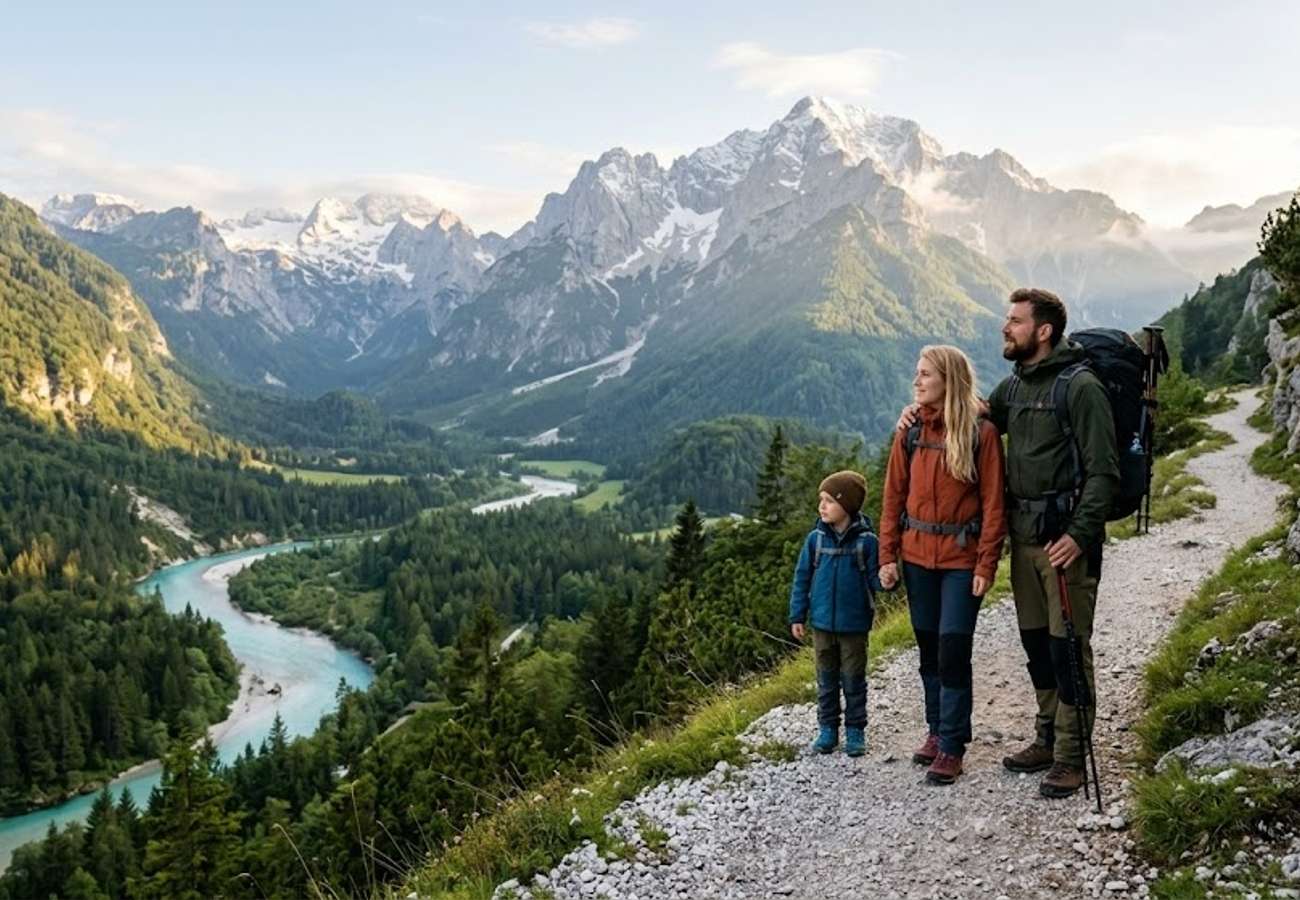
Image generated by AI
I've spent the last three years chasing light and predators across Eastern Europe, and I can tell you plainly: the real wilderness left on this continent isn't in Switzerland or the French Alps. It's here, in six countries most Western photographers skip entirely.
While safari tourists clog the main viewing platforms at Yellowstone and Kenya, I've stood alone on a limestone outcrop in Slovakia watching a wolf pack move through fog at dawn. No crowds. No guides shouting into megaphones. Just the animal, the landscape, and the understanding that you're witnessing something genuinely wild and protected by law.
This shift in European eco-tourism is real, measurable, and accelerating. Photographers are abandoning overcrowded destinations for strictly protected ecosystems where biodiversity still functions on its own terms. Slovenia, Romania, Estonia, Slovakia, Bulgaria, and Croatia aren't trying to be famous. They're trying to stay intact.
Slovenia's Julian Alps: Triglav as Your Access Point to Untouched Alpine Terrain
I first visited Triglav National Park in May, arriving at the village of Kranjska Gora by train from Ljubljana (the standard entry route via ÖBB rail from Austria). The moment I stepped off at Kranjska Gora station, I understood why Slovenian photographers keep this place quiet.
Triglav contains 330 distinct natural habitats compressed into one compact alpine system. You're looking at glacial valleys, the Soča River (some of the most photographable turquoise water in Europe), dense spruce forests, and high meadows—all within a 4-hour radius. The park manages roughly 1.2 million visitors annually across its entire territory, but 90% cluster around Lake Bled and Lake Bohinj. If you bypass those postcards entirely, you enter genuine silence.
Chamois move across the Triglav North Face at first light. Alpine marmots occupy rocky scree at 2,000+ meters. Golden eagles hunt the thermal currents above. I recommend starting at the Soča River trailhead near Bovec (about 90 minutes from Kranjska Gora by car, or the 1B bus from Tolmin). This route avoids the main park infrastructure entirely and deposits you directly in working habitat where wildlife still moves freely. Early June is when marmot activity peaks—they're active for maybe six hours a day, mainly 5 AM to 11 AM.
The Slovenian natural parks authority maintains detailed habitat maps on naravniparkislovenije.si. Book accommodation in Tolmin (population 3,800) rather than Bled—you'll find yourself 40 minutes from serious wilderness instead of surrounded by tour groups.
"Skip Lake Bled completely. Base yourself in Tolmin, wake up at 4 AM, and spend your days in the Soča Canyon instead. Most 'photographers' never make it past the postcard lake. The real light is in the river gorge." — r/wildlifephotography
Romania's Danube Delta: Europe's Most Concentrated Wetland Wildlife System
I spent two weeks in the Danube Delta in April—peak spring migration—and it ranks among the most intense wildlife viewing experiences I've documented anywhere on Earth. This isn't hyperbole. The Delta functions as a continental bird superhighway where migratory routes from three continents collide.
The Delta exists where the Danube meets the Black Sea, creating a 4,152-square-kilometer labyrinth of reed islands, floating vegetation, and seasonal floodplains. More than 303 bird species have been recorded here. During migration weeks, you can witness 100,000+ birds moving through in a single day.
Access is tightly regulated (correctly, for conservation reasons). I operated through a licensed local guide service—Danube Delta Tours offers well-structured photography-focused trips—launching from Tulcea (the main entry city, 3 hours by bus from Constanța). You'll navigate by small motorboat through controlled waterway corridors. The best wildlife photography happens in the core wetland zones before 9 AM, when pelicans, herons, and cormorants are actively fishing in shallow bays.
April brings peak waterfowl activity. August brings pygmy cormorants and smaller wading birds. September offers the most dramatic migration volume. I documented Eurasian cranes, whooper swans, and white-tailed eagles here using the same camera settings I'd use in cold-water environments—fast shutter speed (1/2500+), high ISO (3200-6400), and longer focal lengths (500mm+).
The Delta's ecological structure means wildlife is never "posed." These birds are moving through on ancient migratory schedules, feeding, resting, and departing. You're capturing behavior, not subjects. This is what separates authentic eco-tourism from zoo-like reserves.
According to the Romanian environmental ministry's Danube Delta management framework, core breeding zones remain closed to visitor access March through July, which protects nesting colonies but restricts photographer access. The outer zones (where licensed guides operate) offer plenty of action without ecological damage.
Stay in Tulcea. Book guides 2-3 weeks in advance during spring migration. Bring 16+ GB of memory cards—you will fire thousands of frames daily.
Estonia's Matsalu National Park: The Migratory Bird Superhighway North
Estonia punches above its weight in terms of raw avian biodiversity. Matsalu National Park, managed by Estonia's Environmental Board, sits on the East Atlantic migration flyway and functions as a staging ground for millions of birds crossing from African wintering grounds to Arctic breeding territories.
I visited in April and September—the two migration peaks. April is the spring movement (northern-bound birds are in fresher plumage and more aggressive behavior, offering better action photography). September is the autumn exodus (juveniles are present, creating family group dynamics).
The park covers 48,296 hectares of coastal meadows, reedbeds, shallow bays, and floodplains. Over 270 bird species have been documented here. The key: most international photographers don't know this place exists. You can spend entire mornings watching cranes, geese, and ducks without another photographer in your frame.
Access is from Pärnu (a small coastal city, 2 hours by bus from Tallinn). The park maintains designated observation towers and trails that keep you positioned above the marsh without disturbing feeding birds. The Penijõe tower offers sightlines across the core wetland. Arrive by 5:30 AM and position yourself for first light. Light angles favor the east side of the towers.
Visit Estonia's official tourism board for current access information and bird species migration calendars, which predict which species will be present on your specific travel dates.
Late April and early September are your peak photography windows. Bring waterproof gear—the marshes are genuine wetlands, not manicured parks. Accommodation in Pärnu is affordable and offers numerous small guesthouses catering to nature photographers.
Slovakia's Tatra National Park: Apex Predator Territory You Can Actually Access
This is where I got closest to a wild brown bear, and I'm including that detail because it explains why serious wildlife photographers prioritize Slovakia.
The High Tatras (Vysoké Tatry) form a transboundary biosphere reserve shared with Poland, governed by Slovakia's State Nature Conservation authority. The park maintains one of Central Europe's densest populations of apex predators: brown bears, Carpathian lynx, and gray wolves coexist in 738 square kilometers of steep alpine terrain.
I worked with a local tracker-guide (essential—this isn't a solo tourism zone) who specializes in predator location and behavior documentation. We spent six days in late May moving through spruce and dwarf pine forests, reading sign (scat, track, browse marks), and positioning ourselves in likely travel corridors. The distances are deceptive—the Tatras look compact on maps but vertical terrain makes every kilometer count.
On day four, we encountered fresh bear sign near Zelené Pleso lake (the main glacial lake accessible via the Tatranská Polianka trailhead). We never saw the animal directly, but the tracker identified a female with cubs had passed the location maybe 3-4 hours prior based on scat freshness and vegetation damage patterns. That kind of data-driven proximity is what separates real wildlife documentation from lucky snapshots.
Wolf photography requires more patience (I spent 12 days total across two trips without direct visual confirmation, though I documented multiple kill sites and den-associated behavior). Lynx are extremely elusive—I documented only track and scat evidence across six days.
What makes Slovakia accessible is that unlike truly remote wilderness, the Tatras are reachable. Poprad airport connects to European hubs. The village of Tatranská Polianka serves as the base for guides and accommodation. You can photograph apex predators without flying to Canada or Siberia.
Book a guide through the Tatra National Park authority (tanap.sk) 3-4 months in advance. Best predator activity occurs late April through June and September through October. Budget 5-7 days minimum for serious documentation.
"If you want to photograph wolves or bears in Europe without traveling 36 hours to Russia, Slovakia is your only realistic option. The predators are there. Hire a competent guide. Be patient. I spent $4,000 total for a week including guide, accommodation, and travel. That's cheaper than most African safaris." — r/adventurephotography
Bulgaria's Rila National Park: Balkan Wilderness at Scale
Bulgaria's Rila National Park is one of Southeastern Europe's least-known protected territories, and that anonymity is precisely why it matters for eco-tourism.
Covering 813 square kilometers, Rila contains extensive beech and spruce forests, alpine meadows, and glacial lake systems. The park holds over 1,400 plant species and hosts brown bears, gray wolves, chamois, and capercaillie (a rare alpine grouse species). The elevation gradient is steep—you move from 800 meters to 2,925 meters in accessible trail distances, creating multiple distinct habitat zones within one compact geography.
I spent five days in June exploring the Seven Lakes region (Sedem Rilski Ezera), the park's most photographed area but still relatively quiet compared to Western European mountain zones. The glacial lakes offer reflective compositions unavailable in most alpine systems, and the presence of wildlife (chamois, marmot, and occasional predator sign) adds behavioral elements to landscape photography.
Access is from the town of Rila (pop. 2,000), which is 2 hours by bus from Sofia. The Seven Lakes trailhead starts at Rila Monastery (a historic Orthodox site that also serves as visitor infrastructure). Most international tourists visit the monastery for 2-3 hours and depart. Actual mountain photographers continue into the alpine zone and overnight in basic mountain huts managed by the Bulgarian mountaineering association.
July and August see the highest wildlife activity (marmots, chamois, and birds are most visible as flowers bloom and insects proliferate in alpine meadows). September offers the best light and fewer insects, but wildlife visibility drops. June sits in the sweet spot between vegetation emergence and peak summer heat.
Croatia's Plitvice Lakes National Park: Karst Ecosystem with Rare Predator Presence
I'm including Croatia because its Plitvice Lakes National Park represents a different eco-tourism model than the others—less about predator-focused wildlife and more about rare karst-adapted fauna and pristine freshwater ecosystems.
The park consists of a cascading system of 16 interconnected lakes formed by limestone dissolution and water flow, creating a hydrogeological system entirely distinct from the alpine environments of Slovenia or Slovakia. The landscape is shaped by travertine barriers (sediment dams that build naturally over centuries), dense beech forests, and endemic species found nowhere else.
Wildlife here is subtle. Freshwater species dominate (otters, crayfish, endemic fish species). Terrestrial fauna includes chamois, wild boar, and rare bird species adapted to karst environments. It's not predator-focused tourism—it's ecosystem tourism. The value lies in observing the hydrological processes and endemic biodiversity rather than charismatic megafauna.
Access is straightforward—Plitvice is 1.5 hours from Zagreb by bus. The park maintains designated walking routes and boat circuits that keep visitors positioned for wildlife observation. July and August see significant tourist density, but the system's size means quiet zones exist if you navigate early morning trails.
The park's conservation model is worth studying: visitor volume is carefully managed through ticket quotas, trail routing separates different user types (hikers, photographers, families), and core zones remain off-limits to public access. This balance allows high visitor throughput without ecological degradation.
Practical Visitor Guide
Best Times to Visit by Destination
Slovenia (Triglav): May-June for marmots and alpine flowers; September-October for clarity and lower crowds. Avoid July-August (peak tourist season, warmth reduces predator activity).
Romania (Danube Delta): April (spring migration, 100,000+ daily bird movements); August-September (pygmy cormorants, wading birds). March and late October see weather volatility.
Estonia (Matsalu): April (spring migration, fresh plumage, active behavior); September (autumn exodus, juveniles present). Each migration window lasts 3-4 weeks at peak intensity.
Slovakia (Tatras): Late April-June (predator activity peak, cubs visible, tracking conditions optimal); September-October (predators moving before winter, clearer visibility). Winter and early spring create difficult terrain.
Bulgaria (Rila): June-July (
Disclaimer
This article is for informational and educational purposes only. It does not constitute legal, financial, or professional advice. While we strive to provide accurate and up-to-date information, travel policies, regulations, and conditions change rapidly. Always verify information with official sources before making travel decisions. Nomad Lawyer makes no representations about the accuracy, reliability, completeness, or suitability of the information provided. Readers should consult qualified professionals for advice specific to their circumstances. The views expressed in this article are those of the author and do not necessarily reflect the views of Nomad Lawyer.
Kunal K Choudhary
Co-Founder & Contributor
A passionate traveller and tech enthusiast. Kunal contributes to the vision and growth of Nomad Lawyer, bringing fresh perspectives and driving the community forward.
Learn more about our team →