
Aviation Updates: The $900 First-Class Upgrade Trap—How Airlines Weaponize Dynamic Pricing During Travel Chaos
As airport disruptions terrify passengers, US airlines deploy ruthless real-time algorithms, charging up to $1,500 for last-minute check-in upgrades.

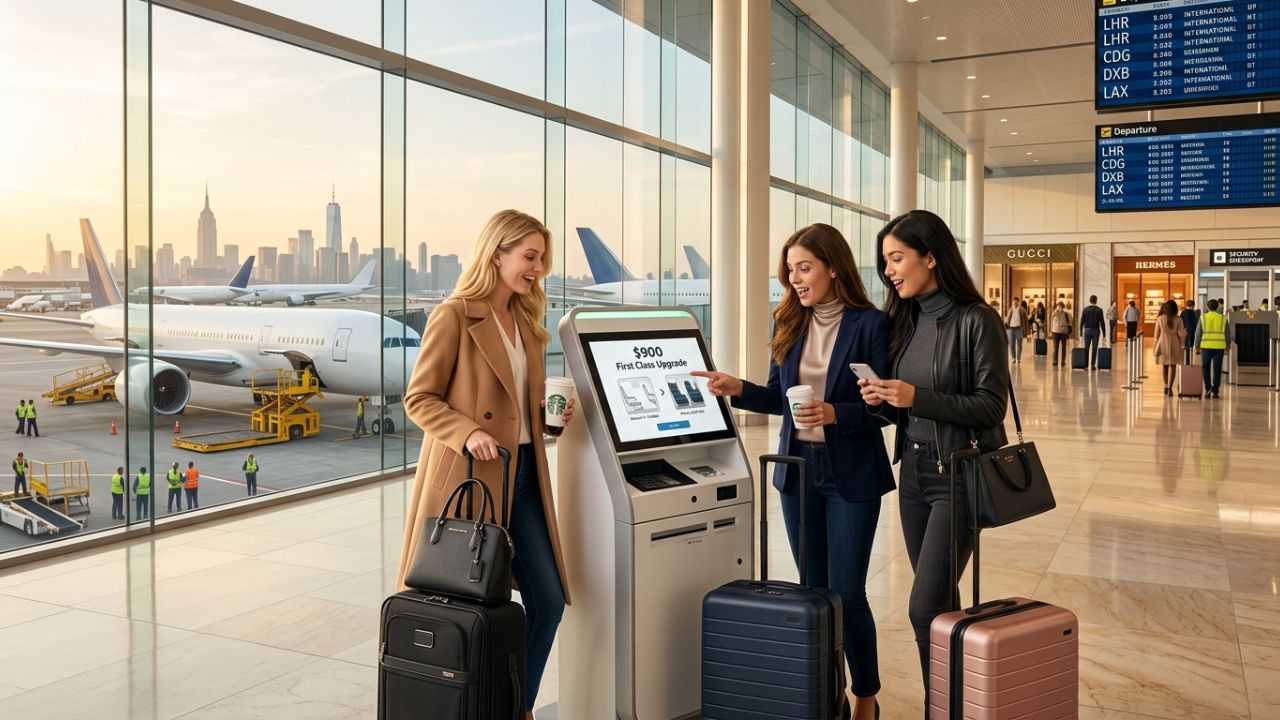
Image generated by AI
Aviation Updates: The $900 First-Class Upgrade Trap—How Airlines Weaponize Dynamic Pricing During Travel Chaos
As catastrophic airport disruptions and systemic capacity failures actively terrify the flying public, major US airlines are ruthlessly deploying highly aggressive, real-time dynamic pricing algorithms—ambushing passengers at the 24-hour check-in screen with massive $900 first-class upgrade offers designed to exploit the fear of modern travel chaos.
Image generated by AI
As urgent airline news platforms and highly critical aviation updates relentlessly analyze the brutal economics of modern air travel, a terrifying financial trap is actively ensnaring passengers flying out of major hubs like New York. Exactly 24 hours prior to departure, a supposedly standard economy ticket suddenly triggers a massive, highly intimidating $900 first-class upgrade offer directly on the check-in screen. In an era where extreme airport disruptions and devastating flight cancellations dictate the passenger experience, airlines are brutally weaponizing dynamic pricing systems. Major US carriers are aggressively monetizing unsold premium inventory, forcing highly stressed business travelers, tourists, and frequent flyers to make split-second, high-stakes financial decisions at the airport kiosk without any understanding of the ruthless algorithmic logic driving the price.
Expanded Overview: The Psychology of the 24-Hour Trap
When analyzing the massive macroeconomic forces driving airline revenue, the final 24-hour check-in window is the ultimate psychological battleground.
Airlines understand intimately that passengers checking in for high-demand routes—like New York to London or Los Angeles—are incredibly vulnerable. The looming threat of overbooked flights and systemic travel chaos creates immense pressure. What looks like a lucky "deal" to the passenger is actually a highly calculated, real-time auction-style algorithm designed to extract absolute maximum revenue from last-minute demand spikes. Airlines activate these automated systems to aggressively scan remaining seat inventory across premium cabins; if first class or business class is slightly underbooked, the system generates a sudden, exorbitant paid offer designed to trigger panic-buying from travelers terrified of being stuck in a cramped economy cabin during a multi-hour tarmac delay.
Section-Wise Breakdown: The Algorithmic Auction Engine
The sheer unpredictability of these upgrade offers stems directly from the deployment of highly advanced revenue optimization tools.
Major legacy carriers, including Delta Air Lines, American Airlines, United Airlines, and Alaska Airlines, have completely abandoned fixed upgrade pricing. Instead, their systems continuously, ruthlessly adjust pricing minute-by-minute until boarding officially commences. The extreme price swings—ranging anywhere from a trivial $29 to an extortionate $1,500—are dictated by multiple colliding variables. The algorithm instantly calculates route demand strength, the exact seat availability in premium cabins, the time remaining before departure, specific aircraft configurations, historical booking patterns, and the elite passenger upgrade priority list. A seat on a high-yield six-hour transcontinental flight is algorithmically valued entirely differently than a regional 90-minute hop.
Section-Wise Breakdown: Transatlantic Extortion and Domestic Spectrums
The most jarring examples of this dynamic pricing warfare occur on the world’s most lucrative intercontinental corridors.
On the massive New York (JFK) to London Heathrow (LHR) route, check-in algorithms frequently slam passengers with last-minute upgrade offers ranging strictly between $600 and $900 for business class. This price reflects immense corporate travel demand, the massive inherent value of overnight lie-flat beds, and extremely limited premium cabin inventory.
Conversely, domestic operations present a highly volatile spectrum. Short-haul domestic flights (under two hours) occasionally offer upgrades for a highly reasonable $29–$199. Medium domestic routes push prices into the $150–$400 range, while long, highly lucrative cross-country flights—such as New York to Los Angeles or Atlanta to Seattle—command $250–$700 simply because airlines know business travelers will aggressively pay to avoid transcontinental exhaustion.
Flight Details: Dynamic Check-In Upgrade Pricing Matrix
The exact operational telemetry outlining this highly strategic pricing warfare, detailing specific flight durations and the verified upgrade price ranges demanded by the algorithms, has been consolidated into the mandatory matrix below.
Dynamic Check-In Upgrade Pricing Matrix (2026)
| Flight Duration / Route Type | Typical Check-In Upgrade Range | Key Example Routes |
|---|---|---|
| Short-Haul Domestic (< 2 hours) | $29 – $199 | Regional US flights |
| Medium-Haul Domestic | $150 – $400 | Mid-continent US connections |
| Long Cross-Country Domestic | $250 – $700 | New York (JFK) to Los Angeles (LAX), Atlanta to Seattle |
| Transatlantic Business Class | $600 – $900 | New York (JFK) to London Heathrow (LHR) |
| Ultra-Long-Haul International (> 10-14 hours) | $600 – $1,500+ | San Francisco (SFO) to Singapore (SIN) |
Passenger Impact: The Pricing Transparency Gap
For the modern passenger, this algorithmic manipulation translates directly into intense financial anxiety and a massive "pricing visibility gap."
Airlines aggressively refuse to show passengers the underlying data. Travelers checking in on their mobile apps are never told why a specific $900 price appears, how many premium seats actually remain unsold, or whether the price will plummet or skyrocket in the next ten minutes. This complete lack of transparency operates in a largely unregulated grey zone, generating intense behavioral pressure. Passengers frequently feel compelled to decide instantly, irrationally fearing that the offer will permanently disappear before they reach the security checkpoint.
Industry Analysis: High-Margin Product Protection
Aviation economists explicitly highlight that ultra-long-haul international operations represent the absolute ceiling of this pricing volatility.
On grueling flights exceeding 10 to 14 hours—such as the massive San Francisco to Singapore corridor—upgrade pricing frequently surges between $600 and $1,500+ for business class. Airlines actively treat these lie-flat cabins as incredibly high-margin, protected products. The dynamic algorithms are explicitly programmed to withhold last-minute discounts unless unsold capacity remains dangerously high. The airlines ruthlessly prioritize full-fare business class ticket sales first, aggressively choking off discounted upgrade opportunities until the absolute final hours before departure.
Conclusion: Navigating the Algorithmic Battlefield
Ultimately, the airport check-in screen has quietly mutated into the single most unpredictable, highly weaponized pricing moment in modern aviation. The incredible difference between a trivial $29 domestic upgrade and a massive $900 transatlantic shakedown is no longer a matter of luck; it is dictated entirely by ruthless, data-driven pricing logic. As extreme travel demand continues to trigger massive, cascading airport disruptions globally, airlines know that passengers are highly vulnerable to panic-buying premium seats just to secure priority boarding and rebooking protection. To survive this algorithmic battlefield, passengers must aggressively monitor upgrade prices the absolute second the 24-hour check-in window opens, comparing offers across devices before surrendering hundreds of dollars to the airline's revenue engine.
Key Takeaways
- Algorithmic Ambush: Major US airlines (Delta, American, United, Alaska) deploy real-time dynamic pricing to aggressively monetize unsold premium seats during the 24-hour check-in window.
- Massive Price Swings: Upgrade offers range wildly based on flight duration and demand, from $29 for short domestic hops to $1,500+ for ultra-long-haul international flights.
- The Transatlantic Premium: High-demand routes like New York (JFK) to London (LHR) consistently trigger massive $600 to $900 check-in upgrade offers for lie-flat business class.
- The Transparency Gap: Airlines intentionally hide seat inventory data and algorithm variables, creating intense behavioral pressure that forces passengers to panic-buy upgrades instantly.
- Strategic Timing: Upgrade prices are highly volatile; passengers can secure the best rates by monitoring the app precisely when the 24-hour window opens rather than waiting for the airport kiosk.
FAQ: Dynamic First-Class Upgrade Pricing 2026
Why do airlines offer last-minute first-class upgrades at check-in? Airlines utilize advanced dynamic revenue optimization tools to extract maximum financial value from premium seats that remain unsold 24 hours prior to departure, preventing high-margin cabins from flying empty.
How much does a typical domestic first-class upgrade cost at check-in? Domestic pricing behaves on a massive spectrum based on flight length: short-haul routes typically cost $29–$199, medium routes run $150–$400, and long cross-country flights command $250–$700.
How much does a check-in upgrade cost for a long-haul international flight? International long-haul upgrades are the most volatile, with business class offers between the US and Europe or Asia (e.g., San Francisco to Singapore) ranging anywhere from $600 to $1,500+.
Related Travel Guides
Global Airlines Consolidation Long Haul Travel Chaos 2026
SkyWest United Airlines SKW4700 Flight Diversion Travel Chaos 2026
Global Aviation Pricing and Consumer Protection Guide 2026
Disclaimer: This article is strictly for informational purposes. The aviation operational data, specific dynamic pricing spectrums (ranging from $29 to $1,500+), specific route examples (including JFK to LHR, ATL to SEA, and SFO to SIN), and airline algorithmic strategies involving Delta, American, United, and Alaska Airlines are based on official airline revenue management disclosures and observed industry pricing trends available at the time of publication. Dynamic check-in upgrade pricing, elite passenger priority queues, premium cabin seat availability, and mobile app offer algorithms are highly dynamic and subject to immediate, real-time modification by the operating carrier without any prior notice. Passengers must explicitly verify exact upgrade costs, fare class restrictions, and refund policies directly with the airline prior to executing any last-minute financial transactions at airport kiosks or mobile applications.
Disclaimer
This article is for informational and educational purposes only. It does not constitute legal, financial, or professional advice. While we strive to provide accurate and up-to-date information, travel policies, regulations, and conditions change rapidly. Always verify information with official sources before making travel decisions. Nomad Lawyer makes no representations about the accuracy, reliability, completeness, or suitability of the information provided. Readers should consult qualified professionals for advice specific to their circumstances. The views expressed in this article are those of the author and do not necessarily reflect the views of Nomad Lawyer.
Kunal K Choudhary
Co-Founder & Contributor
A passionate traveller and tech enthusiast. Kunal contributes to the vision and growth of Nomad Lawyer, bringing fresh perspectives and driving the community forward.
Learn more about our team →