
Aviation Updates: Delta, United, and Global Mega-Carriers Forge Massive 2026 Alliance to Defeat Worldwide Travel Chaos
As airport disruptions and flight cancellations cripple independent airlines, global mega-carriers form impenetrable alliances to completely control long-haul aviation.

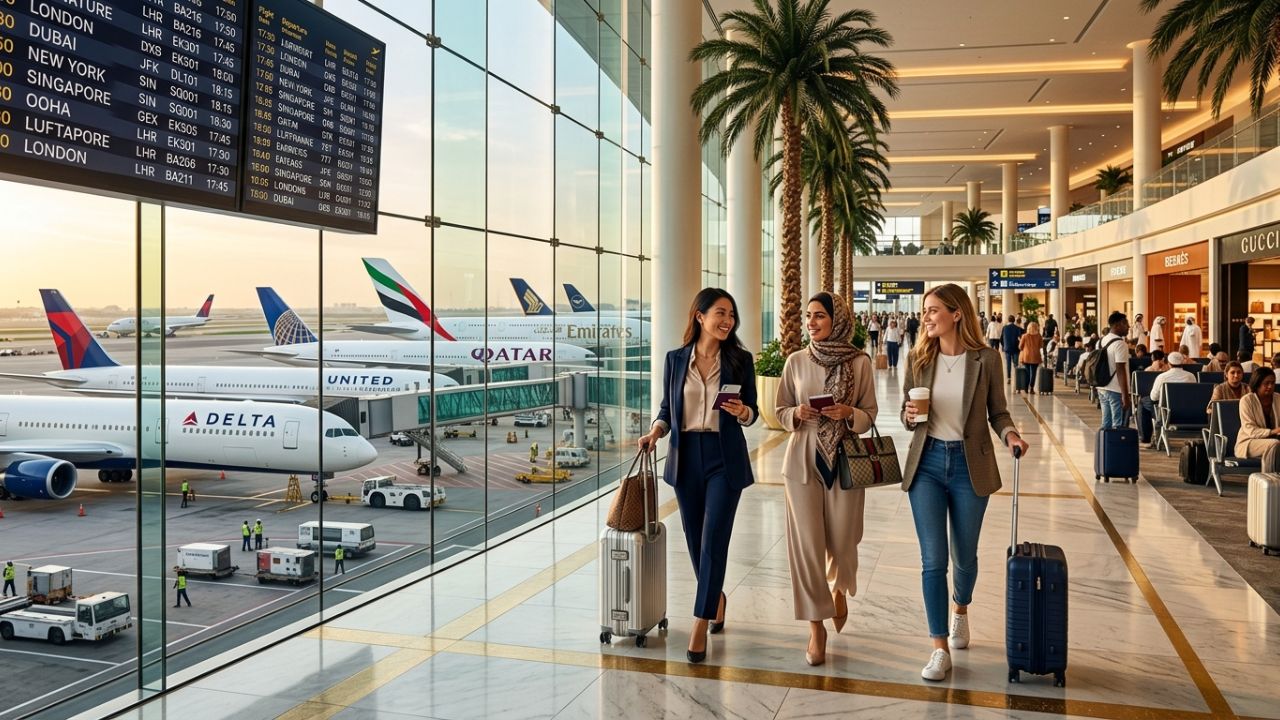
Image generated by AI
Aviation Updates: Delta, United, and Global Mega-Carriers Forge Massive 2026 Alliance to Defeat Worldwide Travel Chaos
As catastrophic airport disruptions and systemic capacity failures actively terrorize independent operators, Delta Air Lines, United Airlines, and a ruthless syndicate of global mega-carriers have executed a massive structural consolidation to completely control intercontinental travel and permanently insulate their premium passengers from rolling travel chaos.
Image generated by AI
As urgent airline news platforms and highly critical aviation updates continuously document the incredible fragility of isolated airline operations, a terrifying new power structure has emerged in 2026. Delta Air Lines, operating in aggressive tandem with American Airlines, United Airlines, Emirates, Qatar Airways, IndiGo, and other global titans, has officially initiated a massive restructuring of worldwide aviation. Driven by absolutely surging long-haul demand and the terrifying threat of systemic airport disruptions, these legacy carriers are ruthlessly locking down the global airspace. While outright corporate mergers face brutal regulatory hurdles, these airlines are executing a devastating alternative: forming incredibly dense joint ventures and integrated codeshare agreements. By effectively consolidating their immense power, these mega-carriers are seizing absolute control over the world’s most lucrative premium long-haul connectivity, creating an impenetrable fortress designed to withstand massive, cascading flight cancellations that routinely paralyze lesser competitors.
Expanded Overview: The Consolidation of Intercontinental Airspace
When analyzing the massive macroeconomic forces driving this 2026 power shift, the absolute necessity for structural resilience is undeniable.
The global aviation ecosystem is no longer defined by isolated regional dominance; it has rapidly mutated into a highly weaponized, interconnected network. As extreme post-pandemic travel demand collides with heavily constrained airport infrastructure, standalone airlines are being violently squeezed out of the market. The massive global alliances forged by carriers like Delta and Qatar Airways guarantee that when severe weather triggers massive travel chaos, these airlines possess the combined network scale to instantly rebook passengers across partner flights, bypassing gridlocked hubs. Supported by the aggressive deployment of next-generation, fuel-efficient wide-body fleets such as the Airbus A350 and the Boeing 787, these alliances are rapidly opening highly lucrative new city pairs, permanently accelerating how global connectivity is distributed and rigidly controlled.
Section-Wise Breakdown: US Dominance and the Middle East Mega-Hubs
The absolute foundation of this new world order is heavily anchored in the immense scale of United States and Middle Eastern carriers.
The United States absolutely leads the global aviation power structure. Delta Air Lines, United Airlines, American Airlines, and the domestic low-cost juggernaut Southwest Airlines collectively operate a terrifyingly massive aviation system. Delta ruthlessly optimizes premium service efficiency, while United expands incredibly aggressively into long-haul international corridors.
Simultaneously, the Middle East has completely weaponized its geographic advantage. Emirates and Qatar Airways have established absolute dominance over ultra-long-haul connectivity. By utilizing vast wide-body fleets and ultra-modern airport infrastructure, their mega-hubs serve as vital global transit points, perfectly linking East and West while offering unmatched luxury standards that independent carriers simply cannot afford to replicate.
Section-Wise Breakdown: Asian Expansion and European Network Control
Across the Pacific and the Atlantic, a similar brutal consolidation of market share is actively unfolding.
In the Asia-Pacific theater, India’s IndiGo is violently dominating domestic aviation while executing a massive expansion into international routes. Singapore Airlines and Japan's All Nippon Airways (ANA) continue to rigidly defend their reputations for extreme operational excellence and premium safety. Meanwhile, China’s state-backed giants, Air China and China Southern Airlines, command some of the absolute largest fleets on the planet, capturing massive domestic demand.
In Europe, the power structure is strictly divided. Ryanair violently controls the low-cost, short-haul sector with immense connectivity across the continent. Conversely, massive conglomerate operations like the Lufthansa Group and Air France-KLM dictate transcontinental connectivity between Europe, the Americas, Africa, and Asia, relying heavily on deep alliance integration to protect market share.
Flight Details: Global Aviation Power Distribution Matrix
The exact operational telemetry outlining this highly strategic network domination, detailing how specific mega-carriers monopolize geographical regions to completely control global long-haul connectivity, has been consolidated into the mandatory matrix below.
Global Aviation Power Distribution Matrix (2026)
| Geographic Region / Country | Dominant Carrier / Group Leadership | Strategic Aviation Focus |
|---|---|---|
| United States | Delta, United, American, Southwest | Global alliance dominance, scale, frequency |
| United Arab Emirates | Emirates | Ultra-long-haul mega-hub connectivity |
| Qatar | Qatar Airways | Premium global transit and partnership expansion |
| India | IndiGo | Massive domestic volume and international expansion |
| Singapore | Singapore Airlines | Operational excellence and premium intercontinental routes |
| Japan | All Nippon Airways (ANA) | High-standard safety and punctual Asian connectivity |
| China | Air China, China Southern Airlines | Massive domestic demand and international scaling |
| Germany / Europe | Lufthansa Group | Multi-national portfolio leadership |
| France & Netherlands | Air France-KLM | Transcontinental European connectivity |
| Ireland / Europe Low-Cost | Ryanair | Short-haul, high-frequency European market dominance |
Passenger Impact: The Protection of Alliance Ticketing
For the modern international traveler, this massive shift in aviation power dictates entirely how they survive transit volatility.
Booking a highly complex long-haul itinerary across unaligned carriers is now considered a catastrophic risk. However, passengers flying within these new, hyper-integrated alliance structures are completely insulated. If an Airbus A350 experiences a mechanical failure in Frankfurt, Lufthansa can seamlessly transfer high-yield passengers onto a partner United Airlines Boeing 787. This deep digital integration across booking systems and baggage tracking completely eliminates the terrifying prospect of being stranded during a massive hub meltdown, guaranteeing that business travelers and premium tourists reach their destinations despite severe, region-wide operational chaos.
Industry Analysis: Sustainability and Digital Weaponization
Aviation economists explicitly note that this global power shift is heavily underpinned by massive technological and environmental investments that smaller airlines simply cannot afford.
Sustainability has been weaponized as a barrier to entry. Mega-carriers are aggressively investing billions into Sustainable Aviation Fuel (SAF), sweeping carbon emission reduction programs, and fully electric ground operations. Furthermore, the deployment of advanced AI-driven flight optimization systems allows these massive airlines to heavily reduce fuel burn while maximizing payload efficiency. This intense digitalization ensures that only the largest, best-funded airline alliances survive the brutal regulatory and economic pressures defining modern commercial aviation.
Conclusion: The Final Era of Independent Airlines
Ultimately, the aggressive alignment of Delta Air Lines, United Airlines, American Airlines, Qatar Airways, Emirates, and IndiGo signals the absolute end of the independent global carrier. By executing massive fleet expansions and ruthlessly locking down the world's most critical long-haul routes via joint ventures, these airlines have formed an impenetrable global oligopoly. As international passenger demand surges and the threat of severe airport disruptions remains a constant reality, this highly integrated power structure provides the ultimate operational resilience. This strategic convergence permanently reshapes the balance of global aviation, guaranteeing that these mega-alliances will completely dictate the future of international air travel, economic integration, and global tourism for decades to come.
Key Takeaways
- Massive Alliance Consolidation: Global titans like Delta, United, American, Emirates, Qatar, and IndiGo are aggressively utilizing joint ventures to bypass mergers and control global airspace.
- Next-Generation Fleets: The global power shift is heavily supported by the massive deployment of highly advanced, fuel-efficient Airbus A350 and Boeing 787 wide-body aircraft.
- Mega-Hub Dominance: Middle Eastern carriers (Emirates and Qatar Airways) have established absolute control over ultra-long-haul intercontinental transit via their ultra-modern hubs.
- Asian Market Surge: IndiGo is rapidly scaling India’s international footprint, while China Southern and Air China command some of the largest aircraft fleets on the planet.
- Technological Weaponization: The leading alliances are aggressively deploying AI-driven flight optimization and Sustainable Aviation Fuel (SAF) to permanently outcompete smaller, independent carriers.
FAQ: 2026 Global Aviation Power Shift
Which US airlines are leading this global alliance strategy? Delta Air Lines, United Airlines, and American Airlines are aggressively leading the United States' strategy to control global connectivity through incredibly dense joint ventures and codeshare agreements.
How are Middle Eastern carriers influencing this power shift? Carriers like Emirates and Qatar Airways are utilizing their massive geographic advantage, deploying vast wide-body fleets to completely dominate ultra-long-haul transit between the East and West.
What aircraft are driving this new era of long-haul connectivity? The rapid expansion of incredibly efficient, next-generation wide-body aircraft, specifically the Airbus A350 and the Boeing 787, allows these mega-alliances to profitably operate massive intercontinental networks.
Related Travel Guides
- AIRCAIRO Commits to 15 Airbus A320neo Aircraft at El Alamein Airshow in Strategic Fleet Expansion to 130 Jets
- Delta Air Lines Reveals Luxe Delta One Suite for Next-Generation Fleet Overhaul
- Dallas-Fort Worth Airport Chaos: Envoy Air and Air Canada Cancel 4 Flights, Trigger Delays Across 60+ Cities in North America, Europe, and Beyond
Disclaimer: This article is strictly for informational purposes. The aviation operational data, specific airline alliance strategies, fleet expansion metrics (including the deployment of Airbus A350 and Boeing 787 aircraft), and regional market dominance assessments (involving Delta Air Lines, United Airlines, Emirates, Qatar Airways, IndiGo, and other mentioned carriers) are based on official industry trend reports and aeronautical strategic data available at the time of publication. International airline joint ventures, codeshare agreements, and specific long-haul route operations are highly dynamic and subject to immediate modification based on complex international regulatory approvals, global economic shifts, and regional aviation supply chain constraints. Passengers must explicitly verify exact codeshare ticketing policies, baggage interlining agreements, and alliance benefits directly with their booking carrier prior to finalizing highly complex intercontinental travel plans.
Disclaimer
This article is for informational and educational purposes only. It does not constitute legal, financial, or professional advice. While we strive to provide accurate and up-to-date information, travel policies, regulations, and conditions change rapidly. Always verify information with official sources before making travel decisions. Nomad Lawyer makes no representations about the accuracy, reliability, completeness, or suitability of the information provided. Readers should consult qualified professionals for advice specific to their circumstances. The views expressed in this article are those of the author and do not necessarily reflect the views of Nomad Lawyer.
Raushan Kumar
Founder & Lead Developer
Full-stack developer with 11+ years of experience and a passionate traveller. Raushan built Nomad Lawyer from the ground up with a vision to create the best travel and law experience on the web.
Learn more about our team →