
Dubai Travel Safety 2026: Essential Legal Regulations, Passport Rules, and Visitor Guidelines
Comprehensive 2026 guide to Dubai travel safety, 6-month passport validity rules, licensed venue alcohol laws, privacy photography restrictions, and airport biometric entry.

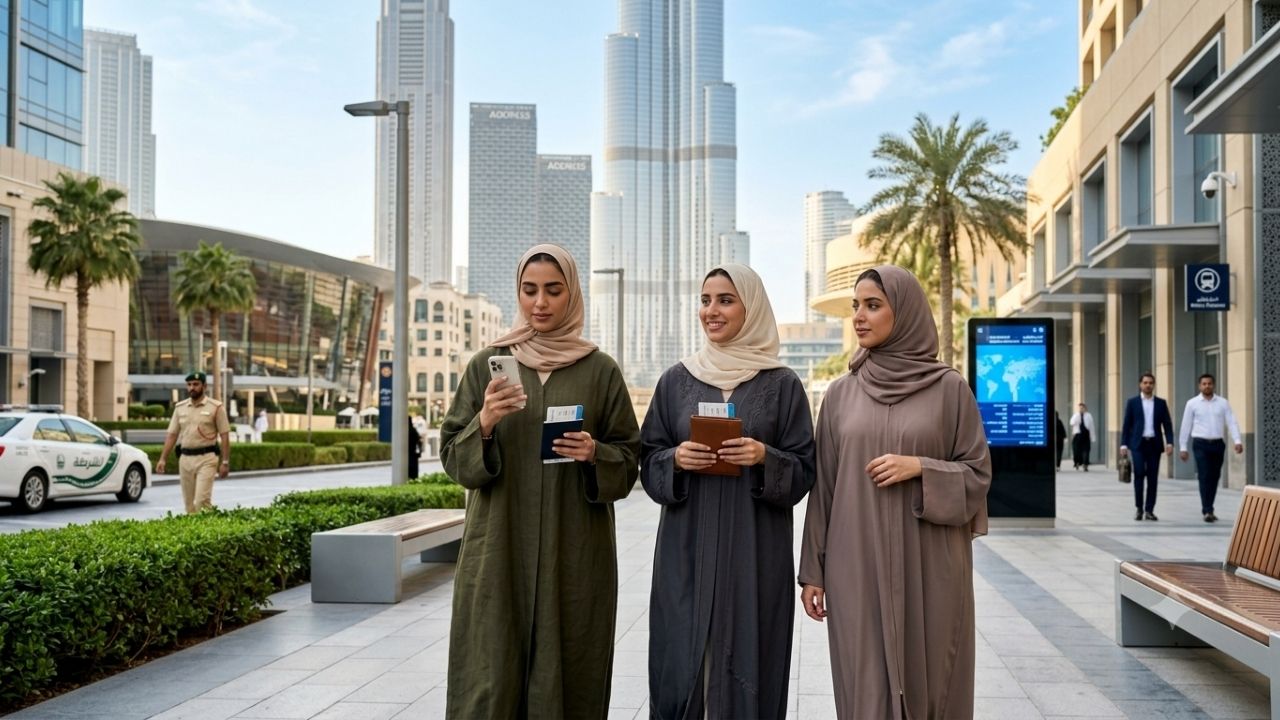
Image generated by AI
Travelers visiting Dubai and the United Arab Emirates in 2026 face strict enforcement of public behavioral standards, 6-month passport validity rules, and specialized privacy laws alongside ultra-modern airport biometric screening. While street crime remains among the lowest globally, visitors must navigate strict legal frameworks governing alcohol consumption in licensed venues, photography permissions, and digital visa compliance.
[DUBAI, United Arab Emirates, Sept. 1, 2026] — Travel security analysts and official immigration authorities in the United Arab Emirates have issued updated operational guidance for international visitors navigating Dubai’s legal and municipal frameworks in 2026. According to published directives from the UAE Government Portal (U.AE), the emirate maintains its status as one of the safest global metropolitan destinations, supported by comprehensive state surveillance, rapid emergency response networks, and strict legal enforcement.
While daily commercial operations across Dubai International Airport (DXB), luxury resorts, and business districts proceed without disruption, foreign travelers are expected to maintain full compliance with local laws. Navigating Dubai safely requires balancing high physical security against strict legal codes governing public behavior, digital privacy, and substance regulation.
Balance Between Modern Infrastructure and Strict Public Order Governance
Dubai’s operational environment is defined by ultra-modern cosmopolitan infrastructure paired with traditional legal governance. State security apparatuses prioritize public order through advanced municipal surveillance, smart-city monitoring, and visible police presence across tourism hubs, shopping centers, and coastal districts.
Despite ongoing geopolitical volatility across the broader Middle East region, internal security within the UAE remains highly insulated. Federal authorities coordinate closely with aviation bodies to maintain safe airspace operations while enforcing zero-tolerance policies toward public disturbances, illegal substance possession, and financial fraud.
Daily Operations and Visitor Enforcement Rules in Dubai Municipal Zones
For leisure and business travelers, day-to-day life inside Dubai operates smoothly, with hotels, shopping centers, and entertainment venues operating at full capacity. However, foreign visitors must adjust to local behavioral standards that differ significantly from Western jurisdictions.
Key enforcement areas include:
- Strict regulation of public behavior and public displays of affection
- Rigid adherence to modesty guidelines in public government buildings and religious sites
- Enforcement of privacy laws prohibiting unauthorized photography of individuals or government facilities
- Strict monitoring of digital communications and social media publishing
Hospitality Resilience and Airspace Monitoring Amidst Regional Dynamics
Dubai’s aviation and hospitality sectors demonstrate high operational resilience amidst shifting global travel advisories. Tourism authorities and airline operators emphasize flexible rebooking policies to accommodate potential regional airspace adjustments or transit updates.
Security analysts note that Dubai's physical isolation from regional conflicts, combined with sophisticated airport security infrastructure at DXB and Al Maktoum International Airport (DWC), ensures that inbound passenger flows remain robust. Hospitality providers continue to enforce high safety standards across resort properties.
Core Legal Protocols and Practical Guidance for Dubai Visitors
| Regulatory Category | Official 2026 Requirement / Standard | Legal & Logistical Impact for Travelers |
|---|---|---|
| Passport Validity | Minimum 6 months validity from arrival date | Entry denied at departure gateway if passport expires early |
| Visa & Entry Clearance | Pre-arranged e-visa or visa-on-arrival clearance | Biometric registration integrated directly into immigration gates |
| Alcohol Consumption | Restricted exclusively to licensed venues & hotels | Public intoxication & unlicensed drinking carry severe legal penalties |
| Privacy & Photography | Express consent required before photographing people | Photographing individuals without consent violates UAE cybercrime laws |
| Public Behavioral Code | Modest public attire & restricted public affection | Fines or administrative detention for public behavioral violations |
| Overstay Penalties | Daily fine structure enforced via GDRFA Dubai | Strict financial penalties & potential entry bans for overstaying visas |
Regulatory Evolution: From Rapid Expansion to Biometric Integration and Overstay Enforcement
Compared to previous years, entry and regulatory frameworks in the UAE have become more digitally streamlined yet significantly stricter in legal enforcement. Recent administrative updates implemented by the General Directorate of Residency and Foreigners Affairs (GDRFA) include smart biometric gates at Dubai Airports, enabling contactless passport clearance for registered travelers.
Concurrently, federal authorities have increased financial penalties for visa overstays and automated the tracking of entry permits through integrated national ID databases. This regulatory phase balances open international tourism access with tight digital border control.
Industry Impact Analysis: Maintaining High Security Equity in Metropolitan Tourism
Hospitality experts highlight that Dubai's strict legal environment acts as a primary selling point for family travelers, luxury vacationers, and corporate event organizers. By eliminating street crime, pickpocketing, and public harassment through strict enforcement and surveillance, Dubai maintains high brand equity among international destination marketers.
However, travel agencies and corporate mobility managers must ensure that inbound travelers receive comprehensive briefings on local laws, particularly regarding digital privacy, alcohol consumption rules, and prescription medication restrictions.
Why This Matters: Essential Takeaways for International Travelers in Dubai
For travelers planning trips to Dubai in 2026, adhering to legal guidelines ensures a safe and seamless experience:
- Check Passport Expiry Dates: Ensure your passport has at least six months of validity remaining beyond your intended arrival date to avoid entry refusal.
- Limit Alcohol to Licensed Establishments: Consume alcohol only within licensed hotel bars, restaurants, and private venues. Avoid public intoxication or carrying open alcohol in public spaces.
- Obtain Consent Before Taking Photos: Never take photographs or videos of private individuals, accidents, or government/military facilities without explicit permission.
- Verify Medication Restrictions: Check the official UAE Ministry of Health portal to ensure carrying personal prescription medications complies with federal controlled substance lists.
- Utilize Biometric Smart Gates: Eligible travelers should register for smart gate access at DXB to complete airport immigration in under 20 seconds.
Frequently Asked Questions
Is it safe to travel to Dubai in 2026?
Yes. Dubai is consistently ranked among the safest cities globally, with exceptionally low crime rates, high-tech municipal surveillance, and rapid emergency response systems.
What is the passport validity requirement for entry into Dubai?
Foreign travelers must possess a passport valid for at least six months from their date of entry into the United Arab Emirates.
Are alcohol consumption laws strict in Dubai?
Yes. Alcohol consumption is legally restricted to authorized, licensed venues such as hotel restaurants and bars. Drinking in public places or public intoxication is strictly illegal.
What are the photography laws in Dubai?
Taking photographs of individuals without their explicit consent is a violation of UAE privacy and cybercrime laws, carrying fines and potential legal action. Photographing government, military, or restricted sites is strictly prohibited.
Related Travel Guides
Disclaimer
This article is for informational and educational purposes only. It does not constitute legal, financial, or professional advice. While we strive to provide accurate and up-to-date information, travel policies, regulations, and conditions change rapidly. Always verify information with official sources before making travel decisions. Nomad Lawyer makes no representations about the accuracy, reliability, completeness, or suitability of the information provided. Readers should consult qualified professionals for advice specific to their circumstances. The views expressed in this article are those of the author and do not necessarily reflect the views of Nomad Lawyer.
Raushan Kumar
Founder & Lead Developer
Full-stack developer with 11+ years of experience and a passionate traveller. Raushan built Nomad Lawyer from the ground up with a vision to create the best travel and law experience on the web.
Learn more about our team →