
Why Stop-and-Go Traffic Leads to Frequent Accidents
Understand why stop-and-go traffic creates accident-prone conditions and the dangers of low-speed collisions. Learn how to stay safe and navigate congested driving environments.

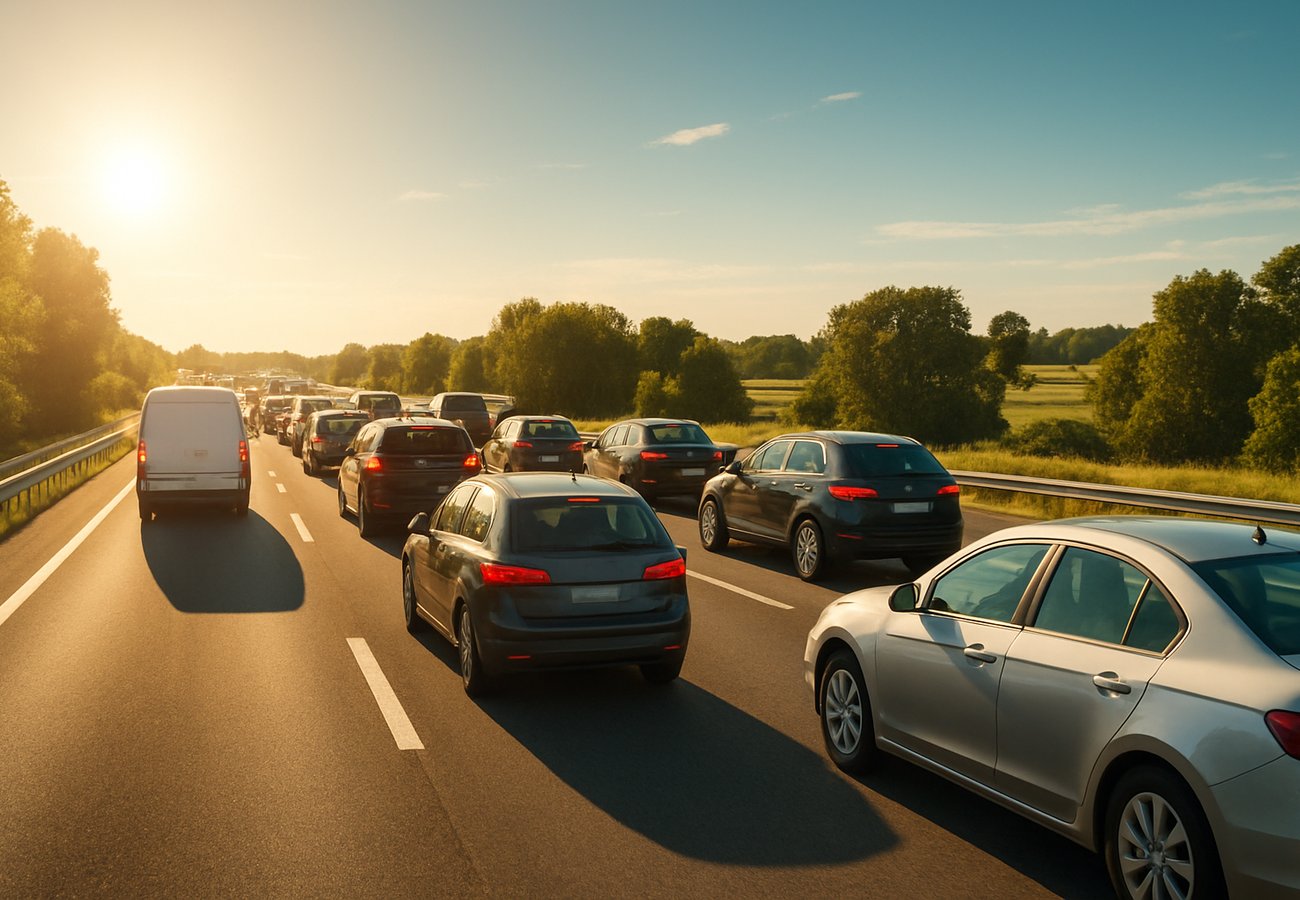
Image generated by AI
For most drivers, stop-and-go traffic is simply an unavoidable frustration: a daily inconvenience to be endured during rush hour or navigated around a construction zone. What many people do not fully appreciate, however, is that congested, stop-and-go conditions are among the most accident-prone driving environments on the road. The combination of close vehicle proximity, unpredictable speeds, driver impatience, and divided attention creates a setting where collisions are not just possible but statistically common.
Examining why stop-and-go traffic so frequently leads to accidents, and what that means for drivers who are injured in those conditions, offers a clearer picture of a risk that millions of people face every single day.
The Mechanics of Stop-and-Go Collisions
To understand why stop-and-go traffic generates so many accidents, it helps to understand how that driving environment differs from normal highway or surface street driving.
Under typical conditions, drivers maintain relatively consistent speeds, follow established gaps between vehicles, and have time to process and respond to what is happening ahead of them.
Stop-and-go traffic disrupts all of this. Vehicles accelerate, decelerate, and brake repeatedly and often unpredictably. The gaps between cars shrink, the margin for error narrows significantly, and all of this happens while drivers are tired, distracted, or otherwise less alert than they should be. These conditions create a false sense of security, which is one of the most dangerous aspects of congested driving.
Because vehicles are moving slowly, many drivers assume the risk of a serious accident is low. In reality, the frequency of braking events, combined with reduced following distances and high driver inattention, makes rear-end collisions extremely common in stop-and-go conditions. Even at low speeds, rear-end collisions can cause significant injuries, particularly to the neck, spine, and soft tissues, that may not be immediately apparent in the moments following impact.
Several specific factors make stop-and-go traffic particularly hazardous:
Reduced following distance: As traffic slows and compresses, the space between vehicles shrinks. Drivers who do not actively compensate by increasing their following time leave themselves very little room to stop when the car ahead brakes suddenly.
Attention fatigue: Prolonged exposure to slow, repetitive traffic dulls alertness. Drivers who have been sitting in congestion for 20 or 30 minutes are often less focused than they were when they first entered it, even if they don't realize it.
Distracted driving: Stop-and-go traffic invites distraction. When a car is barely moving, glancing at a phone, adjusting the radio, or turning to speak to a passenger can feel inconsequential. But traffic conditions can change in an instant, and a driver whose eyes are off the road for even two or three seconds may have no time to react.
Aggressive driving and impatience: Congestion breeds frustration, and frustration breeds risk-taking. Drivers who weave between lanes, follow too closely in an attempt to pressure the car ahead, or accelerate aggressively into small gaps significantly increase the likelihood of a collision.
Phantom braking and chain reactions: In heavy traffic, a single vehicle braking slightly harder than necessary can trigger a chain reaction of braking through dozens of cars behind it. Each successive driver has less time to react than the one before, and the cumulative effect often results in a collision somewhere down the line, sometimes far removed from the original cause.
Why Low-Speed Accidents Are More Serious Than They Appear
The human body, particularly the neck and spine, is highly vulnerable to the rapid, forceful movement caused by a rear-end collision, even at speeds as low as five to ten miles per hour. Whiplash, one of the most common injuries associated with stop-and-go accidents, occurs when the head is thrown forward and backward in rapid succession. This motion can strain or tear the muscles, tendons, and ligaments of the neck and upper back in ways that produce delayed symptoms. A driver who walks away from a fender-bender feeling fine may find themselves dealing with significant pain, stiffness, and limited mobility within 24 to 72 hours.
Beyond whiplash, low-speed collisions can cause herniated discs, shoulder injuries, and in some cases concussions, particularly when the occupant's head makes contact with the headrest, steering wheel, or window during impact. Airbags typically do not deploy in low-speed collisions, which means occupants absorb more of the physical force of the crash without that form of protection.
The financial consequences of these injuries can accumulate quickly. Medical evaluations, imaging, physical therapy, and time away from work add up even when an injury is not immediately visible or dramatic. This is one reason why seeking medical attention after any collision, regardless of how minor it appears, is strongly advisable. A thorough medical evaluation documents the injury, establishes its connection to the accident, and protects the injured person's ability to pursue compensation with an experienced team of personal injury lawyers.
Liability in Stop-and-Go Traffic Accidents
Rear-end collisions, by far the most frequent type of accident in congested traffic, are generally presumed to be the fault of the following driver, because every driver has a legal duty to maintain a safe following distance and remain attentive to traffic conditions ahead. However, that presumption is not absolute. Certain circumstances can cause a leading driver's behavior to contribute to or directly causes a collision.
Multi-vehicle pileups, which are not uncommon in stop-and-go conditions, raise even more complex questions of liability. When one collision triggers another, and that one triggers a third, identifying which driver or drivers bear legal responsibility requires a careful reconstruction of the sequence of events. Insurance companies in these situations often dispute liability aggressively, and the accounts of multiple parties may conflict significantly.
Staying Safe in Congested Conditions
While not every stop-and-go accident can be prevented, drivers can meaningfully reduce their risk by adjusting their habits in congested traffic. For example, maintaining a following distance of at least three seconds, even when surrounding drivers leave less space, provides critical reaction time.
Stop-and-go traffic is an unavoidable feature of modern driving. The accidents it produces, however, are far from inevitable, and for those who are injured in them, understanding both the cause and the legal landscape that follows is an essential part of the path forward.
Disclaimer
This article is for informational and educational purposes only. It does not constitute legal, financial, or professional advice. While we strive to provide accurate and up-to-date information, travel policies, regulations, and conditions change rapidly. Always verify information with official sources before making travel decisions. Nomad Lawyer makes no representations about the accuracy, reliability, completeness, or suitability of the information provided. Readers should consult qualified professionals for advice specific to their circumstances. The views expressed in this article are those of the author and do not necessarily reflect the views of Nomad Lawyer.
Kunal K Choudhary
Co-Founder & Contributor
A passionate traveller and tech enthusiast. Kunal contributes to the vision and growth of Nomad Lawyer, bringing fresh perspectives and driving the community forward.
Learn more about our team →