
Dubai Tourism Rebounds As 869,000 Visitors Arrive In August 2026, Signalling Strong Global Travel Recovery
Dubai Tourism Rebounds As 869,000 Visitors Arrive In August 2026, Signalling Strong Global Travel Recovery

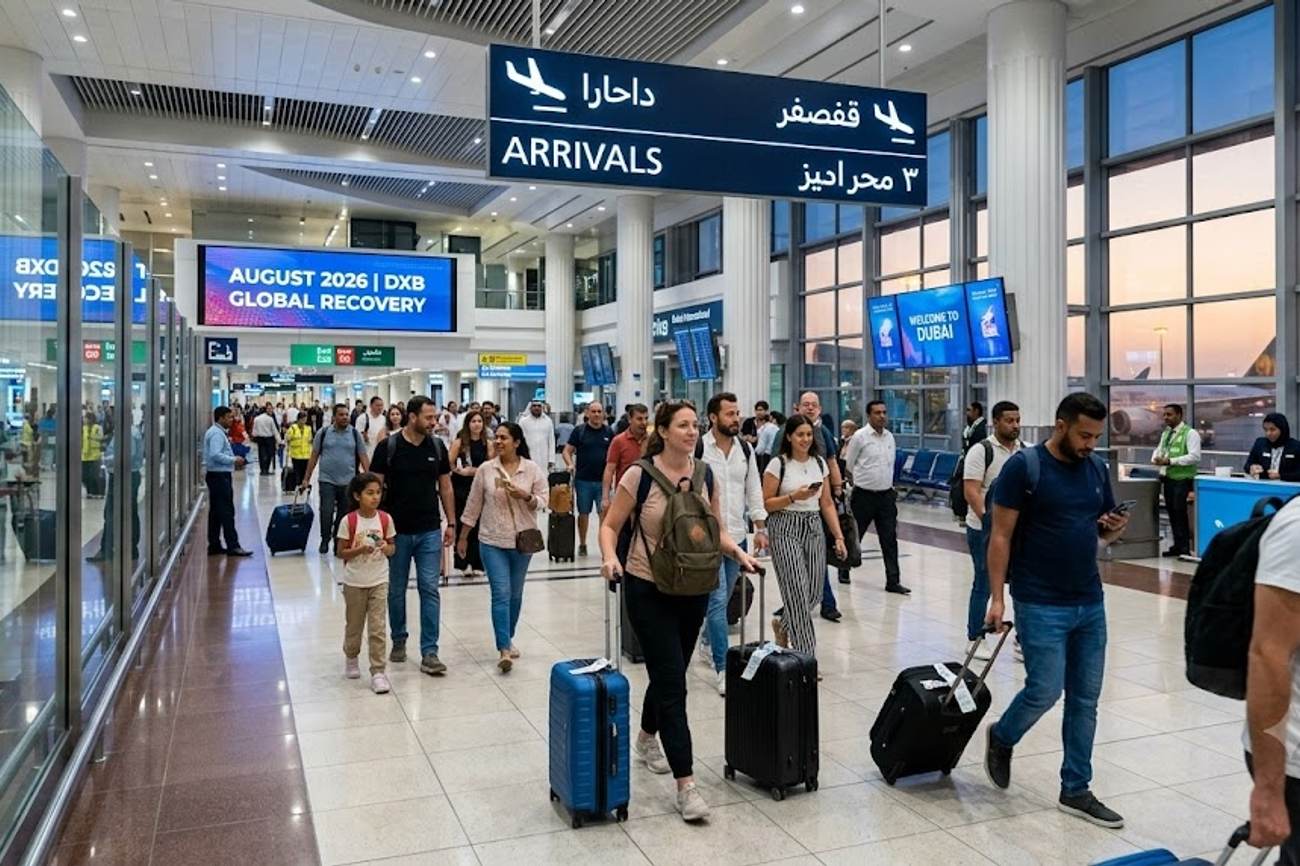
Image generated by AI
869,000 international overnight tourists arrived in Dubai during August 2026, marking the city's most successful tourism month since February. This surge signals a decisive pivot for the United Arab Emirates, as the emirate effectively shakes off the regional instability and aviation disruptions that hampered travel patterns in the first quarter of the year.
The Architecture of a Rapid Recovery
The rebound in visitor numbers is not a random spike but a calculated recovery from a volatile start to 2026. Earlier in the year, the Dubai tourism ecosystem faced significant headwinds; regional geopolitical tensions and disrupted airline schedules created a climate of uncertainty for international travelers. However, the data from the Dubai Department of Economy and Tourism reveals a resilient trajectory.
Between January and August 2026, the city welcomed a total of 6.97 million international visitors. The momentum has been characterized by consistent double-digit growth in monthly arrivals starting in March, culminating in the August peak. This recovery underscores the structural strength of Dubai's tourism infrastructure, which is designed to absorb shocks through diversified market appeal and aggressive capacity management.
The city's strategy relies heavily on its role as a global transit node. By leveraging the massive operational scale of Emirates, Dubai has managed to restore its global network rapidly, ensuring that the pipeline of passengers from Europe, Asia, and Africa remains open even when regional volatility increases.
Hospitality Metrics and Capacity Utilization
The recovery is most visible in the hotel sector, where occupancy rates have swung from desperation to stability. In March 2026, hotel occupancy plummeted to a meager 36%, reflecting the height of the regional disruptions. By August 2026, that figure climbed to 66%. While this represents 89% of the occupancy levels seen in August 2025, the sharp ascent from the March lows indicates a rapid restoration of traveler confidence.
The scale of the hospitality sector provides a buffer against market fluctuations. By the end of August 2026, Dubai’s total hotel room inventory reached approximately 149,000 rooms. This massive capacity allows the city to handle surges in demand without immediate pricing spikes that would deter the mid-market traveler, though it also puts pressure on operators to maintain high occupancy to cover fixed overheads.
The following data outlines the operational performance of the hospitality sector for the first eight months of 2026:
| Metric | Value (Jan - Aug 2026) |
|---|---|
| Total International Visitors | 6.97 Million |
| August 2026 Arrivals | 869,000 |
| August 2026 Hotel Occupancy | 66% |
| March 2026 Hotel Occupancy | 36% |
| Total Occupied Room Nights | 21.61 Million |
| Total Hotel Room Inventory | 149,000 Rooms |
Expert Analysis: The Diversification Hedge
For the sophisticated traveler and industry analyst, the most critical data point is not the total number of visitors, but the geographical distribution of those arrivals. Dubai has successfully implemented a "diversification hedge," ensuring that no single geopolitical event in one region can collapse its entire tourism economy.
The breakdown of the 6.97 million visitors reveals a balanced portfolio:
- Western Europe (20%): The primary engine of growth, driven by luxury seekers and winter sun tourists.
- South Asia (17%): A high-volume market supported by dense aviation links and VFR (Visiting Friends and Relatives) travel.
- GCC Countries (16%): Short-haul regional travel that provides a steady baseline of arrivals.
- CIS and Eastern Europe (14%): A strategic growth segment that balances the Western European reliance.
The direct consequence of this distribution is a reduction in systemic risk. When Western European demand dips, the South Asian or GCC markets often provide a counter-balance. For travelers booking routes into Dubai, this means the city remains a viable hub regardless of localized crises.
Furthermore, the timing of this recovery is strategic. By stabilizing occupancy at 66% in August—a month typically hindered by extreme heat—Dubai has created a powerful springboard for the winter peak season. The alignment of this recovery with the 33rd Arabian Travel Market (ATM) 2026 at the Dubai World Trade Centre demonstrates a synchronized effort to signal "open for business" to the global trade community. The use of trade events to reinforce destination marketing ensures that the recovery is not just a fluke of demand, but a result of active B2B pipeline management.
The aviation connectivity provided by Dubai International Airport acts as the primary catalyst here. Because Dubai controls both the airport infrastructure and the primary carrier, it can adjust capacity and pricing in real-time to attract specific demographics, a level of vertical integration that few other global cities possess.
Key Takeaways
- Strong Recovery Momentum: August 2026 saw 869,000 visitors, the highest monthly total since February, contributing to a year-to-date total of 6.97 million arrivals.
- Hospitality Rebound: Hotel occupancy surged from a low of 36% in March to 66% in August, supported by a total inventory of 149,000 rooms.
- Market Diversification: Western Europe remains the top source market (20%), followed by South Asia (17%) and GCC nations (16%), reducing reliance on any single region.
- Aviation Synergy: The restoration of the International Air Transport Association (IATA) standardized routes and Emirates' network recovery were central to the visitor influx.
- Strategic Timing: The recovery peak in August sets a positive trajectory for the high-demand winter season.
FAQ: Dubai Tourism 2026
Is Dubai a stable destination for travel in late 2026? Yes. The arrival of 869,000 visitors in August and a total of 6.97 million year-to-date indicates strong international confidence and a successful recovery from earlier regional disruptions.
How has hotel pricing been affected by the occupancy surge? While specific pricing wasn't listed, the jump to 66% occupancy from 36% suggests a return to standard seasonal pricing models, with higher demand likely leading to increased rates as the winter peak approaches.
Which regions are visiting Dubai the most in 2026? Western Europe is the leading market, accounting for 20% of arrivals, followed closely by South Asia at 17% and the Gulf Cooperation Council (GCC) countries at 16%.
What caused the dip in Dubai tourism earlier in 2026? The decline, evidenced by the 36% hotel occupancy in March, was driven by regional disruptions that impacted airline schedules, passenger movement, and general travel confidence.
The emirate's ability to weaponize its aviation hub status ensures that while regional storms may brew, the gateway remains open.
Tags: Dubai Department of Economy and Tourism, Emirates Airline, Arabian Travel Market 2026, Dubai International Airport, UAE Tourism Recovery 2026
Related Travel Guides
- Portugal Reveals Hidden Travel Paradise With Golden Sands and Calm Waters Away From Tourist Crowds
- US Travel Industry Revolution: $1 Million Wanderlust Campus Initiative to Build Next-Gen Advisor Talent
- Thailand Visa Shake-Up 2026: 21 Countries Including Mexico and Jamaica Lose 60-Day Visa-Free Entry
Disclaimer
This article is for informational and educational purposes only. It does not constitute legal, financial, or professional advice. While we strive to provide accurate and up-to-date information, travel policies, regulations, and conditions change rapidly. Always verify information with official sources before making travel decisions. Nomad Lawyer makes no representations about the accuracy, reliability, completeness, or suitability of the information provided. Readers should consult qualified professionals for advice specific to their circumstances. The views expressed in this article are those of the author and do not necessarily reflect the views of Nomad Lawyer.
Raushan Kumar
Founder & Lead Developer
Full-stack developer with 11+ years of experience and a passionate traveller. Raushan built Nomad Lawyer from the ground up with a vision to create the best travel and law experience on the web.
Learn more about our team →