
Dubai's Winter Aviation Surge: Inside DXB's 31.5 Million Passenger Rebound and the DWC Megahub Horizon

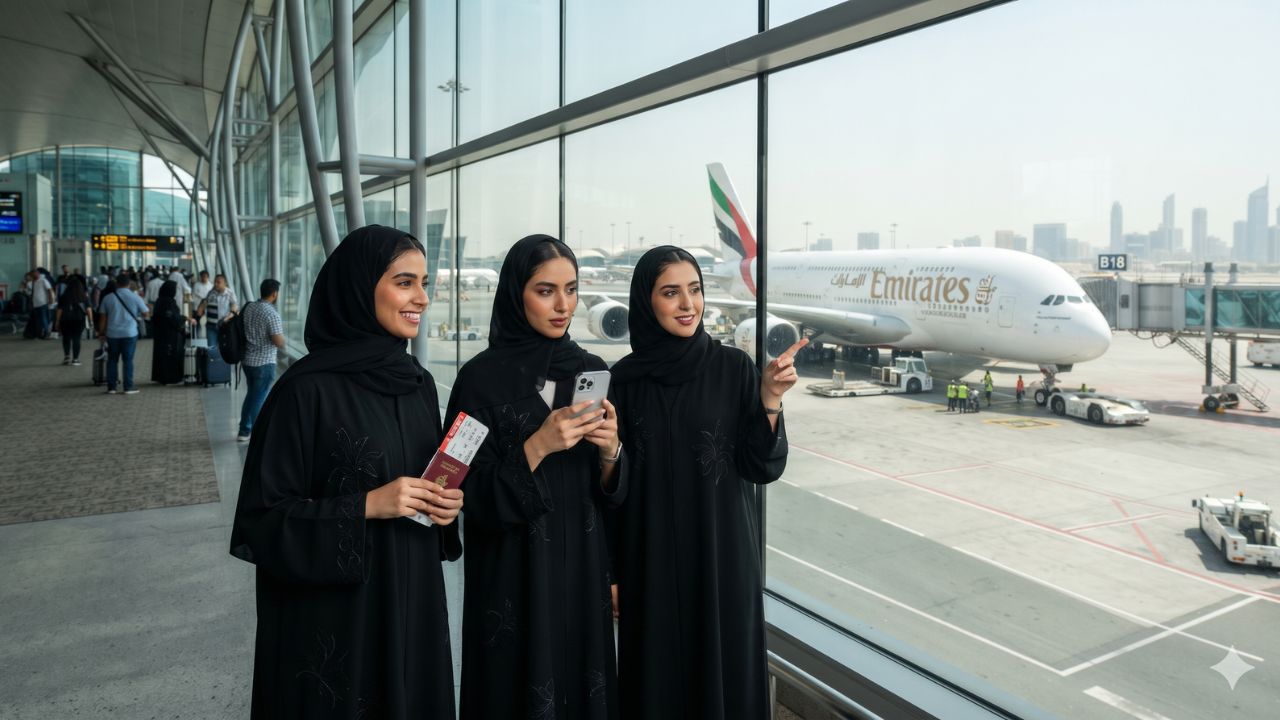
At Dubai International Airport, more than 98 per cent of departing travelers clear passport control in under ten minutes, while biometric Smart Gates whisk registered passengers through border security in less than ten seconds. That high-velocity efficiency powered a record-setting first half of 2026, during which Dubai International (DXB) processed 31.5 million guests across its concourses—cementing its position as the planet's busiest international crossroads.
Presenting a unified commercial front at the 29th Routes World Conference at Messe Frankfurt, Dubai Airports joined forces with the Dubai Department of Economy and Tourism (DubaiDET) to pitch global carriers on expanded routes ahead of the high-demand winter season. Supported by anchor carrier Emirates restoring 91 per cent of its pre-disruption network capacity, the emirate is aligning airport slots, luxury hotel inventory, and cultural attractions to capture high-yield winter sun vacationers.
The Frankfurt Summit and Summer Acceleration: Decoding the Flight Boom
Traditional aviation development often operates in bureaucratic silos: airports negotiate physical runway slots while tourism boards promote hotels and beaches independently. In Frankfurt, Dubai dismantled that legacy framework. The combined delegation pitched international airline network planners with an integrated business proposition that combined real-time passenger spend data, route profitability modeling, ground handling incentives, and municipal marketing campaigns across target source markets in Europe, Africa, and Central Asia.
This unified route diplomacy builds directly upon DXB’s mid-year operating momentum. Following temporary regional airspace constraints earlier in the year, the hub staged an aggressive rebound:
- April: Handled 3.5 million passengers as regional flight schedules restabilized.
- June: Surged to 5.0 million passengers as summer vacation getaways and long-haul connections expanded.
- July & August: Delivered peak summer performance, welcoming over 6.0 million guests in both consecutive months.
By mid-year, nearly 50 scheduled international airlines were operating out of DXB, connecting the city directly to 217 destinations across 99 countries. Crucially, the passenger volume maintains a balanced 50/50 split between transit travelers connecting between continents and point-to-point visitors spending nights inside Dubai hotels.
What Makes Dubai Different: Old Creek Soul Meets Tomorrow’s Aerotropolis
While most international visitors associate Dubai with gleaming glass towers and air-conditioned luxury at the Dubai Mall, the city’s heart beats across its historical maritime quarters along Dubai Creek (Khor Dubai). Long before widebody jets crossed the desert skies, wooden dhows docked along these saltwater shallows, trading pearls, dates, and frankincense across the Arabian Sea.
Beyond the terminal gates, winter travelers discover a multifaceted metropolis:
- Al Fahidi Historical Neighborhood: Wander through winding alleys shaded by traditional barjeel (wind towers) built from gypsum and coral stone, home to quiet contemporary art galleries and courtyards serving cardamom-scented coffee.
- Traditional Creek Abra Crossings: Step aboard a wooden motorized abra ferry to cross between Bur Dubai and Deira for just 1 AED, wandering historic textile, spice, and gold souqs where merchants converse in a dozen languages.
- Dubai Desert Conservation Reserve: Spanning 225 square kilometers of protected inland dunes, this sanctuary shelters herds of once-endangered Arabian oryx and sand gazelles, providing ethical desert camel treks and Bedouin starlit dining.
- Michelin-Starred Gastronomy: From humble Emirati seafood taverns serving grilled hammour with spiced rice to rooftop culinary temples in DIFC (Dubai International Financial Centre), the dining scene reflects more than 200 resident nationalities.
Infrastructure Evolution: Dubai International (DXB) vs. Al Maktoum International (DWC)
To guarantee that regional airspace and terminal facilities keep pace with runaway passenger growth, Dubai is executing an ambitious dual-airport roadmap transitioning toward the future megahub at Al Maktoum International (DWC):
| Infrastructure Benchmark | Dubai International (DXB) — Current Hub | Al Maktoum International (DWC) — Future Megahub | Operational Impact on Global Aviation |
|---|---|---|---|
| Annual Passenger Capacity | ~90 to 100 Million Guests | 260 Million Guests (Ultimate Master Plan) | Eliminates slot caps, enabling unlimited international fleet expansion |
| Runway Infrastructure | 2 Parallel Runways (Constrained urban site) | 5 Parallel Runways (4 active, 1 standby) | Allows simultaneous multiple takeoffs and landings without holding patterns |
| Aircraft Contact Gates | Over 150 Dedicated Passenger Gates | 400+ Contact Gates across multi-node hub | Minimizes remote apron bussing and accelerates turnaround cycles |
| Annual Cargo Capacity | ~2.5 Million Tonnes per Year | 12 Million Tonnes Annual Cargo Throughput | Integrates direct sea-air multimodal logistics via Jebel Ali Port |
| Urban Rail Integration | Dubai Metro Red Line (Terminals 1 & 3) | Integrated Express Rail & Metro Links | Connects financial centers directly to intercontinental departures |
| Network Restoration | Emirates at 91% pre-disruption capacity | Staged long-term mega-carrier migration | Guarantees 2- to 4-hour transit windows linking six continents |
Visitor Insider Tips: Navigating Dubai's Peak Winter Season
Visiting Dubai between November and March offers ideal 25°C daytime weather, but requires smart planning to outmaneuver holiday crowds:
- Glide Through Smart Gates Automatically: If you hold a biometric passport from an eligible visa-on-arrival country (including the UK, EU, US, Australia, and GCC), bypass the standard immigration line and walk directly into the Contactless Smart Gates. Stare into the green camera scanner for iris recognition and clear border control in under ten seconds.
- Hop on the Dubai Metro Red Line from Terminal 1 or 3: Avoid peak highway taxi queues along Airport Road during evening arrivals. The Dubai Metro Red Line departs directly from inside Terminals 1 and 3, delivering you to the Burj Khalifa and Downtown Dubai in 25 minutes for a fraction of private car costs.
- Reserve Desert Safaris Inside Protected Reserves: When booking a desert excursion, ensure your tour operator holds an official concession inside the Dubai Desert Conservation Reserve (DDCR). Unlike unregulated commercial dune-bashing areas, the DDCR enforces strict vehicle limits to protect sensitive native desert flora and wildlife.
- Schedule Old Dubai Walks in the Morning: Explore the spice and perfume souqs of Deira between 09:00 and 11:30 before tour groups arrive. Stop for traditional Emirati breakfast—saffron cardamom tea and warm chebayb pancakes drizzled with date syrup—at the Arabian Tea House in Al Fahidi.
- Take Advantage of Baggage Delivery Services: DXB’s high-velocity baggage system delivers over 90% of terminating bags to carousels within 45 minutes of touchdown. If you want to head straight to meetings or the beach, utilize the DUBZ luggage delivery service at arrivals to have your suitcases delivered directly to your hotel room.
Cultural and Environmental Context: Balancing Super-Hub Scale with Conservation
Dubai’s transformation from a sleepy pearl-diving village into the aviation capital of the world represents one of the modern era's most astonishing civic feats. Yet this rapid growth brings significant ecological responsibilities. Operating hundreds of widebody flights daily requires intense focus on carbon mitigation and energy conservation.
Through initiatives supported by the official Dubai Department of Economy and Tourism, the emirate enforces strict sustainability criteria across its hospitality and aviation sectors. DXB has converted thousands of apron lights to high-efficiency LED arrays, installed rooftop solar arrays across Terminal 2, and expanded electric ground service vehicle fleets.
Concurrently, Emirates’ restored fleet relies heavily on fuel-efficient Airbus A350-900s and modernized Boeing 777s equipped with lightweight cabin furnishings that reduce fuel burn. By pairing advanced biometric terminals with clean-energy urban rail transit, Dubai proves that accommodating tens of millions of international travelers can coexist with meaningful conservation benchmarks.
FAQ: Dubai Travel, DXB Airport, and Winter Surge 2026
What is the best time of year to visit Dubai?
The ideal travel window is between November and March, when daytime temperatures hover around a pleasant 24°C to 28°C, making outdoor beach activities, dining, and desert excursions exceptionally comfortable.
Who is eligible to use the Smart Gates at Dubai Airport?
Citizens from GCC nations and travelers from visa-on-arrival countries holding biometric machine-readable passports can use the automated Smart Gates without prior registration.
How does Dubai Al Maktoum (DWC) compare to Dubai International (DXB)?
While DXB currently handles 90 to 100 million passengers annually on two runways, the future DWC megahub will accommodate 260 million passengers across five parallel runways upon final completion.
What is the fastest way to get from DXB Airport to Downtown Dubai?
The Dubai Metro Red Line runs directly from Terminals 1 and 3, reaching the Burj Khalifa/Dubai Mall Station in roughly 25 minutes without road traffic delays.
As the winter sun warms the waters of the Gulf, Dubai’s synchronized runways continue to weave distant continents into a single, vibrant global crossroads.
Related Travel Guides
- Security Precision at King Phalo Airport: FlySafair FA388 Incident and Eastern Cape Guide 2026
- Beyond Riyadh and Jeddah: Qatar Airways Restores Direct Flights to Four Hidden Saudi Regions
- Swiss Airline Middle East Flight Suspensions: Dubai Advisories and Route Rerouting 2026
- Kuwait's Aviation Leap: Jazeera Airways Eyes 100 Destinations with First A320neo Delivery
Disclaimer
This article is for informational and educational purposes only. It does not constitute legal, financial, or professional advice. While we strive to provide accurate and up-to-date information, travel policies, regulations, and conditions change rapidly. Always verify information with official sources before making travel decisions. Nomad Lawyer makes no representations about the accuracy, reliability, completeness, or suitability of the information provided. Readers should consult qualified professionals for advice specific to their circumstances. The views expressed in this article are those of the author and do not necessarily reflect the views of Nomad Lawyer.
Preeti Gunjan
Contributor & Community Manager
A passionate traveller and community builder. Preeti helps grow the Nomad Lawyer community, fostering engagement and bringing the reader experience to life.
Learn more about our team →